

Signs Your Teen Is Burnt Out vs. Understimulated

Two teens surfing side by side during Discover Term

Editor’s Note: This article is adapted with permission from an original piece by Morgan Phillips, which first appeared on the Discover Term Blog. It features new imagery and revised strategies tailored for our readers. Morgan serves as a guide at Discover Term. Photographs courtesy of Discover Term, with special acknowledgment of Nico Loayza.


As parents, decoding our teenager's behavior can feel like an impossible task. When a teen starts pulling away from favorite activities, retreating into a smartphone screen, or dismissing daily life as "boring," it’s easy to assume they’re just unmotivated. However, underneath that irritable or exhausted exterior, something deeper is often at play. Are they genuinely overwhelmed by chronic pressure, or are they simply starved for meaningful stimulation? Identifying the exact root cause is the critical first step to providing the right kind of support. 

Three teens surfing while holding hands during Discover Term

Understanding the Root Causes: Overloaded vs. Under-Stimulated

Although boredom and burnout can look similar on the surface, they are rooted in very different issues. Burnout often stems from prolonged stress. When teens feel pressured, overwhelmed, or unable to meet expectations, burnout may show up as constant irritability, fatigue, negative self-talk, and lack of motivation. Boredom, on the other hand is rooted in under-stimulation. It might manifest in passive screen time, or longer periods of scrolling, complaints that “nothing sounds fun, or disinterest in previously enjoyed activities. 

An important distinction is that burnt-out teens struggle to engage, even when they want to, while bored teens long for meaningful opportunities to engage. A key to supporting young people through both burnout and boredom is recognizing this difference.

The Hidden Value of Empty Schedules

Boredom is not always a problem that needs a solution. Unstructured time is highly valuable because it builds a critical tolerance for discomfort in young people. However, the modern default response to any empty schedule is instant screen time. Turning to devices immediately kills the opportunity for true creative discovery. Instead of trying to eliminate boredom, the goal should be to guide teens to push through that uncomfortable "nothing to do" phase to find meaningful transformation on the other side.

A group of teens surfing during Discover Term

What Fuels Teen Burnout (and What Heals It)

When a young person faces chronic burnout, applying typical motivational pressure will backfire—acting like fuel on a growing fire. Piling on extra expectations, obsessing over academic performance, or trying to downplay their mental load only worsens the exhaustion. Healing requires a complete shift in strategy:

What to Prioritize (Healing the Burnout)

  • Protecting true rest and uncommitted downtime

  • Holding low-stakes conversations without pressure

  • Providing low-pressure, engaging activities that are fun and meaningful

What to Avoid (Fueling the Burnout)

  • Overscheduling calendars with extra activities

  • Focusing strictly on performance and outcomes

  • Minimizing their signs of stress or dismissing their feelings

Recovery is never about adding more to a student's plate. It is entirely about creating the mental and physical breathing room necessary to slowly recuperate and rebuild their resilience.

6 Strategies to Spark Intentional Teen Engagement

When adolescents are disengaged and understimulated, the answer isn’t more entertainment but rather intentional engagement.

  1. Providing hands-on, somewhat difficult targets sparks motivation. Teens are far more likely to re-engage when something feels real, hands-on, and slightly outside their comfort zone. Whether it’s learning an instrument, trying something new for the first time, taking on a creative project, or working toward a tangible goal, what matters is that it requires effort and offers a sense of real progress.

  2. Trusting them with real stakes builds motivation. Motivation often follows responsibility, not the other way around. When young people are trusted with something that has real stakes (helping to plan something, mentoring a younger student, managing a project, contributing to a team), they begin to feel a sense of ownership. That naturally increases engagement and investment.

  3. Supporting growth through discomfort nurtures confidence. Growth doesn’t come from comfort alone. It comes from being stretched, while knowing that support is nearby. When teens face something unfamiliar or difficult and work through it, they prove to themselves that they are far more capable than they ever imagined.

  4. Breaking the low-effort screen loop eventually pays off. While screen time temporarily relieves boredom, it rarely resolves it. Passive consumption tends to flatten motivation, making it even harder for teens to initiate effort or find activities rewarding. The more time spent in low-effort stimulation, the harder it becomes to engage in higher-effort, more meaningful experiences.

  5. Prioritizing real-world novelty reactivates engagement. New environments, new challenges, and real-world interaction can quickly shift a teen out of stagnation. Novelty captures attention, while physical and social experiences create energy that screens simply cannot replicate.

  6. Leveraging positive peer dynamics can powerfully shape teen identity. Teens are highly influenced by the environments and people around them. When they’re part of a group that is active, engaged, and trying new things, it raises their level of participation. Positive peer environments don’t just fill time, they shape identity, confidence, and motivation.

Together, these strategies create conditions in which teens naturally begin to re-engage and thrive —not because they’re forced to, but because they’ve finally found something that feels worth showing up for.

From Boredom to Breakthrough

Both boredom and overwhelming stress will eventually return to our teens' lives. The vital question is whether we have equipped them with the practical internal tools to navigate those waves. Sometimes, helping them build that lifelong toolkit simply starts with identifying exactly what they need right now—and handing them the right type of challenge at the perfect moment.

If you are looking for a concrete way to give your teenager that right type of challenge, programs like Discover Term can help. The guides and other adults at Discover Term use these exact principles—immersive, screen-free environments, real responsibilities, and supportive mentorship—to help young people unplug from their screens, build confidence, and discover what they are truly capable of achieving.

Teens relaxing in the ocean with a rainbow behind them during Discover Term


—Morgan Phillips |
Discover Term
When teachers are trusted, students thrive

Guest contributor Adriana Mata is an anchor teacher for Discovery Class 1 at The Compass School in Austin, Texas, where she works with early elementary students in small group settings. With over a decade of classroom experience across diverse learning environments, she is also pursuing doctoral work with a focus on writing and Chicana feminisms. Her teaching emphasizes place-based learning, cultural pedagogy, and student agency.

 Some of the most important moments in learning happen when a teacher has the time and trust to truly notice a child. In many schools, public and independent alike, educators carry the weight of systems they didn't shape. Mandates, pacing pressures, and test-driven priorities push teaching craft to the margins, leaving teachers to apply their deepest skills last. When that happens, students feel it first.

But what changes when teachers aren't constrained?

I've seen what becomes possible when educators are trusted as curious, thoughtful professionals whose voices meaningfully shape how learning unfolds:

When time constraints are replaced with intention.
When the preset curriculum gives way to student interest.
When testing is reframed as coaching.

What emerges is a learning environment where children are deeply known, and where rigor comes from attention rather than pressure.

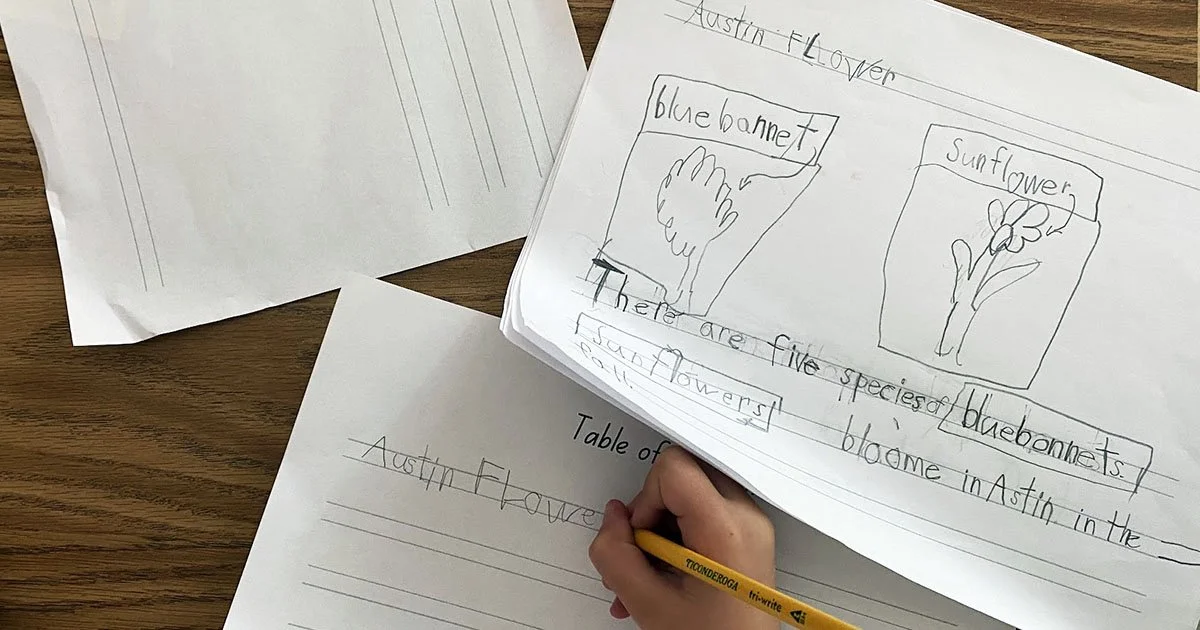
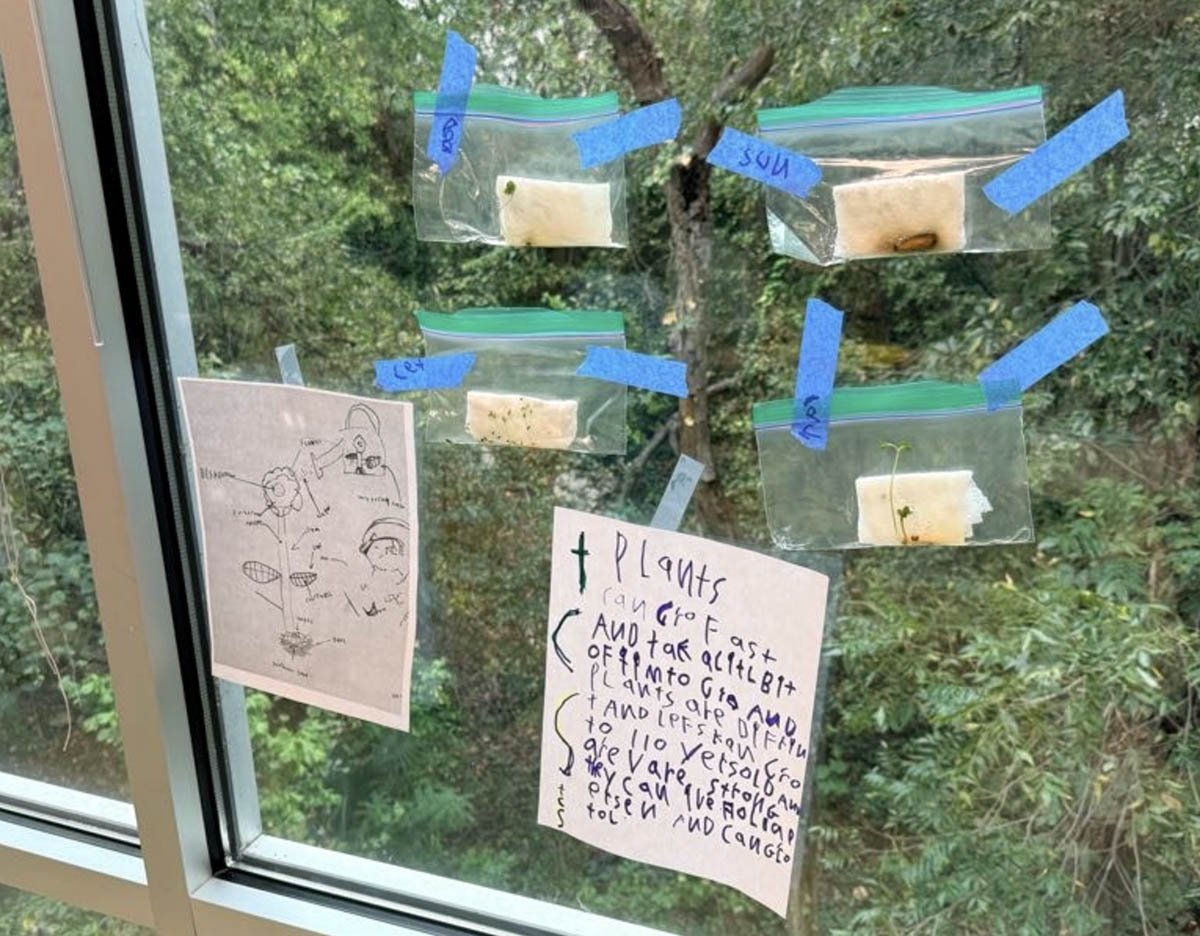
Recently, I worked with a student who shared that they didn't have any particular interests and felt unsure about beginning a deep dive project. Instead of rushing past that moment, we slowed down. Through observation and conversation, a quiet curiosity emerged: plants. From there, I guided, encouraged, and challenged the student to research, document, question, and present their learning. What began as uncertainty became ownership. This is what student-driven learning can look like, not the absence of structure, but the presence of responsive, skilled guidance grounded in professional judgment.

When teachers have autonomy, families see the impact in their children's academic growth, but also in their confidence, agency, and willingness to take intellectual risks. Students learn to articulate their thinking, revise their work, and see themselves as capable learners. This growth is not accidental; it is the result of the teacher's voice being central to daily decisions about learning.

For educators who sense they're capable of more than constraint-driven systems allow, this recognition matters. Ecosystems that trust teachers are rare. They work because trust is operational, not aspirational. When educators are given both the tools and the autonomy to practice their craft fully, students benefit directly from that alignment.

Education should be thoughtful, human, and deeply responsive to who children are and who they are becoming. When educators are trusted as professionals, and when students are invited to discover, develop, and lead their own learning, schools become places where children and the adults who teach them are trusted to grow.

Adriana Mata | The Compass School

When learning gets messy: The power of productive struggle in early elementary

The Compass School is a research-driven school in Austin that grounds its educational approach in neuroscience, psychology, and education research. Anna Yakabe, a founding member and Director of Learning, shares insights from their Innovation Lab, where young learners develop the perseverance and problem-solving skills needed to create meaningful change.


In Hidden Potential: The Science of Achieving Greater Things, Adam Grant reminds us that the real magic of learning comes from the struggle.

Grant describes learning as a journey shaped by how we respond to challenges. When children wrestle with something new, they're strengthening the neural pathways in their brains that lead to long-term understanding and resilience. Each mistake, frustration, or I-don't-get-it-yet moment is an invitation to stretch the mind and build perseverance.

This concept of productive struggle has deep roots in education research. J. Hiebert and Douglas A. Grouws introduced the term in 2007, though it wasn't until H. K. Warshauer's 2011 paper that it gained widespread recognition within mathematics education. The concept draws on several foundational frameworks, including Bjork's theory of Desirable Difficulties and Vygotsky's Zone of Proximal Development. These frameworks share a common insight: learning happens most powerfully in a particular space. When tasks are too easy, students experience boredom and minimal growth. When tasks are too difficult, students experience frustration and disengage. Productive struggle exists precisely in that sweet spot where the challenge is significant enough to require effort and creative thinking, but not so overwhelming that it becomes counterproductive.

While Warshauer's work focused on mathematical thinking, the principles of productive struggle apply across disciplines. The question that matters most to educators and parents is: What does this actually look like in a classroom with six- and seven-year-olds?


From Theory to Towers: Design Thinking in Action

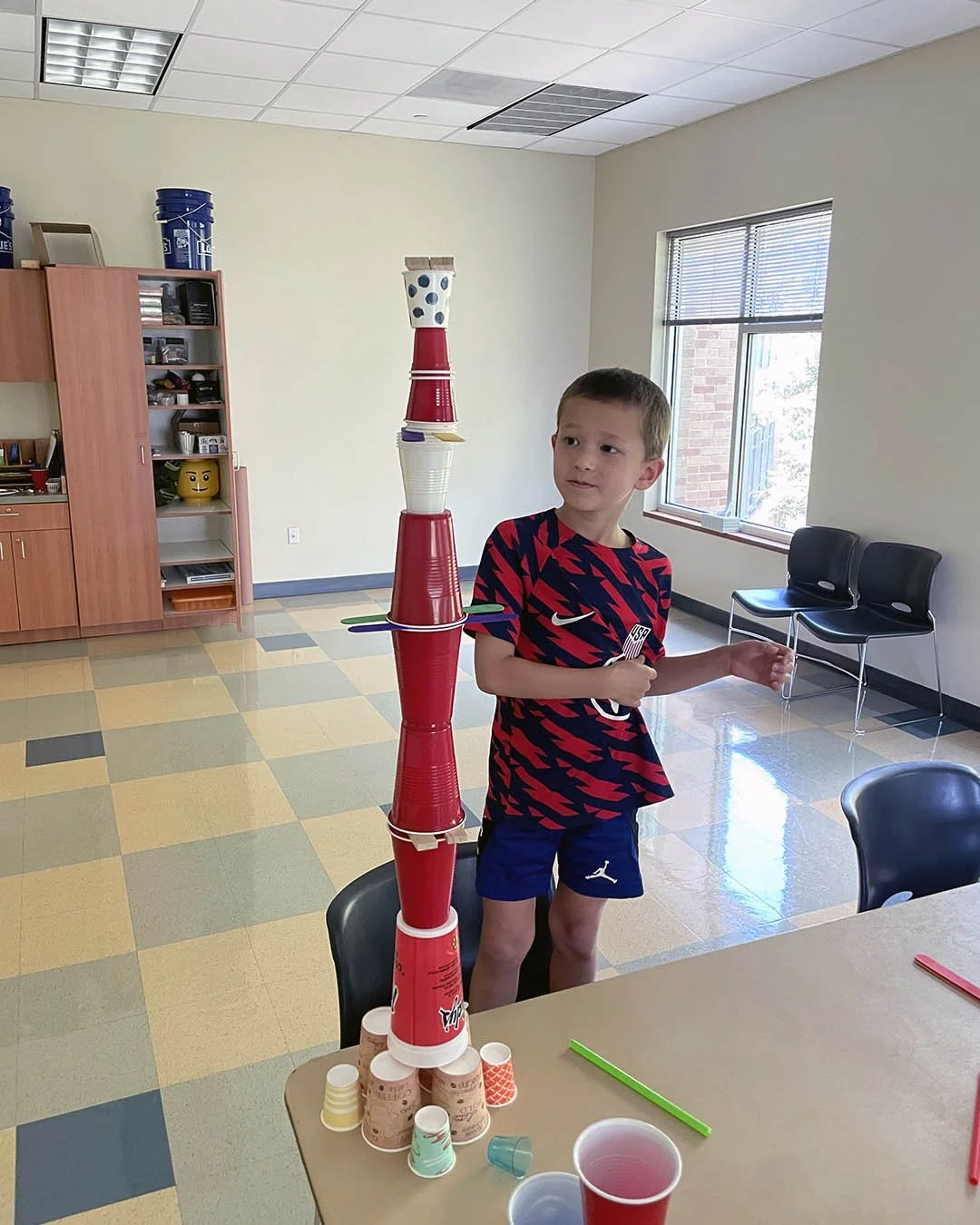
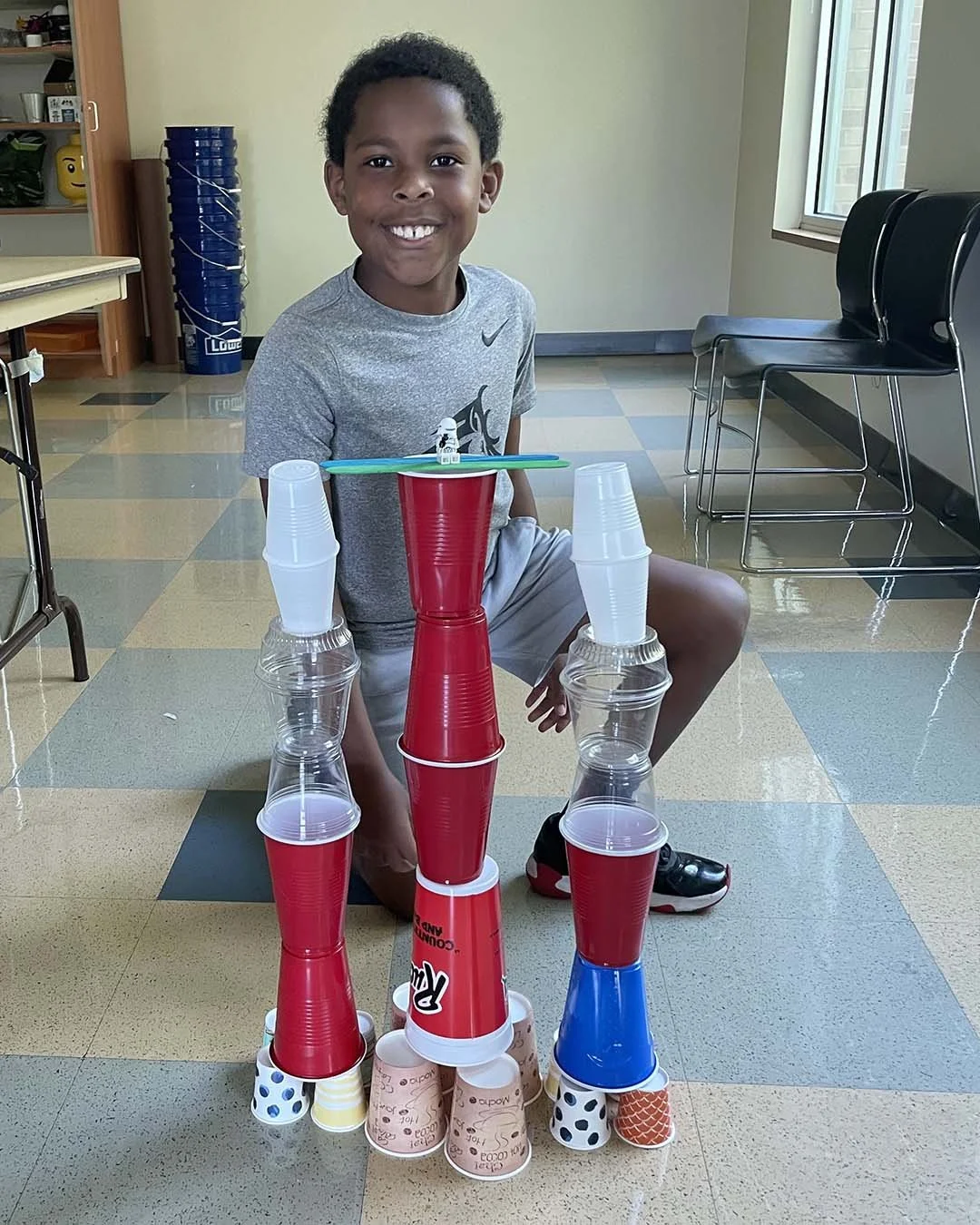
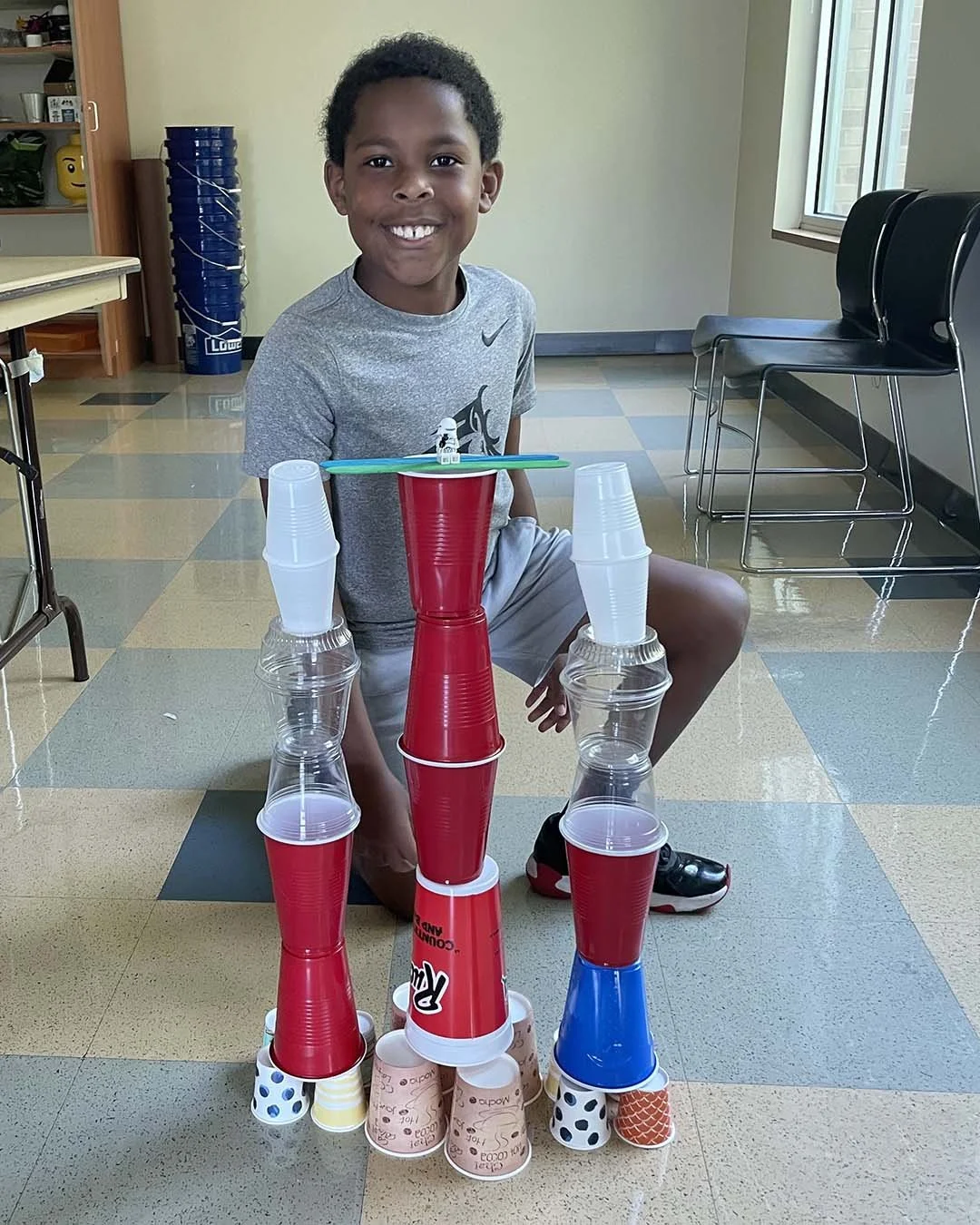
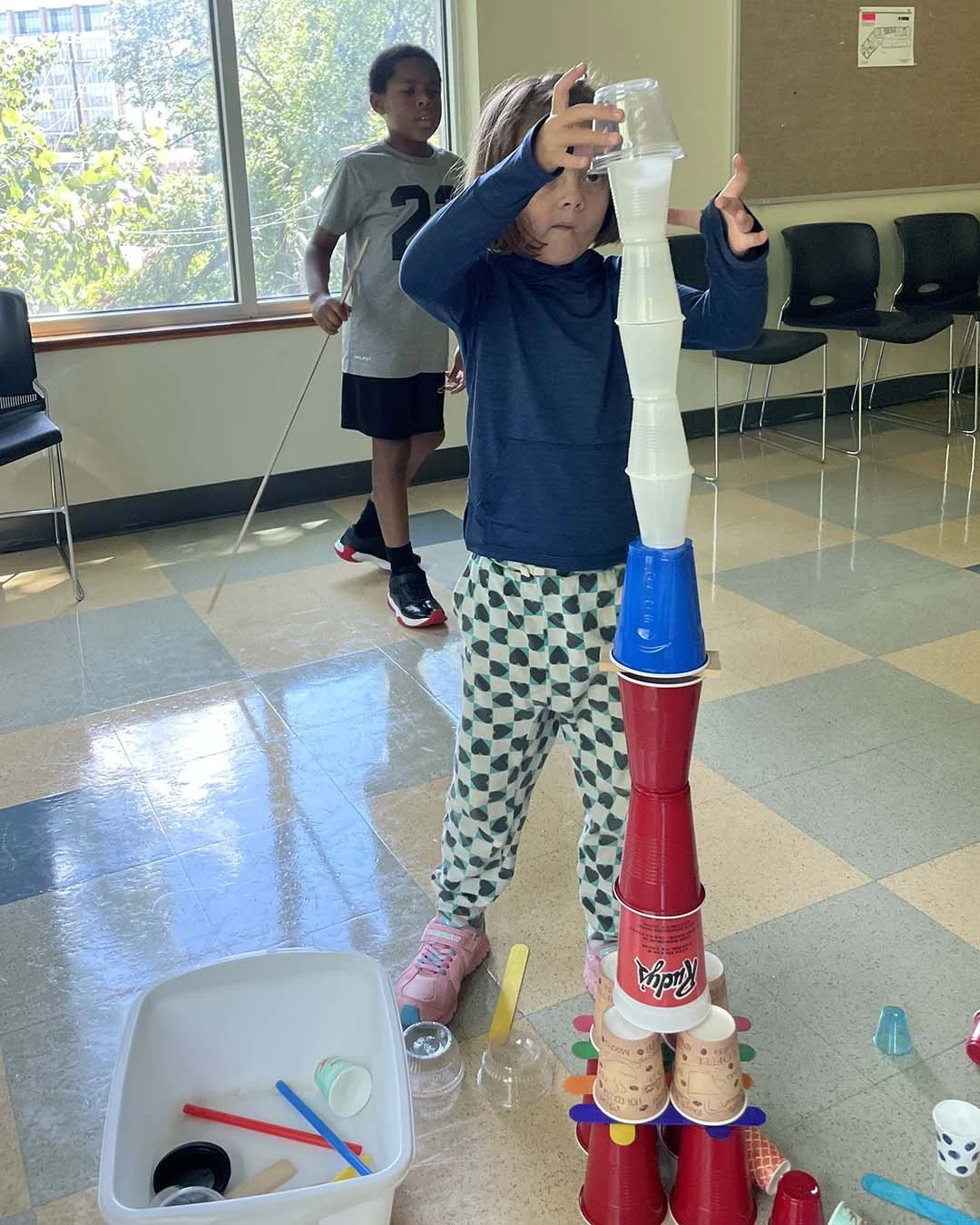
Recently, our young learners faced a challenge in our Innovation Lab that brought these research insights to life. The task: design a structure out of different size plastic cups for a LEGO person that stands at least 39 inches tall and can withstand a wind gust from a fan.

After a quick prototype and testing, students found that the fan caused structures to collapse instantaneously. One student captured the moment perfectly: "There needs to be weight to give it stability." This observation marked the beginning of their productive struggle.


The Messy Middle: Where Real Learning Happens

What unfolded over the next three days wasn't a neat path from problem to solution. It was iterative, frustrating, and essential to deep learning.

Students brainstormed: How can we add weight? They tried tape, hoping adhesive strength would compensate for structural weakness. They experimented with stacking cups of various sizes and materials, testing whether diversity in their building blocks would create stability. They placed LEGOs at the base, reasoning that a heavy foundation might anchor the entire tower.

Each attempt taught them something. Each failure led them to a revised design. This is the design-thinking protocol in its most authentic form—not a worksheet about problem-solving, but the actual experience of wrestling with a real challenge that has no predetermined answer. Students moved through cycles of defining the problem, generating ideas, prototyping solutions, and testing their effectiveness.

The breakthrough came from an unexpected place. What if the weight didn't need to be at the bottom? What if it could wrap around the structure like a sleeve? Students created a square LEGO structure that slid over the third cup from the bottom, adding stability exactly where the tower needed it most.

When the fan finally turned on and the towers stood firm, the celebration wasn't just about success. It was about the journey they'd taken to get there.


The Role of the Educator in Productive Struggle

During the cup tower challenge, no adult handed students the answer. No one told them where to place the LEGO sleeve or which cup would provide the best anchor point. Instead, educators asked questions: What happened when you tried that? What might you do differently? What are you noticing about the structures that are more stable?

The role of the educator is not to eliminate struggle, but to make it productive. Educators provide scaffolding through questioning rather than direct instruction, supporting students' thinking without removing the challenge that makes learning meaningful.


Why Productive Struggle Matters More Than Ever

Progressive education has long understood what neuroscience now confirms: Children learn best when adults support them through obstacles.

The research is clear. When students engage in productive struggle, they develop a growth mindset. They begin to see difficulty not as a stop sign but as a signpost pointing toward growth. They build executive function skills like planning, flexibility, and self-monitoring. Most importantly, they develop the courage to try, fail, and try again.

According to neuroscience research, when students work through challenging problems, they are building and strengthening neural connections. The effort required creates deeper, more durable learning than passive reception of information. This aligns with Grant's emphasis that achievement isn't about having the most natural ability but about developing the character skills that help us unlock our potential. Those skills—perseverance, adaptability, creative problem-solving—are built one productive struggle at a time.


Building Courageous Learners

When we give young children the space to struggle productively, we're not just teaching them about engineering or physics. We're teaching them about themselves. We're showing them that they are capable of facing uncertainty, of persevering through frustration, of collaborating to solve problems that no single person could tackle alone.

The next time you see a child wrestling with something difficult, resist the urge to jump in with the answer. Instead, lean into the discomfort. Ask a question. Express curiosity about their thinking. That struggle is not a problem to be solved. It's the very place where learning comes alive.


Anna Yakabe | The Compass School

Boo-tiful moments: Helping kids with autism understand Halloween

Just in time for the season of spookiness, we have some helpful tips from Alix Naginski, MSc, RBT, for parents, educators, and caregivers of children with autism. Alix is a staff member at Spark Learning, which provides therapy, social skills groups, and camps, as well as the Little Sparks Preschool and Kindergarten program, in Austin.

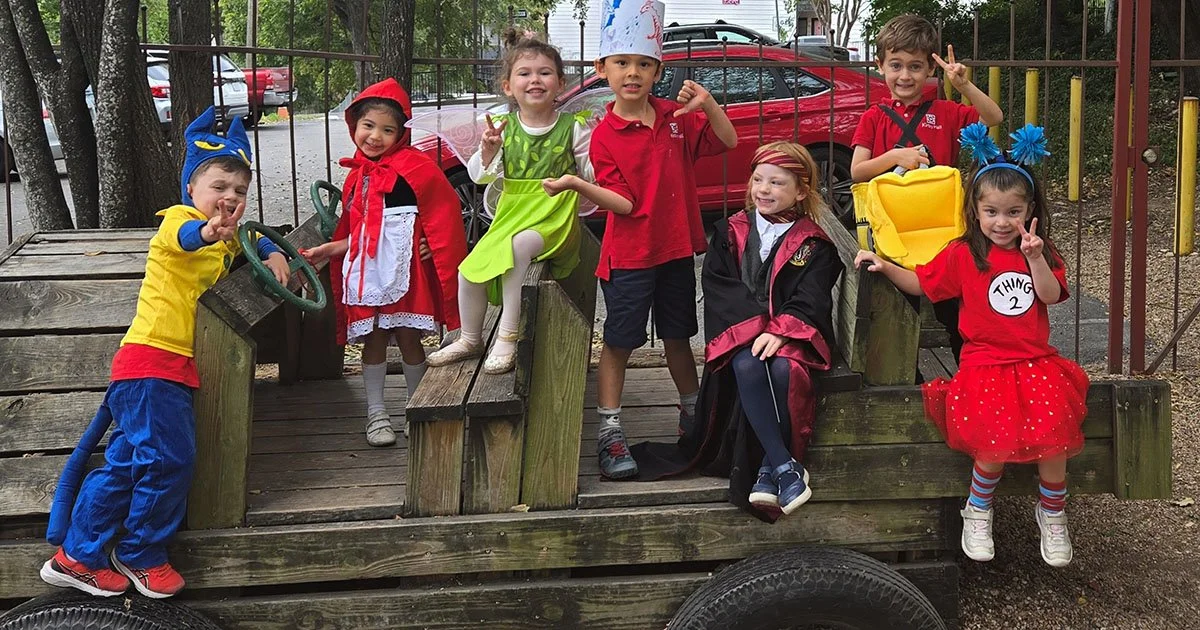
Three happy kids in Halloween costumes


Halloween is a magical time for children, a night filled with creative costumes, decorations, candy and trick-or-treating with friends. For many autistic children however, it can also be a time of sensory overload, social stress and unexpected challenges. At Spark, we understand that every child experience Halloween differently. We're here to help you make this special day feel safe, enjoyable, and tailored to your child. With planning and flexibility, there are many ways to approach costumes, decorating, and trick-or-treating to prepare your child for the surprises that come on this spooky holiday.   


Social stories: A great way to teach about Halloween

One fun and personalized technique you can use to help explain Halloween and its features is creating a social story. A social story is a simple, personalized story that uses clear language and visuals to explain social situations or upcoming events. It helps children understand what to expect, how to respond, and feel more comfortable in new or unfamiliar settings.

Some key features you may want to include are:  

  • Why do we celebrate Halloween?  

  • How do we celebrate it?  

  • Decorations they may see  

  • How do we trick or treat?  

You can include pictures of your street, your child, their costume, and the candy they may get! Make it fun, simple and personalized. These personal aspects are key as it makes the story more interesting and relatable for your child (Chen et al., 2020). Moreover, reading the story with your child several times before the big day will give your child time to absorb the information and feel more prepared for Halloween.   


Practice, practice, practice!

It is important also to help your child develop the skills needed and practice them. This will help your child feel more relaxed on Halloween night. Certain aspects of Halloween may be more challenging than others, and that is okay! Practicing as early as possible is what will lead to higher chances of a successful and stress-free night. 

  • Costumes: Getting your child comfortable with their Halloween costume is particularly important. This can be done by having their costume out and visible as well as having them try it on a couple times leading up to Halloween. Be prepared for resistance. But, the sooner you have them grow accustomed to their costumes the more likely they will become comfortable with wearing it! This is especially crucial if parts of the costume are new to them, such as glasses or other fun accessories (Kyriacou et al., 2023).  

  • Trick-or-treating: Practice trick-or-treating a couple of times before the 31st. Begin by walking in your neighborhood during the daytime, making sure they stay near you or hold your hand.  Ideally, your child should have the chance to practice being in a busier neighborhood to mimic what it may be like on Halloween. Also, with the help of a friendly neighbor or family member, try having them knock on someone's door. Be sure to highlight the order in which we do things: knock, say "trick or treat", take some candy, and leave. Have them practice just taking one or two pieces of candy and not entering the person's home. This may be very different from previous social experiences. Practice leads to being more prepared and sets the boundaries prior to the start of the event.   

  • Social skills: For some kids, it may be good to practice what to do if you get candy you don’t like (Say thank you and take it, but you don’t have to eat it!). Also, when receiving candy, it may be extremely tempting to eat it there and then. Reviewing ahead of time when they will be able to eat the candy will avoid challenges occurring. Some other important social skills to consider are responding to others’ questions about what they are dressed up as or compliments about their costumes. Halloween is a wonderful time to work and make progress on your child’s social skills! 


When in doubt, adapt!

If you find that your child is having a harder time with everything that comes with Halloween, changing the skill set sought may make a world of a difference for your child's and your experience.   

When it comes to walking around for trick-or-treating, it may be less stressful to have your child sitting rather than walking with you. For younger children, consider using a wagon or stroller to walk around your neighborhood – it could even be part of their costume! This keeps them safe in busier areas and may make the experience more comfortable for them. 

Not everyone likes candy, and that’s okay! It doesn't need to take away from their trick-or-treating fun. Consider bringing alternative goodies that you can add to your child's bag like stickers, small fidgets, or other snacks they prefer. This will increase their enthusiasm and sense of taking part in the experience.    

Finally, being in costume all together is a great way to make Halloween a family experience. Note that some materials may not be easy for your child to wear, such as accessories your child has never been exposed to before (wigs, certain shoes, jewelry, etc.). When picking out a Halloween costume, consider choosing a two-piece shirt and bottom that has the design printed or sewn on the front or back. This will help make the costume feel less foreign to your child.    

Halloween doesn't have to be overwhelming. With preparation, practice, and flexibility, every child can participate in a way that works best for them. Whether that means adjusting costumes, modifying trick-or-treat routines, or creating a personalized social story – what matters is making your child feel safe, comfortable, and included.    


References  

Chen, T., Yang, W., Wang, Q., Zhang, Y., & Ma, Z. (2020). Effects of social stories intervention for children and adolescents with autism spectrum disorders: A protocol for a systematic review and meta-analysis of randomized controlled trials. Medicine, 99(37), e22018. https://doi.org/10.1097/MD.0000000000022018  

Kyriacou, C., Forrester-Jones, R., & Triantafyllopoulou, P. (2023). Clothes, Sensory Experiences and Autism: Is Wearing the Right Fabric Important?. Journal of autism and developmental disorders, 53(4), 1495–1508. https://doi.org/10.1007/s10803-021-05140-3  


Alix Naginski, MSc, RBT
| Little Sparks at Spark Learning

The mechanics of cultivating growth mindset

Srinivas Jallepalli is the author of Education Empowered: A Holistic Blueprint for Building Better Schools and a Better World. He also founded Sankalpa Academy, a growth-mindset school created to offer gifted-level education to all children, and cofounded the Higher Orbit Foundation, a nonprofit that promotes educational equity. We asked him to share some thoughts on “growth mindset” based on his extensive research for the book.


If you stand on a street at dawn, you can feel the city waking up and everything feels possible. Childhood is like that. It isn’t one long day; it’s a series of early mornings—“windows”—when the brain is unusually ready to wire new beliefs and habits that can last a lifetime. The most powerful of those beliefs may be: I can accomplish anything.

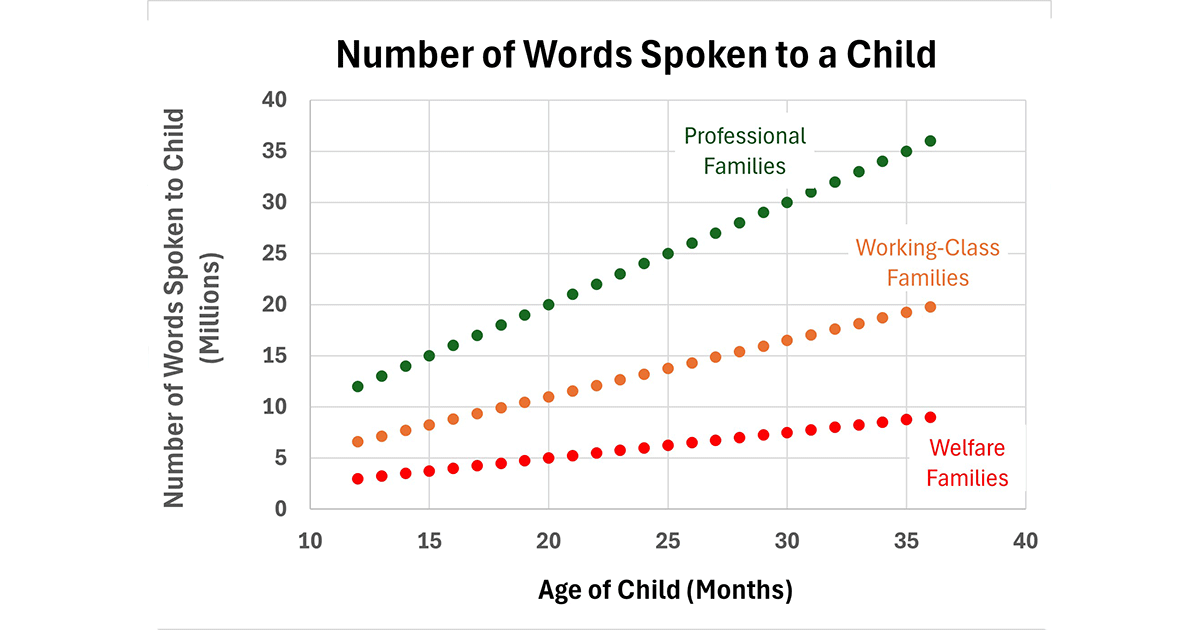
For their landmark study of language acquisition in the early years, Betty Hart and Todd Risley sat on many living-room floors and watched and listened. Their observations revealed something so basic that it might be easy to overlook: a stark difference in how much and how richly adults from different backgrounds talked with their children. The gap wasn’t just in word count—it was in conversational turns, encouragement, and the sense that a child’s voice mattered. It turns out that these early exchanges were highly correlated with vocabulary growth over the years, school readiness, and even achievement in higher grade levels. But the greatest benefit is in building identity: repeated serve-and-return talk teaches a child: My ideas are worth exploring.

Other scholars—Garcia and Otheguy, Flores and Rosas, and Faltis, for example—also point to issues with schooling that compound the challenges children from minority communities face. They argue that a cultural mismatch between families and a school system rooted in middle- and upper-class White norms is a key deterrent in the United States for these communities. Incidentally, evidence from feral and institutionalized children, Maria Montessori’s work at the Scuola Ortofrenica, and significantly higher scores for homeschooled children on the Piers-Harris Self-Concept Scale underscore the central role of enculturation, agency, and identity in human development (Education Empowered).

“Your beliefs become your thoughts. … Your values become your destiny.” This inspirational quote, traditionally attributed to Gandhi, sums it up well. This idea isn’t a cliché, it isn’t hyperbole. It’s neurological wiring in action. In the language of Education Empowered, subconscious programming happens when a message is repeated with emotion and social proof. If a child repeatedly hears, “You’re not a math person,” that phrase gets stored under truth and will silently steer choices for years. If a child repeatedly experiences “When I try strategies, I learn,” that becomes the stored program. The window isn’t just age; it’s recency and frequency—the density of messages during sensitive periods.

Education Empowered uses the story of Hermione and the House Elves in the Harry Potter series to make a crucial point: the chains that bind are often the scripts we don’t realize we’re reading from. The elves aren’t weak; they are programmed—by the world’s expectations and their own rehearsed self-talk. Hermione doesn’t just free the elves; she invites them to imagine new roles and practice them until they feel natural. This is precisely how growth mindset works in children.

How can we benefit from this understanding? The Department of Public Health in Georgia took the lessons from Hart and Risley’s work and acted. Their innovation was disarmingly practical: using the WIC program—where nearly every infant and caregiver already shows up—to coach parents on language enrichment and parent-child interaction. No new app. No new building. Just reimagining diaper changes, bath time, and grocery trips as micro-seminars in brain building. Coaches help caregivers narrate what they see, ask open questions, wait for the baby’s response, and mirror it back. Because it’s anchored in real routines, the coaching sticks. It’s not “homework”; it becomes home. And when caregivers change the soundtrack of daily life, children internalize a different story about themselves: I am a participant, not a passenger. This narrative offers an excellent start. If parents and schools then follow up with reading materials that are enriching, engaging, nuanced, and inspiring, we are well on our way to wiring confidence, high expectations, grit, and courage into our children.

The following four windows of opportunity for fostering growth mindset make the process relatively concrete.

  1. Birth to 3: Wire confidence through identity.
    This is the Hart & Risley era. Babies aren’t keeping score of correct answers; they’re counting turns. Narrate (“I’m zipping your jacket—up, up, up”), name feelings, and practice wait-time. Celebrate effort (“You kept trying that sound!”). Every serve-and-return is micro-proof that initiative matters and the child’s ideas matter.

  2. Ages 4–7: Script values and inspiration through play.
    Children try on roles the way actors try costumes, and it helps to minimize cultural misalignment. Offer challenges with visible feedback: puzzles with multiple strategies, invented spelling that improves every week, stories with values that inspire. Label process not person: “You tried two ways,” “You asked for a hint.” These phrases write the growth script line by line.

  3. Ages 8–12: Make struggle normal and strategic.
    Teach the practices behind progress: spacing, retrieval, worked examples, and reflection. Allow them to confront options, multiple choices, irony, hypocrisy, and strategy. Invite students to annotate their setbacks: What did I try? What will I try next? Turn “wrong” into data. When adults model revisions in their own work, children learn that improvement is a professional skill, not a personal rescue. Mindset dies when schedules deny second tries.

  4. Adolescence: Align belief with purpose.
    Teens will work incredibly hard for something that matters to them. Enable them to experience agency repeatedly. Link growth to contribution: tutoring a younger student, building a community resource, or pursuing a project that solves a real problem. Help them experience freedom as an opportunity to make a difference.

Hart & Risley showed that early talk forecasts later outcomes, but the deeper lesson is agency: children who are invited into conversation learn that their efforts can move the world. Georgia’s WIC-based coaching proves the solution can be elegant and equitable—bringing brain-building into places families already trust, for example. Education Empowered adds the blueprint: expose the invisible scripts, replace them with rehearsed, purposeful roles, and let children practice freedom with guidance. When we stack these pieces, we don’t just close “gaps”; we open windows—again and again—until a growth mindset is not a slogan but a lived, daily rhythm.

The dawn is already here. Our job is to step out and build a new world.


Srinivas Jallepalli | Education Empowered