The S-E-X talk

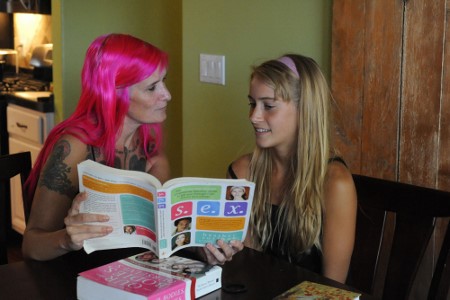
Alt Ed Austin is proud to welcome adolescent development expert Karen Rayne as a guest contributor. Karen teaches sexuality education to middle school and high school students as well as parents locally through Unhushed. She also teaches at the college level and lectures nationally. You may reach her at karen (at) unhushed.net or 512-662-1862.
When something goes un-talked-about, it’s easy for young people to pick up misconceptions. I teach sex education and get a heavy dose of misconception stories. Sometimes they’re funny (“Girls have two butts!”), and sometimes they’re not (“I started my first period, never having heard anything about a period, alone in a Schlitterbahn bathroom with only my friend’s father waiting outside for me. A kindly stranger explained to me that I wasn’t dying.”).

Parents often aren’t sure of how or when to start teaching their children about sex, and they come to me with this question: When should we have The Talk?

But when we “should” start teaching about sex isn’t the right question—because we DO start teaching our children about sexuality from infancy. We teach them whether or not it’s okay to touch their genitals. We teach them what a gentle touch feels like and what it feels like to be loved and held. These are critical parts of learning about safe human interactions, about touch, and about feeling good in our bodies.

As they get older, we teach our toddlers how to be gentle with other people’s bodies, and we teach them how to make sure that their peers treat their bodies gently. We teach them the names of their body parts and the names of everyone else’s body parts, too. We also teach toddlers to understand their own desires and to know that sometimes they can’t immediately have what they want. These are often natural parts of parenting and they are always critical parts of sexuality education.

We teach our children how to be a good friend, how to share, and how to reconcile disagreements graciously and with love. We teach them how to be patient, to know that there are choices to be made, and that sometimes putting off a good thing is the best choice. We teach our children how to understand and engage in verbal and nonverbal communication with their friends and family. We teach them how to judge situations and to pay attention to safety. We teach them what is beautiful, not through our words but through our responses to our own bodies and selves and our responses to other people’s bodies and selves. We teach them how (and how not) to interact with the media based on how we do it. Children learn through imitation, and there is no one else they love to imitate more than their parents. You continually teach your child about sexuality and relationships in the ways that you live your own life.

All of these are necessary skills and knowledge that lead to good choices about sex, sexual relationships, and love. All of this is sexuality education.

Some misconceptions about sex are based in misrepresentations of these early approaches to sexuality. But often misconceptions are more about what is left out of sexuality education than what is included—like not giving complete information about body parts. This empty space without information is where best guesses and peers’ influence can rush in and do more harm than good.

There is a need for some level of explicit conversation in these childhood years. Most children are talking about sex with their friends by the time they turn eight. If you want to be the first one to talk with your child about sex (and you should want this), you should talk with them before they are eight. When you start the conversation about sex, rather than allowing it to be started by peers, you teach your child that conversations about sex are allowed and encouraged in the home. This will do wonders for your conversations about sexuality with your child in the long run!

And then comes early adolescence, or middle school. This is the age when young people start looking with increasing clarity and interest toward the reality (sometimes the far-off reality) of romantic and sexual relationships. However, young people are generally not deeply engaged in these activities yet. This rather delicate balance of interest but little actual involvement creates a perfect environment for young people to learn about sexuality more fully through a comprehensive sexuality class and growing conversations in the home. They are able to take in the specifics of sexuality and good practices in regard to decision making without judging (or feeling judged) based on a prior sexual history.

During high school is when most youth have their first romantic relationships and about half have their first sexual experiences. This is another time when extended conversations about sexuality are important. Across the adolescent years, youth contextualize information differently as they have increasing personal knowledge of and exposure to sexual relationships, through either their own experiences or those of their peers. While sexuality should be a conversation that starts at birth and never really stops, it is the adolescent years when the heaviest-hitting and most explicit parent/child conversations should take place.

The two biggest factors determining whether family-based conversations about sex will be easy or hard are: (1) you and (2) your child. You only have control over the first of those factors. Getting yourself into a clear headspace about your own sexuality (both current and past) will get you off to the best start possible. If you aren’t ready to engage openly and meaningfully, how can you expect your child to?

So when should you have The Talk? You should have it tonight and tomorrow and again in a few weeks. You should have it about big things and little things. And you should remember that regardless of whether you’re talking, your child is listening and learning.

If you’re looking for books, here are a few of my favorites:

  • S.E.X.: The All-You-Need-to-Know Progressive Sexuality Guide to Get You Through High School and College by Heather Corinna
  • Body Drama by Nancy Amanda Redd
  • What Every 21st-Century Parent Needs to Know by Debra W. Haffner
  • How To Talk So Kids Will Listen And Listen So Kids Will Talk by Adele Faber and Elaine Mazlish
  • How To Talk So Teens Will Listen And Listen So Teens Will Talk by Adele Faber and Elaine Mazlish

If you’re looking for classes, here are a few Austin resources:

  • Unhushed. Offers classes for middle and high school students and parents of preteens and teenagers. karen (at) unhushed.net, 512-662-1862
  • Dr. Laura Hancock. Offers classes for parents of infants, toddlers, and young children. drlaurahancock (at) gmail.com, 646.801.6842

Karen Rayne, PhD
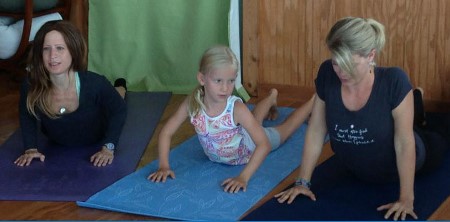
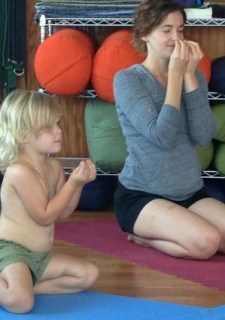
Yoga: Empowering for all ages

Julia Grueskin is on a mission to help people of all ages enjoy holistic wellness. She teaches hatha yoga, visual art, and plant-based cooking classes at schools, after-school programs, camps, and yoga centers around Austin. Here she shares with Alt Ed Austin readers her own yoga story and the benefits of yoga for children. Find out more about Julia and her classes here.

Yoga has been an essential part of my life for about the past four years. I was first introduced to it as a junior in high school, when I spent a semester in Maine and we had the option to take a yoga class once a week. I don’t remember all the poses we learned, but I do remember being in a beautiful space with huge glass windows and a tall ceiling, with the skeleton of an entire whale hanging above us. The atmosphere of the whole school was serene, and getting to practice yoga every Friday afternoon was the perfect way to round out the week and appreciate just how lucky I was to have the opportunity to be there.

Unfortunately, I didn’t pick up yoga again for about another four years, until I was a junior in college in Colorado. Other interests would always pop up, and yoga was no longer in the forefront of my mind. However, the preceding summer, my stepmother suggested I take some physical therapy to help with my posture. I was not in love with those exercises, and at the end of the summer, the therapist told me that I could either continue with those, or I could pick up yoga. That was just the reminder I needed to resume a yoga practice! And I knew that not only would it help with my spinal alignment, but it would also help me return to that space of calm and acceptance that I had been introduced to years before.

Once I picked it up for the second time, there was no turning back. I found a yoga studio I loved, and I began practicing regularly. The more I did it, the better I felt, and I knew that I needed to share that experience with others—especially young ones. Knowing how good it made me feel, I realized right away that I had not only a desire but also an obligation to not keep that secret to myself.

A growing body of research is now revealing the benefits of yoga and meditation. Much of this scientific study builds upon what many of us already know and feel through our own bodies and experiences. For example, through the Yoga Ed program, many high school students across the country are getting exposed to yoga as an alternative to the traditional P.E. class. A controlled study was carried out to evaluate the mental health benefits of practicing yoga vs. participating in a standard P.E. class. It was shown that the students who took the yoga classes significantly improved in measures of anger control and fatigue/inertia. In other factors, such as mood, anxiety, perceived stress, and resilience, the students in the P.E. classes tended to worsen, whereas the yoga students generally had minimal changes or even slight improvements. The conclusion of the study was that yoga can play a protective and even preventive role in maintaining students’ mental health.

Another study examined the benefits of mindfulness practices, which are central to the practice of yoga, and specifically how they can be implemented through arts- based methods. This study was focused in particular on children involved with child protection and/or mental health systems. Researchers found here that this type of mindfulness teaching can help these children with emotional regulation as well as social and coping skills, and that it can also improve their self- awareness, self-esteem, and resilience.

As parents and educators, we see students struggling every day with these sorts of issues, and I am constantly blown away in my yoga classes by how self-aware these children are of the challenges that await them. Yoga classes create a safe and supportive environment for children to be themselves and share their ideas without judgment or ridicule. I believe it is critical for us to provide them these opportunities as much as we possibly can.

So as we get back into another new school year, I am once again reminded of my first experience with yoga, back in the whale room, and I only wish that I had been exposed sooner, and more consistently, from a younger age. I believe yoga can have incredible benefits no matter at what stage of life one begins, but I also know the power of introducing it early on, so that it can become fully integrated into one’s whole way of life.

Julia Grueskin

On proficiency

Kami Wilt has been thinking a lot about proficiency lately. She shares her thoughts on the topic in this guest post, her third for Alt Ed Austin. Kami runs—quite proficiently, I might add—the Austin Tinkering School, which now has a second location, on North Lamar.

Proficiency: A high degree of competence or skill; expertise. Synonyms: skill, expertise, experience, accomplishment, competence, mastery, prowess, deftness, dexterity, finesse

I’ve had a sewing machine for several years now—longer than I’d care to admit, because I continue to have a contentious relationship with my machine. I didn’t grow up sewing, and although I took a few sewing classes awhile back, my experiences sewing at home are peppered with frustration and troubleshooting. I can hack it through a small project, but the thought of using it kind of stresses me out. I don't feel like, “Oh, I’ll just sit down and whip that out,” but instead brace myself for the inevitable snarls and hiccups that accompany my sewing experiences. 

I don’t know what happened, or what shifted, because I hadn’t even used the machine recently, but this week I had an idea for something I wanted to make, and I just sat down and MADE it. My off-and-on usage over the years had somehow reached the tipping point, and I achieved proficiency. The machine didn’t give me trouble. My project came together more or less the way I had wanted it to. I’m no expert, so maybe saying that I suddenly became proficient on the sewing machine is overstating it a tad, but the feeling that I could use the machine with ease opened me up to all sorts of projects that seemed way out of my range before, and my synapses were firing all over the place.

Of course, I've had this experience with other tools, too. I can remember the mental “click” that happened when using the chop saw changed from anxiety-producing to no big deal, and the possibilities that suddenly opened up when I could make those quick cuts easily. I took a screen printing class a few years ago, yet the screens I made weren’t seeing any action; I still felt like it was something I couldn’t really do on my own. But this summer I wanted the kids in my summer camps to get an Austin Tinkering School t-shirt, and ordering a bunch of preprinted shirts just didn’t seem very tinkery. Now, 84 t-shirts later, I'm feeling pretty fly with that squeegee!

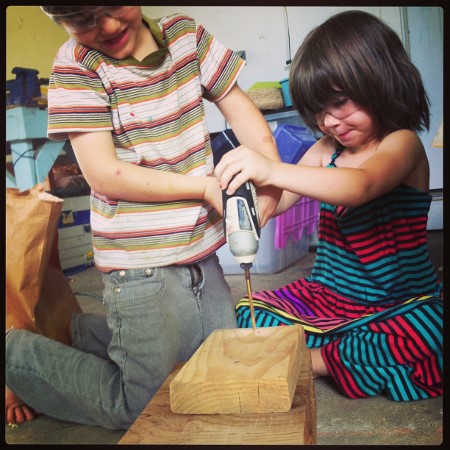
At least for me, a single class usually is not enough to help me break through my mental block with a new tool. It takes a lot of time and floundering and mess-ups, which can be very hard for us results-oriented and failure-averse adults. Kids are so much better at just being interested in the process and persevering as they learn to use a new tool, if we give them that space. At Tinkering School we often see kids sawing through a big, thick two-by-four with a handsaw or working to cut a piece of cord with a pair of scissors, completely absorbed for surprisingly long periods. Sometimes it’s hard to not just step in and do it for them. But we don’t rescue them, because we want them to have that chance to hone their skills—and to be opened up to the multitude of possibilities that mastery of a new tool affords.

When I see a kid suddenly driving in screws by herself, where before she was fumbling and nervous and needed help, I am so psyched that she was able to make the leap from “I can use a drill, but only at Tinkering School” to “I can use a drill. On my own. Any time I have access to one.” That’s a kid who’s more empowered.

Proficiency is key to feeling like we can have an effect on the world around us. We can fix things. We can make things. We move from passivity (“It broke, and now we have to throw it out” or “I have an idea but no idea how to build it, so I never will”) to action and participation. Not only does this society needs all the active participants it can get, but being a part of the Making and the Doing is also a lot more fun!

Kami Wilt

Adventures in learning

Guest contributor Paul T. Shafer is a self-proclaimed fun dad who enjoys going on educational adventures with his children. He writes about some of their exploits at shaferpower.com. In 2014, he’ll be launching IncrediBUS, a mobile learning extravaganza for children between the ages of 4 and 10. If you’d like to get a sense of the adventures Paul has in store (and a chance to win free passes on IncrediBUS) check out his weekly challenge, which can be found here.

Shortly after my son learned to speak, I hung a number chart on the wall and quizzed him using a laser pointer. In the event he would provide an incorrect answer, I would make him do push-ups totaling the number he had just missed. For some reason, he learned his numbers very fast. He also built some good strength along the way. (Kidding, of course—at least about the push-ups.) Anyway, it didn’t take me long to realize I needed to make some adjustments or this whole father-son teaching thing wasn’t going to last very long.

Fortunately, my wife witnessed the number chart episodes and gently intervened: “You might want to consider making it fun for him, or you’ll both end up pulling out your hair.” She was right: virtually every time I sat down with that laser pointer, my son or I ended up in tears. “There must be a better way,” I thought to myself.

Fast-forward several months and one deck of Uno playing cards . . .

The thing I noticed about playing Uno with Owen was the overwhelming joy we shared together. He was excited at all the numbers and colors, and I was elated because the cards were doing all the work. “What’s this one, Daddy?” and “Is this card a 9 or a 6?” We were both having fun and he was learning along the way. The experience left a profound impact on me—learning should be fun, right?

I decided to continue testing this theory of fun and adventurous learning for the next several years. For example, I always had an interest in entrepreneurialism, so I wondered if a fun entrepreneurial event might advance my kids’ interests on the topic. We forewent the traditional lemonade stand and sold Starbucks, chocolate milk, and donuts on a street near our house one Sunday morning. We sold our entire inventory and made some good tips to boot. The kids thought that was great. And we got to learn about creating flyers and counting money and saying “Thank you” to customers as part of the event.

We decided to take it a step further a few weeks later and sold breakfast in our neighborhood from my kids’ Radio Flyer wagon. We got the inspiration from a local food trailer called Torchy’s, and I arranged for them to meet the founder and ask him a few questions about how he started his business. He was incredibly kind to the kids, had a great amount of patience, and even donated a few tacos for their taco wagon event. Now we were really having fun!

Through all of these adventurous experiences (there are many others I’ve written about on my blog), I have noticed that kids are most engaged when they are exploring and having fun. Learning doesn’t have to be about worksheets and memorization and mundane repetitive tasks. It’s about experimenting and trying new things and getting lost in the experience. And to make things even better, I’ve found that if I’m joining in the experience and rolling up my sleeves with them, we all get to learn together and keep enjoying it for weeks to come.

Paul T. Shafer

Planting Roots of Empathy in Austin schools

Laura Smith, a postpartum doula with Austin Babymoon, is one of those rare individuals who seem to transform the world in positive ways with their every move. I am thrilled to bring Laura and her latest transformative project to you by way of today’s special guest post.

Roots of Empathy is a social-emotional learning program for elementary-aged schoolchildren that brings together everything most dear to me in the world: babies, children, and compassion and empathy. From the moment I first encountered the program, through an article in the New York Times in late 2010, I knew I wanted to bring it to Austin to share with our community.

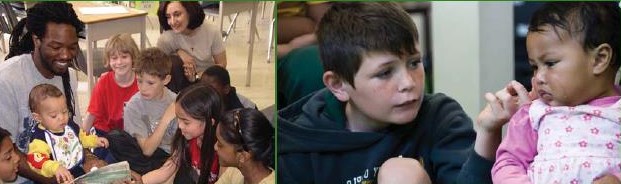
At the heart of the program are babies, coming into K–5 classrooms every three weeks all year long as tiny teachers. As a postpartum doula and nanny (and mother) with over a decade of work with dozens of babies, I have long felt reverence for the simple wisdom and presence of babies. Babies’ lack of self-assertion and their guilelessness makes them universally appealing. Almost anyone can smile with a baby.

What Roots of Empathy has discovered since the program’s inception in Toronto in 1996 is that deliberate exposure to these infantile qualities can be profoundly transformative, bringing out the best in us all. The children connect to the baby's humanity on a deep emotional level. This connection becomes the lever for discovering their own feelings and the feelings of others.

Roots of Empathy takes place in classrooms with students and teachers, a parent & baby duo, and a trained, volunteer Roots of Empathy instructor. Through guided observations of the baby's development and feelings and of the loving parental relationship, children learn to identify and reflect on their own thoughts and feelings and those of others. The trained Roots of Empathy instructor prepares and reinforces teaching done during family visits using a specialized lesson plan each week.

Much research and independent evaluation back up what I could immediately intuitively understand: that the program significantly reduces bullying and aggression and increases social-emotional competence and prosocial behaviors such as sharing and cooperation. It also reduces bystanderism. When students who have been through the program later witness cruelty and injustice, even if they are not directly involved, they are moved to stand up for their beleaguered peers.

And of course, better academic performance is a natural outcome of children's lowered stress levels and sense of being more supported and safe in their classrooms.

The program has deeply affected many participants, like a troubled young man who had been in and out of foster care most of his life. He held “his” baby (a beautiful sense of ownership comes for the students as they connect to “their” baby throughout the year) in a Snuggli and took her to a corner of the classroom to spend a few quiet moments with her, while the mom, instructor, and teacher pretended not to look on. Afterwards, he said to the instructor, “Do you think that even if no one has ever loved you in your whole life, it is possible to love?”

The program is widespread in Canada, England, Isle of Man, Northern Ireland, Scotland, and New Zealand and is newly established in Germany, Seattle, San Francisco, and New York. It is so effective that the Scottish government has decided to implement it countrywide.

Roots of Empathy has been recognized by His Holiness, the Dalai Lama; Emotional Intelligence author Daniel Goleman, Dr. Dan Siegel, the award-winning psychiatrist, author, and educator; and the World Health Organization, among others. The organization works in partnership with indigenous people and minorities globally. Mary Gordon, the founder, has won numerous awards, and the program has also won an International Changemakers award from the Ashoka organization.

And now, this fall, as a result of more than two years of community development work, Roots of Empathy is coming to Austin!

There is nothing quite like seeing the program in action, so I suggest at this point watching this two-minute introductory video:

Here is a longer, ten-minute video with a lot more classroom footage. (I will admit it now: I can never keep from tearing up when I watch these videos!)

You might also want to listen to this Jian Ghomeshi interview with Mary Gordon that aired on NPR in May.

Interested in being involved? I would love that, and I need your input! Here are a few ways to participate.

  • I am looking for people who are interested in becoming volunteer Roots of Empathy instructors. Instructors deliver all aspects of the Roots of Empathy lessons in the classroom and work closely with the participating volunteer family. The instructors witness and guide the transformative effect of the baby’s presence in the group of children. It is an amazing experience!
  • We will also need volunteer families, once funding is secured. Babies should be between two and four months old at the beginning of the program, so born between early July and late August of this year. It is a transformative experience for participating families. Often, the parents are so moved by the experience that they become volunteer instructors the following year!
  • Perhaps you know of a school that would benefit from this program. This fall, it will be in 15 classrooms across the following four schools: The Khabele School, Austin Discovery School, Cedars International Academy, and Ridgetop Elementary. I have interest from schools in Pflugerville ISD and Eanes ISD as well and am already starting to prepare for the next school year (2014–2015), when it will be in 15 more classrooms.
  • Lastly, and at the moment most importantly, funds. Financial support. We are applying for several grants, but in order to conduct the training in October for this fall, we need immediate funds. Roots of Empathy is a 501c3 nonprofit organization. We are looking for private individual donors as well as corporate sponsors.

Thank you for your interest! For more information, check out the Roots of Empathy website. And please feel free to ask me any questions in the comments section below.

Laura Smith

Start them now

I couldn’t be happier to welcome Virginia Woodruff to our roster of guest bloggers. Today she shares her family’s experiences with one of Austin’s best language immersion programs. Virginia founded the website Great Moments in Parenting, where moms and dads share the agony and ecstasy of life with kids. She invites you to share yours, too.

When I admit that my kids take Chinese, I immediately follow it with “But I swear I’m not a tiger mama!” I’m actually a rather laissez-faire mother, but my mother-in-law’s trip to China prompted me to start my kids in one of the world’s oldest, most spoken, and most challenging languages. (Note that I said “challenging,” rather than “difficult”—part of my attempt to reframe words around my kids, who have no idea that for an average American adult, learning Chinese is equivalent to having your hair plucked out strand by strand.)

My mother-in-law, a language maven, studied Chinese before her trip, just to have a “get along” ability. At the time my son was two. When my mother-in-law returned, she said, “If you can, start him in Chinese NOW!” Apparently it was difficult to “get along.”

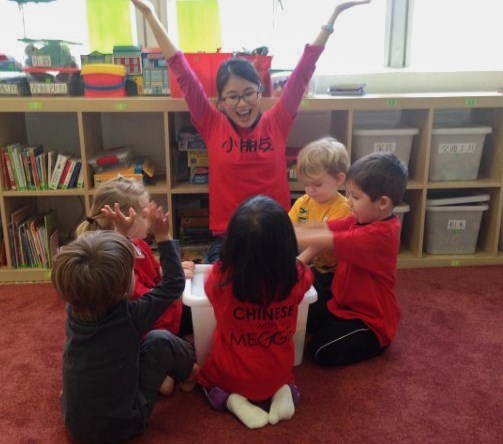
We had always hoped our children would be bilingual, so why not start them in this complex language? I set myself to researching and found Chinese with Meggie, an immersion program in central Austin. It was so quaint: Taiwan native Meggie Chou held classes in a toy-filled studio behind her home. Classes were limited to four kids and were all in Chinese. The children played as she slid in the learning by reading picture books in an animated tone, doing puzzles, and playing eating and drinking games with plastic toys. As my son got older it included a quick game of flashcards, identifying pictures of animals or family members.

The program became so popular that, just a few years later, Meggie moved it to the former Griffin School building in Hyde Park, took over five classrooms, and hired six Chinese teachers. Meggie trains all her instructors in her own child-friendly style. “Working with young children, you need a very special connection with them so they trust you and want to communicate with you,” Meggie explains.

Meggie says immersion learning works best for children under age six: “For kids at this age, their brains are working on building language skills in general. There is no concept of ‘first language’ or ‘second language.’” Young children don’t filter the information they receive. “Whatever information they get, they just try to sort out and save it as part of their cognition,” Meggie says.

Older kids usually begin with Chinese-as-a-second-language classes taught in English. “They start to filter information that cannot be recognized by their cognition,” says Meggie. “The total-immersion class might be difficult or ‘distanced’ for older kids.”

We’ve been going to Chinese with Meggie for four years now (my twin girls joined when they were about 18 months old). We’re committed, but it’s not always easy. It’s a long drive in traffic from their school, and I can’t say my kids skip into the classroom every week. But when they grumble, I remind them, “It’s pretty cool that you’re learning Chinese. Maybe one day you can go to China!”

My girls, who started so young, just think it’s par for the course to speak Chinese.  As Meggie explains, “When they start to speak, they copy whatever sound they hear. Mommy says, ‘apple’; Miss Meggie says, ‘pingqua.’”

We count ourselves lucky that we found this intimate atmosphere for learning a language. When I started looking, I swore, “I’m not doing this if it’s taught in some authoritarian style.” I pictured rows of students reciting memorized phrases. We were Montessorians, after all (“help me to help myself”), and I knew a traditional structure wouldn’t fly with my individualistic kids.

I appreciated the difference between Chinese with Meggie and traditional Chinese ways of teaching when we hosted a high school exchange student from China. I had hoped she would speak Chinese with our kids, but it was a nonstarter. The idea of slowing down and repeating words to children, engaging their natural curiosity, didn't make any sense to her. If they couldn't understand her immediately, she walked away. She was used to learning through tests and quizzing. The only part she did grasp was flashcard review.

Some parents bring their kids to Chinese class because they want them to be global citizens; some are bilingual themselves and see Chinese as the third logical language to add; some are—yes—tiger mamas; and some, like me, stumble upon it. But if you want your kids exposed to Chinese (or any other language) while their brains are still spongelike, take my mother-in-law’s advice: Start them now.

Virginia Woodruff