When what you’re doing isn’t really working

Joey Hajda holds a doctorate in veterinary science and a master’s degree in secondary and higher education curriculum and instruction. He has taught science courses at the middle and high school levels for more than 20 years as well as at the community college level. He and his wife, Lisa Hajda, MEd, are homeschooling parents and coauthors of the innovative and popular Friendly Chemistry curriculum. In this refreshingly honest guest post, Joey shares his bumpy journey to becoming a creative, highly effective educator.

GIVEAWAY: Joey and Lisa have kindly offered a complete set of Friendly Chemistry (a $120 value) to one lucky reader in honor of Alt Ed Austin’s 2nd anniversary. Read on to find out all the ways you can enter to win!


My first teaching job was in a rural public school in Northeast Texas. I was assigned the whole science department (grades 7–12), which was great for developing continuity between subject areas but rather exhausting when it came to lesson preparation. But I managed, and I grew to enjoy it.

Teaching the life sciences came easily due to my veterinary training, but for chemistry I had to rely more heavily upon the text. My chemistry course was good, though—or so I thought. After about two years, I began to receive feedback that the students to whom I had taught chemistry were failing their freshman chemistry course at the nearby junior college. Yikes! Could that be true? What was going on?

I went to the junior college to find out what was being expected of freshman chemistry students and to determine what was wrong with what I was doing. Something needed to change because not only were these kids failing this course, but they were also getting the idea that pursuing a college degree was now unattainable. Things were going sour for these kids, and I needed to do some serious thinking about what we were doing in my classroom.

After looking closely at the college’s freshman chemistry course syllabus, I readily saw that the course was really just a repeat of the concepts I had been presenting to students in my course, but it all came at a much faster pace in a single semester rather than a year-long course. I dissected the syllabus in greater detail to determine exactly what concepts my students needed to fully understand in order to be successful in this course. I made the decision to focus only upon these basic chemistry concepts and forget about the rest. While we had been “covering” most of the text, my students had really not had the time to fully understand these basic concepts. In my class, they were scoring well on tests and final grades were stellar, but in reality they were only excelling at memorizing a multitude of tiny facts and not understanding the “big picture” of chemistry whatsoever. Things had to change.

I went to my chemistry text, all 15 pounds of it, and set about locating those basic concepts that I felt matched those required in the college course. When I compared them to what the district (and state) required, we were well within the prescribed scope of the course. Next, I thought long and hard about the sequence in which these concepts were being presented within my text. The sequence that the text followed wasn’t making the best sense, so I experimented with rearranging them and came up with a plan that I hoped would be a more logical approach for my students.

This was all good, but then the thought came to me: if I pared away 70 percent of the text material, would I have enough for a year of teaching? And then a second thought came to me: maybe part of my earlier problem, in addition to covering way too many concepts, was the fact that maybe I wasn’t giving my students enough practice at the concepts I was presenting to them. Maybe we were moving along too fast. And again, maybe it was just good memorization on the part of the kids that was allowing them to keep afloat. Maybe, we just needed to slow down and spend more time with each concept and then practice more of what we learned.

But more practice only meant more worksheets. Or did it? As a church youth group leader and middle school camp counselor, I’d always loved group games. I enjoyed the combination of physical play with intense application of some sort of concept. I began developing classroom games—both running-around-the-room-type games and board games—that could allow for practice of the chemistry concepts we were learning. We were now enjoying ourselves with the fun and challenge and “physicalness” of the game.

Together, my students and I modified the games, which gave them ownership of the process and resulted in greater effectiveness. They always wanted to make the rules more challenging. What was once drudgery turned into my having to limit “practice” time in order to move on to new concepts. I think one of the best things to come from this experience was the fact that the students could see that I, too, really enjoyed play. We had fun—lots of good fun.

Smores and Stoichiometry: One of many fun and effective activities in Friendly Chemistry

And the learning came. My students were no longer experiencing failure as they entered their freshman chemistry courses, whether at the local junior college or at universities others were attending. Things were better, they really were. In this case, some of my classroom teaching had not been as effective as I had hoped. It took some time to evaluate the whole situation and more time to remedy it, as well as taking risks to get things fixed. But, in the end, those efforts paid off.

Joey Hajda


And here’s your payoff: Enter here for your chance (or several chances) to get a complete set of Friendly Chemistry. This includes:

1 Student Textbook
1 Volume 1 Teacher’s Edition
1 Volume 2 Teacher’s Edition
1 Manipulative Set
1 Annotated Solutions Manual

Total Retail Value: $120.00. Bonus: Everyone who enters the giveaway will receive a discount coupon on one purchase at friendlychemistry.com.

a Rafflecopter giveaway
Thanks to Joey and Lisa for helping mark Alt Ed Austin’s two-year milestone. Stay tuned all week for more great giveaways!

What she wishes you knew

Barb Steinberg is a teen life coach and workshop facilitator who transforms the lives of adolescent girls and the adults who care about them. I’m excited to welcome Barb as a guest contributor with a preview of her workshop at the upcoming We Are Girls Conference. To learn more about Barb and her work, please visit barbsteinberg.com.

Watching our girls grow up can be bittersweet. We pour our hearts and souls into these little beings and rearrange our worlds for them. We cheer them on when they take their first steps, we dole out hugs and band-aids for skinned knees, and we relish the moments when they hold our hands, even when they don’t have to.

When our daughters hit adolescence, things start to change. Voices may be raised. Eyes may be rolled (although, admittedly, this can happen much earlier). Sighs can become louder and longer. Tensions can run higher.

In my twenty years of working with adolescent girls and the adults in their lives, I often hear parents lament, “Where did my sweet little girl go?”

As challenging a time as it can be for us parents, during adolescence our daughter’s primary developmental task is to separate from us. The brain goes into overdrive, rewiring in a way she has not experienced since she was a toddler. She tries on different identities to see which is right for her. She may experiment, and sometimes makes mistakes. You may feel a widening gulf between the two of you.

If given the chance to be totally honest, what would our daughters tell us about how to better parent them during adolescence? What do they wish we knew? Here are a few things our daughters would share with us:

  • We wish our parents didn’t expect us to be perfect. We want you to trust us to make the right choices and learn from our mistakes. We need time and space to do so. We feel disempowered when our parents take over for us.
  • We wish our parents would respect our need for privacy. One of the ways we are transitioning into being adults is by asking for more privacy. Our rooms are sacred spaces, and so we’d like to ask that you knock before you enter.
  • We wish our parents realized how much we want to fit in. Social media can make it so much easier to feel left out, when friends are posting photos having fun somewhere we weren’t invited.
  • We wish our parents understood that comparing us hurts more than you think. Whenever a parent starts a sentence with “Why can’t you be more like _______ (insert name of perfect best friend or older sibling here)?” teens automatically cringe. Comparing us to others makes us feel bad about ourselves.

These are just a few of the insights I will be sharing during my upcoming What She Wishes You Knew workshop at the We Are Girls Conference hosted by GENaustin. I will be drawing from my experience working with girls and their families as well as the latest research. I hope you can join me! If not, I invite you to join me on the evening of November 7 for a similar workshop in the Barton Hills neighborhood.

Parents, was this list of girls’s wishes surprising? Girls, is there anything you would like to add?

Barb Steinberg, LMSW

Growin’ Together and playin’ rough

Can rough play be good for children? A growing body of evidence says it can. The Growin’ Together Hands-On Afterschool Program makes a point of encouraging it, as staff members Joe Carr and Heather Aguilar explain in today’s guest post.


As any parent knows, kids love to play with their entire bodies. Running, jumping, climbing, and wrestling are the norm on most playgrounds. Many kids even enjoy play fighting, using swords or other pretend weapons. This is scary for educators at a lot of schools and youth programs, as well as for some parents, so they don’t allow this kind of play. They may worry that it is unsafe or that it encourages violence. At Growin’ Together, however, we encourage kids to play this way and to develop agreed-upon boundaries that keep all willing participants safe. We also have conflict resolution structures in place to resolve issues when boundaries are crossed.

This topic recently came up when students expressed a desire for swordplay. They started using sticks and other objects, making some adults (and some kids) worry about safety. So we had a meeting. “How can we engage in this type of play and keep everyone safe?” we asked them. As a group, they talked and listened and agreed by consensus on a specific set of guidelines. In the process, they learned important skills in teamwork, compromise, and boundary setting. Here’s what they came up with:

  • You may play rough only with someone who agrees to play that way.
  • Stop means stop!
  • We only play rough in a certain area of the yard (this includes solo practicing with a weapon).
  • Anything used like a weapon must be foam-covered.
  • Contact should be made between objects, such as foam swords, not people.
  • Objects may touch another person’s body only if each player agrees, and then only with a light touch that is not intended to hurt.

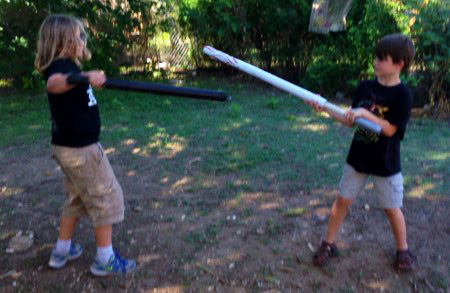
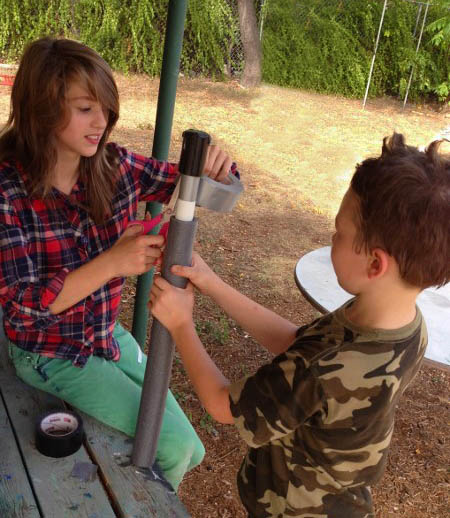
We used our next Carpentry Wednesday to make and decorate foam-covered swords, and it was one of the most engaging activities we’ve done. Some made staffs, one kid made a club, another a sai (a traditional weapon used in Okinawan martial arts), another a magic wand. It brought out their full creativity and ingenious designs and made for endless hours of imaginative play.

Do the kids violate their agreements? Of course! Which is then an opportunity for them to assert boundaries, hear the pain or anger their action caused, and make a different choice.

Is it dangerous? No. There is the risk of some pain, but no risk of injury. At Growin’ Together, we make a strong distinction between danger and risk, and we believe that taking risks is essential to learning what our limits are and how to stay safely within them—or to deliberately move beyond them.

For more insight into children’s need for rough play, why we support it, and how we supervise it, check out this enlightening article by educator and author Frances M. Carlson: “Rough Play: One of the Most Challenging Behaviors.” And for a more in-depth discussion of rough play and its benefits, we recommend The Art of Roughhousing: Good Old-Fashioned Horseplay and Why Every Kid Needs It, by Anthony T. DeBenedet and Lawrence J. Cohen (2010). In this well-researched and persuasive book, the authors make this “Bold Claim”: “Play—especially active physical play, like roughhousing—makes kids smart, emotionally intelligent, lovable and likable, ethical, physically fit, and joyful.”

We think so, too.

Joe Carr and Heather Aguilar

The S-E-X talk

Alt Ed Austin is proud to welcome adolescent development expert Karen Rayne as a guest contributor. Karen teaches sexuality education to middle school and high school students as well as parents locally through Unhushed. She also teaches at the college level and lectures nationally. You may reach her at karen (at) unhushed.net or 512-662-1862.

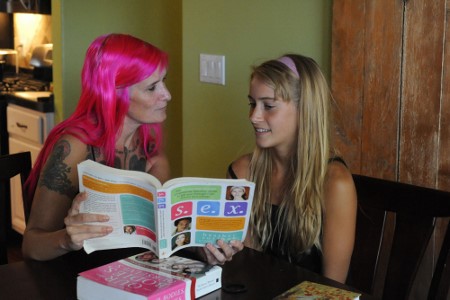
When something goes un-talked-about, it’s easy for young people to pick up misconceptions. I teach sex education and get a heavy dose of misconception stories. Sometimes they’re funny (“Girls have two butts!”), and sometimes they’re not (“I started my first period, never having heard anything about a period, alone in a Schlitterbahn bathroom with only my friend’s father waiting outside for me. A kindly stranger explained to me that I wasn’t dying.”).

Parents often aren’t sure of how or when to start teaching their children about sex, and they come to me with this question: When should we have The Talk?

But when we “should” start teaching about sex isn’t the right question—because we DO start teaching our children about sexuality from infancy. We teach them whether or not it’s okay to touch their genitals. We teach them what a gentle touch feels like and what it feels like to be loved and held. These are critical parts of learning about safe human interactions, about touch, and about feeling good in our bodies.

As they get older, we teach our toddlers how to be gentle with other people’s bodies, and we teach them how to make sure that their peers treat their bodies gently. We teach them the names of their body parts and the names of everyone else’s body parts, too. We also teach toddlers to understand their own desires and to know that sometimes they can’t immediately have what they want. These are often natural parts of parenting and they are always critical parts of sexuality education.

We teach our children how to be a good friend, how to share, and how to reconcile disagreements graciously and with love. We teach them how to be patient, to know that there are choices to be made, and that sometimes putting off a good thing is the best choice. We teach our children how to understand and engage in verbal and nonverbal communication with their friends and family. We teach them how to judge situations and to pay attention to safety. We teach them what is beautiful, not through our words but through our responses to our own bodies and selves and our responses to other people’s bodies and selves. We teach them how (and how not) to interact with the media based on how we do it. Children learn through imitation, and there is no one else they love to imitate more than their parents. You continually teach your child about sexuality and relationships in the ways that you live your own life.

All of these are necessary skills and knowledge that lead to good choices about sex, sexual relationships, and love. All of this is sexuality education.

Some misconceptions about sex are based in misrepresentations of these early approaches to sexuality. But often misconceptions are more about what is left out of sexuality education than what is included—like not giving complete information about body parts. This empty space without information is where best guesses and peers’ influence can rush in and do more harm than good.

There is a need for some level of explicit conversation in these childhood years. Most children are talking about sex with their friends by the time they turn eight. If you want to be the first one to talk with your child about sex (and you should want this), you should talk with them before they are eight. When you start the conversation about sex, rather than allowing it to be started by peers, you teach your child that conversations about sex are allowed and encouraged in the home. This will do wonders for your conversations about sexuality with your child in the long run!

And then comes early adolescence, or middle school. This is the age when young people start looking with increasing clarity and interest toward the reality (sometimes the far-off reality) of romantic and sexual relationships. However, young people are generally not deeply engaged in these activities yet. This rather delicate balance of interest but little actual involvement creates a perfect environment for young people to learn about sexuality more fully through a comprehensive sexuality class and growing conversations in the home. They are able to take in the specifics of sexuality and good practices in regard to decision making without judging (or feeling judged) based on a prior sexual history.

During high school is when most youth have their first romantic relationships and about half have their first sexual experiences. This is another time when extended conversations about sexuality are important. Across the adolescent years, youth contextualize information differently as they have increasing personal knowledge of and exposure to sexual relationships, through either their own experiences or those of their peers. While sexuality should be a conversation that starts at birth and never really stops, it is the adolescent years when the heaviest-hitting and most explicit parent/child conversations should take place.

The two biggest factors determining whether family-based conversations about sex will be easy or hard are: (1) you and (2) your child. You only have control over the first of those factors. Getting yourself into a clear headspace about your own sexuality (both current and past) will get you off to the best start possible. If you aren’t ready to engage openly and meaningfully, how can you expect your child to?

So when should you have The Talk? You should have it tonight and tomorrow and again in a few weeks. You should have it about big things and little things. And you should remember that regardless of whether you’re talking, your child is listening and learning.

If you’re looking for books, here are a few of my favorites:

  • S.E.X.: The All-You-Need-to-Know Progressive Sexuality Guide to Get You Through High School and College by Heather Corinna
  • Body Drama by Nancy Amanda Redd
  • What Every 21st-Century Parent Needs to Know by Debra W. Haffner
  • How To Talk So Kids Will Listen And Listen So Kids Will Talk by Adele Faber and Elaine Mazlish
  • How To Talk So Teens Will Listen And Listen So Teens Will Talk by Adele Faber and Elaine Mazlish

If you’re looking for classes, here are a few Austin resources:

  • Unhushed. Offers classes for middle and high school students and parents of preteens and teenagers. karen (at) unhushed.net, 512-662-1862
  • Dr. Laura Hancock. Offers classes for parents of infants, toddlers, and young children. drlaurahancock (at) gmail.com, 646.801.6842

Karen Rayne, PhD

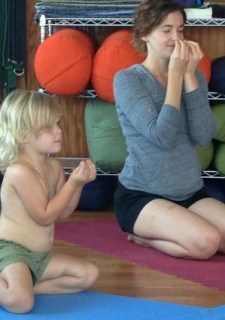
Yoga: Empowering for all ages

Julia Grueskin is on a mission to help people of all ages enjoy holistic wellness. She teaches hatha yoga, visual art, and plant-based cooking classes at schools, after-school programs, camps, and yoga centers around Austin. Here she shares with Alt Ed Austin readers her own yoga story and the benefits of yoga for children. Find out more about Julia and her classes here.

Yoga has been an essential part of my life for about the past four years. I was first introduced to it as a junior in high school, when I spent a semester in Maine and we had the option to take a yoga class once a week. I don’t remember all the poses we learned, but I do remember being in a beautiful space with huge glass windows and a tall ceiling, with the skeleton of an entire whale hanging above us. The atmosphere of the whole school was serene, and getting to practice yoga every Friday afternoon was the perfect way to round out the week and appreciate just how lucky I was to have the opportunity to be there.

Unfortunately, I didn’t pick up yoga again for about another four years, until I was a junior in college in Colorado. Other interests would always pop up, and yoga was no longer in the forefront of my mind. However, the preceding summer, my stepmother suggested I take some physical therapy to help with my posture. I was not in love with those exercises, and at the end of the summer, the therapist told me that I could either continue with those, or I could pick up yoga. That was just the reminder I needed to resume a yoga practice! And I knew that not only would it help with my spinal alignment, but it would also help me return to that space of calm and acceptance that I had been introduced to years before.

Once I picked it up for the second time, there was no turning back. I found a yoga studio I loved, and I began practicing regularly. The more I did it, the better I felt, and I knew that I needed to share that experience with others—especially young ones. Knowing how good it made me feel, I realized right away that I had not only a desire but also an obligation to not keep that secret to myself.

A growing body of research is now revealing the benefits of yoga and meditation. Much of this scientific study builds upon what many of us already know and feel through our own bodies and experiences. For example, through the Yoga Ed program, many high school students across the country are getting exposed to yoga as an alternative to the traditional P.E. class. A controlled study was carried out to evaluate the mental health benefits of practicing yoga vs. participating in a standard P.E. class. It was shown that the students who took the yoga classes significantly improved in measures of anger control and fatigue/inertia. In other factors, such as mood, anxiety, perceived stress, and resilience, the students in the P.E. classes tended to worsen, whereas the yoga students generally had minimal changes or even slight improvements. The conclusion of the study was that yoga can play a protective and even preventive role in maintaining students’ mental health.

Another study examined the benefits of mindfulness practices, which are central to the practice of yoga, and specifically how they can be implemented through arts- based methods. This study was focused in particular on children involved with child protection and/or mental health systems. Researchers found here that this type of mindfulness teaching can help these children with emotional regulation as well as social and coping skills, and that it can also improve their self- awareness, self-esteem, and resilience.

As parents and educators, we see students struggling every day with these sorts of issues, and I am constantly blown away in my yoga classes by how self-aware these children are of the challenges that await them. Yoga classes create a safe and supportive environment for children to be themselves and share their ideas without judgment or ridicule. I believe it is critical for us to provide them these opportunities as much as we possibly can.

So as we get back into another new school year, I am once again reminded of my first experience with yoga, back in the whale room, and I only wish that I had been exposed sooner, and more consistently, from a younger age. I believe yoga can have incredible benefits no matter at what stage of life one begins, but I also know the power of introducing it early on, so that it can become fully integrated into one’s whole way of life.

Julia Grueskin

On proficiency

Kami Wilt has been thinking a lot about proficiency lately. She shares her thoughts on the topic in this guest post, her third for Alt Ed Austin. Kami runs—quite proficiently, I might add—the Austin Tinkering School, which now has a second location, on North Lamar.

Proficiency: A high degree of competence or skill; expertise. Synonyms: skill, expertise, experience, accomplishment, competence, mastery, prowess, deftness, dexterity, finesse

I’ve had a sewing machine for several years now—longer than I’d care to admit, because I continue to have a contentious relationship with my machine. I didn’t grow up sewing, and although I took a few sewing classes awhile back, my experiences sewing at home are peppered with frustration and troubleshooting. I can hack it through a small project, but the thought of using it kind of stresses me out. I don't feel like, “Oh, I’ll just sit down and whip that out,” but instead brace myself for the inevitable snarls and hiccups that accompany my sewing experiences. 

I don’t know what happened, or what shifted, because I hadn’t even used the machine recently, but this week I had an idea for something I wanted to make, and I just sat down and MADE it. My off-and-on usage over the years had somehow reached the tipping point, and I achieved proficiency. The machine didn’t give me trouble. My project came together more or less the way I had wanted it to. I’m no expert, so maybe saying that I suddenly became proficient on the sewing machine is overstating it a tad, but the feeling that I could use the machine with ease opened me up to all sorts of projects that seemed way out of my range before, and my synapses were firing all over the place.

Of course, I've had this experience with other tools, too. I can remember the mental “click” that happened when using the chop saw changed from anxiety-producing to no big deal, and the possibilities that suddenly opened up when I could make those quick cuts easily. I took a screen printing class a few years ago, yet the screens I made weren’t seeing any action; I still felt like it was something I couldn’t really do on my own. But this summer I wanted the kids in my summer camps to get an Austin Tinkering School t-shirt, and ordering a bunch of preprinted shirts just didn’t seem very tinkery. Now, 84 t-shirts later, I'm feeling pretty fly with that squeegee!

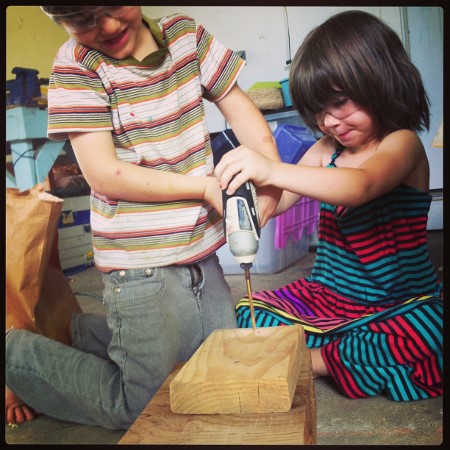
At least for me, a single class usually is not enough to help me break through my mental block with a new tool. It takes a lot of time and floundering and mess-ups, which can be very hard for us results-oriented and failure-averse adults. Kids are so much better at just being interested in the process and persevering as they learn to use a new tool, if we give them that space. At Tinkering School we often see kids sawing through a big, thick two-by-four with a handsaw or working to cut a piece of cord with a pair of scissors, completely absorbed for surprisingly long periods. Sometimes it’s hard to not just step in and do it for them. But we don’t rescue them, because we want them to have that chance to hone their skills—and to be opened up to the multitude of possibilities that mastery of a new tool affords.

When I see a kid suddenly driving in screws by herself, where before she was fumbling and nervous and needed help, I am so psyched that she was able to make the leap from “I can use a drill, but only at Tinkering School” to “I can use a drill. On my own. Any time I have access to one.” That’s a kid who’s more empowered.

Proficiency is key to feeling like we can have an effect on the world around us. We can fix things. We can make things. We move from passivity (“It broke, and now we have to throw it out” or “I have an idea but no idea how to build it, so I never will”) to action and participation. Not only does this society needs all the active participants it can get, but being a part of the Making and the Doing is also a lot more fun!

Kami Wilt