Using art to teach history

Tyler Merwin teaches history and philosophy and leads Socratic Seminars at Skybridge Academy. He joins us on the blog to share his experiments with making art in the history classroom.

I have always had an interest in art, whether paintings, literature, propaganda posters, or pottery. That being said, I have never been much of an artist. Even something as trivial as shading inside the lines of a fourth-grade coloring book can feel less like fun and more like the New York Times Sunday Edition crossword for me.

With this in mind, I have had an aversion to using art as an instruction method, partly because I felt that in order to properly teach something I should have some level of competency, and partly because I didn't want my students to see their 26-year-old history teacher struggling to draw something a 6-year-old could whip up during snack break. But after seeing the work that our art teacher, Johnny Villarreal, was doing to help his students navigate their anxieties with art, and witnessing students bravely posting their artwork across his classroom walls, I decided to take the leap—and the results have been astounding.

“Anyone? Anyone?”

“Anyone? Anyone?”

One of my biggest concerns as a history teacher is that my lessons are going to be boring. I am always working to use humor, academic controversy, or anything else that may seem remotely interesting so that students feel fully engaged—and so that I don’t feel like the economics teacher from Ferris Bueller’s Day Off.

Most students are not exactly thrilled by the prospect of writing research-based papers. So how can we help prepare them for research-intensive college courses while at the same time keeping lessons fun and engaging?

One answer can be art.

For example, I’m currently teaching a class called Civilizations, which explores various aspects of many of the major societies of Earth’s history, starting with precivilized humanity and ending with the Mongols. Currently we’re learning about ancient Egypt. For the first few classes I used a short lecture along with an informative YouTube video and student-led research about Egyptian culture. Over the next few days, students wrote a historical fiction piece based on this prompt:

Imagine you are someone alive at the time of the construction of the Great Pyramid of Giza. Write a two-page story about a day in your life. You can be the Pharaoh, you can be a pyramid builder, a merchant, or any other entity relevant to that time. The goal is to research about the time and write a short story that could have actually happened.

(These assignments can also require students to cite their sources, giving them a taste of what the academic research process is like.)

The results were fascinating. The stories’ narrators included a woman who is questioning the applied gender roles of the time, a pyramid builder planning a workers’ revolt, a Pharaoh who has become consumed by materialism and is refusing to escape his burning town in fear of abandoning his possessions, a revered cat in charge of watching over the grain stores, and a tomb thief who meets an untimely demise, among many others.

The level of effort students put into their research and writing was incredible. To create more immersion, we played ancient Egyptian–themed music we found on YouTube, alternating with a loop of construction noises (kind of corny, but actually kind of cool). To help create a sense of community, between times spent helping students as needed, I too wrote a story that I shared with them.

Being in a room with 15 high schoolers ditching their phones and iPods to work fastidiously on ancient Egyptian historical fiction pieces was the highlight of my week (which has also indicated to me that I am officially transitioning into boring adulthood; I think I’m OK with that). To finish the assignment, we shared the stories together in class, and it served as a great way for students to compare, contrast, and ask questions pertaining to the subject.

Modern cave paintings recently discovered on the walls of Skybridge Academy

Modern cave paintings recently discovered on the walls of Skybridge Academy

Another example of using art projects to teach history also comes from my Civilizations class. In learning about the Neolithic Period, we studied the struggles that cave dwellers endured and examined their cave paintings. We then used charcoal to create original cave paintings that emulated the styles of examples from sites throughout the world. Students (and teacher, in this case) who didn’t feel competent in drawing found themselves comfortable with this assignment because of the lack of complexity of many cave paintings; they didn’t require a high level of artistic sophistication or skill. We covered the classroom walls with these simple paintings, creating a cave-like feeling in the classroom.


Propaganda posters are almost universally fascinating to high school students. So playing off of my students’ interests, in our World War II: A World at War class we spent a day discussing and exploring forms of propaganda. We also had a Socratic Seminar discussing the serious nature of propaganda in its various forms and the dangerously powerful effects it can have on a society. To finish the lesson, students independently researched posters used in World War II by all sides, looking at the artistic styles, the messages they transmitted, and their potential effects. I then prompted students to create posters that would not glorify violence or be vulgar (because allowing for these kinds of negativity, while perhaps more realistic, is a slippery slope that we discussed and decided against as a class).

The student who drew this propaganda poster wanted to depict the urgency of the Allied nations’ need for a "hero" to help fight the war.

The student who drew this propaganda poster wanted to depict the urgency of the Allied nations’ need for a "hero" to help fight the war.

Students took many different approaches to the posters. Those who were confident in their artistic abilities made posters that were visually arresting, using imagery that forced you to pay attention. Others chose to concentrate on the verbal aspect, creating posters with original slogans that evoked the sense of urgency associated with the propaganda of the time. Most students were very engaged, and many said they had gained a better understanding of how propaganda seeks to manipulate emotions to promote ideologies. A few students, however, were rather curmudgeonly about the idea of doing art in history class and complained that they were “not an artist” or that they didn’t “know how to start.” That’s OK. It gave me time to work with these students, encouraging them to abandon their inhibitions. I used my own work as an example of why you don’t need to be the next Gabriel García Márquez to write a fun historical fiction piece, that you don’t need to be a young Da Vinci to make an awesome cave painting.
 

The creator of this poster wanted to point out the evil nature of concentration camps. The gate reads, “Work Will Set You Free,” a slogan used cynically by Nazi camp officials.

The creator of this poster wanted to point out the evil nature of concentration camps. The gate reads, “Work Will Set You Free,” a slogan used cynically by Nazi camp officials.

Every couple of months I spend some time reflecting on myself as a teacher and evaluating my progress. I try to figure out what has been working, what hasn’t been working, how I can improve, how I can adapt. Implementing art into my classes has been one of the biggest breakthroughs I have ever experienced as an educator. Although I still cannot color inside the lines, I have seen major progress from my students in engagement and productivity. Art appeals to all ability levels and works for most learning styles, and this is why it can engage students in meaningful and emotional ways.

Tyler Merwin

Join us for Ruckus Parade!Club and Honk!TX in March

Caitlin Macklin is back on the blog with a cool invitation for your kids. Caitlin plays many roles in the Austin community, including those of founder and teacher at Radicle Roots Community Schoolhouse, trombone player in marching bands, parade enthusiast, and, most recently, new mom!

ParadeClub_02.jpg

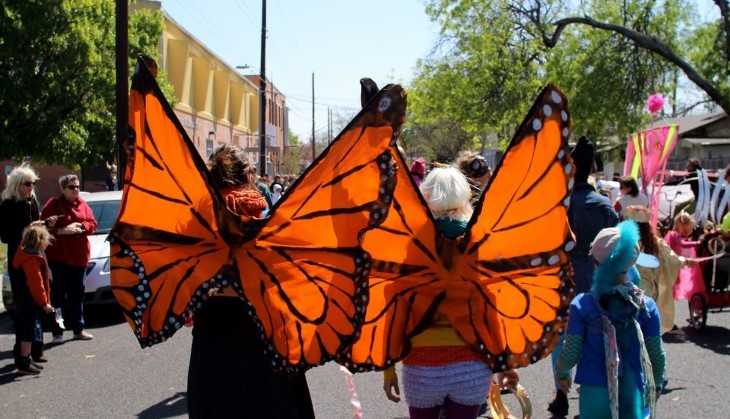
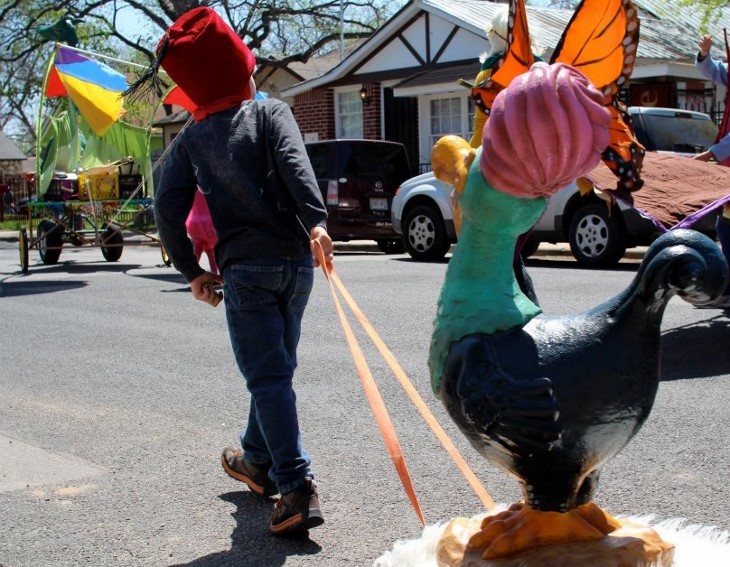
Here at Radicle Roots Community Schoolhouse, we’re gearing up for Parade!Club 2015, and you’re invited! This will be our third year to put out the call for families with children of all ages to be part of the Honk!TX excitement. Come march in the parade with us!

Honk!TX is one of our favorite Austin festivals. Twenty-some community brass bands descend on the neighborhoods around town to play for free! Come out and participate in the transformation of our public places into joyous celebrations of community and music.

This year we are the Ruckus Parade!Club. Since we moved off 9th Street last June, we have become the Radicle Roots Community Schoolhouse, aka RRCS, which we pronounce “Ruckus”! See below for more about the Schoolhouse name.)

To join the Ruckus Parade!Club, follow our Vimeo channel and like us on facebook so you will not miss any of our video installments or Club announcements. Your family prepares for the big day at home by making cool costumes and parade crafts (our colors are RAINBOW, so be as colorful as you can!), and learning the parade songs we will sing and dance to.

Another way to participate is the Parade!Club Open Shop. The illustrious Austin Tinkering School will be hosting this crafternoon on Sunday, March 8, from 1:00 to 4:00 p.m. Bring raw materials to make your own costume, musical instrument, flag, or ribbon dancer. Participate in the creation of giant street puppets. Play games and get to know other families. RSVP here. It will be a blast!

Then join the Club for PARADE DAY on Sunday, March 29, 2015, at Pan Am Park! Line up at 11:00 a.m. sharp; parade rolls at 12 noon. Show up in your hand-crafted finery ready for a jaunt through East Austin led by the combined forces of the Yes Ma’am Brass Band and the Hey Lolly Brass Band. So fun!

WHO:  Parents with kids of all ages
WHAT:  Ruckus Parade!Club: make costumes / crafts to be in the Honk!TX Parade
WHERE:  Pan Am Park
WHEN:  Sunday March 29th, 2015 line up at 11am sharp, parade leaves at 12noon
WHY:  Reclaim public space for joy and music!

This call is open to one and all, so pass the word along to anyone you want to dance in the streets with. YOUR KIDS are the main source of creativity for this spectacle, so go all out! Get together with friends for a Vimeo watching party, host a costume crafternoon for your school, or come up with dance routines to the songs with some neighborhood kids.

Parents need to accompany their children during this family event; strollers and wagons are welcome to assist little legs. The parade is a mile and a half long or so—that’s about two hours.

ParadeClub_01.jpg


More about the Schoolhouse

Last June, we said goodbye to our original East Austin home on 9th Street and loaded up bikes, trikes, and trailers to relocate the Schoolhouse. In our new spot at 3310 Red River, we’ve become Radicle Roots Community Schoolhouse! We are sharing the space with the incredible and creative after-school and summer camp program Spilled Milk Social Club. That means we are better able meet the needs of working families by offering on-site after care. We already strive to keep tuition as low and accessible as possible. We are excited to have plenty of room to grow in this beautiful building, and we look forward to this new chapter in the life of our learning community.

You may have noticed the spelling of our new name. We do embrace methods that are a departure from the traditional schooling model, though we wish that learning through direct experience, participating in community democracy, and being led by the innate curiosity of children were not radical ideas. However, we’ve adopted the biology term for our appellation:

rad·i·cle noun \ˈra-di-kəl\
1: the smallest part of the seed that becomes the root.

One of the things this means to us is that we guide our students to seek within to discover their passions, talents, gifts, and interests during Self-directed Learning. If you’d like to find out more, we’d love to show you around during a parent tour, happening every Wednesday until March and alternate Wednesdays after.

See you in the streets!

Caitlin Macklin

Connecting Texas children with nature

Johnnie Smith, Conservation Education Manager at the Texas Parks and Wildlife Department, joins us on the blog to let you know about three great programs that help students, educators, and families learn about nature firsthand.


Texas Children in Nature

Texas Children in Nature is a network of more than 300 partners from around the state who are dedicated to connecting all Texas children and their families with nature to be healthier, happier, and smarter. TCiN reaches the many diverse Texas communities through regional collaboratives that bring together nonprofits, government agencies, businesses, and individuals to focus on the issues and solutions that are relevant to them.

Through our unified messaging, our partners help raise awareness about why kids need nature and how everyone benefits when children and families spend more time outside. No one agency or organization can get every single child outside—but together we can! In 2013 we conducted a survey of our partners; the 28 percent who responded reported serving almost 4 million youth with their outdoor programs and events. 

According to the American Academy of Pediatrics, children and teens today spend between 7 and 11 waking hours per day indoors, isolated, and with media. You can help stem the tide of nature deficit disorder and create real solutions to get kids plugged into nature. Find your regional leaders at TCiN! 


Project WILD

The Texas Parks and Wildlife Department sponsors a suite of Project WILD programs, each offering a special iteration of this outstanding, hands-on approach to learning. Project WILD is a kindergarten through 12th grade environmental and conservation education program emphasizing awareness, appreciation, and understanding of wildlife and natural resources. It is interdisciplinary and supplementary and can be used to teach basic skills in science, social studies, language arts, math, art, music, and physical education.

TPWD offers Project WILD through hands-on workshops for educators. With an unbiased approach to basic wildlife management practices, Project WILD

  • teaches young people how to think about wildlife, not what to think;
  • provides a set of fun, hands-on, easy-to-use educational activities;
  • trains teachers and youth group leaders in an outstanding six-hour, hands-on workshop;
  • includes helpful, scientific background information with all activities;
  • incorporates powerful techniques and methods for teaching problem-solving and decision-making skills; and
  • is kid-tested and teacher-approved!


Saving Water for Wildlife

Texans know about drought. What they may not know is that, due to global weather patterns, the chances are high for another 10 to 15 years of persistent dry weather. Our water habits must change.

Wildlife needs clean, fresh water in the habitat, in seasonally appropriate amounts. Whether that habitat be upland, forest, riparian, subterranean, wetland, or estuarine, wildlife will not survive without it. While terrestrial species require water for sustenance and for the vegetation that supports the food web, aquatic species rely on water not only for these needs but for completion of their life cycle as well.

Everything we do on public and private lands affects our natural environment, directly or indirectly. Unlike plants and animals, however, we can choose a role that determines our impact. Texas Parks and Wildlife has put together a special website with resources to help prepare both children and adults for informed, effective action in saving water for wildlife. Every positive step you take helps us all.

Johnnie E. Smith


A new home for Austin Tinkering School!

Kami Wilt runs both the annual Austin Mini Maker Faire and the year-round Austin Tinkering School, where there are big changes afoot. Kami joins us on the blog today to share the good news.

Kami Wilt at Austin Tinkering School

Kami Wilt at Austin Tinkering School

As some of you may know, Austin Tinkering School recently ran a Kickstarter campaign to raise money to create a kid-friendly, community-oriented, centrally located Makerspace. A space like this doesn't exist in Austin yet, and it seems necessary (and awesome!) for a growing, vibrant, Maker city like Austin.

Lucky for us, the Kickstarter was a success, and we were able to raise $23,000! After months of looking and, truthfully, feeling a little worried that even with that handsome chunk of change we might not find a place that met our needs, we managed to secure a fantastic spot that is going to allow us to bring many more great tinkering experiences and adventures to kids and adults than we have before.

Introducing the new Austin Tinkering School:

1122 Airport Blvd.

ATS_3.jpg

This place is ideally located in East Austin and is just two minutes away from Hausbar Urban Farm, Canopy, Blue Genie, Splinter Group, a playground at Govalle Elementary, and scads of awesome East Side artists and artisans we can go visit whenever we want. It has a HUGE backyard! It also has AIR CONDITIONING! I'll tell you, $23,000 sounds like a lot and it definitely is, but when you start looking at places, you realize you might have to give up on some things, like temperature control or an easy-to-get-to location.

And since we didn't know how long it was going to take us to find a new place, we decided to build a nice new outdoor workshop at Austin EcoSchool, so now we have a South Austin hub as well! We offer a Friday program there for homeschoolers and alterna-schoolers, and will be running summer camps all summer long at both locations, along with lots of great classes and workshops for kids and adults.

ATS_4.jpg

​2015 is a brand spankin’ new year with so many tinkering adventures ahead! Can’t wait to have you all over to the new digs. Check us out at austintinkeringschool.com.

ATS_2.jpg

Kami Wilt

Celebrating informal science education in Texas

Emily Weerts has been an educator and program manager for museums, preschools, special education classrooms, and afterschool classes. She has been a member of the Informal Science Education Association of Texas (ISEA) since 2011 and currently serves on its board of directors. Emily is passionate about connecting with fellow educators and believes that great learning opportunities can happen anywhere.


Frank Oppenheimer, the visionary founder of San Francisco’s Exploratorium, once noted that “no one ever flunked a museum.” As a lifelong learner, I find the sentiment resonates with me—there are countless venues rich with educational opportunities, many that celebrate a learner-driven, informal approach to attaining new knowledge.

The field of science is particularly rich with informal venues; from museums to zoos, from state parks to aquariums, there are many science-rich institutions welcoming individuals, families, and classes interested in self-directed learning experiences. The Informal Science Education Association of Texas (ISEA) was founded in 1997 to support partnerships among informal and formal science educators to improve science education in Texas.

ISEA Texas defines informal science education as providing unique learning environments that increase appreciation and understanding of science, mathematics, and technology and their applications through voluntary and often self-directed experiences for individuals of all ages and backgrounds. Those interested in alternative schooling and inspiring learning experiences will relate deeply to the educators and professionals brought together by ISEA.


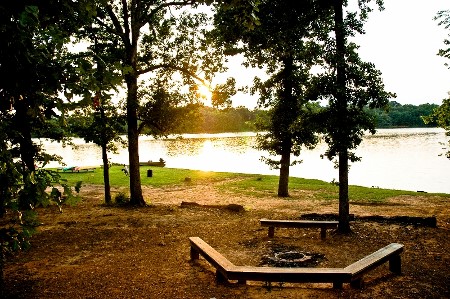
The firepit at Sky Ranch, venue for this year’s ISEA Texas conference

ISEA's annual conference will be held February 18–20 at Sky Ranch in Van, Texas. This year's conference theme is “Creating Connections: Building the Future,” and Dr. Gerald Liberman, PhD, will be delivering a keynote address focused on designing and implementing successful environmental education programs. As a museum educator I've had the pleasure of attending three previous conferences, and I always gain a great deal from the experience. As the name might suggest, the ISEA conference experience is informal and friendly; topics are accessible and participants are extremely welcoming. Through ISEA, I've connected with other educators, learned new skills, and talked late into the night about new approaches to education.

This year’s ISEA conference features a number of sessions that will be of interest to members of the alternative education community. Several focus on creating successful partnerships between educational groups and their communities. Gina Higby from UT will teach workshop participants how to engage diverse audiences in STEM activities through a parachute design class. Dr. Finkelstein and Dr. Silverman from the McDonald Observatory will overview activities about stars and galaxies and advise on how to successfully incorporate astronomy content into science curricula. There's even a session for fearful grant writers; in “It Was a Dark and Stormy Grant Application,” author and educator Christina Soontornvat will apply tools from fiction to write more successful grants.


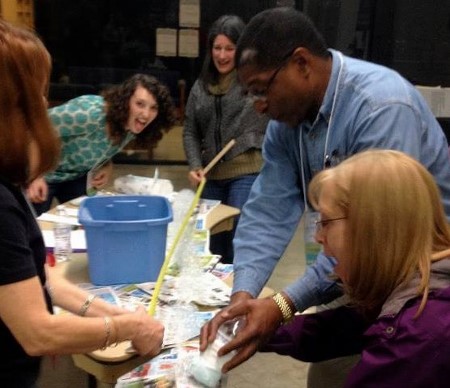
Informal science educators delving into hands-on activities at a past ISEA conference

The ISEA conference always features an incredible silent auction, with participating museums, zoos, aquariums, parks, and educators donating great swag to support scholarships for the conference. This year’s attendees can opt in to participate in a pre-conference workshop focused on crafting engaging social media or attend a post-conference field trip to the Texas Freshwater Fisheries Center. More information about the conference, including registration and a scholarship application, can be found here. Hope to see some of you there!

Emily Weerts


How do children as young as three learn in three languages?

Sharon Munroe serves as outreach coordinator at Austin International School, where her own children happily learn in three languages. In this guest post she explains how the school’s unusual model works.


It is possible for young children to be educated in three languages, even if they have only spoken their native language prior to starting school. In fact, this is both the philosophy and the practice at a unique preschool and primary school called Austin International School located in Northwest Austin. I have seen it myself, both as a parent of young children and now working at the school on the outreach team.

AIS began like many international schools around the world. Founded in 2001 by French nationals seeking to keep their own children immersed in French language and culture during their time in Austin, the school has evolved into one serving both local families and those from as many as 20 different countries, making a very diverse community of learners. Students from all ethnic and cultural backgrounds learn in French, English, and Spanish through immersion with native speakers who are experienced teachers. There is no language prerequisite for entering pre-kindergarten or kindergarten at Austin International School.

What makes the school unique is less readily apparent in the published curriculum than in the way it is delivered and in classroom interactions. Looking around on any given school day, I can see that it is happening:

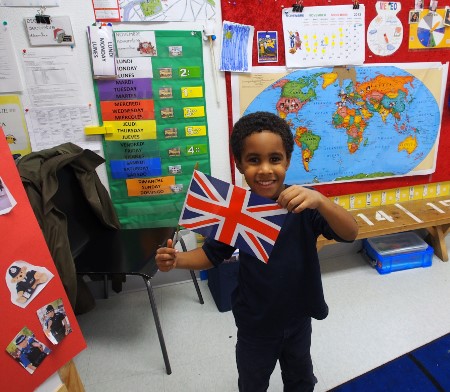
  • I walk into a Petite Section classroom designed for three-year-olds, and they are singing “Head, Shoulders, Knees, and Toes” in English.
  • Four-year-olds down the hall are painting outlines of bodies, drawing in the heart and lungs using Spanish vocabulary.
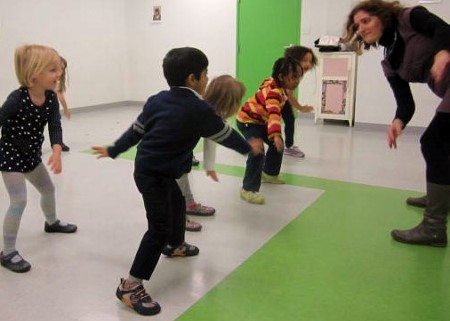
  • Kindergartners are dancing with their native French-speaking teacher in the multipurpose room.
  • Fourth graders in the Science Lab are having a lesson in French about organs and how the heart and lungs work in humans.

The curriculum is not the juxtaposition of three curricula (one French, one English, and one Spanish); instead, it is one unified curriculum in three languages that includes all subjects. It builds on the core learning from year to year, based on the French Baccalaureate curriculum.

In the unit of inquiry on the human body, all students in pre-kindergarten and kindergarten learn vocabulary and the science behind their bodies, incorporating art and music in their classroom as well as physical education instruction. Over three weeks, they learn all of the age-appropriate information from three teachers who come to their classroom on a rotating basis throughout the week. The seamless delivery of the unit allows a dialogue among cultures and languages and develops critical thinking skills. Yes, it happens in children as young as three.

The international faculty leads by example by always working collaboratively. For a typical kindergarten class, a team with a teacher from the United States, France, and Mexico are a classroom team. Each teacher brings his or her personal background, culture, and professional expertise to deliver the best learning experience possible.

Each week when school is in session, they spend at least three hours as a teaching team, planning the units of inquiry and daily lessons and discussing both the needs of the class overall and of individual students. Where one child may need extra support in one language that is new to him, the same child may need to challenge his vocabulary in his native language.

“Fundamental language skills develop in all three languages simultaneously; however, some skills are language specific. Communication between teachers is critical to ensure that students are successful and that we meet their needs in each language,” according to Carol Shay, who joined the first grade teaching team in 2012 after many years in Austin’s public schools.

An assistant teacher helps and nurtures the children alongside each team of three classroom teachers. These vital staff members support the children’s needs both in the classroom and on the playground. Teacher-student ratios are intentionally low to provide support to all learners from preschool through fifth grade.

Many young children are ready to learn at age three in a full-day school environment. They are able to learn a great deal from their classmates and teachers; they see and hear the differences among their schoolmates, who come from many different countries but all now live in Austin, a microcosm of the world. This is the start to their global citizenship.

Austin International School graduates go on to many of the area’s top middle schools—public, charter, and private—and thrive in all settings. One recent graduate, David, who began in kindergarten with no prior background in language or culture beyond his own (as an English-speaking American), has been recognized as a “connector” and won a sixth grade leadership award at St. Stephen’s Episcopal School. Other students are learning a fourth language and excelling in advanced math and science. They are well-rounded young people. Most come back weekly for the Alumni Club activities held on campus.

I have seen the progress of the school, the students in general, and my own children over the past four years. Austin International School develops global citizens and critical thinkers.

For more information, please visit austininternationalschool.org or contact me at outreach@austininternationalschool.org.

Sharon V. Munroe