How to help your daughter remain healthy and confident throughout her teen years


Guest contributor Michael Strong is a co-founder of innovative schools throughout the country, including the Khabele Strong Incubator in Austin. He is a thought leader in educational innovation, Socratic practice, and conscious entrepreneurship. Here he discusses the ways in which a carefully designed school culture can help prevent or reverse some of the common traumas of adolescence, particularly for girls.
 

Mary Pipher’s Reviving Ophelia, published twenty years ago, described teen culture in the United States as “girl destroying.”

She documented how happy, confident preteen girls often became diffident, depressed, and prey to self-harm, eating disorders, low academic performance, and suicidal thoughts. It is one of the most depressing books a parent of a girl can read.

Yet, sadly, if anything conditions for adolescent girls have gotten worse. For instance, a 2012 study found that the incidence of eating disorders among 15–19-year-old girls had gotten worse. Teen depression has increased five-fold since the early 20th century. Between 1990 and 2010 depression replaced asthma as the leading cause of disability among teens. By numerous metrics, we are seeing a public health crisis in adolescents, with girls being hit especially badly.

What can you do to protect your daughter?

Judith Rich Harris, in The Nurture Assumption, documented the impact that peers had on teens. While this is something we have all known intuitively, Harris showed that for a broad range of behaviors, including smoking, teen pregnancy, and academic performance, teen culture was more influential than were parents.

There are two general approaches to ensuring that your daughter is immersed in a positive peer culture:

  1. Be highly selective about the peers she spends time with, both in and out of school.
  2. Select a school that takes a proactive approach to improving peer culture.

The first is relatively widely recognized and can be approached by talking openly with teens and discussing their peer groups with them. Because the second is less familiar, as well as a domain in which I specialize, I’ll focus on that for the remainder of this article.

I began my life as an educator leading Socratic discussions in public schools in Chicago and Alaska. Although at first I perceived my work as a form of pedagogy, I soon came to realize that I was primarily focused on changing classroom culture. Most public school classrooms are not places in which students are intellectually engaged. My goal as an educator was focused on transforming classroom culture to an environment in which it became socially acceptable to discuss ideas thoughtfully and authentically.

Over time I realized that an explicit focus on group process was essential to improving the peer culture. As a consequence of my focus on group process, I often found that adolescent girls became leaders in the group. They were typically more socially mature and sophisticated than were the boys. At one site in Anchorage, minority girls in my classes achieved larger test score gains in four months than the average American student gains in four years (on the Watson-Glaser Critical Thinking Assessment, which correlates with IQ and SAT scores). One of the authors of Women's Ways of Knowing praised my work for its particular efficacy with teenage girls.

But the real insight for me was that it was possible for an educator to work with students deliberately to create a more positive and supportive classroom culture. However, because of the constraints put on educators in the public schools, I was not able to develop my work in that context. Since then I’ve primarily worked in private schools where I have more freedom to have a positive impact on peer culture.

Most recently, I’ve partnered with Khotso Khabele, co-founder of the Khabele School, to create the Khabele Strong Incubator. One of our primary themes is the deliberate design of healthy culture, including a culture designed to ensure that teen girls are healthy and confident. We’ve had teenage girls who were previously traumatized by their experiences at public schools come to us and, over time, become transformed into happy, confident young women once again.
 

KSI_TeenGirls_2 (800x533).jpg


How do we do it? We have three core themes in our program: Personal Development, Authentic Leadership, and Autodidacticism. Each of these is implemented primarily by means of peer coaching rather than by means of didactic teaching. Thus instead of having our students listen to lectures and fill out worksheets, we engage our students in active learning with their peers—and then coach them on how to become ever more effective leaders. For instance, a class might include the following exchange:

Teacher: Julie, would you mind leading class today?

(Julie leads a discussion on her own while the teacher observes quietly.)

Teacher: What worked best for you?

Julie: I was able to keep my peers engaged most of the time with my questions, but I had a hard time getting James to engage.

Teacher: What if you were to stop the conversation, ask him to make eye contact, and then ask him what it means for him to be part of this community? Do you think he would respect you if you put him on the spot and essentially demanded that he decide if he is really part of this community or not?

Julie: I can do that. I think he needs to be put on the spot like that. I'll do it tomorrow.

Obviously these sorts of interactions can be sensitive and delicate for a variety of reasons. The right behaviors in the right situations are highly contextual and personalized. But by means of this sort of very direct coaching of leadership, we've seen young people become dramatically more capable and confident leaders—while transforming peer culture for the better.


Michael Strong
 

8 big benefits of martial arts training

Anna Balyakina is the director of Mariposa Homeschool Co-op, where she also teaches creative writing and art. Among the co-op’s many offerings for kindergarten through sixth grade students and their families are martial arts classes. Anna joins us on the blog to describe how martial arts can enrich learning and life.


It’s Friday night. The doorbell rings, followed by a rush of children running down the stairs. The room smells of pepperoni and cheese. The kids hop onto the couch, and the previews begin. They picked Kung Fu Panda 1 and 2 for movie night because they cannot wait for the third one to come out. Soon the living room is filled with the sound of giggles as Po the panda enters the screen. Your mind wanders to martial arts as an extracurricular activity for the kids.

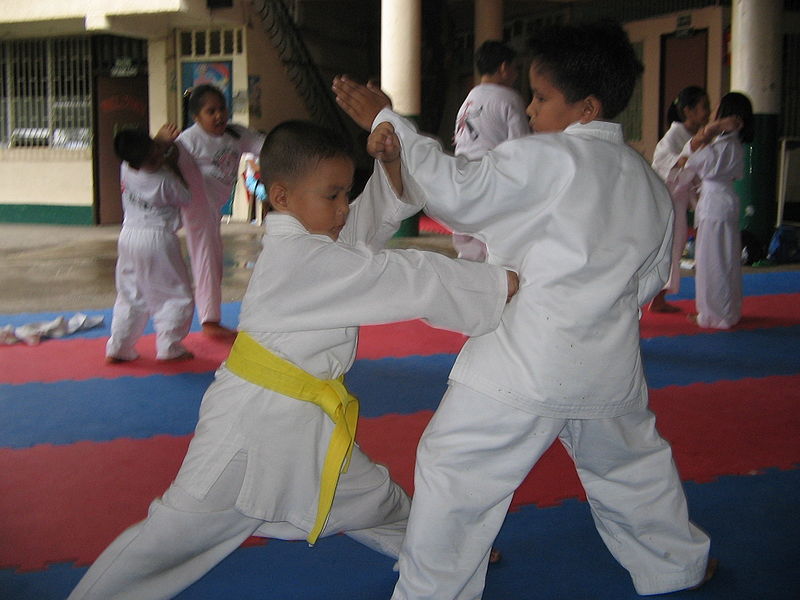
What are the benefits of martial arts? Below are eight reasons you should consider martial arts training as the perfect activity for your kids—or even your whole family.

1. Self-defense. This is most likely the number-one reason most people decide to try martial arts. I hope that you will not find yourself in a life-threatening situation, but having martial arts training gives you the ability to defend yourself if you need to.

2. Focus and improved listening skills. When you challenge yourself to try something you’ve never done before and you accomplish the task, it makes you feel better about yourself. It also develops mental toughness and focus. This mental toughness is a type of courage. It is being able to realize you have doubts and taking them head-on. It is believing you can handle anything that is thrown your way, no matter what. Taking martial arts classes requires a great deal of focus. You have to be 100 percent in. Because of the physical and mental demands martial arts require, you will find that your thoughts wander less and you become present in the moment. Going through numerous mentally challenging drills, techniques, and training scenarios while under pressure is a personal growth experience.

3. Teamwork and positive social interaction. Taking martial arts classes creates lifelong friendships as well as an awareness of others and their needs. Martial arts classes often emphasize the importance of respect, courtesy, kindness, and sensitivity to others. Students learn to use self-control when working with partners during techniques, takedowns, and sparring. As children mature, they find a sense of belonging, a sense of identity. A good martial arts school provides a positive social network and support group for like-minded folks who are focused on personal development and living a healthy lifestyle.

4. Self-esteem and self-confidence. The great thing about martial arts is that you are not competing against anyone else. It allows you to focus on your own self-improvement at your own pace. Students are able to set goals and achieve new rank levels, which gives students a sense of accomplishment, leading to improved self-esteem and self-confidence.

5. Self-discipline. To move up in rank level, students must commit to their training. The harder they work and the more they practice, the faster they will achieve their next goal or rank level.

6. Accountability and responsibility. A martial art does not just teach you techniques and principles that you can use to defend yourself. It teaches you about the power that comes with these techniques and the responsibility that accompanies them, such as knowing when and where to use this knowledge. Children are taught that they are responsible for their actions and to help others who cannot defend themselves. Students are also taught that they are accountable for their peers and instructor for the way they behave inside and outside the dojo. There is a strict code of conduct and level of expectation for martial arts students. There are consequences for their behavior, both good and bad.

7. Improved overall health. Martial arts increase muscle strength, which can help prevent injury from daily activities as well as reduce body aches and pains as you grow older. Regular training sessions increase cardiovascular endurance and allow you to engage in physical activities for longer periods without feeling short of breath. Martial arts practice also helps reduce risks of obesity, improves cardiovascular health, and increases flexibility, speed, and balance.

8. A structured, safe haven for self-growth. Children do not like feeling embarrassed or out of place or that they are stupid because of mistakes they make. A good martial arts program can provide a supportive environment for children to feel safe about making mistakes, learning, and growing. It can also provide guidelines and boundaries to channel their feelings of independence. This structured environment found in a martial arts class sets the necessary boundaries while still providing plenty of room for freedom of expression.

Registration is open now for martial arts and other classes at Mariposa Homeschool Co-op. The spring term begins January 6.

Anna Balyakina
 

Expressive movement for kids

We welcome alternative educator extraordinaire Colleen Sears to the blog to introduce herself and her new Expressive Movement program at Casa de Luz, Center for Integral Studies.
 

Our bodies were meant to move, and we are meant to enjoy being inside them!
—Colleen Sears

Hello, lovely families of Austin! My name is Colleen, and I’d like to tell you a little about myself and my work. For the past 23 years, I have been extensively involved in childcare as well as movement and musical arts. I’ve always been passionate about connecting with people. A graduate of St. Edward’s University in communication studies and a student in counseling and acupuncture master’s programs, I began dancing 31 years ago and working with children 23 years ago.

My most recent accomplishment was assisting in the opening and success of Integrity Academy at Casa de Luz, Center for Integral Studies. There, I created the curriculum for and held the role of mentor for Level 1 (3- to 5-year-olds). Prior to this, I worked professionally in child care via after-school program directing, preschool teaching, substitute Montessori teaching, and in-home care for children as young as 3 months up to 16 years. In 2013 I took a year off of work to focus on dance at Austin Community College, where I studied ballet, jazz and modern dance, choreography, and dance performance.

Though I enjoyed and had success in my experiences at ACC, ultimately, my greatest passion is what I like to call “Expressive Movement.” My definition of this is: movement that involves authentic, personal expression from the soul. It is basically the opposite of technical dance; there is no “right” or “wrong” to this movement. It is movement inspired by the music and what it brings out in the individual, not from an instructor who teaches specific movements.


EXPRESSIVE MOVEMENT: AN AFTER-SCHOOL CLASS FOR AGES 3–15

When: Monday–Thursday, 3:00–5:00pm (later care available if needed)
Where: Casa de Luz, Center for Integral Studies, 1701 Toomey Road, Austin, TX 78704
(Este Room on Mondays & Sur Room on Tuesdays & Thursdays)


Because it is authentic movement, I give each child the space and freedom to move according to what feels good to him or her. The music provided in my classes allows for a spectrum of movements, feelings, and energetic releases.

My theory is this: Children are filled with energy and often don’t have the communication skills that we attain as adults to express how they are feeling; so this class gives them the opportunity to tap into the moment and move in whatever ways their body, mind, and soul wish, without anyone telling them they are doing something wrong. Too often, children are told that they need to “calm down” or what they are doing isn’t “right” in many (but not all) school settings. They need a space that allows them to be their full selves (within physical and emotional safety boundaries, of course).

My intentions and goals for this expressive movement class are the following:

  • Help children connect with their bodies on a deep level
  • Build confidence
  • Help release excess energy and emotions that children don’t have the communication skills to process on their own
  • Provide physical exercise
  • Learn movement, physical expression, and musicality
  • Explore space in relation to ourselves and each other
  • Create a calming effect

Providing a safe space where there is no judgment is crucial to attaining these goals. The only rule of the class is to respect others’ space, bodies, and feelings. It is a very free, welcoming, accepting space for all kids.

I have always had a natural gift of helping others, young and old, to feel comfortable in moving. I have been asked for many years to teach others to dance. It doesn’t feel right for me to teach specific dance moves, but rather to create a safe, comfortable, judgment-free, nurturing space for others to explore their own bodies, emotions, and souls.

On occasion, music according to the chakras will be included to help create balance and grounding. Besides this, the class provides diverse genres and styles of music to inspire different experiences with a flowing, flexible agenda for each class. I usually like to let the children decide what music they would like to hear. If they are at a loss or if some inspiration is needed for music options, I am always prepared with an extensive variety of music to offer them. Costumes and instruments are available to assist with expression, and occasionally children like to create dances and songs to perform for each other!

For questions or to sign your child up for classes (registration available up until noon the same day), please email me at ExpressiveMoves@gmail.com or call/text me at 512-785-8839.

Colleen Sears
 

Sex in the library (books)! How our students helped me develop a plan to handle mature content in their Skybrary

Kendra Fortmeyer is an award-winning author, a teacher at Skybridge Academy, and a graduate student in the School of Information at the University of Texas at Austin. She blogs about her adventures in school librarianship at The Skybrary and graciously shared with Alt Ed Austin this fascinating post about how she handles one of the stickiest aspects of her job.
 

In the summer of 2015, I developed a school library for Skybridge Academy, the small, progressive private school where I’d been teaching English for the last two years. I was (and am) enrolled in a graduate program in library science, the school administration was passionate and supportive, and I used to reorganize my books for fun when I was eight—a perfect fit, right? Though I knew, intellectually, that it would be a mighty endeavor, some part of me was dimly certain that it would be a summer of dancing through the school Maria Von Trapp style and depositing books into the hands of shining-faced students.

Well, let me tell you.

What followed was a summer of less (though certainly a bit of) singing and dancing, and more buckling down and facing question after question I never could have anticipated. I walked away three months and one library later with an immensely deepened respect for librarians. The business of getting books into people’s hands—especially young people’s hands—is one riddled with challenges. Perhaps the most basic of these is: What do we give them to read?

 In the alternative education field, all of us understand the tightrope walk that is navigating the dual identity of responsible educator and champion of intellectual freedom. When do you give your students hard-hitting material? How do you decide they’re ready? This was a unique challenge for me at Skybridge Academy, a combined junior high and high school that serves students in grades 6–12. This population runs the gamut from smart but very (emotionally) young ten-year-olds to 18-year-olds with part-time jobs and coffee addictions. Obviously, books for one age group might not be of interest, or appropriate, for the other. This is what we call having a dual-audience library.


What do public libraries do?
In a public library, all library content is available to all patrons. It’s detailed in the American Library Association Bill of Rights—the librarian’s job is to allow everyone access to all information. A parent may tell his eight-year-old that he may not check out
Sex Criminals. However, the librarian may not do so.
     It’s different in a school library. For one, the parent isn’t present, and many schools have privacy policies so that parents may not even know what their child has taken out. Also, because the library collection has been selected especially for youth (as opposed to a public library, which caters to all ages), there’s an expectation that the materials in the library already are youth-appropriate. In making that collection development policy, the librarian is putting her implicit seal of approval on each book. There’s no expectation that she’s
read every book, but her collection development should be so intentional that she could stand behind every single book in a challenge (and she certainly wouldn’t put Sex Criminals in her collection).


How could we properly serve users at all stages along this development spectrum? There are a few options:

  1. Shelve all materials for all ages together, and trust students to choose material that is appropriate for them developmentally.
  2. Shelve all materials together, but label “mature” content (i.e., content that you’ve identified in a written policy as not appropriate) with stickers or other signifiers. Only allow older students to borrow these materials.
  3. Keep “mature” content in a secured closet or other locked area that older users may access with teacher permission.
  4. Do not keep mature content in the library at all; students may access such material at home or from a public library.

Frankly, none of these options sounds great. The first two put an awful lot of trust in 11-year-olds to not hang out in the library at lunch and giggle over naughty bits of lit; the third stigmatizes material that may be developmentally important for high schoolers (like “first time” sex narratives, or stories in which characters fight to recover from sexual abuse) in the manner of the XXX back room of a video store. And that fourth one—the so-called safe route? It cripples your collection by making it irrelevant to teens who may not be able to get that kind of information elsewhere, thus gutting your own mission statement.

Not the vibe we’re going for. (image credit: yelp.com)

Not the vibe we’re going for. (image credit: yelp.com)

To solve this dilemma, my director and I set aside abstraction and philosophy and took a more radical, direct approach: we talked directly to the students. Enter Oleanna, Rose and Tav [names changed to protect the children], three of our high school girls and most vocal readers (and, as a result of this discussion, the newly minted Student Library Council). After about an hour, the council ultimately decided this:

  • The Skybrary will contain material suited for teens only, which can be borrowed only by high school students, as well as middle school students whose parents have given written permission.
    • This allows developmentally appropriate students to have access to the material. It also protects this material from being challenged (librarian-speak for “attempted censorship or banning”) by the parents of younger students who don’t want their children reading that material.
  • The material will be kept on a shelf in the office marked “Mature Readers.”
    • The school’s office is a walk-through room directly outside of the library, and is almost always overseen by the co-directors or an administrator. This allows the administration to enforce the high-school only rule.
    • Additionally, because this is a high-traffic space, it is more difficult for kids to clump up and giggle, thus decreasing the self-consciousness of those who may want to borrow the material.
       
Beautiful, Orpheus-inspired book for high schoolers; too much sex and teen drinking to endorse it for middle schoolers.

Beautiful, Orpheus-inspired book for high schoolers; too much sex and teen drinking to endorse it for middle schoolers.

The student council members also suggested that some books with sexual content may remain in the main collection if sex is discussed abstractly, or if the writer employs the “fade to black” narrative lapse that eclipses the actual sex scene (such as in Twilight or Divergent, where sex occurs in the timeline of the book but is not described for the reader). Books that discuss sex explicitly would only be appropriate for the mature readers section. Additionally, books that take a casual, more adult attitude toward sex (as opposed to treating sex with the great importance that many “first time” high school narratives do) are questionably not appropriate for the library and will be handled on a case-by-case basis. (Fifty Shades of Grey and Lolita? No way.) And again, this isn’t preventing the students from obtaining those books—they can easily do so at a public library. However, as an adult responsible for their education, I don’t feel that I can so actively endorse their consumption of these materials as to put the books in their hands myself.

Both the director and I came away exceedingly impressed with the intelligence, eloquence, and depth of consideration of these young women. Their solution was mature and responsible and, most importantly, spoke deeply to the needs that they felt as teen readers and learners. Sometimes, when puzzling over how best to serve your students, it’s powerful and formative to set down the books on education and librarianship, break out of your own brain-box, and talk to those students. They’re just as invested in their learning community as you are, if not more! And in libraries, valued, invested readers will become your greatest advocates: they will do more to build a community than you and your books could ever do alone.

Kendra Fortmeyer
 

Teaching improv

Carrie Carter recently wound up her work as an intern at The Hideout Theatre’s summer camps and teen intensives in downtown Austin. She graciously agreed to share some of the lessons she learned there as a young improv teacher.

When I first found my internship at The Hideout Theatre’s youth program, I thought it must be too good to be true. When I told my friends about it, they agreed.

During the school year, I attend Mount Holyoke College in South Hadley, Massachusetts. I study English and Educational Studies and am in the teacher’s licensure program for early childhood education. I love all of my classes, my professors, and fellow students whom I have the privilege of learning beside. The thing I love most about Mount Holyoke, however, is that the learning goes beyond the classroom. Education spills over into the organizations, traditions, and relationships one finds there.

Mount Holyoke is where I stumbled into improv. My best friends said, “You can totally do this, and if you don’t know how, we’ll teach you.” They allowed me to be brave, and I trusted them. So, lo and behold, they did teach me how to do improv. I trusted them because it was their best friends who taught them how to do improv. It is this chain of teaching each other that makes Mount Holyoke a wonderful place.

The college encourages this not only vocally but also financially. By that I am referencing Mount Holyoke’s Lynk Universal Application Funding Program, in which the Career Development Center agrees to fund students for an internship that pertains to their future career. Without this program, I would not have been able to study this summer at The Hideout Theatre. I wanted to make sure that in this blog post I expressed my extreme gratitude to the school that I attend.

So, I found this amazing internship, one that somehow encompassed two things I love—teaching and improv—and it turned out to be way harder than I ever expected. Before starting I thought, “I’ve worked at plenty of summer camps before: day camps, art camps, even an eight-week sleep-away camp. I’ve also done improv and am pretty okay at it. How hard can this be?”

Well, just because you are good at two things individually—no matter how many principles they share—doesn’t mean you can do them both at the same time. I found myself in a situation that I had never been in before: I had been “trained” in my program at school to follow the guidelines of what students are required to learn by the state when making lesson plans. But when teaching improv, that of course doesn’t exist. Where was my checklist of what the children must learn? What if I taught the principle of being obvious before I taught students how to agree with each other in the “Yes, and . . . ” lesson?

Teaching improv made me realize how reliant I had become on structure, and how it may have been squelching the growth of both my students and myself as a teacher in the classroom. When I went in, I found myself asking students questions and then answering them myself if they didn’t understand after a few moments. It is so obvious to me, now that I reflect, how silly and counterproductive that is—but, again, I had become caught up in the “checklist” that teachers often begin to follow religiously, and had forgotten about the needs of the students right in front of me.

There are a lot of “unknowns” in teaching. Your students might understand what you are teaching themin the way that you have written down on your lesson plan, or they might grasp the concept in ways that only they truly understand. Working with improvisers who are also educators this summer taught me how to dive into all of these “unknowns” and get comfortable with them. Whether you are doing improv yourself, teaching improv, or teaching something completely different, you never know what will happen next. And isn’t that the most fun part?!

Carrie Carter
 

An arts-based approach to literacy

In her second contribution to the Alt Ed Austin blog, art educator Heidi Miller Lowell discusses one of the inspirations for the new arts-based literacy program she is co-teaching this fall. You can read more about Heidi’s work on The Austin Artery website and blog, where an earlier version of her essay appeared.


Five years ago, I snuck into a crowded room in a Baltimore hotel, unaware that my ideas about education would be forever changed. Researcher Beth Olshansky became one of my heroes, as she introduced me to a constructivist model of education. I wished someone had taught me writing and reading in such an exciting and low-pressure way.

Beth Olshansky is the author of the book The Power of Pictures: Creating Pathways to Literacy Through Art and numerous published articles based on her years of research at the University of New Hampshire. She observed children who had minds filled with vibrant imaginings and stories but who did not like writing and reading.

This arts-based literacy program integrates children’s visual imagery into every stage of the writing process. Classes study the illustrations of famous authors and are introduced to art materials from the first day of class. Unlike traditional methods, this gives students a chance to tap into visual, kinesthetic, and verbal modes of thinking. Many children who have a hard time writing in other classes find that words come to them as they create art pieces for their books.

Children are motivated to finish the entire writing process so they can then create hand-bound books, complete with their own photographs on an author’s page. Each finished book is presented to the class, and the learner is invited to share his or her work in an author’s circle.

Research has shown that the learners in the arts-based literacy program display fuller expression than students in control groups. Personally, I have used this model to teach camps over the last several years, and I have been amazed with the results. Parents and students are often astonished by the quality of work produced in this program.


and The Austin Artery are excited to announce Austin’s very first arts-based literacy program beginning at Four Seasons Community School this fall. The lindergarten and first grade students will spend their Tuesday and Thursday afternoons splitting time between a quiet writing space and the art studio as they produce their own hardbound books and plays. There will even be an option for a limited number of homeschool students (grades K–2) to join me and my co-teacher, Jen Bradley.

For more information on arts-based literacy programs, you might want to check out visit Beth Olshansky’s website. You may also contact me at The Austin Artery for more information.

Heidi Miller Lowell