New graphic novels workshop for high school students and adults

GraphicNovels.jpg

Jess Hagemann is an award-winning author and accomplished biographer. She owns and operates Austin’s premier ghostwriting service, Cider Spoon Stories, through which she helps seniors, veterans, small business owners, and others write their life stories as books. She’s helping us celebrate National Novel Writing Month (#NaNoWriMo) with this guest post about her upcoming workshop, Graphic Novels and Novel Graphics.


I was six years old when the Bosnian War broke out in 1992. Protected in my little corner of Kansas, I watched Sesame Street, not the news. I didn’t know that 100,000 people were dying in this artificial conflict, the result of one group of people asking for their independence, and another group of people deciding they had no right to live at all. The largest European instance of ethnic cleansing since the Holocaust didn’t end for three bloody years. By then I’d graduated from PBS to MTV: a rapid coming-of-age that left me wise to the ways of pop culture—but not the politics to which pop culture responds.

It wasn’t until college that I read Joe Sacco’s Safe Area Gorazde, a graphic novel published in 2000 that recalls the journalist-author’s four months spent in the middle of the conflict. Based on the stories of several Bosniaks that Sacco interviewed in Gorazde between 1994 and 1995, the extent of the violence is revealed through a series of graphic vignettes and black-and-white illustrations more powerful than any photo essay. I learned then what it means for an author to give voice to the voiceless. For an artist to render truths we couldn’t otherwise have known. For trauma victims to share their stories, and finally be heard.

This eventually led me to start Cider Spoon Stories, a ghostwriting and editing service, in 2014. Ghostwriting means that if you have a story to share, but don’t have the time or confidence to write it down, you’ll tell it to me, I’ll write it for you, and you get the credit. It’s just that important to me that firsthand experiences and critical truths be disseminated.

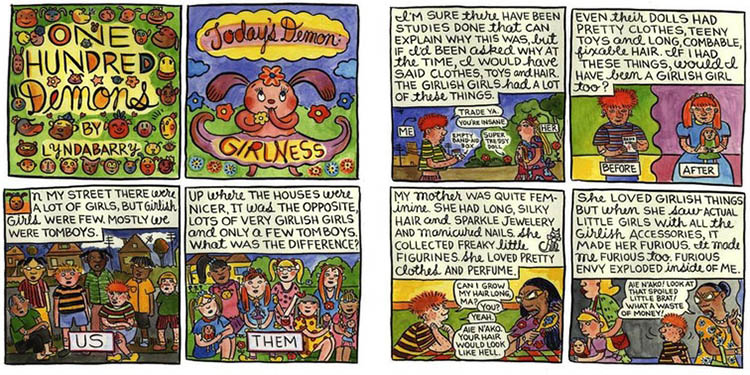
When I’m not writing, I’m teaching other people to write. This month, the topic is (naturally) graphic novels. On Saturday, November 18, we'll be discussing Lynda Barry, Marjorie Satrapi, Mat Johnson, Mark Danielewski, Chris Ware, Tom Phillips, Sophie Calle, and more. We'll look at how they use illustration, obfuscation, and found objects—all layered with (or revealing) text—to create beautiful, whimsical, or disturbing stories—some for the social good, some for the sake of telling a dang good tale.

If you want to learn to create engaging, active characters; develop coherent narrative around those characters; write detailed, scene-by-scene story outlines; and script through page breaks and panel descriptions, register here. The class is appropriate for ages 16+.


Jess Hagemann

Nurturing young writers and entrepreneurs through NaNoWriMo

Staffmembers at The Joule School in Cedar Park, just north of Austin, join us on the blog today to explain the school’s approach to National Novel Writing Month and the ways it has changed how its young students view writing, entrepreneurship, and themselves.


When first-grader Ripley Martinez walked into a school assembly, she had no idea she would soon be showered in cash. Within 30 minutes, she was jumping up and down with joy as $76—all her own—rained down around her onto the floor.

Ripley celebrates her writing and entrepreneurial achievements at The Joule School’s NaNoWriMo kickoff

Ripley celebrates her writing and entrepreneurial achievements at The Joule School’s NaNoWriMo kickoff

That's how much Ripley made selling her novel since last November. You read that correctly: a 5-year-old had written and marketed her own book. Even more impressive, Ripley’s book, Lollipop Girl in a Lollipop World, had just broken the school’s record for number of copies sold. She was surrounded by cheering classmates engulfing her with hugs, and her teacher was crying with pride.

The Joule School, a progressive K–8th private school in Cedar Park, participates each year in the National Novel Writing Month (NaNoWriMo) Young Writers Program. You might be familiar with the adult competition, in which anyone can attempt to write a 50,000-word novel in 30 days. The NaNoWriMo organization offers suggested word-count goals and a certificate for grade-school students who complete a modified version of the competition.

The Joule School does NaNoWriMo in a big way. First, it raises the bar—increasing the word count minimum for their students by up to 3,000 words per grade level. Suggested word-count goals for Kindergarten, when Ripley wrote her book, range from 20 to 200 words, but she was encouraged to hit 500. (This is equivalent to the “advanced” category for second-grade students in the national program.) If students rise to the challenge, Joule celebrates by arranging to have their hard work published and placed for sale on Amazon. Then, at the beginning of every November, authors from the previous year are recognized at an awards ceremony and handed cold, hard cash—their royalties from a year’s worth of online sales.

Of course, merely placing the book on Amazon doesn’t sell copies. Ripley publicized her book all over Austin, wherever she went. Her mother reported, “I went to get my oil changed and stepped outside for a few seconds. When I came back, Ripley was encouraging the receptionist to buy her novel.” (She even went behind the desk and pulled up the link to make the checkout process easier!) Her sales pitch was simple: “Can you please buy my book? It’s on sale on Amazon if you look up ‘Ripley Martinez.’” Determination and a dash of innate childlike charm did the trick, and now Ripley has 76 more bucks to spend on “Hatchimals, LOL Dolls, and . . . more books.”

Ripley’s novel is about “a candy girl adventuring and finding her friends,” according to the young author. When asked where she derived her inspiration, she said simply, “Candy.” (A glimpse into the mysterious creative processes of a visionary.) Her teacher, Meredith Allen, said Ripley was encouraged by meeting—and then exceeding—her incremental word-count goals. All over the school, individual floor-to-ceiling progress trackers (similar to a fundraising thermometer) were plastered on the walls. At the end of each day, Ms. Allen would type up her students’ handwritten work and let them check their totals. (Incidentally, this is not unlike Margaret Atwood’s writing process.) She says the students felt gratified when they used the word-count tool to see how much they had accomplished each day. It quantifies their success in a way that is readily accessible to them.

Students’ published works on display at The Joule School

Students’ published works on display at The Joule School

The Joule School’s approach to NaNoWriMo develops more than just literacy skills. As the students complete the process, they learn about gross versus net income, active versus passive income, marketing, and other elements of entrepreneurship. The entire student body, from three-year-olds to eighth-graders about to matriculate to high school, can opt in. Ripley’s novel grossed $285 in 12 months, but she knew she would have to pay publishing costs and taxes. She also knew that the money she would get on November 1st was all her own, free and clear. What better way to teach a young child about net profit?

More importantly, however, students at The Joule School associate joy, achievement, and success with the act of writing—something that can be a hard sell in the elementary grades. “I’ve seen kids go from reluctant writers to enthusiastic just by completing one round of NaNoWriMo,” said Madison McWilliams, the school’s founder and principal. “You see their whole attitude change—it’s suddenly I CAN do this. Once they start believing in themselves, we can roll that over to the classroom. Suddenly the kid who wasn’t such a huge fan of writing is the most attentive student in Language Arts.”

These days, Ripley often chooses her own book to read as her bedtime story. In doing so, she generates new ideas and thinks of ways she could improve her writing. One year later, she’s decided to tackle a more complex subject: this November, she’s working on a rags-to-riches tale of redemption about a young girl living in poverty. Soon, you’ll see it on Amazon. Soon, you might just see a young girl around town asking you to buy her second book.

The Joule School staff

Redefining “merit” in our education system

OneHeart_working-outside_blog.jpg

Kristin Kim, founder of Austin OneHeart School, has dedicated the past 20+ years to creating a new paradigm for learning. Along the way she has served in multiple roles: educator, online education company CEO, Harvard program director, attorney, entrepreneur, nonprofit board member, parent, and many more. She joins us on the blog today to announce a new merit-based scholarship program at her school and to explain why she decided to create it. [The school website is under maintenance this weekend, so if you get an error message, please check back in a couple of days.]


Starting a new alternative school in Austin has taught me a lot. Austin, with its freedom-loving spirit and progressive mindset, is an ideal environment for alternative education. As many of Austin’s alternative school founders have shared with me, it takes hard work and love to create and sustain a school. And I am happy to add my voice and vision and serve families who are seeking more than what traditional schools offer.

OneHeart_on-the-floor-together_blog.jpg

The most enjoyable part of my job is meeting and getting to know students and families who leave the conventional school system. The students are incredibly creative, inquisitive, and intelligent, and they are an inspiration for me. I treasure sharing our respective learning journeys, and I respect their boldness. It takes guts to listen to one’s heart and go against the current!

As I thought more about our new school, Austin OneHeart School, and its mission, the more I wanted to celebrate students choosing alternative education and their amazing talents. The National Merit Scholarships, for example, recognize and award academic achievements, but they measure academic achievements almost solely by grades, ranking, and test scores. Just as alternative education has redefined “learning,” I want to change how we all view “merit” and celebrate excellence that goes beyond grades and test scores.

I am happy to announce that Austin OneHeart School will offer full and partial merit-based scholarships for its Upper School (11–18 years) starting in early 2018. The OneHeart Scholars will be selected based on their scholarly achievements, extracurricular leadership, and good citizenship.

Scholarly achievements will include not only school evaluations or their equivalents for homeschoolers but also a student’s record of self-directed and holistic learning. We will consider academic curiosity and innovative ways a student has engaged in learning.

OneHeart_playing-in-the-grass_blog.jpg

Extracurricular leadership will include activities outside the school, such as athletics, student-led volunteer work, and charity work. We want to see how a student has channeled his or her energy outside of school.

Lastly, good citizenship will include anything students have done to better their community in some way. We are interested in finding what they care about in their environment, in and out of school.

I believe these merit-based scholarships will also make a statement to college admissions offices. Yes, alternatively schooled students are also merit scholars, and it’s time we recognize and celebrate their amazing accomplishments!

For more information on the OneHeart Scholarships, please contact Kristin at open@OneHeartSchool.org. The deadline for applying for a 2018 Scholarship is November 30, 2017.

sansori-banner-home_cropped.jpg

Austin OneHeart School is located in South Austin, at 8601 South 1st Street (near Slaughter), and offers lower school (ages 3–6) and upper school (ages 11–18) programs. Austin OneHeart School is a part of Sansori.org and is not affiliated with any religious, ethnic, or political organization.


Kristin Kim

What should I be listening for?

Emily Cohen-05.jpg

Guest contributor Emily Cohen, MA, CCC-SLP, received her Master’s of Speech-Language Pathology in 2008 from Eastern Michigan University. She is a Hanen-certified SLP specializing in working with children with early childhood language delays. Emily owns a private practice called Tandem Speech Therapy, where she provides in-home services in south and central Austin, Westlake, and Dripping Springs. You can read more about topics related to speech and language development, including her series Playing with Purpose, on her blog.


As a pediatric speech-language pathologist, I get questions from parents on a nearly daily basis about speech and language development. They are trying to determine if their child is a “late talker.” While it's true that all children develop at their own rate, there is a set of developmental milestones that I look for in children.

First and foremost, if you suspect your child is struggling, then trust your gut. Some kids will catch up, and others won’t. How do you know, though, when your child would benefit from seeing a speech-language pathologist? For quick reference, I have developed the 1, 2, 3 Rule. This rule states that at 1 year old, a child will use 1 word or single words; at 2 years old, a child will use 2-word phrases (e.g., “mommy go”; “eat apple”). And at 3 years old, a child will use 3 or more words together to form simple sentences.

The same applies for following directions. At 1 year old, a child will follow a 1-step instruction, such as “go get your ball.” At 2 years old, a child should follow a 2-step direction, like “go get your ball and bring it to daddy.” And at 3 years old, a child should follow more complex, multi-step directions.

More specifically, it is typical for an 18-month-old child to use at least 20 words and have different types of words in their vocabulary. This includes nouns (ball, book), verbs (eat, sit), and social words (hi, bye). At 2 years old, a child should use at least 100 words and combine words into 2-word phrases. The phrases can be combinations the child puts together, like “eat apple.” This does not include common phrases such as “all gone.” A toddler (18–30 months) who has limited vocabulary based on his/her age is often a late talker.

A late talker can have difficulty specifically with spoken or expressive language. It is important to keep in mind that children who are late talkers will have typically developing play skills, motor skills, comprehension (receptive language), social skills, and thinking skills. The idea that “boys talk late” is, in fact, a myth. Development is not gender specific. Boys and girls develop at the same rate despite anecdotal experience saying otherwise.

Emily Cohen-47-2.jpg

What should you do if you suspect your child is a delayed with their speech and language skills?

Your first step is to contact a speech-language pathologist like myself. It's never too early to begin intervention. In fact, research indicates the importance of early intervention (i.e., before the age of 3 and as early as you suspect your child is experiencing challenges) for increased long-term success. Lots of speech and language deficits remediate very quickly, and others take time. If you are worried, seeking the expertise of a local SLP as early as possible is the best pathway to language development for your child.

To get started working with your child now, try one of my favorite strategies, called “Offer a Little Bit, Then Wait”:

  • By giving your child just a few crackers, instead of the whole package, you give your child an opportunity to request more.
  • After you have given those first few crackers, wait. Be sure to have the rest of the crackers in sight so your child knows there is more to come.
  • When your child gives you a message that they want more, provide them with a few more crackers. Pay attention to different types of messages. Some children may use eye contact or eye gaze, while others may use words or word approximations.

By immediately giving your child more crackers, you reinforce the communication. The more positive reinforcement your child receives for communication, the more they will send messages to you!


Emily Cohen, MA, CCC-SLP

The Alt Ed Teacher Exchange

We invited Gina McMurray to the blog to share a wonderful new initiative for alternative educators in the Austin area. Gina works as a mentor at Integrity Academy and is volunteering her time to coordinate this effort. If you know educators at alternative schools who could benefit from the exchange program, be sure to pass along this post! 
                        

Collaboration and idea sharing among mentors are daily events at Integrity Academy.

Collaboration and idea sharing among mentors are daily events at Integrity Academy.

We are all on the same mission: to change how we as a culture approach education.  Let’s join together in a new form of collaboration with a Teacher Exchange Program!

Mentors/teachers/guides at two different schools can switch places for the day, and learn—through direct interaction—what makes those schools awesome! We will experience what is successful and unique at another alt ed school and bring it “home”: putting into practice new ideas that we gain from other educators and learning environments.

Integrity Academy and Whole Life Learning Center are spearheading this movement, and we are in the planning stages of our first exchange date. One of our mentors will spend the day at WLLC, while one of theirs will come work with us. We all get the benefit of sharing teaching ideas and alt ed culture—without having to hire a sub!

If you are interested in participating in a Teacher Exchange day, please contact me at gina@integrityacademy.org, and I will help facilitate it. Thank you!


Gina McMurray
 

College admissions for alternative schooled, homeschooled, and unschooled applicants (Part 2)

Guest contributor Antonio Buehler, founder of Abrome and a highly experienced college admissions consultant, returns to the blog today with Part 2 of his extensive guide to college admissions for unconventionally educated students. You can learn more about Antonio and read Part 1 of this essay here.


Four-year Colleges vs. Community Colleges

University of California, Berkeley

University of California, Berkeley

Community colleges are a fabulous higher education alternative for both traditional and non-traditional applicants who are concerned about the costs of college or the distance from home, or who may not be able to gain immediate access to more selective universities. Unfortunately, many people (especially in more affluent communities [and charter school networks]) seem to look down on community colleges as an option because they do not carry with them an air of exclusivity. However, while many applicants and parents may find themselves on the outside looking in after the college admissions season, for many top state universities, community college is an excellent end-around into school, with many offering automatic admission based on GPA.[2] Community colleges have particular leverage among many elite public universities, such as Berkeley and UCLA, where upwards of 20 percent of the undergraduates come from community colleges. Although the percentage of community college transfers at the University of Texas at Austin is lower than at the California schools, over 40 percent of transfer students into UT-Austin come from community colleges.[3]

 
When to Apply

Sooner is always better than later in the admissions game. While some recommend holding off until Regular Decision (historically January 1st or 15th) so that applicants can build up their bona fides, it is extremely rare for someone to add anything to their application in a couple of extra months that will seriously move the admissions committee. The cost of delaying until Regular Decision is missing out on the opportunity to apply Early Decision, Early Action, or Restricted Early Action. And the chances of admission at most schools are substantially higher for those who apply early rather than later.

Many counselors and consultants also advise applicants with financial need to apply Regular Decision because they believe that applying early locks them into a school with no opportunity to compare financial aid offers. This is also a misplaced argument. First, those with the most financial need are most likely to benefit from the free room, board, and tuition that is offered by the most selective colleges with the most generous financial aid (e.g., Harvard, Princeton, Stanford). Second, all schools allow their applicants out of a binding admission if they can demonstrate that they cannot afford to attend. Third, many schools are need blind during early admissions, but become need aware later in the admissions process, meaning those with need are even more disadvantaged by waiting to apply.

It is also worth noting that many applicants can have multiple bites of the early admissions apple. Early Decision (ED) limits applicants to applying to only one school, and they must enroll if accepted (or forgo college altogether unless they can be released from their commitment due to financial or other exigent circumstances). Some of the more exclusive universities that have ED include Brown, Columbia, Dartmouth, and the University of Pennsylvania, as well as some of the most exclusive liberal arts colleges, such as Amherst and Williams. However, some schools also have an Early Decision Round 2, which allows people who fail to earn admission to their first-choice ED school to apply to another ED school. Although this is no longer an “early” admission, it is binding. More exclusive schools with an ED Round 2 include NYU, Pomona, Swarthmore, Tufts, Vanderbilt, and Wellesley.

Instead of Early Decision, applicants can choose to apply Early Action (EA), which does not bind them to the school should they gain admission. This allows them to apply with an increased likelihood of admission (although not as much of an advantage as ED) without taking away other potential college options. Some of the more selective schools with an EA round include CalTech, Chicago, Georgetown, and Notre Dame. Finally, a small number of schools offer Restrictive Early Action (REA), where applicants can apply early and get a non-binding response but can only apply to one school early. This means that they can apply to either a bunch of EA schools, or one REA school, but not a mixture of the two. The four most selective universities in the country happen to offer REA: Stanford, Harvard, Yale, and Princeton.


Crafting a Story

Another tremendous advantage of applying as a non-traditional applicant is that it is remarkably easy to come across as interesting, accomplished, and intellectually curious to the admissions committee. Most conventionally schooled students simply do not have time to be interesting, accomplished, or intellectually curious. They are stuck in required classes in school for 5 to 7 hours per day for 180 days per year for 13 years of their lives, in addition to all of the hours they spend on expected extracurricular activities and sports, required service hours, and the many more hours of homework and studying needed to finish at the top of their class. There is a reason why most high achievers are perpetually exhausted: there is not sufficient time to sleep, especially for those who come from feeder high schools and the schools that wish they were feeder schools.

On the other hand, non-traditionally schooled applicants are able to lead remarkable, interesting lives. It is not a given that they will, especially for those who attend schools where they have little to no say over how they spend their time, or for homeschoolers who are forced to work though boxed or online curriculum. But when young people have the freedom and time to take learning down pathways that meet their needs, they get to engage in the type of deep, meaningful, and enduring learning experiences that turn them from just another applicant with good numbers into someone who captures the attention of the admissions committee as well as future classmates. When those experiences are coupled with a level of intellectual vitality that rarely survives the K–12 schooling process (because of the coercive nature of schooling), colleges are eager to offer admission and bring these applicants onto campus.

It is not sufficient to have a great story, however. An applicant must also be able to tell a great story, and that is where the college essays and recommendations come in. Telling that story in a way that will move an admissions committee that reads tens of thousands of applications is challenging. It is why a select number of college admissions consultants charge over $20,000 to their clients. But non-traditionally schooled applicants typically have ample essay fodder to work with, and they typically have a sense of purpose or a mission in life that allows them to string that essay fodder into a powerful and compelling personal story.


Decision Time

The University of Texas at Austin

The University of Texas at Austin

Almost as stressful as the application process is the decision process once the offers begin to roll in (if an applicant is not bound by an Early Decision offer of admission). Non-traditional applicants have a tremendous advantage over their traditionally schooled peers in picking a college and in taking advantage of the resources available to them at the next level. This is because traditional school applicants have been fighting to get to the top of their high school class, because ranking ahead of peers is deemed necessary to success, and now they are moving on to 13th grade with a vision of climbing to the top of their college class as well. To too many traditionally schooled students, education is about satisfying teachers and competing against peers, as opposed to learning.

Non-traditionally schooled young people have more likely seen education as a collection of experiences that have allowed them to understand themselves and to grow as intellectuals and humanitarians. Education to them is an opportunity, not a competition, and because of that perceived opportunity they are more likely to choose the college that is the best fit for them, as opposed to obsessing over college rankings. They are also more likely to take advantage of the many opportunities at college that they can use to continue to grow, as opposed to being worried about going down the same path as all of their pre-med and Goldman Sachs–bound peers.

Good luck to all the non-traditionally schooled young people out there who are heading into the college admissions season. You have tremendous advantages in the admissions game, but more importantly, you will have tremendous opportunities to make the most of your college experience.
 

“Great educations aren’t passive experiences; they’re active ones.”
—Frank Bruni
 

“Far more significant than where you go to school, however, is why and how.”
—William Deresiewicz


      2. For example, the University of Virginia is one of the most prestigious public schools, often considered a “public Ivy,” and offers Virginia community college graduates who meet very reasonable standards a guaranteed admission into UVA. https://admission.virginia.edu/vccsguide

     3. Conversation with UT-Austin admissions office, August 1, 2017.


Antonio Buehler