How to find a better-fit learning environment for your twice-exceptional child

DeanneR_girl-wind-web.jpg


Guest contributor Deanne Repich is Co-Founder and Head of School at Great Minds Learning Community, a three-day micro-school tailored to the unique needs of gifted and twice-exceptional kids, featuring personalized, differentiated learning; a sensory-friendly environment; key supports for your gifted or 2e child’s unique gifts and challenges; and student-driven, project-based learning in an environment that nurtures the whole child intellectually, emotionally, and socially. An educator for almost two decades with experience in gifted and 2e kids, she is a Positive Discipline in the Classroom certified educator, a member of SENG (Supporting the Emotional Needs of the Gifted), and a mom to two twice-exceptional children. You can learn more at greatmindslc.com or contact Deanne directly at deanne@greatmindslc.com.


Does the following scenario sound familiar to you? Your bright and quirky twice-exceptional child, your amazing child who is destined to change the world with his ravenous curiosity, out-of-the-box thinking, and deep dives into subjects passionate to him, is surviving, not thriving, in his current school.

Take a deep breath. It’s okay. The signals are clear. It’s time to consider a new learning environment for your child, one that is a better fit.

Before we move forward, what do I mean by twice-exceptionality? Twice-exceptional kids (also known as 2e) are kids who are intellectually gifted and have a learning difference (differently wired), challenge, or disability. Some common twice-exceptionalities/challenges/learning differences are dyslexia, ADHD/hypermobile, sensory processing challenges, vision challenges, dysgraphia, dyscalculia, chemical sensitivity and allergies, autism, Asperger’s/high-functioning autism, anxiety, and social difficulties.

When considering a new school for your 2e child, here are some helpful questions to consider:
 

Does my child learn best in small or large class sizes? Many 2e children do better with small class sizes. Small classes provide the individualized attention necessary to promote differentiated learning, get support for lagging skills, and fuel their immense intellectual curiosity while minimizing sensory overload.
 

In what type of sensory environment does my child learn best? Does your child like music playing on headsets while learning? Playing with fidgets? Frequent breaks to be active? Make sure the school culture has a built-in daily sensory “diet” individualized for students with specific tools for sensory challenges as part of its core school culture.
 

What is my child’s preferred mode of displaying mastery? Choose a school culture that truly celebrates your 2e child’s differently wired brain—not just in words but in its actions—by allowing her to display mastery in a way that meshes with her learning style a majority of the time.

Think touch-screen laptops and typing for those who struggle with handwriting; think video portfolios or hands-on visual models for visual thinkers; think oral reports and songs for auditory learners; think movement-oriented projects for ADHD learners, to name just a few options. Lagging skills need to be practiced separately and to gradually be integrated into displaying mastery in “just-right” bite-sized chunks.

In what ways does my child like to be challenged intellectually? Seek a school that provides student choice and has a core value of deep dives into student passions. Think student-driven playlists, project-based learning, and differentiated learning so your child can move at his own pace. It’s also important for your child to be with true intellectual peers, not just age mates, to provide intellectual stimulation and a sense of community with like-minded kids.

Does the school nurture the whole person? Does the school incorporate social-emotional learning into its daily structure and interactions, every day, not just as a one-hour weekly add-on? It’s a matter of “walking the walk” and not just “talking the talk.”
 

DeannR_boy-light-bulb-web.jpg


Does the school specialize in intellectual, emotional, and social support for 2e kids’ unique needs? Make sure that the school has experience in supporting the unique intellectual, social, and emotional needs of gifted and twice-exceptional children, as they have very different needs in many respects from other kids.

Many non-traditional schools (and some traditional ones) provide student choice and small class sizes. However, you need much more than that for a 2e child. For 2e kids, a completely self-directed learning experience without specific support structures for their unique 2e needs can be a poor fit.

It is a school’s job to both nurture the intellectual thirst and address challenges that come with a 2e child’s immense intellectual capacity and uneven development, to work as a co-collaborator with your 2e child. Ensure that the school offers key supports for a 2e child’s academic, emotional, and behavioral challenges due to “lagging skills and unresolved problems,” as Dr. Ross Greene, author of Raising Human Beings and The Explosive Child, describes.

Think specific supports for phonetics, fluency, and comprehension for a dyslexic child, for example. Think specific processes to uncover lagging skills and unresolved problems in social communication, self-awareness, and executive functioning skills for behavioral problems. Think vagal tone exercises for 2e kids who are anxious, have sensory overstimulation or social difficulties, and are stuck in fight/flight/freeze mode, to name just a few examples.


Is the school just “accommodating” or actively celebrating my child’s way of thinking and being? It’s key for the school to have a built-in culture of celebrating differently wired bright and quirky kids, not only “accommodating” them and trying to make them be like other kids. You want your 2e child to be accepted and nurtured, not just tolerated. Celebrate the differences!


By finding a school that is in step with your 2e child and her unique gifts and make-up, together you, your child, and the new school can help her truly thrive!


Deanne Repich

Autism and the art of fierce love

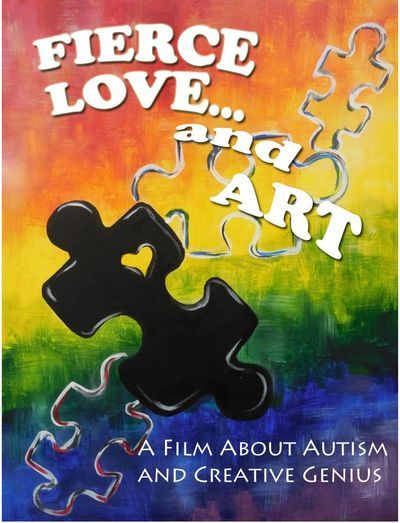
As guest blogger today, we welcome Dr. Laurence Becker, an educator and advocate for the autistic community and creative savants, who is also an award-winning film director and producer based in Austin. Dr. Becker first tackled the subject of autism and artistry 35 years ago in his film Eyes Wide Open, about artistic savant Richard Wawro. His new film, Fierce Love and Art, premieres on Mother’s Day, Sunday, May 13, at 7pm at the Performing Arts Center of Austin ISD. You can learn more and support the film via the website. You can also see art related to the film from February 25 to April 8 at Hyde Park Bar & Grill.
 

FierceLove_film-poster.jpg


To journey and to be transformed by the journey is to be a pilgrim.
—Mark Nepo, The Book of Awakening


My real mission with Fierce Love and Art is to open the eyes of the world. We need to realize that all of us are related, and we can all make the world a better place. In the film we meet individuals with autism and other disabilities who have been able to transform their own lives and contribute to their communities through art, music, and words as a result of powerful support and love from parents and grandparents.

The film explores the lives of seven savant visual artists, a savant musician, and an author and minister who are living extraordinary lives today because their families used art as a means of connection, bringing them home from solitary confinement on “Autism Island.”

Some of the incredible people we meet and spend time with in the film include savant musician Tony De Blois, who plays 23 musical instruments and sings in 11 languages. Tony is a Berklee College of Music graduate who plays in a jazz band and composes original music at his home in Boston.

Another great story I’m delighted to share is about Houston native Grant Manier, whose autism and obsessive repetitive behavior led him to repeatedly tear paper. With encouragement from his mother, Grant soon began collecting and recycling bits of paper, creating amazing collages, which he calls “coolages.” The artworks are a form of therapy for Grant but also a contribution to the eco-art movement, as he recycles materials and helps us all look at them in new ways. Grant now also participates in educational outreach to share his vibrant, colorful art and point of view with others. His slogan is “Different is More.”

Sadly, one of the young people we had the honor to work with for the film passed away in 2016 as a result of an injury connected to her epilepsy. Kimberly Dixon was a warm and lively spirit who wrote poetry and painted as a way of connecting with her family and community, despite being nonverbal in a verbal world.

I’m eager to have everyone join us in May to see these amazing stories. To me they’re a real testament to what happens in the lives of children with autism when their families fiercely take charge of their development—and also a testament to the power of art in all our lives.

Laurence Becker, PhD
 

Talking with kids about social media

CourtneyHarris_headshot.jpg

As a child-centered coach for teens and parents, guest contributor Courtney Harris supports children ages 11–19 in finding their voice, growing confidence, and thriving. Through 1:1 and small-group coaching sessions, teens and tweens are able to overcome anxiety, disconnect, and isolation as they discover their truest sense of self and develop a deep sense of empowerment. Courtney supports parents in self-care, growing alongside their children, and developing balanced sensitivity toward the process their child is creating. Sessions with both teens and parents guide families in developing the trust, communication, and connection that's crucial for a life of ease.

The following is republished with Courtney’s permission from her “Talking to Teenagers” series on her website, Courtney Harris Coaching;  we encourage you to follow her on Facebook to learn more.
 

Courtney Harris_social-media.jpg


Teenagers spend up to nine hours a day on social media.

Let that sink in.

Now, consider: How many hours a day do you spend on social media? Right now, check battery usage under settings on your phone. Where have you spent your screen time in the last 24 hours and the last 7 days? And how much time have you spent? Let’s go ahead and admit that as adults, we struggle with device overuse, too.

Tweens and teens, however, have grown up socializing on and through social media to an extent that is unprecedented. During the teenage years, the brain is changing very quickly and can be easily influenced. Thus, impulsivity and the drive to impress others can occupy much of our young peoples’ thought processes. Enter social media and the ability to engage and interact 24/7.

This cocktail of impulsivity and nonstop stimulation can be a huge drain on teenagers and a massive barrier in family relationships. Parents often share with me that their teens have “unhealthy relationships” with their phones or laptop. They often continue, saying that they feel helpless and uncertain about how to help their teens navigate their relationships to technology and social media.

Get Curious About Your Teen

I’d like to invite all parents and supporters to work toward a curious approach when addressing social media with their teens and tweens. This requires letting go of our biggest fears about what they’re doing on their devices, our resentment over their addiction to their devices, and so on. While these fears and hurts may be real, it’s important that we loosen our grip enough to get curious and to listen authentically.

Here’s a list of open-ended questions (my favorite) that we can use to open space for our young people to share (and become aware of) their process:

  • What kind of posts (that you see or create) make you feel joyful?
  • What kind of posts (that you see or create) make you feel upset?
  • How does social media help you express yourself?
  • How does social media create a sense of competition?
  • How does social media feel like a tool for you?
  • How does social media feel like a chore/challenges for you?
  • Where do you go online for support?
  • Where, online, do you feel fearful or insecure?
  • What will you create online? In your online presence?

All of these example questions can be followed up with a “why” or a gentle encouragement to dig a little deeper. As our young people engage in dialogue with us, it’s important that we refrain from responding with judgmental comments or quick advice.* The goal is to give our young people space to put a name to what they’re feeling and to grow consciousness of their behaviors and patterns. We are careful, in this dialogue, not to fault or scold.

*Of course, if our teen shares that they or someone they know is in danger, we must take action, set boundaries, or intervene.

I also encourage parents to share their own responses to these questions. This is a sweet, authentic, and inclusive way of modeling healthy behaviors for social media and technology usage. It is also a pathway to relating to our children, acknowledging that we, too, are challenged by social norms and pressures of the internet.

Creating Routines

Another crucial piece of this conversation is about helping our teens create routines that help them thrive, not just survive, this highly stimulating time of life. Co-creating norms for technology usage supports teens in growing awareness of their thoughts, feelings, and actions, and it encourages them to self-regulate. Norms and routines must be created together for our young people to feel a sense of ownership and purpose. Thus, we may use another series of questions to empower our children:

  • What types of things do you need your phone for on a daily basis?
  • What time should screens be put away, so we can get the rest we need?
  • How long do you think you’d like to be on your phone for socialization each day?
  • Where will you keep your phone overnight so that it doesn’t disturb your rest?
  • What times or situations is phone usage not appropriate for?
  • What types of things do you find it useful/fun/joyful to post/share about?
  • What types of things do you find it unhelpful/hurtful/damaging to post about?

These questions allow our teens to develop habits that serve them, name their needs, and become aware of boundaries. Likewise, they provide parents the same opportunities.


Tips for Dialogue

  1. Start with one or two questions at a time. We aren’t interrogating or interviewing the child.
  2. Share the adult experience! This makes it a true dialogue.
  3. Adapt questions to individual languaging/style (but stay curious and receptive by using open-ended questions).
  4. Initiate this dialogue in a time free of technology-related conflict. Start with a fresh slate.
  5. Boundaries and safety are important. Trust your judgment if there’s something you know you need to intervene in.
  6. Revisit this conversation time and time again. Routines need to be updated as life and technology shift and change. Emotions and reflections will get lost in the daily pressure to perform from time to time. So, come back to these questions often. Come back to a calm, shared space of curiosity and conversation.


Courtney Harris

Learning with our senses

LearningWithOurSenses.jpg

I recently happened upon a beautiful photo essay by Morna Harnden on some of the ways experiential learning takes place at Austin Children’s Garden. She has kindly granted Alt Ed Austin permission to publish excerpts here. Morna is a co-founder and co-teacher there, along with her husband, Ben Harnden, where they offer a variety of preschool programs as well as elementary-level homeschool science classes in South Austin.


Children use their senses to explore and try to make sense of the world around them. They do this by touching, tasting, smelling, seeing, hearing, and moving.
 
We love to provide opportunities for children to actively use their senses as they explore their world. “Sensory play” is crucial to brain development—it helps build nerve connections in the brain’s pathways. This leads to a child’s ability to complete more complex learning tasks and supports cognitive growth, language development, gross motor skills, social interaction, and problem-solving skills.
 

Sit Spots

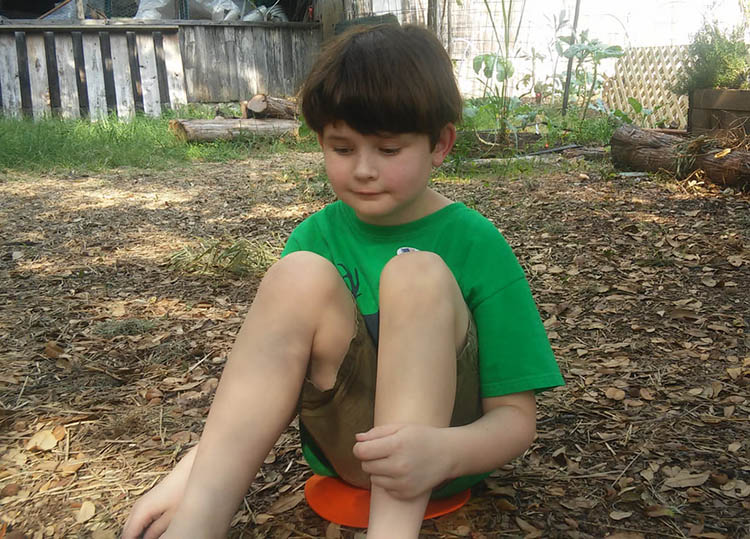
To start off our unit on the senses, we searched out our first Sit Spots. (We first learned about Sit Spots from Earth Native Wilderness School. If you haven’t had a chance yet to check out Earth Native, you must! They have amazing camps, preschool programs, workshops, and more!) In our Sit Spots we focused on our senses and discussed all the different sensations we experienced.
 

Sit Spots 1.jpg

We listened to all the sounds around us and heard:

"crickets"
"squirrels"
"church bells"
"my breath"
 

Sit Spots 2.jpg

With our eyes closed, we touched our surroundings and felt:

"leaves"
"something tickly"
"sticky grass"
 

Sit Spots 3.jpg

With our eyes closed, we smelled our surroundings and smelled:

"popcorn"
"leaves"
"air"
 

Sit Spots 4.jpg

With our eyes open, we focused on what we could see:

"my friends"
"clouds"
"magic tree"
 

Sit Spots 5.jpg

We focused on what we could taste in the air and had some surprising responses:

"ice cream"
"popcorn"
"just air"
 

Our Sensory Garden

We planted a garden for each of the five basic senses!
 

Sensory Garden 2.jpg

The kids dug their own holes with a spoon and learned how to gently loosen the roots of the baby plants before planting.
 

Scent Garden.jpg

In our Scent Garden, as it is pretty shady, we planted many varieties of mint:

Chocolate mint
Orange mint
Pineapple mint
Grapefruit mint
Spearmint
Peppermint
 

Taste Garden.jpg

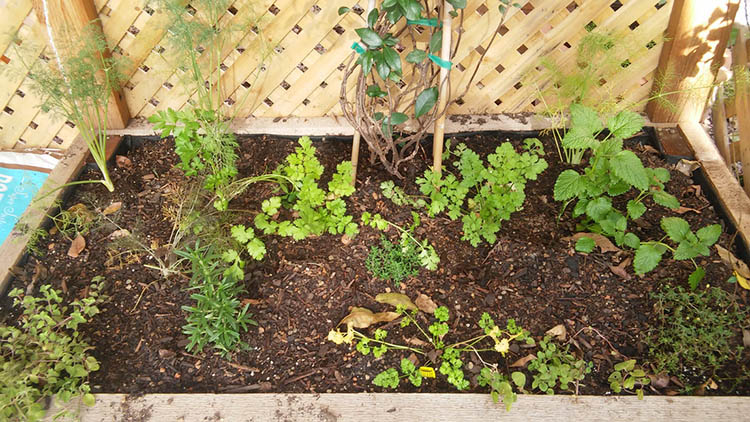
In our Taste Garden, we planted many different seasonal herbs:

Dill
Fennel (fun taste test to do with the dill, as they look so similar)
Parsley
Cilantro
Rosemary
Thyme
Oregano
Sage
Lemon Balm
Chervil
 

Listening Garden.jpg

In our Listening Garden, we planted grasses and plants with crispy leaves that make interesting sounds. Adding wind chimes and windmills enhances the listening quality of the garden.
 

Touch Garden.jpg

In our Touch Garden, we planted a variety of plants with soft leaves and interesting textures, including rubbery succulents.
 

Sight Garden.jpg

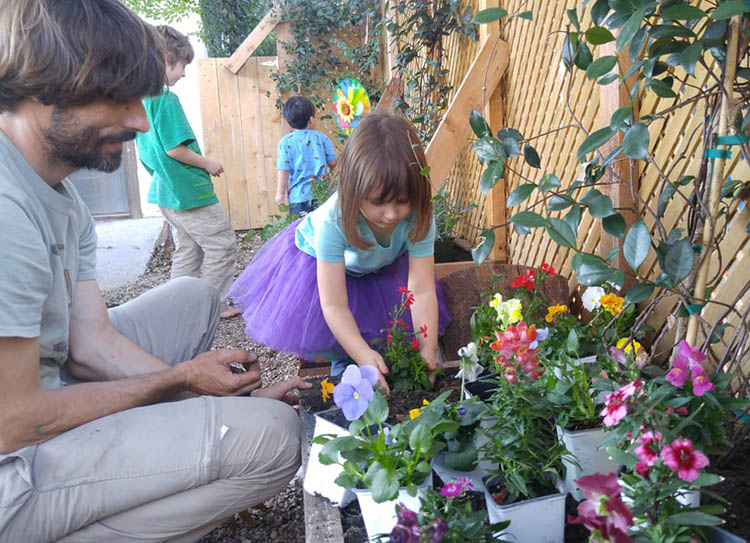
In our Sight Garden, we planted edible flowers with all the colors of the rainbow!


For an extended version of this articleincluding recipes for salt-preserved herbs and spice-scented play dough, instructions for “Easy Peasy Tie-Dyed Socks,” a scientific explanation of why mud pies make you happy, and much morevisit Morna’s original post on the Austin Children’s Garden blog. And don’t miss ACG’s upcoming events on Saturday, December 9: an Open House, including a free children’s yoga class, from 2pm to 6pm (RSVP to austinchildrensgarden@gmail.com); and a Kids’ Night Out from 3pm to 7pm, where children aged 3 to 10 will create their own candles with crayons and beeswax (tickets and more info available through Eventbrite).


Morna Harnden


New graphic novels workshop for high school students and adults

GraphicNovels.jpg

Jess Hagemann is an award-winning author and accomplished biographer. She owns and operates Austin’s premier ghostwriting service, Cider Spoon Stories, through which she helps seniors, veterans, small business owners, and others write their life stories as books. She’s helping us celebrate National Novel Writing Month (#NaNoWriMo) with this guest post about her upcoming workshop, Graphic Novels and Novel Graphics.


I was six years old when the Bosnian War broke out in 1992. Protected in my little corner of Kansas, I watched Sesame Street, not the news. I didn’t know that 100,000 people were dying in this artificial conflict, the result of one group of people asking for their independence, and another group of people deciding they had no right to live at all. The largest European instance of ethnic cleansing since the Holocaust didn’t end for three bloody years. By then I’d graduated from PBS to MTV: a rapid coming-of-age that left me wise to the ways of pop culture—but not the politics to which pop culture responds.

It wasn’t until college that I read Joe Sacco’s Safe Area Gorazde, a graphic novel published in 2000 that recalls the journalist-author’s four months spent in the middle of the conflict. Based on the stories of several Bosniaks that Sacco interviewed in Gorazde between 1994 and 1995, the extent of the violence is revealed through a series of graphic vignettes and black-and-white illustrations more powerful than any photo essay. I learned then what it means for an author to give voice to the voiceless. For an artist to render truths we couldn’t otherwise have known. For trauma victims to share their stories, and finally be heard.

This eventually led me to start Cider Spoon Stories, a ghostwriting and editing service, in 2014. Ghostwriting means that if you have a story to share, but don’t have the time or confidence to write it down, you’ll tell it to me, I’ll write it for you, and you get the credit. It’s just that important to me that firsthand experiences and critical truths be disseminated.

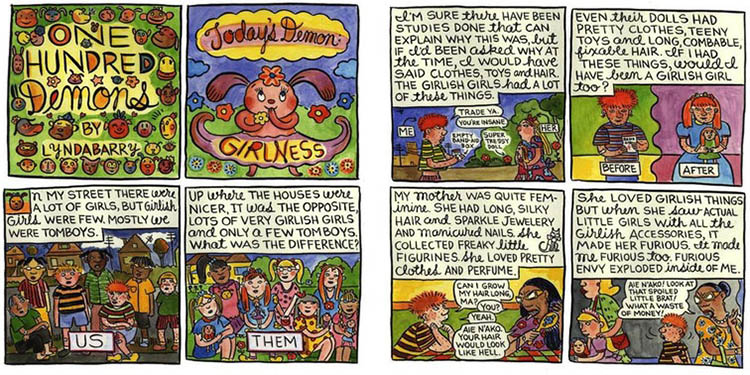
When I’m not writing, I’m teaching other people to write. This month, the topic is (naturally) graphic novels. On Saturday, November 18, we'll be discussing Lynda Barry, Marjorie Satrapi, Mat Johnson, Mark Danielewski, Chris Ware, Tom Phillips, Sophie Calle, and more. We'll look at how they use illustration, obfuscation, and found objects—all layered with (or revealing) text—to create beautiful, whimsical, or disturbing stories—some for the social good, some for the sake of telling a dang good tale.

If you want to learn to create engaging, active characters; develop coherent narrative around those characters; write detailed, scene-by-scene story outlines; and script through page breaks and panel descriptions, register here. The class is appropriate for ages 16+.


Jess Hagemann

Nurturing young writers and entrepreneurs through NaNoWriMo

Staffmembers at The Joule School in Cedar Park, just north of Austin, join us on the blog today to explain the school’s approach to National Novel Writing Month and the ways it has changed how its young students view writing, entrepreneurship, and themselves.


When first-grader Ripley Martinez walked into a school assembly, she had no idea she would soon be showered in cash. Within 30 minutes, she was jumping up and down with joy as $76—all her own—rained down around her onto the floor.

Ripley celebrates her writing and entrepreneurial achievements at The Joule School’s NaNoWriMo kickoff

Ripley celebrates her writing and entrepreneurial achievements at The Joule School’s NaNoWriMo kickoff

That's how much Ripley made selling her novel since last November. You read that correctly: a 5-year-old had written and marketed her own book. Even more impressive, Ripley’s book, Lollipop Girl in a Lollipop World, had just broken the school’s record for number of copies sold. She was surrounded by cheering classmates engulfing her with hugs, and her teacher was crying with pride.

The Joule School, a progressive K–8th private school in Cedar Park, participates each year in the National Novel Writing Month (NaNoWriMo) Young Writers Program. You might be familiar with the adult competition, in which anyone can attempt to write a 50,000-word novel in 30 days. The NaNoWriMo organization offers suggested word-count goals and a certificate for grade-school students who complete a modified version of the competition.

The Joule School does NaNoWriMo in a big way. First, it raises the bar—increasing the word count minimum for their students by up to 3,000 words per grade level. Suggested word-count goals for Kindergarten, when Ripley wrote her book, range from 20 to 200 words, but she was encouraged to hit 500. (This is equivalent to the “advanced” category for second-grade students in the national program.) If students rise to the challenge, Joule celebrates by arranging to have their hard work published and placed for sale on Amazon. Then, at the beginning of every November, authors from the previous year are recognized at an awards ceremony and handed cold, hard cash—their royalties from a year’s worth of online sales.

Of course, merely placing the book on Amazon doesn’t sell copies. Ripley publicized her book all over Austin, wherever she went. Her mother reported, “I went to get my oil changed and stepped outside for a few seconds. When I came back, Ripley was encouraging the receptionist to buy her novel.” (She even went behind the desk and pulled up the link to make the checkout process easier!) Her sales pitch was simple: “Can you please buy my book? It’s on sale on Amazon if you look up ‘Ripley Martinez.’” Determination and a dash of innate childlike charm did the trick, and now Ripley has 76 more bucks to spend on “Hatchimals, LOL Dolls, and . . . more books.”

Ripley’s novel is about “a candy girl adventuring and finding her friends,” according to the young author. When asked where she derived her inspiration, she said simply, “Candy.” (A glimpse into the mysterious creative processes of a visionary.) Her teacher, Meredith Allen, said Ripley was encouraged by meeting—and then exceeding—her incremental word-count goals. All over the school, individual floor-to-ceiling progress trackers (similar to a fundraising thermometer) were plastered on the walls. At the end of each day, Ms. Allen would type up her students’ handwritten work and let them check their totals. (Incidentally, this is not unlike Margaret Atwood’s writing process.) She says the students felt gratified when they used the word-count tool to see how much they had accomplished each day. It quantifies their success in a way that is readily accessible to them.

Students’ published works on display at The Joule School

Students’ published works on display at The Joule School

The Joule School’s approach to NaNoWriMo develops more than just literacy skills. As the students complete the process, they learn about gross versus net income, active versus passive income, marketing, and other elements of entrepreneurship. The entire student body, from three-year-olds to eighth-graders about to matriculate to high school, can opt in. Ripley’s novel grossed $285 in 12 months, but she knew she would have to pay publishing costs and taxes. She also knew that the money she would get on November 1st was all her own, free and clear. What better way to teach a young child about net profit?

More importantly, however, students at The Joule School associate joy, achievement, and success with the act of writing—something that can be a hard sell in the elementary grades. “I’ve seen kids go from reluctant writers to enthusiastic just by completing one round of NaNoWriMo,” said Madison McWilliams, the school’s founder and principal. “You see their whole attitude change—it’s suddenly I CAN do this. Once they start believing in themselves, we can roll that over to the classroom. Suddenly the kid who wasn’t such a huge fan of writing is the most attentive student in Language Arts.”

These days, Ripley often chooses her own book to read as her bedtime story. In doing so, she generates new ideas and thinks of ways she could improve her writing. One year later, she’s decided to tackle a more complex subject: this November, she’s working on a rags-to-riches tale of redemption about a young girl living in poverty. Soon, you’ll see it on Amazon. Soon, you might just see a young girl around town asking you to buy her second book.

The Joule School staff