

Intentional tech use: Helping young people build immunity to persuasive technology

Photo by Fredrick Tendong on Unsplash

Photo by Fredrick Tendong on Unsplash

Alt Ed Austin is delighted to bring the work and voice of guest contributor Seth Bunev to our readers. Seth is a remarkable young writer, researcher, and educator whose new book, Screenfarers: Nurturing Deliberate Action in a Digital World, was released in paperback this month; both book and ebook can be found here. He has been rethinking education systems since age 7 and has participated in numerous forms of school, from Montessori to distance learning. Starting at age 17, he spent four years offline to better understand how digital technologies had shaped his experience and to try to experience something different. Seth teaches naturalist skills to children and is currently working with Turning Life On to develop a school program that facilitates a more balanced relationship with tech at a community level.


I grew up with the internet. In high school, I regularly stayed up till three in the morning watching YouTube videos. This was normal among my peers—it was also normal to have trouble remembering things, avoid eye contact, and be diagnosed with depression. It was obvious to me at the time that these things were, at least to some degree, related to our digital habits.

Why would we do this to ourselves? Well, in the moment, it seemed fun. Somehow, it seemed fun even when my eyes were bloodshot, I had a headache, and I had barely left my room for a week. There was always another interesting thing to read, or watch, just a click away.

While modern digital technologies are powerful, and can have many benefits, some of the less positive effects are increasingly obvious: the eye damage, attention disorders, compulsive behaviors, loss of social skills, even loss of a social fabric in which to practice those skills.

It is no accident that young people spend huge numbers of hours on digital media, with US teens averaging about 7.5 hours per day in 2019. Social media and video game companies carefully design their products to be as addictive as possible, because their business model usually depends on maximizing “time on device” to generate data and ad revenue, or encourage in-game purchases. On top of that, there is the cumulative effect of millions of people competing to create the most eye-catching and engaging online content.

As a result, compulsive tech use is rampant. If this were confined only to video games, or clickbait sites, the solution would be simpler—complete avoidance would be an option. But pretty much everything on the internet can create unwanted habits, from email to database searching to blogs. It is possible to live without digital media—I did so for four years, to better understand its effects on me—but at present that is not feasible or desirable for most people. Can we have the good things the internet provides, without the disruptive habits?

It would help to have cultural norms that restrict digital tech’s invasion of every aspect of life. Perhaps we can also hope for a digital paradigm that doesn’t aggressively leverage human psychology to keep people hooked. But those things will take time. While we work towards them, we need to help kids and youth develop the skills to take charge of their relationship with digital tech at an individual level—ways to build immunity to the nebulous thing variously referred to as habit-forming technology, persuasive technology, or behavior design.

The immunity-building regimen I have developed, through research and experimentation on myself and peers, involves three components:

  1. Understanding how persuasive tech works, the underlying motivations behind it, and how to recognize it in digital interfaces

  2. Practicing attention to one’s own digital habits and how they are shaped by design

  3. Cultivating habits that facilitate intentional use of digital media

Together, these three approaches can interrupt some of the unconscious habits and habit-forming mechanisms through which tech use gets out of control.

Photo by Chris Yang on Unsplash

Photo by Chris Yang on Unsplash

How Persuasive Technology Works

The human brain works and develops by linking things together—neurons, words and their meanings, places and memories of them, stimuli and behaviors. These associations can form sequences, which become habits.

Drawing on the field of behaviorism founded by B. F. Skinner, digital platforms create associations that shape behavior. Specifically, they do this by linking something we desire or feel strongly about with an action the company wants us to take, according to Nir Eyal, author of Hooked: How to Build Habit-Forming Products. The desire for social connection can be linked to a behavior like checking notifications, which leads back to a social media site. Then, when someone takes the desired action, the habit is reinforced by a psychological reward—either one directly generated by the platform, such as an “achievement,” or one generated by other people using the options strategically provided within the platform, such as an exciting video or a “like.” Thanks to competition among companies, pretty much every human desire is now targeted by this approach.

The companies responsible for vast swaths of the internet use this type of psychological technique to maximize “time on device.” The net result is widespread compulsive use and many people of all ages spending more time on screens than is healthy or even desired (by them!). This is a difficult issue to confront for several reasons:

  • The good things about digital technologies—availability of information, ease of connection with others, entertainment, convenience—are also what can make them addictive.

  • Persuasive design accomplishes its goals by restructuring a person’s values, motivations, behaviors, and identity around using the platforms in question.

  • Persuasive design is integrated into the very infrastructure that we currently depend on for many essential and valuable activities.

  • Widespread dependence on digital technologies for nearly everything has destroyed the offline social fabric.

How can we navigate this complex situation? How can young people, whose identities and lives are often heavily invested in digital media, and who are immersed in a society where compulsive use of these technologies is the norm, be encouraged to find moderation, assess their habits, and be intentional?


Learning to Pay Attention

When I was a teenager slouched over my laptop, it was not helpful for my parents to tell me I was damaging my eyes, or to express any other kind of concern about the effects of my actions. I grew up in a culture that valorizes rebellion against authority—adults telling me to do something made me want to do the opposite, even if I agreed with them.

While it is helpful to tell young people about how and why digital tech is designed to shape their behavior—this is a fact of the world, which they can research themselves—it is not necessarily so helpful to tell them how they are affected by it. It can feel like an attempt to limit their freedom, creating pushback.

On the other hand, helping kids and youth see how designers of digital platforms are trying to control their behavior allows pushback to go in a more productive direction! Are the persuasive technologists succeeding? If so, in what ways? Better to ask the kids to figure that out for themselves, developing the habit of being more intentional with how they relate to devices in the process.

peter-jones-hNtiP7nVmCs-unsplash.jpg

Photo by Peter Jones on Unsplash

One excellent way to do this is to encourage them to keep a journal of their tech use. Whether it is the number of times they touch their cellphone, the number of hours they spend on screens in a week, or how much of that time they are spending on each type of activity, writing down observations as objectively as possible can be revealing. It’s easy not to remember where the time went, but it’s hard to argue with one’s own record of it.

In addition to tracking their own behavior, young people can use journals to track the persuasive design features they find in their apps, games, and websites, and to asking questions about them. Why is this button here? Why did this message pop up at this specific time? What is this webpage trying to encourage me to do?

The more I observe consciously how I am impacted by digital tech, the more motivated I am to take charge of my interactions and ensure that they serve my goals, not Google’s or Facebook’s. And the more I look for persuasive design in the digital places I go, the less likely I am to simply do whatever a website prompts me to do without even noticing. The practice of observing and recording one’s tech habits is a way to wedge some conscious thought into sequences of behaviors that have become totally automatic.


Creating Habits of Intentional Use

Ideally, we should be helping young people create intentional use habits when such habits are the easiest to form—as soon as they have access to digital technology. But starting early is not always an option.

A “digital detox,” a period of time without digital tech, can be helpful for creating intentional habits. When I started using computers again after years offline, it was easy to stay on task and do exactly what I intended—my old habits had mostly faded into oblivion. Even a week can be enough time to create a sense of divide between habits-before and habits-after, and to give new habits a head start. Even a weekend would help.

One of the simplest ways to develop more intentional digital habits is to take a moment to decide on an intention before using a device, and practice sticking to it. The following exercise builds this skill:

  1. Decide on a single purpose before opening a laptop, unlocking a smartphone, etc.

  2. If straying from the original purpose, try to remember the origin of the distraction and return to the intended activity.

  3. When finished, reflect on the difference between intention and behavior. Was there a gap? Why? What could be changed?

As with paying attention, practicing intention can be aided by recording the intention and reflection in a notebook. Over time, young people who apply this exercise to their digital activities will build up an understanding of their own minds, making it easier to anticipate and prevent distractions before they happen. The habit of sticking to an intention can help counteract the numerous sources of distraction.

Cultivating such a habit, combined with the practice of attention, a basic knowledge of how persuasive design works, and a grasp of what is at stake (their time—that is, their lives), can empower people to access the bounty of the digital age while reducing some of its negative side effects. 


Note: This guest post is the author's adaptation of an article originally published on
INTENTA DIGITAL.


Seth Bunev | Screenfarers
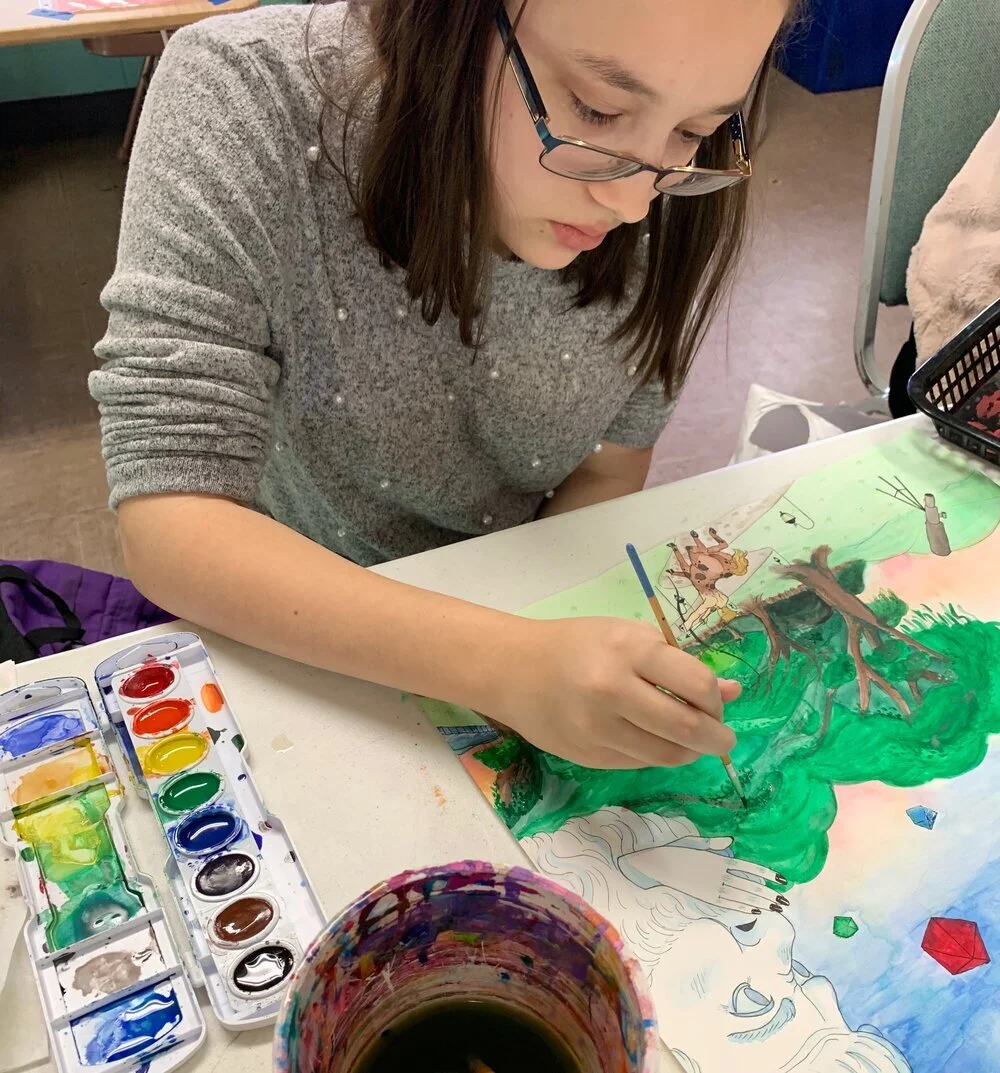
Why should I take an art class? I don’t want to be an artist when I grow up!

studentworkingonart.jpg


Alison Pilon Nokes teaches art, among other subjects, at
Huntington-Surrey High School in Austin. Her guest contribution here is adapted from her recent post on the school’s own blog.


After about ten years in the visual art education world, I feel pretty strongly that everyone should take an art class—every year, if possible!

Throughout my own educational and professional experiences, I have always felt freed by the opportunity for creative problem solving and exploration of visual media provided through the visual arts. I was, and still am, able to process many different parts of my life through an art outlet. And while I do, personally, as an adult, identify as an artist, I think the benefits of working through an artistic process—much like the experience of working with the scientific method in a science course—are worthwhile for everyone to experience as they venture through their education, no matter what they end up doing and becoming. 

studentart2.jpg

We are living in a rapidly changing world. In many ways, we cannot even imagine what the work force and daily life are going to look like for our kids when they come of age. This year of rapid adjustment to virtual learning and social distancing has certainly given us all a taste of how flexible we need to be and how quickly our world can change. What we do know is that students who can think critically and creatively about a variety of complex problems are going to have the best chance for success in just about any setting. 

studentart1.jpg

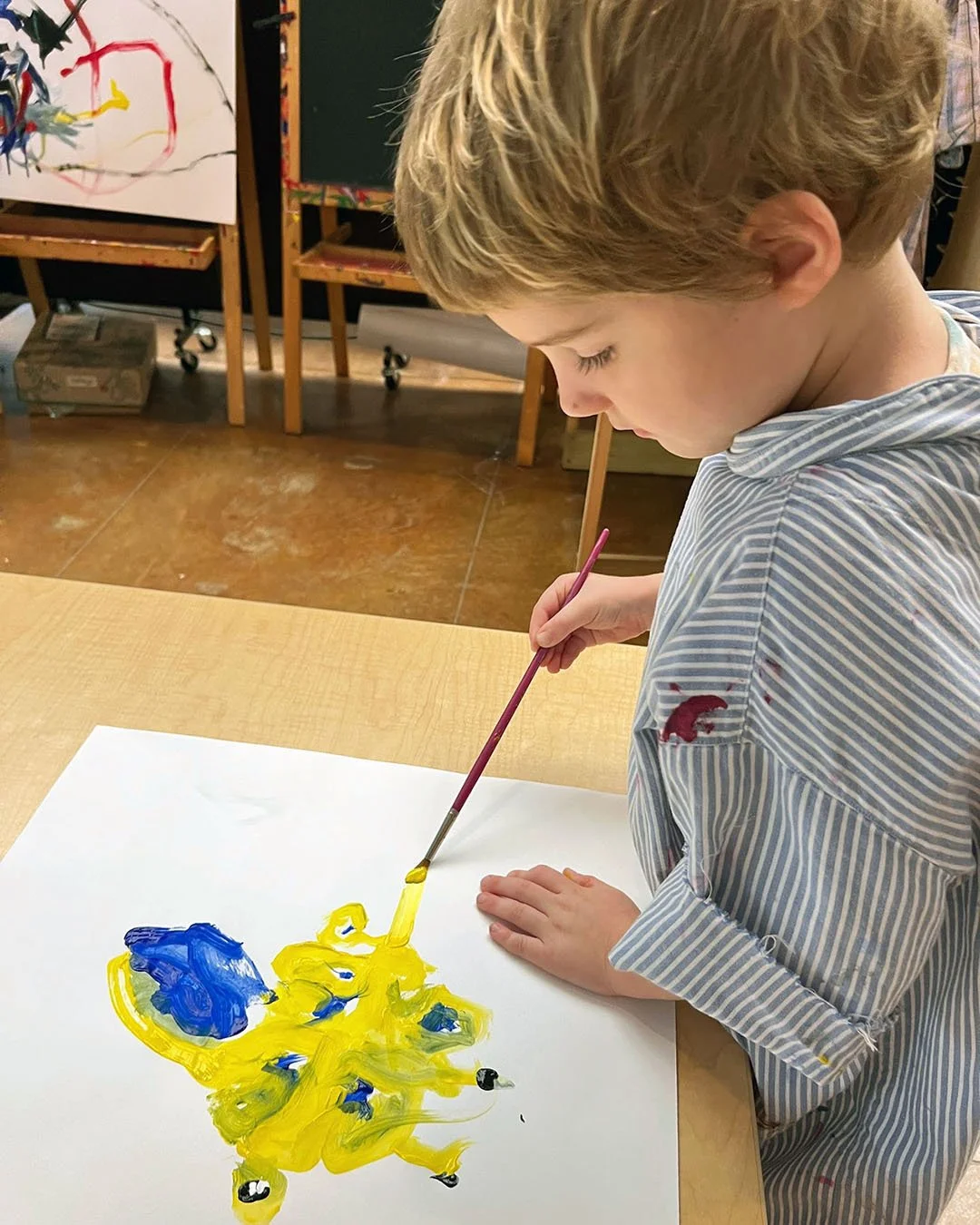
Not every student who is taking an art class is planning to apply to art school for college. In fact, most aren’t (just as not every student who is taking a biology course plans to become a biologist). It is with that in mind that I design lessons and projects for my art students. My lessons provide students with opportunities to play with materials they may not have used before, discover for themselves how those materials work, and consider how they can use them to meet their needs. My lessons present students with a problem, a dilemma, or an obstacle and ask them to come up with an out-of-the-box solution.

studentart5.jpg

As much fun as it is for families and friends to walk into a student art show at the end of the year full of beautiful finished work, the reality of art is that most often what students make is messy and strange. For every finished work of art that is “pretty,” there are often several unsuccessful attempts (I’m purposely avoiding the term “failures”). Those unsuccessful attempts—those messy and strange drawings, paintings, and sculptures—are what show the important lessons of art: the processes of working out a solution to a problem. As a teacher of art, the most important thing to me is not what the final product looks like. Rather, I want my art students to put forth their best effort, maintain a good attitude about trying, and work through the hard process of solving problems in innovative ways with materials that may be new to them.


Alison Pilon Nokes

3 things I’ve learned about distance learning as an online tutor

Jason Silverberg, M.Ed., joins us as a guest contributor to share his insights about remote learning. He has been a classroom teacher and popular tutor since 2004.


Ever since the world turned upside down, many parents have been in a constant state of uncertainty as to what type of schooling environment is best for their children. Is it safe to return to campus? Could lessons taught over Zoom really be effective? Well, ever since shifting all of my tutoring online in March, I’m proud to report that I have had much more success than I originally thought possible. I’ve learned a lot about connection, improvisation, and perseverance, and I look forward to seeing my students continue to meet and exceed their goals. Here are my top three takeaways from the last six months as an online educator.

A positive outlook is key.

To a lot of people, education just seemed too hands-on and interpersonal to move to an online medium. But as anyone wearing a mask and social distancing will tell you, sometimes doing what seems uncomfortable might just be the best way to move forward. People, especially children, are resilient. If the goal is to learn with no threat of spreading the virus, online tutoring is the safest bet. Starting off with a positive mindset makes all the difference. You get out what you put in.       

Vibe is fully translatable.

A teacher is more than just a random person, and a classroom is more than just four walls. It’s the teacher’s personality, vibe, and surroundings that create a unique, welcoming atmosphere. Whatever you bring to the classroom can also be conveyed online, especially a sense of humor. Nothing cements a friendship like cracking up together! Ironically, being limited to the confines of a computer screen actually feels limitless in a lot of ways. This even applies to my students whom I have still not yet met in person. Seeing my home, my drums, my plants, my cat, etc. gives them more of an opportunity to see what we have in common, which of course only strengthens our bond and makes learning much more of a fun experience.  

Being face-to-face on the screen rather than side-by-side at a table also makes it easier to notice when students get distracted. At these times, I can always tell what they need in order to get back on track. Redirection? A change of gear? A brain break? A quick conversation? Even taking one minute together to watch a youtube video of a puppy can make the rest of the session even more focused than before.

Being in the driver’s seat further opens the open road.

Online tutoring may seem impersonal at first glance, but it actually allows students to work for extended periods of time with their teacher one-on-one…an extremely rare occurrence in most classrooms. In this type of setting, teachers can more easily assess a student’s specific needs, reinforce unclear concepts, and even identify and repair past educational misunderstandings that might have normally gone undetected. 

Watch Jason in action in this video from a tutoring session. [TutoringMindset.com Disclaimer: I do not claim to own the rights to the songs or movie clips in this video. 😇]

My students know that they can only succeed if they meet me halfway. Signing into sessions on their own, taking initiative, and asking clarifying questions encourages and empowers them to take their education into their own hands. Of course, these feelings contribute to their ongoing ability to consistently surpass expectations throughout their academic career and beyond.

When the world gets back on its feet someday, I look forward to seeing the many ways in which schooling may change. Regardless of lessons being taught online or in person, I take comfort in knowing that the connection between the teacher and the student will always remain the most important aspect of education. 


Jason Silverberg

Sudbury silver linings

Clearview_Reopening_1-6-2021.jpg

Today we’re pleased to share an important update from Bruce Smith, a longtime staff member of Clearview Sudbury School, about the Clearview community’s democratic decision-making around reopening during the COVID-19 pandemic.


In a time when so many are stressed and scrambling, when good options seem rare, gratitude for the silver linings becomes that much richer. As schools and unschoolers alike approach the end of summer, I am very fortunate to be part of a community that just made our own hard, but healthy, decision.

At a special (and, of course, virtual) meeting in late July, the staff, students, and parents of Clearview Sudbury School voted to push the first day of our 2020–2021 school year to 2021— January 6th, to be precise. Our schedule the rest of the year will also see reduced hours and four-day weeks. This vote followed two rounds of surveys and informal discussions, as we worked over several weeks to assess everyone’s preferences and concerns, along with crunching all the numbers we could get our hands on.

While the outcome was relatively difficult and frustrating, there is also a degree of comfort and gratitude. I know I feel better putting off reopening to a date when more of us will feel safer returning. Neither opening while Texas remains a hotspot nor spinning the revolving door of opening and reclosing held any appeal for me. Nor was I interested in returning to the week-to-week uncertainty of this past spring, not knowing if we’d be closed for a week, a month, or the entire semester.

There have been many times over the years when I’ve appreciated the democratic processes of Sudbury schools, but this is the first time it’s hit home quite like this. There’s still plenty of uncertainty, of course, and it isn’t getting any easier to support our families, to keep everyone feeling connected at a distance. However, in comparison to so many other schools, I feel incredibly lucky to be part of one where everyone has a voice and a vote, where we get to decide for ourselves, together, what approach feels safest and best for us.

In a perfect world, every family would have this much of a say in the decisions affecting their children’s learning. And who knows? If this crisis leads more people to find the educational option that works best for them, well, maybe that will be a silver lining on a grand scale.

Thanks for reading, and my best wishes for health and strength to all of you.


Bruce Smith

So, you want to start a pandemic pod? There may be some pitfalls.

MeaganWelch.jpg

Meagan Welch is an AMI Montessori trained guide with a master’s degree in education who serves as the director of Julia’s Garden Montessori Family Learning Center. She has a passion for sharing the insights of Dr. Maria Montessori’s profound discoveries into human development with children and families. Below, she shares her candid thoughts and concerns on the emerging phenomenon of pandemic learning pods.


The “pandemic pod” phenomenon has exploded with an immediacy never seen before in education, and things are getting strange. There are pods hiring lawyers to write up contracts with Covid-19 infection contingency plans. People are ponying up serious cash to hire teachers directly. Freelance teaching is now “a thing.” There are internet forums and websites functioning as ad hoc HR departments to help connect families with similar exposure levels. Strangers are attempting to create very intimate learning environments for children run by parents with no educational background at all. What could go wrong?

Just to be fair, I would want a pod, too. If my children were still young, I would be trying to find a small group of families with children of similar age to make a little network that would allow the children to learn and play safely with friends and give parents time to do important adult things, like take showers, or make a living. As a school leader, I receive regular requests that go like this: “We are looking for a 5-year-old girl for our pod. We are being very careful. My husband works from home, and we only receive curbside groceries. Do you know anyone?” I want to help, but . . . I mean . . . really? Let’s do some unpacking.


COVID Careful?

Can I just say that my teenage daughter’s version of being “careful” and my version of being “careful” regarding exposure to the virus are really different? If she wears a mask in the car with her friend for 10 minutes she was being “like, sooo careful.” No more explanation needed for this one, really. People are hiring lawyers. There is the pesky life-or-death risk to every single thing we do right now. Pandemic pods included.

Personality Dynamics

Have you ever tried to have dinner with another family? How many times have I met another mom whom I badly wanted to befriend, but our daughters were like oil and water and our husbands ambivalent? Or the children loved each other, and we adults were miles apart politically. Personality dynamics are no joke in an average-size classroom, and in a very small group they are even more intense. I worry that parents have this idea of the perfect child to complement their own child’s needs—someone to be their best friend and inspire them to learn in just the right ways. In reality, children are complicated, just like adults are, and they come with their own conditions.

PandemicPods_MW_AS.jpg

Parents are naturally tolerant and protective of their own children. To say it mildly, we are irrationally biased toward our offspring. I often find that parents are lost when guiding their children in a typical playground conflict. Negativity bias influences how children process healthy conflicts, and parents are particularly vulnerable to their own child’s struggles. How many times have I listened to an irate parent convinced another student is “bullying” their child, when in reality the two children are best friends? Parents’ anger comes from love for our children, but bias can cloud our judgment and make us ineffective. Teachers are experts at using personality dynamics as opportunities for social-emotional learning. They know how to teach important conflict resolution skills on the fly. Parents will need to skill up and check their bias if they are going to create an emotionally safe environment conducive to learning.

Safety (not just from COVID-19)

Childcare centers and schools go to great lengths to create a safe environment. Are people doing safety risk assessments in their homes? What’s safe to do in your backyard when your Dad is watching is not necessarily safe for your friend because they may not have the same skill set. Is the backyard playscape age-appropriate for all the children in the pod? Setting limits on playing safely with other people’s children will take some practice, and preparing the home to prevent accidents is a good idea. What about first aid and CPR certification? Is there an emergency action plan?

Shared Values

A school is a community of families with some level of shared values. Whether you choose traditional or alternative, the school your child will attend says a great deal about your values. Pods that have a connection to a larger community network, like a school, may be more successful because they will have an educational philosophy to help them create agreed-upon parameters. A shared vision will carry communities through conflict and struggle. Families will need a philosophical backbone to lean on when the going gets tough.

City and State Regulations

It may surprise some families to know every state and city already has a set of guidelines and minimum standards for in-home childcare. The State of Texas has three categories—Licensed Child-Care Home, Registered Child-Care Home, and Listed Family Home—each with specific minimum standards, reporting expectations, and possible inspections. Most of these regulations are lowest-common-denominator type requirements meant to protect children from the worst of the worst scenarios, but it may be worth noting that some pandemic pods may already fall into the state’s categories and need to follow specific guidelines. If the pandemic continues on for a protracted period of time—very likely—and schools remain closed or remote, more people will turn to these smaller learning models, and state regulators may play a bigger role than ever before, for better or for worse. Find Texas in-home child-care regulations here and Covid-19 opening guidance here.


Parents are being asked to do so much with so little knowledge in child development theory. I feel compelled to help them. At my little Montessori school, we have decided it’s just not safe to bring teachers and children back to campus until the virus is under control. Who knows how long that will be? In the meantime, we are offering the parents as much support as we can. If you are interested in getting support for yourself, your child, or your learning pod, we are here to help. Find us at juliasgardenmontessori.com or e-mail me at meagan@juliasgardenmontessori.com.


Meagan Welch

The pros and cons of beginning college virtually for students with learning challenges

Janet Price of College Living Experience

Janet Price of College Living Experience

Guest contributor Janet Price is the National Director of Admissions and Outreach at College Living Experience. She has 10 years previous experience as an educational advocate and has co-authored two books, Take Control of Asperger’s Syndrome, winner of the 2010 Legacy Book Award, and Take Control of Dyslexia, as well as numerous articles. Janet has been a guest lecturer for graduate programs at Towson University and American University and frequently presents at national conferences. 


By now we have run out of superlatives to express the unprecedented sense of sadness and loss experienced by our Class of 2020 high school seniors. In addition to navigating the fear of a pandemic and disruption of life at every level, our young adults have had to do without the milestones that typically mark their transition to college. No graduation. No prom. None of the typical rituals of closure marking the end of their secondary school experience.

For students with special needs, transitions can be challenging under the best of circumstances. So, is it a good idea to continue with plans to attend college if that college is going to be all virtual this fall? There are pros, there are cons, and most importantly, there are options!

First, the pros. There are a lot of good reasons not to put the future on hold and to continue with post-secondary plans.

  • Maintaining forward momentum. Beginning college classes, even virtually, feels like a natural progression forward. Waiting until campus life returns to what it was pre-COVID-19 means that the next step toward independence and adulthood is indefinitely on hold.

  • Maintaining routines and good study habits. Once a student, especially a student who has challenges with executive functioning, gets out of the routine of studying and following a schedule, it can be very hard to re-establish good study habits.

  • Learning about college expectations. Exposure to the rigors of college, even virtually, provides an opportunity for practice so that the student will be more prepared when life on campus does resume.

Of course, there are cons as well. Many of these concerns are the same types of challenges that we all experienced with distance learning over the last semester.

  • Motivation. If my high school senior was not motivated to tune into his Zoom classes or complete assignments, how do I know that they will be motivated to do their college classes online?

  • Family harmony. Many families experienced significant tension trying to balance distance learning for their kids and working from home. How much support will your college freshman need to stay on track? Can you use the same strategies to hold a young adult accountable for homework that you did when they were in high school? Should you?

  • Accommodations. How will the college provide classroom accommodations in a virtual model? Will this be sufficient?

Virtual independent living skills ‘cooking group’ session

Virtual independent living skills ‘cooking group’ session

Fortunately, the decision is not a zero-sum game. There are options that lie between taking the risk to try virtual college classes without support and postponing college until things reopen safely. Some colleges offer additional fee-for-service supports that go beyond the limited accommodations available to students with special needs. Enrolling in a program like this can help your student to build a rapport and have someone to rely on to navigate supports on campus once in-person classes resume.

If your college does not offer such a program, there is also the option of hiring an executive function coach who can meet with your student virtually or socially distanced in-person a set number of times per week.  An executive function coach can teach students to prioritize assignments and plan their study time, as well as help them maintain their effort. If neither of these options offers enough support to address all the concerns listed above, you can also consider looking into a more robust post-secondary support program with wrap-around services.

College Living Experience in Austin, Texas (additional locations in Washington, DC; Ft. Lauderdale, FL; Nashville, TN; Denver, CO; and Costa Mesa and Monterey in CA), is one such program. CLE offers support to young adults 18 and over in the areas of academics, career development, social skills, and independent living skills. Students live in apartments close to the CLE center. They have support in the apartments, from a Resident Advisor who is available after hours to Independent Living Skills instructors who help them manage their space, meal plan and cook, and even pay their own bills. The center itself consists of individual tutoring rooms where students receive daily academic support both in content and executive function. Students also receive support in career development and participate in supervised social activities.

Socially distant and masked CLE student advising session

Socially distant and masked CLE student advising session

Because students are living in apartments and not in dormitories, they are able to continue with the program and continue receiving supports virtually if necessary, even if campuses need to close. At the college level, that means that students are following a set schedule, taking their online classes independently, and receiving support from professional tutors, whether that is virtual in their apartments, or whether they are permitted to come to the center and use an individual tutoring room to replicate the experience of going to a classroom. This also removes many potential sources of conflict from the home, from arguments over chores to parents feeling responsible for making students do their homework.

As challenges continue to mount for now, remember that other options exist besides the extremes of continuing a distance learning model that may not have been successful last semester at home and doing nothing. Whether through exploring additional supports on campus, utilizing executive function coaches socially distanced or virtual, or moving to a post-secondary program geared toward supporting all aspects of independence, a new normal calls for a look into new strategies that allow our young adults to progress.


Janet Price