Step outside for learning

The Inside Outside School is known for its innovative incorporation of the outdoors into its academic curriculum. This guest post from IOS director Deborah Hale is adapted from photo essays she posted earlier this month on the school’s blog. Reading this might just lead you to try a few of these activities with your own kids this summer!


We are always looking for ways to get outside for math and science. Some of the most popular ways at our school involve math trails. In fact, a few months ago I decided to write a book about math trails. I thought it would be easy because I am so passionate about the topic, but it’s hard to convey on paper the excitement of an outdoor math adventure. I'm wondering if this should be a movie instead.
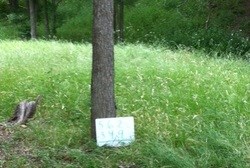
On this math trail there are a few stations where students find a whiteboard with a problem typical of what we've been doing in class. They have a trail map to record their work and answers on a clipboard.

The magnetic garage door of the theater building is an excellent stop on the trail, now that we have a set of large magnetic money.
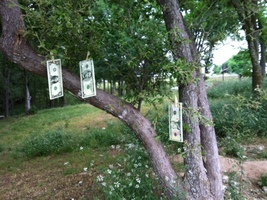
 

By the way, when you are studying money-related math outdoors, money can grow on trees . . .


. . . and even in the garden. This kind of math adventure is so much fun because it is a lot like an Easter egg hunt!


Speaking of Easter egg hunts, at station #3 on the trail, students found three eggs hidden under a traffic cone, each with six shells in it. The traffic cones are a great way to make it clear where the math stations are set up.
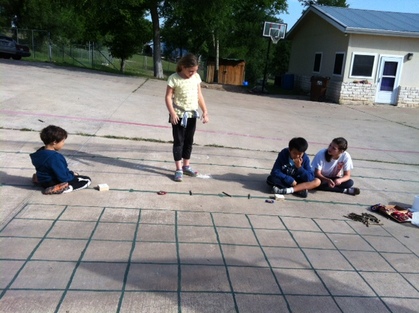
The driveway is part of our outdoor classroom. We used concrete paint to mark large number lines and a blank hundreds chart.


Here you can see examples of some of our manipulatives: wooden number blocks that the shop classes helped to create, felt number patches made last year in sewing classes, and wooden ten sticks. This student has just solved 82 minus 29. These activities all happened on the school grounds not far from the buildings.
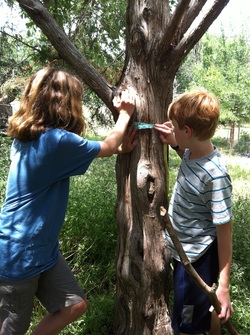
Next we found out what a math trail can look like in the woods down by the creek. Upper elementary students used the stick method to measure the height of trees. All you need is a stick and a measuring tape. They also worked to find the diameter of trees after determining the circumference. The circumference is measured at 4.5 feet up from the ground. Then you divide the circumference by pi (3.14). It is great to estimate before measuring, and then you can always throw in a little subtraction when you determine the difference between the estimate and the actual measurement. A final activity was measuring the canopy of a tree.
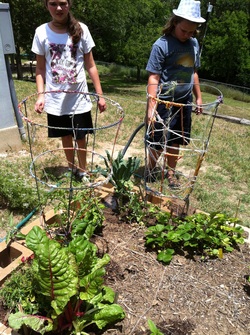
Another great way to integrate math and science is with a square foot garden. You can see the string that the students used earlier in the year to mark off the squares after measuring the perimeter and area of the planting space. Once the garden is divided, students must research the plants they want to cultivate to find out how many each square will support. We have harvested and replanted this garden throughout the school year. Growth of plants can be measured, recorded, and compared.

Another part of gardening is weighing the harvest and recording the data. Then you get to use the basil and tomatoes for making lasagna! Integrating math into cooking is another great way to make connections. This has been indoor work for us so far, until we get the rest of our outdoor kitchen set up (unless we are using our cob oven).

During our Native American cultural study, students created active learning connections in the garden by setting up a “three sisters” garden with Helen, our nature science teacher. We even “planted” a dead fish from our creek to enrich the soil. The corn provides a pole for the beans, the beans stabilize the corn plant and fix nitrogen, and the squash acts as mulch to prevent evaporation of moisture in the soil. The nutritional elements of these foods add additional material for learning.

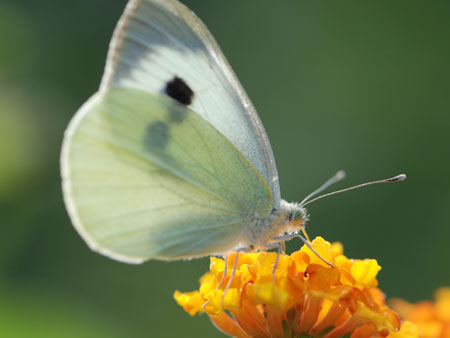
Helen recently noticed some caterpillars and chrysalises on a mustard plant, so she brought in a number of books for the students to use to find out what they were seeing. It turned out to be a cabbage butterfly, and the following week we all got to see one of them freshly emerged and drying its wings.
We encourage you to step outside whenever you can, too, and see what you can learn!

Deborah Hale


9th Street Schoolhouse is moving . . . by bike!


On Sunday, June 1, starting at 9:00 a.m., the 9th Street Schoolhouse community will move the entirety of the school’s belongings to its new location using only bicycles. Austinites with cargo bikes and trailers of all shapes and sizes will make the three-mile trek from 2006 E. 9th Street in East Austin to 3310 Red River, fueled by free coffee and doughnuts. The group will ride slowly in a pack together, obeying all traffic laws and keeping to residential streets.

Families with children who are road-ready cyclists are invited to participate. Caitlin Macklin, founder and teacher at the schoolhouse, said, “It’s a great opportunity for our youth to see what is possible when a community comes together.”

Caitlin was inspired by the Yellow Bike Project shop move in 2008, which accomplished the shipment of a 3,000-square-foot bike shop via a caravan of over 100 people on bikes. She added, “At the schoolhouse, we are always looking for ways to harness people power and live sustainably—and have a lot of fun in the process!”

The Schoolhouse is an independent alternative school founded in 2010. It is a democratic, experiential learning community that has the freedom to pursue meaningful learning, joy, and connection. The Schoolhouse currently serves youth in K–4th grades and will grow to serve K–8th grade youth.

You can RSVP here to join the event!

9th Street Schoolhouse is Moving by Bike!


SUNDAY JUNE 1, 2014

9:00 AM at 2006 E. 9TH STREET

EAST AUSTIN, TEXAS


The 9th Street Schoolhouse will move the entirety of the school’s belongings to their new location using only bicycles. Austinites with cargo bikes and trailers of all shapes and sizes will make the three-mile trek from East Austin to 3310 Red River, fueled by free coffee and doughnuts. The group will ride slowly in a pack together, obeying all traffic laws and keeping to residential streets.


Families with children who are road-ready cyclists are invited to participate. Caitlin Macklin, founder / teacher at the schoolhouse, said, “It’s a great opportunity for our youth to see what is possible when a community comes together.” Macklin was inspired by the Yellow Bike Project shop move in 2008, which accomplished the shipment of a 3,000-square-foot bike shop via a caravan of over 100 people on bikes. She added, “At the schoolhouse, we are always looking for ways to harness people power and live sustainably—and have a lot of fun in the process!”


About 9th Street Schoolhouse

The Schoolhouse is an independent alternative school founded in 2010. It is a democratic, experiential learning community that has the freedom to pursue meaningful learning, joy, and connection. The Schoolhouse currently serves youth in K–4th grades and will grow to serve K–8th grade youth.

You can find out more at http://9thstreetschoolhouse.org/

You can RSVP to join the event at https://www.facebook.com/events/271773276327245/

Alt Ed Austin meets the Typewriter Rodeo

One of the most beloved features of the Austin Mini Maker Faire last weekend was the Typewriter Rodeo, a group of Austin writers who create custom poetry on demand using vintage typewriters. I spent most of the day outside in the Maker Ed tents, but late in the afternoon I slipped into the Expo Center Arena and got in line for a poem of my own.

When it was my turn, I found myself in front of Kate Payne, a freelance writer, popular blogger, educator, and author of two lovely and extremely handy books: The Hip Girl’s Guide to Homemaking (2011) and The Hip Girl’s Guide to the Kitchen (2014). When Kate asked me for a topic, I said, predictably, “Alternative education—you know, like, different ways of learning.” (Sometimes I have to do a little explaining. In Kate's case, it turned out to be unnecessary; she knew exactly what I meant.) Four or five minutes later, she handed me this:

AltEdPoem_TWR.jpg

Exactly! Thanks, Kate and Typewriter Rodeo; you lassoed it. I’m putting this on my office wall—sharing what I love.

Teri

Preparing for the SAT by means of alternative education

Michael Strong is co-founder of the Khabele Strong Incubator, a new Austin school serving students of middle and high school age. He is also author of the book The Habit of Thought: From Socratic Seminars to Socratic Practice, a frequent speaker on TEDx stages, founder or co-founder of several successful schools, and an advocate for nurturing the entrepreneurial spirit as a force for social good. In this guest post, Michael addresses an issue I hear often in my consultation work with parents considering alt schooling for their kids: What about the SAT?

Many of those exploring alternative education models do so in part because they are repelled by the lockstep curriculum and testing regimen associated with traditional schooling. They are committed to a “follow the child” philosophy, according to which educators support student interests rather than test prep.

While I am committed to personalized education that nurtures a child’s interests, I am not hostile to the SAT. In fact, I find that, under some circumstances, an alternative education can result in superior SAT scores.

This perspective is based on my own experience. I was raised on a farm with a 1.5-hour bus ride each direction. Our small black-and-white television received two channels occasionally; my siblings and I had to be pretty desperate to try to watch TV. Within this context, I became a reader—a voracious reader. In sixth grade, a friend and I recorded the books we were reading. I was already reading a 200-page book every night.

At the same time, he and I would play chess on the long bus rides to and from school. Because the chess pieces would often fall off the board as we went over bumps, we became good at remembering where they were on the board from memory. Eventually we quit using the board entirely and played chess games with each other in our heads as we endured the long rides to and from school.

My real learning took place during reading and chess. I also did well on “memorize-and-forget” tests at school, doing almost no homework. I was admitted to Harvard without ever studying for the SAT (really without knowing what the SAT was). My parents, good working-class people, had no idea that Harvard was hard to get into; all they knew was that I was going to college back East somewhere.

Thus my own experience was dramatically different from that associated with children of angst-ridden “helicopter parents” today. All I did to get into Harvard was have fun reading and playing chess. What’s the big deal?

As an educator, I’ve focused on creating schools at which kids mostly have fun. But because of my natural intellectual bent, the form in which the “fun” tends to manifest itself is largely intellectual: we read and discuss intellectually serious articles, we play around with mathematical and scientific ideas, etc. And it is all a natural, spontaneous process based on engaging students’ authentic interests.

Not all students will necessarily obtain high SAT scores. But high-level academic performance does not require tedious studying. If one can create an environment in which students have fun engaging in intellectual activity, then high-level performance on the SAT is often a natural, spontaneous outcome.

There are a couple of reasons why the SAT is associated with stressful studying rather than spontaneous joy:

  1. Conventional schooling provides little intellectual development. The majority of class time is devoted either to classroom management or to “memorize-and-forget” activities. If we were able to monitor blood flow to the prefrontal cortex of most students during most school days, we would find little activity going on there. Most students most of the time are bored, flirting, joking, or goofing off in school. Insofar as much school activity is nonlearning, of course students are stressed out by a measure of cognitive functioning—their brains have been turned off for years, and now we ask them to turn it back on?
  2. Some parents place their own anxieties related to social status onto their children. In some cases they force children into competitive college admissions when such a direction is entirely inappropriate for that particular child. The result is anxiety and resentment toward the competitive process itself.

Young people are sponges who absorb their environment. If they are placed in an environment in which others are trying to avoid learning as much as possible, most will also work to avoid learning. If they are placed in an environment in which the play is primarily physical, or social, then most will become excellent at physical or social forms of play. If they are placed in an environment in which the play is primarily intellectual, then most will become excellent at intellectual forms of play.

It is a bizarre artifact of coercive schooling that intellectual activity is the one domain in which people are least likely to understand the playfulness of it. For many people, the term “intellectual” has heavy, unpleasant connotations. Just as alternative educators would rejoice in supporting their theatrically gifted students to star on Broadway, or their musically gifted students to win on American Idol, we should rejoice in supporting those with intellectual appetites in achieving in the manner that gives them the most joy.

For me, play and excellence are intimately related no matter what a child’s gifts. When I work with young people who are brilliant theatrically or musically, I want to help them develop their gifts in a playful, yet serious, manner. When I work with young people who thrive on social engagement, I love showing them ways in which the world richly rewards their gifts when properly directed (such as sales), and encourage them to interweave play and the development of extraordinary skill.

My mission as an educator is to identify the genius within every child, and then coach him or her to a joyful expression of that genius. From such a perspective, taking the SAT for some is really no different from an audition for others—simply a natural part of their particular journey. Sometimes “follow the child” implies creating an intellectually rich, yet playful, environment that happens to lead to great SAT scores. Sometimes it means creating a dramatically rich, yet playful, environment that happens to lead to an extraordinary range of acting skills.

Someday all students will attend “school” where most of the time they are engaged in joyful, yet serious and demanding, activities. And we’ll all wonder about that peculiar institution of the twentieth century that resulted in teen rebellion and the mass drugging of an entire generation of young people.

Michael Strong

Kinetic learning with the Horse Boy

Alt Ed Austin is honored to share this moving story from guest contributor Jenny Lockwood. Jenny is an educational psychologist and alternative educator who works with a child known worldwide as The Horse Boy and with other remarkable children and their families at Horse Boy World in Elgin, Texas.

In April 2004 Rowan Isaacson was diagnosed with autism. At the age of two and a half he suffered from neurological tantrums that could last for hours and that his parents were powerless to stop. He could repeat long passages of text from his favorite books and movies but was unable to tell his parents he was hungry, thirsty, or tired. He was incontinent and unable to make friends. At age three his speech therapist “gave up” on him and told his parents that he would never use expressive language.

That was almost ten years ago. Rowan is 12 now, and earlier today he told me that he wanted to open his own zoo to provide “a forever home for animals that are abused and neglected.” He is ahead academically, has friends of all ages, and wants to help other special (his word) kids like himself learn to talk, read, and write. So what changed?

When he was almost four years old, Rowan ran away from his father, Rupert, into their neighbor’s horse pasture and threw himself down on the ground in front of a horse called Betsy. His Dad, a lifelong horse person, was terrified that his precious son was about to be trodden on and certainly did not expect Betsy to lower her head and begin to sniff and breathe on Rowan whilst he giggled in delight.

Up until this moment Rupert had been keeping Rowan away from horses, afraid that he would get hurt. But now both his son and the horse had given him a clear sign. He approached his neighbor, Stafford. Instead of worrying about liability, Stafford, a true southern gentleman, gave Rupert the key to his barn and said, “Have at it.”

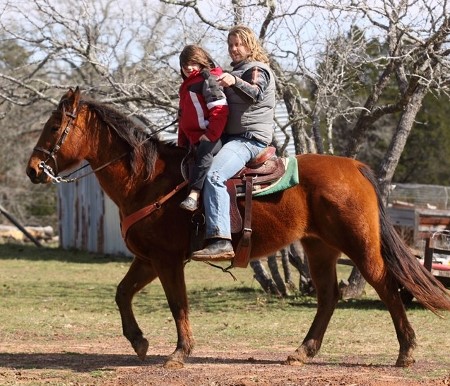
From that moment onward, Rowan and Rupert lived in the saddle together. And the more they rode, the more Rowan began to talk. You can learn more about this story and the family’s subsequent trip to Mongolia in the book and film The Horse Boy.

Around the same time that Rowan met Betsy, his parents made the difficult decision to pull him out of school. He had been stuck all day in a windowless classroom with unmotivated teachers who kept the television turned up loud to drawn out the noise of the kids. Rupert began to homeschool Rowan, and Betsy was a huge part of that. They did a lot of learning, from letters and numbers to reading and writing to basic arithmetic and fractions, up there in the saddle together. When Rowan was on the horse, he seemed to be in an ideal position to soak up new information and make it his own.

Over the years we have discovered that the reason this works is the movement that the horse provides. Children with autism are often kinetic learners, meaning that they need to move in order to be able to learn. Force them to sit at a desk, and all they will learn is how to sit at a desk. Allow their bodies to move, and their brains will be free to receive and retain information.

I have been Rowan’s main teacher for about five years now. We discovered how important movement was to his learning after I had been working with him for about a year. Back then, we still did all his academics inside at a desk but allowed him frequent breaks to go outside and bounce on the trampoline or ride. We always supplemented what he was doing on the horse, of course, but when it came down to “serious” academics, we went inside.

Then one day I decided it was time to start his multiplication tables. He flew through his 0 and 1 times table, but when we got to the 2 times table he began to struggle. The more he struggled, the more he rocked in his chair, so that he eventually fell off and the chair fell on top of him. That seemed a good time to take a break!

So outside we went to the trampoline to blow off some steam. Then I had a brainwave: Why not learn the multiplication tables outside whilst bouncing and having fun? He loved the trampoline, so he was motivated to be on it . . . maybe the movement would help him pay attention?

Little did I know how true that would turn out to be.

By the end of a 30-minute bounce session, he had already mastered the 2 and 3 times tables. By the end of the week, we had done all 12 and were moving on to division (and I had lost more than a few pounds to boot). It was so successful, in fact, that from that day onward we abandoned any thought of trying to teach Rowan at a desk and instead created a whole curriculum for him based around movement. He learned angles through chase games and equations through treasure hunts. We discovered how to calculate the relationships among speed, distance, and time on bike rides and did force, mass, and acceleration through wheelbarrow rides.

What’s more, we began to try the same techniques with other children—some on the autism spectrum, some not—and it worked just as well, as long as the games and activities were adapted to those kids’ interests and passions and we incorporated movement, movement, and yet more movement.

We now work directly with hundreds of children on the autism spectrum each year and indirectly with thousands through the trainings we provide for equine professionals, teachers, and parents. To find out more about our work, please visit our website or contact me at jenny@horseboyworld.com.

Jenny Lockwood

Maker Ed awesomeness at the Austin Mini Maker Faire

Giveaway alert: A family pack of Austin Mini Maker Faire passes is up for grabs, plus free tickets for professional educators and a special discount code for homeschoolers! Read on.

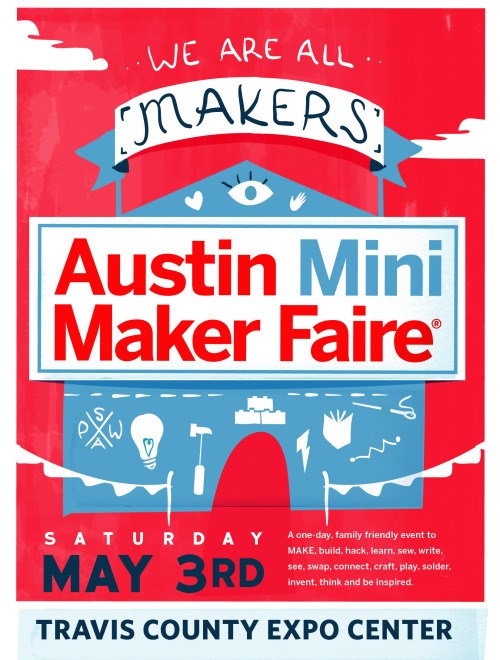
I love the theme of this year’s Austin Mini Maker Faire, as expressed in the beautiful posters designed by Kat Townsend: We are all makers. Even more exciting for me (and the reason Alt Ed Austin is a proud sponsor of AMMF 2014) is its brilliant demonstration of another theme: We are all learners. We are all teachers.

Underlying its well-deserved reputation for outlandish fun in the tech, craft, art, robotics, and sustainability arenas, the heart of Austin’s annual maker extravaganza is education. At a time when our traditional school systems are deep in crisis, the Faire serves as a showcase for learning experiences as they should be: hands-on, interdisciplinary, learner directed, multi-age, naturally engaging, noncompetitive, playful, and focused on using critical thinking skills and imagination to address real-world problems.

With the generous support of our special area sponsor, WonderLab, we have expanded the Maker Ed section of the Faire in a big way and added some extra perks for educators. Here’s what’s in store:

Free admission for professional educators! Just show some proof that you are an educator at check-in. 

Special 20% discount for homeschooling families. Buy your adult and child tickets in advance using this code: AHS20OFF 

Educators’ Lounge. This year we’re giving teachers and other education professionals a comfy place at the Faire to take a break and meet new colleagues. We’ll also facilitate some quick and fun ways for educators to trade ideas about incorporating making into their learning environments and overcoming maker ed challenges. As a thank-you for participating in the Lounge, we’ll have some great teacher-oriented swag bags. Many thanks to supervolunteers Mike DeGraff, Claudia Pepper, and Laura Minnigerode and these sponsors for making all of this happen: Five Elements Furniture, SparkFun, Texas Instruments, and UTeach.

Three huge tents devoted to Maker Ed. Fairegoers will experience a dizzying array of hands-on activities and demonstrations presented by schools and other educational programs from pre-K through college levels. Anchored by AMMF sponsor Skybridge Academy, these edu-makers will give Fairegoers opportunities to sharpen their wilderness survival skills, practice the fine art of bubble making, learn how a couple of local high school kids have built a 3D printer, and much, much more. 

More edu-awesomeness outside the Maker Ed tents. Some of our event sponsors are bringing exhibits and activities so big they’ve claimed their own chunk of AMMF real estate:

  • In the ever-popular Austin Tinkering School pavilion, kids can make their own racecars and try their luck in the Nerdy Derby, or hang out in the Open Shop, deconstructing electronics and creating their own marvels with all kinds of interesting building materials.
  • The Thinkery’s Kid Zone will offer multiple STEAM (science, technology, engineering, art, and math) activities for young makers. Its hand-built trebuchet will be flinging things the old-fashioned way throughout the day.
  • On the outdoor stage, kids of all ages will be amazed and edified by the Mad Science show. Grownups will learn to safely wow their friends and enemies with the fiery arts at Tim Deagan’s Propane 101 for Artists and Makers. And everyone, I mean everyone, will have a blast at Steve Wolf’s multi-award-winning Science in the Movies show. Check out the performance schedule and plan your day at the Faire!
  • Inside the Expo Center arena, beyond the planetarium, aerial dancers, and the gajillion fascinating craft, tech, and arts exhibits, you’ll find a workshop space where you can learn to program a Raspberry Pi, ferment your own vinegar from table scraps, make a perfect hula-hoop, or turn your small business dreams into reality. Reserve your space in a workshop today!

This is only the tip of the iceberg, people. I’ve highlighted the overtly educational features of the Faire, but no matter how you choose to spend your time at AMMF, you’ll learn something. Jump off a tower into a giant marshmallow with the Stunt Ranch crew, find out how an intrepid professor is sustainably living in a dumpster for a year, or pedal like you’ve never pedaled before at the Austin Bike Zoo’s Interactive Wonderland and Carnival. I guarantee you’ll come away with that unmistakable feeling that we are all learners, we are all teachers. And for sure, we are all makers.

Giveaway!

You have a bunch of ways to enter this random drawing, with up to 10 chances to win an AMMF family pack of 2 adult and 2 child passes. If you’ve already bought your tickets, be sure to let your friends know about this opportunity to attend the Austin Mini Maker Faire for free! Enter by midnight Thursday, May 1, and we’ll announce the lucky winner right here in a blog update on Friday morning. Good luck! 

a Rafflecopter giveaway

UPDATE: Congratulations to giveaway winner Suzanne H.! We look forward to seeing you and your family on Saturday. And thanks to everyone who entered the drawing. You can still buy discounted AMMF tickets in advance (through 10am Saturday) here.