A new home for Austin Tinkering School!

Kami Wilt runs both the annual Austin Mini Maker Faire and the year-round Austin Tinkering School, where there are big changes afoot. Kami joins us on the blog today to share the good news.

Kami Wilt at Austin Tinkering School

Kami Wilt at Austin Tinkering School

As some of you may know, Austin Tinkering School recently ran a Kickstarter campaign to raise money to create a kid-friendly, community-oriented, centrally located Makerspace. A space like this doesn't exist in Austin yet, and it seems necessary (and awesome!) for a growing, vibrant, Maker city like Austin.

Lucky for us, the Kickstarter was a success, and we were able to raise $23,000! After months of looking and, truthfully, feeling a little worried that even with that handsome chunk of change we might not find a place that met our needs, we managed to secure a fantastic spot that is going to allow us to bring many more great tinkering experiences and adventures to kids and adults than we have before.

Introducing the new Austin Tinkering School:

1122 Airport Blvd.

ATS_3.jpg

This place is ideally located in East Austin and is just two minutes away from Hausbar Urban Farm, Canopy, Blue Genie, Splinter Group, a playground at Govalle Elementary, and scads of awesome East Side artists and artisans we can go visit whenever we want. It has a HUGE backyard! It also has AIR CONDITIONING! I'll tell you, $23,000 sounds like a lot and it definitely is, but when you start looking at places, you realize you might have to give up on some things, like temperature control or an easy-to-get-to location.

And since we didn't know how long it was going to take us to find a new place, we decided to build a nice new outdoor workshop at Austin EcoSchool, so now we have a South Austin hub as well! We offer a Friday program there for homeschoolers and alterna-schoolers, and will be running summer camps all summer long at both locations, along with lots of great classes and workshops for kids and adults.

ATS_4.jpg

​2015 is a brand spankin’ new year with so many tinkering adventures ahead! Can’t wait to have you all over to the new digs. Check us out at austintinkeringschool.com.

ATS_2.jpg

Kami Wilt

Celebrating informal science education in Texas

Emily Weerts has been an educator and program manager for museums, preschools, special education classrooms, and afterschool classes. She has been a member of the Informal Science Education Association of Texas (ISEA) since 2011 and currently serves on its board of directors. Emily is passionate about connecting with fellow educators and believes that great learning opportunities can happen anywhere.


Frank Oppenheimer, the visionary founder of San Francisco’s Exploratorium, once noted that “no one ever flunked a museum.” As a lifelong learner, I find the sentiment resonates with me—there are countless venues rich with educational opportunities, many that celebrate a learner-driven, informal approach to attaining new knowledge.

The field of science is particularly rich with informal venues; from museums to zoos, from state parks to aquariums, there are many science-rich institutions welcoming individuals, families, and classes interested in self-directed learning experiences. The Informal Science Education Association of Texas (ISEA) was founded in 1997 to support partnerships among informal and formal science educators to improve science education in Texas.

ISEA Texas defines informal science education as providing unique learning environments that increase appreciation and understanding of science, mathematics, and technology and their applications through voluntary and often self-directed experiences for individuals of all ages and backgrounds. Those interested in alternative schooling and inspiring learning experiences will relate deeply to the educators and professionals brought together by ISEA.


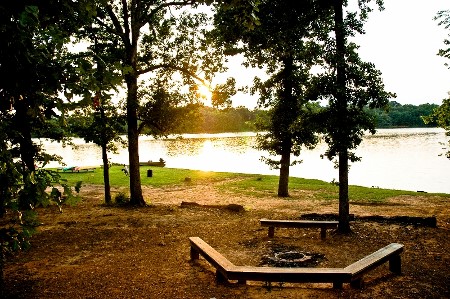
The firepit at Sky Ranch, venue for this year’s ISEA Texas conference

ISEA's annual conference will be held February 18–20 at Sky Ranch in Van, Texas. This year's conference theme is “Creating Connections: Building the Future,” and Dr. Gerald Liberman, PhD, will be delivering a keynote address focused on designing and implementing successful environmental education programs. As a museum educator I've had the pleasure of attending three previous conferences, and I always gain a great deal from the experience. As the name might suggest, the ISEA conference experience is informal and friendly; topics are accessible and participants are extremely welcoming. Through ISEA, I've connected with other educators, learned new skills, and talked late into the night about new approaches to education.

This year’s ISEA conference features a number of sessions that will be of interest to members of the alternative education community. Several focus on creating successful partnerships between educational groups and their communities. Gina Higby from UT will teach workshop participants how to engage diverse audiences in STEM activities through a parachute design class. Dr. Finkelstein and Dr. Silverman from the McDonald Observatory will overview activities about stars and galaxies and advise on how to successfully incorporate astronomy content into science curricula. There's even a session for fearful grant writers; in “It Was a Dark and Stormy Grant Application,” author and educator Christina Soontornvat will apply tools from fiction to write more successful grants.


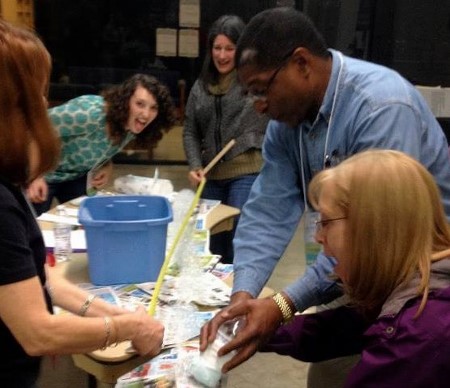
Informal science educators delving into hands-on activities at a past ISEA conference

The ISEA conference always features an incredible silent auction, with participating museums, zoos, aquariums, parks, and educators donating great swag to support scholarships for the conference. This year’s attendees can opt in to participate in a pre-conference workshop focused on crafting engaging social media or attend a post-conference field trip to the Texas Freshwater Fisheries Center. More information about the conference, including registration and a scholarship application, can be found here. Hope to see some of you there!

Emily Weerts


How do children as young as three learn in three languages?

Sharon Munroe serves as outreach coordinator at Austin International School, where her own children happily learn in three languages. In this guest post she explains how the school’s unusual model works.


It is possible for young children to be educated in three languages, even if they have only spoken their native language prior to starting school. In fact, this is both the philosophy and the practice at a unique preschool and primary school called Austin International School located in Northwest Austin. I have seen it myself, both as a parent of young children and now working at the school on the outreach team.

AIS began like many international schools around the world. Founded in 2001 by French nationals seeking to keep their own children immersed in French language and culture during their time in Austin, the school has evolved into one serving both local families and those from as many as 20 different countries, making a very diverse community of learners. Students from all ethnic and cultural backgrounds learn in French, English, and Spanish through immersion with native speakers who are experienced teachers. There is no language prerequisite for entering pre-kindergarten or kindergarten at Austin International School.

What makes the school unique is less readily apparent in the published curriculum than in the way it is delivered and in classroom interactions. Looking around on any given school day, I can see that it is happening:

  • I walk into a Petite Section classroom designed for three-year-olds, and they are singing “Head, Shoulders, Knees, and Toes” in English.
  • Four-year-olds down the hall are painting outlines of bodies, drawing in the heart and lungs using Spanish vocabulary.
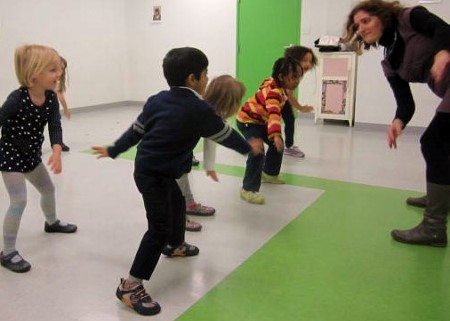
  • Kindergartners are dancing with their native French-speaking teacher in the multipurpose room.
  • Fourth graders in the Science Lab are having a lesson in French about organs and how the heart and lungs work in humans.

The curriculum is not the juxtaposition of three curricula (one French, one English, and one Spanish); instead, it is one unified curriculum in three languages that includes all subjects. It builds on the core learning from year to year, based on the French Baccalaureate curriculum.

In the unit of inquiry on the human body, all students in pre-kindergarten and kindergarten learn vocabulary and the science behind their bodies, incorporating art and music in their classroom as well as physical education instruction. Over three weeks, they learn all of the age-appropriate information from three teachers who come to their classroom on a rotating basis throughout the week. The seamless delivery of the unit allows a dialogue among cultures and languages and develops critical thinking skills. Yes, it happens in children as young as three.

The international faculty leads by example by always working collaboratively. For a typical kindergarten class, a team with a teacher from the United States, France, and Mexico are a classroom team. Each teacher brings his or her personal background, culture, and professional expertise to deliver the best learning experience possible.

Each week when school is in session, they spend at least three hours as a teaching team, planning the units of inquiry and daily lessons and discussing both the needs of the class overall and of individual students. Where one child may need extra support in one language that is new to him, the same child may need to challenge his vocabulary in his native language.

“Fundamental language skills develop in all three languages simultaneously; however, some skills are language specific. Communication between teachers is critical to ensure that students are successful and that we meet their needs in each language,” according to Carol Shay, who joined the first grade teaching team in 2012 after many years in Austin’s public schools.

An assistant teacher helps and nurtures the children alongside each team of three classroom teachers. These vital staff members support the children’s needs both in the classroom and on the playground. Teacher-student ratios are intentionally low to provide support to all learners from preschool through fifth grade.

Many young children are ready to learn at age three in a full-day school environment. They are able to learn a great deal from their classmates and teachers; they see and hear the differences among their schoolmates, who come from many different countries but all now live in Austin, a microcosm of the world. This is the start to their global citizenship.

Austin International School graduates go on to many of the area’s top middle schools—public, charter, and private—and thrive in all settings. One recent graduate, David, who began in kindergarten with no prior background in language or culture beyond his own (as an English-speaking American), has been recognized as a “connector” and won a sixth grade leadership award at St. Stephen’s Episcopal School. Other students are learning a fourth language and excelling in advanced math and science. They are well-rounded young people. Most come back weekly for the Alumni Club activities held on campus.

I have seen the progress of the school, the students in general, and my own children over the past four years. Austin International School develops global citizens and critical thinkers.

For more information, please visit austininternationalschool.org or contact me at outreach@austininternationalschool.org.

Sharon V. Munroe


Tips for outdoor exploration with young children

Michelle Carbone is the youth programs coordinator and an instructor at Earth Native Wilderness School. She also contributes to the Kids in Nature Blog, where an earlier version of this post originally appeared. Thanks for sharing your expertise with Alt Ed Austin’s readers, Michelle!


It’s taken time for me to get used to some aspects of outdoor education. Teaching children to use knives and make fire, as well as hiking with preschoolers (we really are hiking, not just walking), have been some sources of apprehension. But each day, each moment I’m with these children, I not only realize anew how capable they are but also discover more ways to help ensure their safety.

Before the first tools, butter knives, were even handed out in a recent class, we discussed knife safety. We explained how knives are tools, not toys; that using knives is a privilege, not a right. We then spent a whole day practicing carving soap and apples with butter knives.

They all had to earn knife certification, where they proved to an instructor that not only could they regurgitate the information, but they could also explain what it meant to them in their own words, while demonstrating with a butter knife and a stick. Then they were able to use the fixed-blade steel knives. We gave them specific tasks, like carve the tip into a square, or remove all the bark. Soon they were ready to learn different skills, such as how to get rid of knots on the sides of sticks, or how to make a “flower” out of a stick.

I was with that same group of students in a later class, and they were carving pumpkins with knives—not the typical carving knife set you buy for $3.99 at Target, but real, stainless steel knives with a fixed blade. One of the children was celebrating his sixth birthday. It. Was. Amazing. The level of focus, care, and observance of safety rules was astounding.

We have a few basic rules at Earth Native; we call them the ABCs of carving, and the children follow them to a T. They even help one another, telling fellow students if they are too close to them while they are carving, or reminding others to carve away from themselves.

A couple of weeks ago, at the preschool program I teach, we went on a hike. It was probably half a mile—some uphill, some climbing over rocks, some down rocks. Before we came to a hill, I would warn them and suggest some options for safe travel. As they climbed, I commented on how they did, using positive reinforcement. I would say, “I like how (name) is using both their feet AND hands to get down the rocks,” or “Way to sit on your bottom and scoot down this slope!” And they did great. I also said that whenever we see poison ivy, we should turn to the person behind us, point to it, and say “Poison ivy, pass it on!” I’ve also called it “P.I.” in other classes, and the kids just love to point it out because it has a cool nickname.

To sum up, I recommend trying these ideas to help create safer and more positive outdoor explorations for you and your child:

  • clear guidelines (especially with knives)
  • options for success (different ways to climb up and down rocks)
  • positive reinforcement (try to be specific with your comments)
  • nature games (for example, Who can spot the most P.I.?)

Best of luck, and happy exploring!

Michelle Carbone


Transforming education: How a grassroots movement is changing the world

Michael Carberry is the founder and director of the Whole Life Learning Center in Austin and a cofounder of the Education Transformation Alliance. He is also a writer, speaker, and educational consultant. Michael is currently completing an M.A. in Holistic Education from the SelfDesign Graduate Institute. Here Michael sums up his views on the current state of education and what truly meaningful reform looks like. At the end of his guest post, you can watch a lovely new video about his revolutionary (and expanding) school.

I believe in standardizing automobiles. I do not believe in standardizing human beings. Standardization is a great peril which threatens American culture.
                                                 —Albert Einstein
It seems like common sense today that a highly standardized education system will only hinder the creativity of both teachers and students, ultimately damaging their ability to teach and truly learn. Students are often lost and disenchanted within this vast, competitive system. I propose that the highest aim of education ought to be supporting every student in discovering and cultivating his or her unique gifts, while promoting a lifelong love of learning.

Rather than stressing and obsessing over grades and test performance, we educators and leaders in the alt ed movement shift the focus to guiding and mentoring youth toward living more fulfilled, empowered, and joyous lives while promoting health and wellness, ecological awareness, and social justice. Author Ron Miller describes education as “the primary vehicle for cultural transformation.”  This is why it is so important to take a hard look at our traditional education system while researching the myriad alternatives that are sprouting up.

When choosing a school for your child, or deciding on an educational philosophy that you are aligned with, you have to ask the questions: What is the purpose of education? What do I want for myself and my child? And what kind of future do I want to contribute to?

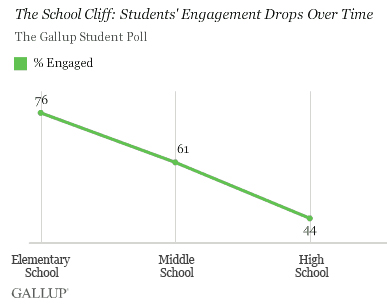
A 2012 Gallup poll demonstrated that the longer students stay in school, the less engaged they become with their own education. The Gallup Student Poll surveyed nearly 500,000 students in grades 5 through 12 from more than 1,700 public schools in 37 states. It found that about 80 percent of elementary students who participated in the poll were engaged with their education, measured in terms of “involvement in and enthusiasm for school.” By middle school it fell to about 60 percent, and by high school, only 40 percent of students would be considered engaged.
It’s no secret: public schools (and traditional private schools too) are focusing on the numbers and forgetting about the students. The most-watched TED Talk ever is “How Schools Kill Creativity” by Sir Ken Robinson. He makes the case that over the past hundred years our education system has basically emulated the industrial, assembly line model. What we need to return to, then, is a more organic model that understands human unfolding and learning as a natural process that requires diverse environments, specialized attention, and unique inputs in order to nourish optimal growth and well-being.
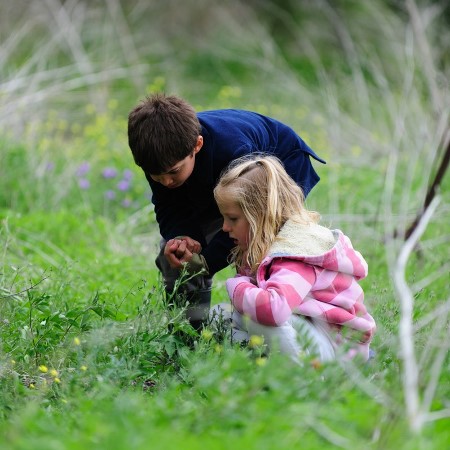
A glimpse of organic learning at the Whole Life Learning Center in Austin, Texas

John Taylor Gatto is another outspoken advocate of education revolution. Gatto was named New York City Teacher of the Year in 1989, 1990, and 1991, and New York State Teacher of the Year in 1991.  He shocked administrators upon his acceptance of this award by lambasting the public school system in a speech that he later expanded into his book, Dumbing Us Down: The Hidden Curriculum of Compulsory Schooling. Gatto asserts that schools confuse students by presenting an incoherent array of information that the child needs to memorize in order to compete in school. He explains that rather than teaching kids to be independent, creative, confident individuals, schools are teaching (through built-in contexts) emotional and intellectual dependence and indifference.

Despite these clear arguments for radical reform in our public education system, pervasive and corrosive programs like No Child Left Behind continue to stifle school districts throughout the country by attaching funding to test performance. The good news is that there is a growing movement of families and educators turning to a rapidly expanding array of alternatives.  The increasing drop-out rates and the steep rise in the number of medicated students are just a couple of examples of the fractured system they are leaving behind.

In the past, alternatives were fewer and farther between. Awareness around these alternatives was quite limited; perhaps people had heard through mainstream sources about Montessori or Waldorf education, but they probably had a very limited understanding of what those were or why they might be better choices for their families than the public school system.

Today the education revolution is in full swing, and it’s not led by any one model of education to universally replace public schools. It’s a movement comprising homeschoolers, unschoolers, co-ops, small independent schools, charter schools, families, and educators choosing options that they’re aligned with—options that see their children and students as more than cogs in a machine being prepared for the workforce, options that recognize that everyone learns differently and honor and support each child’s unique strengths and weaknesses, that recognize the importance of social-emotional learning along with academic study, options that facilitate a connection to nature and promote ecological awareness, social justice, and global citizenship.
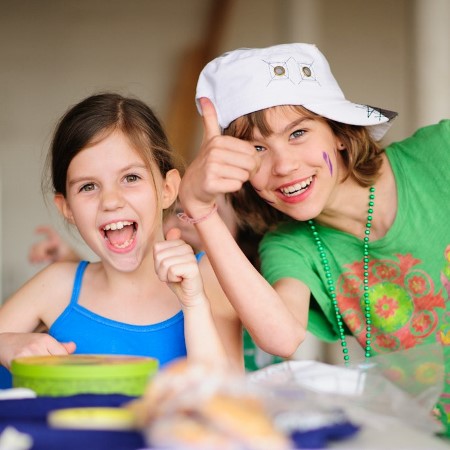
Happy learners at the Whole Life Learning Center

An invaluable resource in this movement is the Alternative Education Resource Organization (AERO), which hosts an annual conference and acts as an international hub for all things alt ed. In Canada, a great example of government-funded measures to support homeschooling efforts can be seen in the organization SelfDesign, which supports parents financially and with a “Learning Consultant” who helps them create and follow through on an individualized learning plan for their child.

One of the cities at the forefront of this education revolution in the United States is Austin, Texas. Yes, that’s right, the home of the President who brought No Child Left Behind to the nation is also one of the most supportive states when it comes to homeschooling. Austin also happens to be a progressive oasis in a conservative state, so it has drawn a multitude of educational options for the many families moving to Austin every day. Beyond the typical alternative options of the Montessori and Waldorf schools, dozens of small, independent schools have sprouted up, each with its own unique learner-centered approach.
In 2012 educators representing a handful of these schools came together to create the Education Transformation Alliance (ETA). The ETA, a growing 501c3 nonprofit organization, now shares resources and organizes school fairs and other events to reach more families and let them know about all the great options out there. Alt Ed Austin, the family consulting service and online resource center that publishes this blog, works closely with the ETA and serves as a one-stop shop for parents interested in comparing the many educational options around Austin. Hopefully, more and more communities will catch on and follow this model of synergistic collaboration. 

Ultimately, the education revolution is not about fixing the current system or finding/creating another system to replace it. It is about supporting the creation of a diverse range of options for families to choose from, while making those options accessible for families, whatever their economic circumstances may be. Every child is unique, every family is different; so why should we continue to pump billions of dollars into a homogenized, one-size-fits-all education for our future generations? It is time we recognize that in order to transform our world to a more just, sustainable, and peaceful place, we need to start by transforming education.

We’re doing just that at the Whole Life Learning Center, and you can be a part of it! Please consider supporting our work by contributing to our crowdfunding campaign. Watch the new video below to learn more about our unique programs, our expansion project, and how you can help.


Michael Carberry, M.S.
 

Unplug & Play! A Living School book review

Paula Estes and her intrepid students at The Living School play a lot of games—and learn a lot while playing them. In fact, games are an intrinsic part of their curriculum. So of course they jumped at the chance to review a new book of games for Alt Ed Austin’s readers. Here are their educated opinions.


About a month ago, the students at The Living School set out to explore the book Unplug & Play! 50 Games That Don’t Need Charging, by Brad Berger. Each week we chose a few games to play, discussed our experiences, and worked to get an overall feel for this new book of games. We hope our review is helpful.

The fifty games in this book are grouped into six categories, allowing every student to find games that really spoke to them. While one set of games may require focus and memory recall, another may challenge your word building or problem solving skills. Some of the best games were the bluffing games, where reading the personalities of the other players was key.

We found that most of the games required personal interactions, and many of them led us to learn more about the other players. We were challenged to use our imaginations, let loose, and have fun. The scorekeeping and competitive aspects took a back seat to the laughter and silliness.  

The Six Categories of Games

  1. “Matchmaker, Matchmaker”—making lists to compare with others
  2. “Call My Bluff”—creatively learn more about other players
  3. “That’s My Plan and I'm Sticking to It”—strategy games designed to make a plan to reach a goal
  4. “Ready, Set, Go!”—speed to the answer before others playing the game
  5. “Try to Remember”—memory games
  6. “I’m Puzzled”—easy-to-create puzzles

We all agreed that there were some great new finds in this book. We tried more than 25 games and decided that at least half of those are ones we will play again. Our favorite games came primarily from three sections: “Matchmaker,” “Call My Bluff,” and “Try to Remember.” These games had us laughing hysterically and wanting to play again and again. Our three favorite games were Popular Match, What You Didn't Know about Bob, and Uncommon Combos.

Learning a new game at The Living School
We discussed some of the pros of the book:

  • Great for playing in the car, around a campfire, on road trips, or as party games
  • Nothing but a pencil and paper required
  • A good variety of games, with something for everyone

Some of the cons:

  • It would be helpful to give a suggested age range for the games.
  • Some of the games had very complicated scoring. (We tended to make up our own scoring when needed.)
  • There were some games we tried but never played because the directions were too confusing and frustrating.
  • It would be helpful to put a range for the number of players for each game. (Groups of 4 or 5 seemed best.)
  • The book itself (a paperback) is a bit flimsy and might not hold up well over time and use.

Living School kids play a bluffing game around the campfire

Overall, we think this book is worth the purchase, as it encourages many types of games that will get people laughing and talking, using their imaginations, and challenging their memories. We love games and will continue to play many of these at school, around the campfire, and with our families.

Paula Estes