


Austin writing camps keep kids’ creativity thriving in the summer and all year long

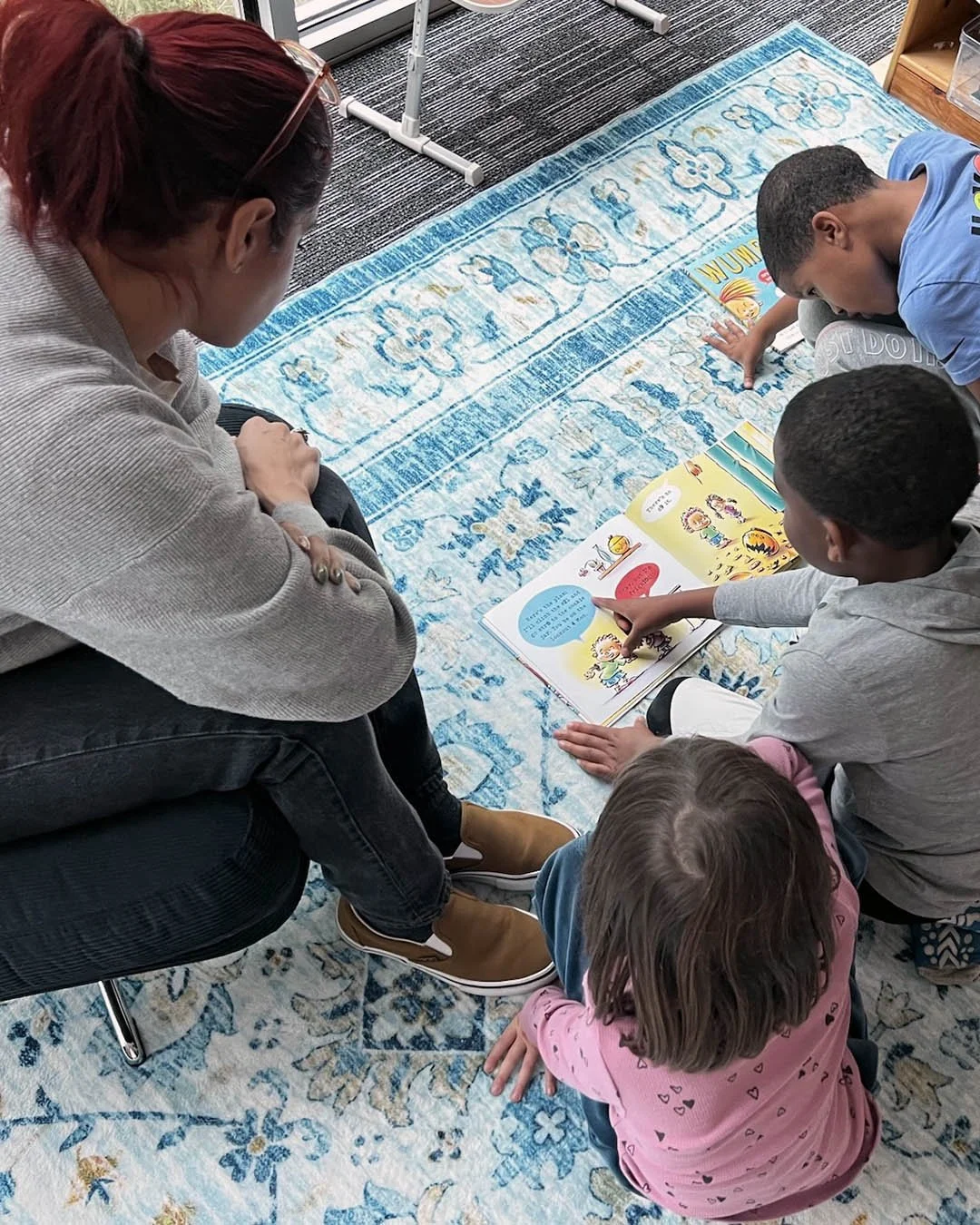
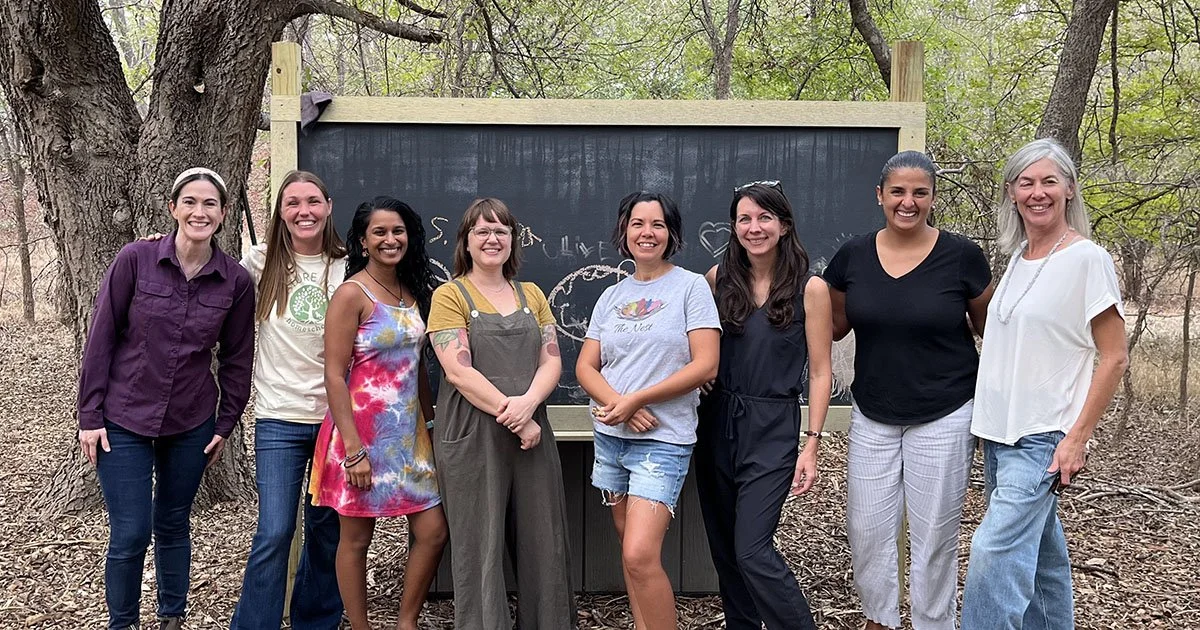
Austin Bat Cave student group.jpg


Because of Jenna and other volunteers from Austin Bat Cave, my words finally feel important. Through her tending and caring, my writing blossomed into something I could never have imagined. Now that I’m in college I feel especially thankful for my Austin Bat Cave experience, which taught me skills that translated into my academic writing and make even my informative papers more engaging. The most important thing is for kids to write and express themselves. The best stories are those that make us laugh and cry, and the most memorable are the original ideas which make us stop and think, or help us see the world in a new way, and therefore both types of writing are essential. Austin Bat Cave understands that.

—Xochi, an Austin Bat Cave alum, and the first in her family to attend college


One of the things writers do, especially when they don’t want to start a new project, is read books and listen to podcasts and lectures about writing. I do it all the time. One of the notions I come across most often in discussions of the craft is, “I really don’t know what I think until I start writing,” or “The process of writing itself shapes my arguments, my characters, my plot.” Even writers who create detailed outlines before putting pen to paper or fingers to keyboard usually admit that the story they finish is very different from the one they started. When I decided to write a blog post about creative writing workshops and camps for kids in Austin, I learned this lesson again.

Ali Haider, program director at Austin Bat Cave (ABC), told me that when kids in their writing workshops learn to analyze how stories and poems are put together, they take that understanding on to everything else they study in school or read and see out in the world. If a student can learn to analyze and then write her own science fiction story, she can also learn to dissect an argument in a history book and write an essay about it—or critique a politician’s speech.

In the experiences offered by Austin Bat Cave and the Austin Public Library Friends Foundation’s Badgerdog program, writing coaches demystify paragraphs and sentences, and students learn how stories are built from scratch. Ali’s approach at ABC reminds me of a tinkering workshop where budding engineers might learn to take apart and put together a toaster or a computer motherboard, gaining an understanding of how things work and the power to create their own entirely new inventions in the process.
 

World Gone Gray
     by Kurion Terrance, an Austin Bat Cave 7th grader
When the ice starts to shiver,
When the fire starts to fade,
When all the water’s in the river,
When you finally get paid.
The world gets cold and gray,
The sea no longer beautiful,
The night is in the day,
Beauty no more, the Earth is dull.
The world is cold or heartless,
It feels like hope is lost,
The smart one from the smartest,
Can’t even help our cause.
The underdog can’t save us all,
’Cause no one seems to care,
The pretty birds no longer call,
This world I cannot bear.
 

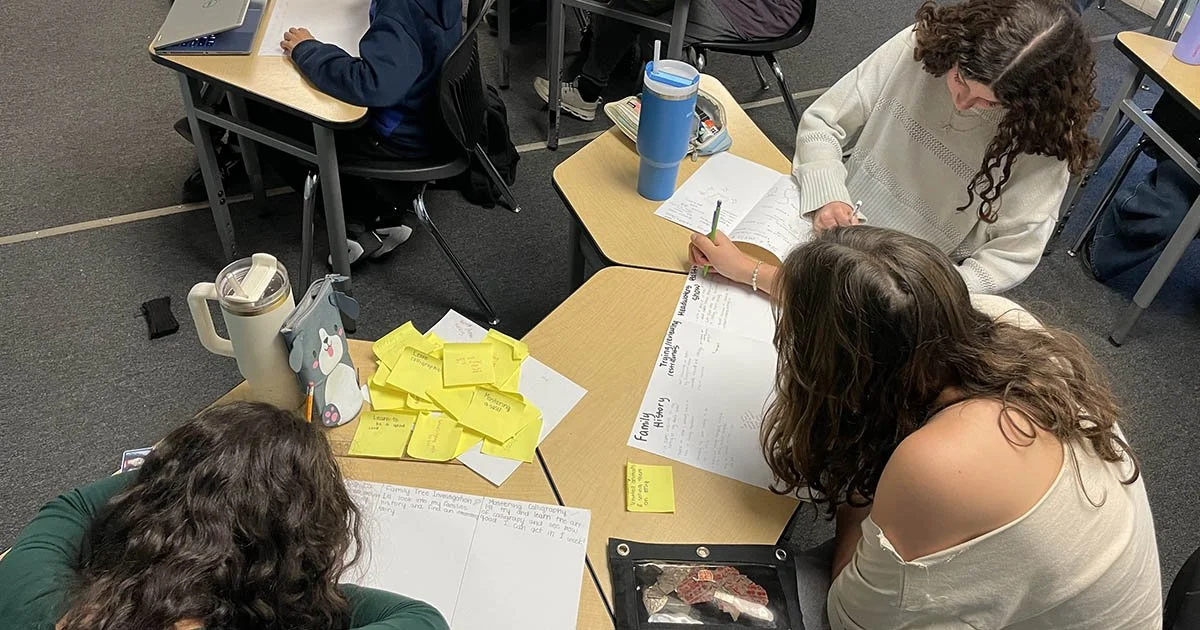
At Austin Bat Cave, about 1,700 students a year get creative in writing classes at participating schools, weekend workshops, and summer camps. Groups are kept small so that the one-on-one mentoring ABC values so highly can happen. “All writers need a good guide and mentor. So ABC builds workshops around one-on-one coaching and feedback,” says Ali.

“We’re lucky that Austin is the perfect place for an organization like ours,” Ali explains. “We have about 50 volunteer mentors each spring and fall, and about 40 more during the summer. They’re really teaching artists—people who write for a living themselves or have a lot of experience in creative writing or journalism and want to give back. They have a passion for storytelling, and it’s hard for kids not to get excited when their mentors are excited.”

At Badgerdog, manager Cecily Sailer finds a similarly talented group of writers fueling her camps and workshops. “Austin is home to a robust writing community,” she says. “Many of the teaching artists in our program are graduate students in the UT Michener Center or New Writers Program or Texas State Creative Writing Program.” Badgerdog’s summer camps and workshops are held in libraries, schools, and community centers all over the city.

Ali works with volunteers to prepare a curriculum that’s fresh each semester and interdisciplinary, brainstorming projects that encourage kids to make paintings, podcasts, or compile zines to showcase their stories. “We want to have projects each student can walk away with, and we want to reach different kinds of learners, so variety is important. Plus each school and each group of students is unique, so flexibility is key.”

Are there any constants in all the variety? “The one-on-one time is something we give all students because we know it’s important and something most teachers don’t have time enough to do. Feedback is important for the growth of a writer. The other constant is that we make sure each student has a notebook to keep—and we provide them if the school can’t afford them.”
 

Breath Notes
    by Emma Baumgardner, a Badgerdog middle schooler
I shape my way with movement
emerging in my throat
and slowly thread the needle
of song.
Bursting to breathe
open my lungs
sound takes moments. Standing
I move to the will of the way
my tongue clicks.
Lips hum,
body sways,
head resonates, bubbling.
And voices cling together,
linking arms,
thumbs pressed against index fingers.
Melody paints piano keys,
never grounded.
Lights pinch our eyes
Laced with sweat,
we burn
with the moment
of performing.
Teeth engulfing our sorrows
like we have wings.
Fourteen of us
living on the stage.
With our passion for music
curling around our chins
and stretching to our ears,
we smile.
We’re not going to be finished
as long as we carry
the note.


In Badgerdog’s many summer writing camps, each classroom has no more than 15 campers. A typical day might start with a free-writing exercise with sharing time afterward. Kids have structured lessons related to some aspect of fiction or poetry, followed by some time to stretch and relax and have a snack. Reading together and playing language games usually rounds out the day.

Even if campers start out as reluctant writers, Cecily says the welcoming, fun, and supportive environment inspires them. “The lessons are less about ‘You will like poetry!’ and more about asking what patterns they notice or why they think the writer decided to repeat herself. We approach learning more as an investigation, an inquiry, rather than a top-down hand-off of knowledge.”

Badgerdog’s philosophy is to offer kids options, not rules. “We show them how writers break rules effectively, and encourage them to take risks. We celebrate weirdness and new ideas, and take the pressure off the writing process,” she explains. “This go-for-it approach helps reluctant writers discover they have talent and interesting ideas and builds their confidence.”

Cecily also explains why Badgerdog emphasizes reading aloud as a way of sharing what the students have created. “Writing becomes immediately more meaningful when it’s read and enjoyed by someone else. It becomes even more real, it lives outside the page it’s written on and inside the imagination of another human being. Reading your own work aloud helps you hear yourself. It’s validating. You take ownership of something you created and then people tell you what it meant to them. It’s about connection and increasing the power of your work. What if Steve Jobs designed the iPhone and then put the plans in a box at the bottom of his closet? What if Prince played all of his songs alone his bedroom?”

I asked both Cecily and Ali if they have any writing tips for parents or kids who aren’t able to attend a camp. Cecily said, “Do anything that interests you enough to keep you writing, whether it’s journaling, writing down all the stuff your brother says, creating an imaginary place where you’re the boss of everything. Like any other skill, practice counts. Playing what if can be another helpful approach. Write for awhile about some absurd scenario. What if toasters spit out pizzas? What if traffic lights started flashing purple? What if your dog was actually helpful? Trying to imagine something unreal forces you to think of details, which is what makes writing powerful for the reader.”

Ali believes in always starting slow. It’s daunting for anyone to sit down in front of a blank page and try to conjure a story, so ABC mentors begin by building relationships and doing world-building and character-building exercises. Parents and their kids can do that too. “We do a lot of work with the building blocks of writing, and that’s more fun than just drafting a story from scratch. At one school students start by making maps and globes about the  worlds they will write about, and the next step is thinking about their characters and all their quirks.”

If you’re ready to stop reading about writing and sign up to WRITE, check out the programs, and consider donating to help them keep thriving.


Shelley Sperry


Media Monday: Come on, bring the noise! Girls rock, and so do boys

The clatter and crowds of SXSW are gone, spring is here, and that means it’s really time to get the kids signed up for summer camps, before they fill up. The number and variety of music-related camps in Austin is pretty overwhelming, and it’s not possible to talk about them all, but here’s a sampling that may get you started.

Most of the music camps in and around Austin lean toward rock and allow young musicians to improve their skills, play in bands, and learn a little about recording and mixing music, sometimes with a little songwriting thrown in. Rock camps include the intimate Eastside Music Summer Camp, the much larger University of Texas Longhorn Music Camps, Lone Star School of Music’s Little Rock Camp, Band Aid School of Music’s Summer Rock Camp, Rock Lab School of Music Camps, and of course, the Austin School of Rock camps.

If you’re into empowering girls with guitars and amps, check out the Girls Rock Austin summer camps. Theyre operated by a nonprofit dedicated to diversity and music education.

Beyond these staples of headbanging summer fun, there are a few smaller camps that you may want to investigate too:

Blue Frog School of Music offers songwriting, performance, and recording camps in its homey location near the Austin Waldorf School. 

Velocity Music Academy has a wide variety of camps for all ages, focused on learning to play the piano, guitar, violin, and other instruments.

Orpheus Academy of Music Summer Camps are offered all summer and range from world music to broadway to introductory instrument classes.

TexArts camps focus on musical theater.

Paramount Theatre hosts a small songwriting camp for kids in grades 6–10.

Creative Action, a nonprofit group of teacher-artists, has a variety of art- and music-themed summer camps planned for this year, including Broadway or Bust and The Studio: Performer camp, all about writing, mixing, and performing music.

If you live near beautiful Wimberley, Agua Fresca Studios camps all combine visual art with music. They’ve got a Ukelele and Drum Camp for ages 9–12, a Music Camp for ages 10 and up, and an Art and Music Extravaganza camp for little ones 6–8 years old.

For kids who love percussion instruments, Ratamacamp offers camps at area public schools for middle and high schoolers.

The Austin Girls’ Choir has an early June camp for beginning singers and a mid-June camp for advanced singers. Both introduce girls to many music genres, from classical to pop.

And if you have a kid who loves chamber music and wants to play in small groups, the Austin Chamber Music workshop is the place to be.

Most music camps in the area are day camps, but if your student wants an overnight experience you’ll want to explore Texas Jaam Camp on the Guadalupe River in the Hill Country in July. Music styles will range from bluegrass and cajun to jazz and Western swing.


Shelley Sperry
 

7 life lessons I've learned as a special needs parent

Kimberly Schuchman, RPh, CWC, is a Registered Pharmacist and Certified Health and Wellness Coach. She has been working at her private practice, Strong Self Wellness Coaching, since 2014. Her mission is to support and empower parents to prioritize and practice regular self-care so that they feel strong and energized. She also provides educational/parenting support to families with special needs children. Before finding KoSchool in Austin, Kim spent nine years advocating extensively for her 2e son in public school. Were pleased to welcome her to the blog to share some of the most important lessons shes learned along the way. Kim may be reached through her Facebook business page or by email at kim@mystrongself.com.


Parenting. It’s the most difficult job many of us will experience in our lives, and one that we receive the least amount of formal training for. Even if you were to become a “certified parent” prior to your first day of parenting, you would still have much learning to do, as each child comes complete with their own set of unique strengths and challenges.

When a child has a diagnosis such as autism, ADD/ADHD, a learning difference (dyslexia, dyspraxia, dyscalculia), sensory processing disorder, health issues, or mental health issues, the parenting waters can become even murkier and more turbulent to navigate. Layer multiple diagnoses onto the same child, and it can feel like “man overboard”!

The good news is that parenting can also feel amazing, exciting, and downright miraculous. It is incredible what your children can inspire you to be, do, or have as a result of their mere existence.

The following are some pearls of wisdom that I’ve gained from my very own special needs parenting experience:

Take time every day to appreciate your child's strengths, no matter how difficult the day has been. Parents often feel a sense of urgency to “fix a problem” when they see their child suffering or struggling in some way. While there are many special needs related issues that may require additional outside help, that process can be all-consuming and deficit-focused. It is important to reconnect daily with your child’s positives, and remind your child of what those positives are. This will help your child develop self-efficacy beliefs.

Use humor, even during difficult moments, and laugh often. Despite our children sometimes embarrassing us with their behaviors, their shameless honesty can be downright funny. Life is too short to take everything so seriously. Laughter and humor can often diffuse a situation more quickly than anger and stern discipline. In addition, laughter reduces stress, elevates mood, and can even contribute to building a stronger immune system.

Build a support network. It takes a village to raise a child, and a city the size of Manhattan to raise a special needs child. Ask for help and support for yourself and your child often. Sources of support can include your spouse, professionals involved in your child’s care, support groups, family members, and friends. Don’t be afraid to share your story and learn from others with similar experiences to your own.

Connect your child with positive adult role models in areas of interest. You can't be everyone or everything to your child. It is especially important for children to have other adults, besides their parents, who can serve as their cheerleaders and mentors. Connecting your child to adults who share their interests can foster their innate desire to want to learn and grow, and help them envision their positive present and future.

Prioritize your concerns. Rome wasn't built in a day, and neither is your child. Children with special needs often have multiple areas in their development where they are struggling. Pick one or two important goals each year that you want to focus on with your child. Ask for their input, if they are able to give it. This approach is less overwhelming for both parent and child.

Give yourself permission and time for daily self-care. It is vital for us as parents and caregivers to take time out each day to recharge our own batteries. As they say on the airplane, “Place your own oxygen mask on first, before assisting others.” Even if it means letting go of other tasks that need to be completed, take 15–30 minutes (or longer if you can) to do something that is especially for you. Ideas for self-care can include meditation, reading a book for pleasure, taking a walk, running a warm bath, or calling a friend.

Practice self-compassion. In a nutshell, be your own best friend each and every day. Life is not perfect, and neither are you. Pat yourself on the back for what you did well and forgive yourself for what you would do differently the next time. Share these thoughts with your children. They will appreciate your honesty and understand that it is OK to make mistakes and learn from them.

 
Kimberly Schuchman
 

A conversation with Dr. Karen Rayne about transgender students and SB6

Of the Texas respondents, 73 percent of transgender schoolchildren said they’d experienced mistreatment because of their gender identity, with nearly half saying they’d been physically attacked and 14 percent leaving a school because of how they were treated.

Another 14 percent of those surveyed said a professional—like a psychologist or religious adviser—had tried to stop them from being transgender, and 41 percent said they experienced “serious psychological distress” sometime in the month before they took the survey.

Lauren McGaughy, “Transgender Texans skip the bathroom to avoid violence, new survey says,” Dallas News, January 26, 2017


With all the controversy heating up in the Capitol over SB6, and growing concern over the problems faced by transgender kids in Texas schools, I decided to talk with Dr. Karen Rayne, a local educator and author with expertise in gender and sexuality issues, particularly related to teenagers. Below is some background on the issue, followed by an edited account of our conversation.

Many thanks to Dr. Rayne for her time and thoughts. Alt Ed Austin highly recommends her UnHushed, “Sex Ed Done Right,” classes and her book, Breaking the Hush Factor.

The debate over SB6, the Texas legislature’s so-called “bathroom bill,” is one that continues to dominate political media, but more important, it is one with sweeping consequences for students across the state. If approved, the bill would prohibit trans people from using bathrooms and locker rooms matching their identities in schools and other public buildings. The law also allows Texas businesses to ignore local ordinances that protect trans citizens’ rights to choose facilities in keeping with their identities.

Nearly 150,000 American teenagers (1 in every 137) would identify as transgender according to a new report from UCLA’s Williams Institute, cited in a recent, enlightening New York Times article by Niraj Chokshi.

Last week the White House weighed in on the controversy, declaring that the federal government would no longer support a stance by the Obama administration that defended transgender students’ rights under 1972’s Title IX, which bars discrimination based on sex for schools that receive federal funds. The decision to stop supporting the Title IX argument affects not only states and localities that want to pass laws requiring that students behave according to the gender listed on their birth certificates, but it also affects an upcoming Supreme Court case originating in Gloucester County, Virginia, in which Gavin Grimm was barred from using the boys’ bathroom at his school.

Last week national attention again focused on transgender rights in Texas. Trinity High School junior Mack Beggs, the 17-year-old boy who competed in and won the girls’ state wrestling championship, was in the news because he had to compete under the gender listed on his birth certificate.
 

I asked Dr. Rayne to tell me a little about how she sees kids and schools reacting right now to the SB6 issue in Texas.

The reaction of a lot of kids, including my teenage daughter, is “Why should anyone care?” The interest in where someone chooses to go to the restroom is oddly invasive, putting the government in someone else’s personal space. It’s strange that we’re in a place where Republicans are no longer the party of small government in many areas, including this one.

The best-case scenario for schools in the future is probably that transgender kids’ classmates will not care at all and will not comprehend that this was ever a serious controversy. I think in the long run that’s where we’re headed, but we’re not there yet.

In general, how do schools and students cope with the process of gender transitioning?

A number of schools are good at supporting students—both public and private schools. The problem with public schools is that they are so large, with very diverse communities. So, in a large community of students and educators, there will always be some people who are not supportive. I do find that in some smaller schools you have a whole community that is supportive of trans kids.

Austin ISD has an array of LGBTQ resources for students and parents, and hosts its own Pride Week in October. Area alternative schools that specifically welcome LGBTQ kids and faculty include, but are not limited to, KọSchool, Skybridge Academy, Griffin School, Integrity Academy, and Radicle Roots Community Schoolhouse.

My experience is that younger kids—elementary school age—are still strongly under their parents’ influence, so if parents are willing and strong advocates, the kids follow their lead and become strong advocates for themselves. Parents can talk with school administrators and are often able to make transitions easier. And of course, transitioning isn’t quite as salient for a six- or seven-year-old, and most other kids that age are fine with it because fewer judgments are made in that pre-adolescent stage.

The older kids are when they transition, the tougher the social, cultural, and biological structures are. The stresses and strains that play out in social lives at school are difficult for all teenagers, and they are less under their parents’ protective wings, so there’s just less that parents can do, even if they want to be supportive.

I think we have to remember that teens have a rough time navigating identity issues, even without the added complication of gender transition. There are issues with self-esteem and self-compassion, and figuring out who you are in relation to the rest of the world. For all teens it’s a socially and politically charged time, and for transgender teens the stresses are multiplied.

Out Youth is a Central Texas organization serving LGBTQ young people with a variety of programs. Right now, they are sponsoring a campaign called #TakeMyHandTexas, and giving away free buttons to symbolize support for transgender rights, explaining: “When you wear a #TakeMyHandTexas button, you’re showing that not only are you an ally to this community, but you’ll also gladly accompany someone to any gender-specific space they feel uncomfortable going to alone, including the bathroom.” 


How can allies talk with legislators, friends, and family about issues of civil rights, privacy, and fairness when it comes to the transgender community?

 It really depends on whom you’re talking to. Some people are lacking good information and quite open to incorporating new ideas when they’re presented. So in that case, statistics and examples you might find in news coverage are helpful. I think one of the best books on the subject is Sam Killermann’s A Guide to Gender: The Social Justice Advocate’s Handbook, which is coming out in a new edition on March 8.

We can talk about the real-world impact of SB6 on vulnerable students, and we can talk about the fact that if protecting people against sexual predators in private spaces like restrooms is the goal, those laws are already on the books. If you think someone is open to new information, then have some solid facts available.

A 2015 Media Matters report found that in 17 school districts with a total of 600,000 students, protections for trans people resulted in no problems with harassment in bathrooms or locker rooms as a result of the protections.

I think one of the biggest problems this kind of legislation introduces is that it encourages and gives license to ordinary people to police others’ behavior.

One real-world impact that people may not be aware of is how laws like the one proposed in Texas stratify gender-nonconforming communities into those who “pass” in the larger community and those who do not. So, for example, if you have undergone hormone treatments or had surgery as part of your transition and you look very feminine, you will be much less likely to be questioned or attacked for using the women’s restroom, and more likely to be questioned or attacked for using the men’s. Transgender women who still look more masculine and cis-gender women who happen to look and dress in a more traditionally masculine way face questions and attacks no matter where they go.

Two advocacy and support organizations with great collections of resources for students, families, and schools are Trans Youth Equality Foundation and Gender Spectrum.

And what about talking with people who don’t seem as eager to receive new information, facts, and statistics?

There are people who have a perspective on gender that is narrow and specific, so for them the idea of a transgender person is an emotional and cultural assault. I think it’s usually not about religious doctrines—I’ve found many religious communities that are strong supporters of transgender people. A lot of religious people hear and feel salience in the notion that “God made me a girl, but then my body did not follow instructions.” Often religious communities support people trying to align themselves physically with what they feel God intended for them.

So, for those who feel assaulted by the idea of transgender people, I think it’s more about inherited cultural values and expectations than religion. We often grow up tied to our culture’s gender structures, without much evidence as to why. In that case, it’s hard to break through unless something happens that makes them question those values and structures.

Do you have any predictions on what we’ll see in terms of both the politics of SB6 and the culture as relates to transgender students?

I would never underestimate how conservative the legislature is, so I would really be stunned if the bill doesn’t pass. But that said, the way our school districts run is somewhat independently, so the implementation might vary a lot.

It’s an interesting time to be alive and looking at these issues. And overall, I think we are coming into a time of more openness. I see us swinging toward openness and acceptance among young people toward each other and toward diversity in terms of gender and sexuality. The current political climate is about reacting to that swing toward openness, and we may lose some footing for a while, but in the long run, openness and compassion and diversity will overcome.
 

Recommended Reading:

Finally,  for some good laughs with a Texas-style political edge, don't miss this short web ad by Oscar-nominated Austin filmmaker Richard Linklater!


Shelley Sperry
 

Experience learning for yourself

Synergy_experiential-learning.jpg

Educator and community organizer Rachel Green Soto is best known as the founder, director, and teacher of Verona Schoolhouse, a pre-K and kindergarten program in southwest Austin; founder and board chair of the nonprofit Kairos Ed; and founder and executive director of the new Synergy Middle School. Rachel returns to the Alt Ed Austin blog to discuss experiential learning, a mode of education at the center of the Synergy model.
 

[E]ducation is not what the teacher gives; education is a natural process spontaneously carried out by the human individual. It is not acquired by listening to words, but by experiences upon the environment.
          —Maria Montessori, The Absorbent Mind


When I think back on my childhood about where I was and what I was doing when I felt like I grew and learned the most, my mind jumps around between the various experiences I had in and out of school such as:

  • practicing for and performing in band concerts
  • preparing for and going on a weeklong canoe trip with Girl Scouts
  • creating campaigns for student council positions
  • volunteering to help students with special needs
  • backpacking around Europe with my family
  • studying abroad
  • working multiple summer jobs
  • participating in theatrical performances
  • writing for local news publications

Upon reflection, I’ve realized that these experiences have certain elements in common that set them apart from the rest. In each experience, I was:

  • actively engaged,
  • working with or for the benefit of someone else,
  • personally invested in the task, and
  • intrinsically motivated by the experience.

According to Wikipedia, “experiential learning is the process of learning through experience, and is more specifically defined as ‘learning through reflection on doing.’” Reflection is a unique element of experiential learning that takes an experience to a whole new level. It is the key to connecting one experience to future learning and experiences, rather than seeing it as a stand-alone event.

What are other characteristics of experiential learning?

Experiential learning takes individual involvement and time. One can’t rush an experience. One can’t force true learning. Through regular interaction in an experience, growth will naturally happen over time. Children don’t learn to walk simply by focusing really hard on the people around them who are already walking, paying close attention, and explaining how walking is done. Rather, they learn to walk by doing the walking  . . . with support, with guidance, and with encouragement. Eventually, they will walk because they put that learning into their body, practiced it, and took the time they needed for it all to come together and make sense.

Experiential learning puts its focus on the process rather than the product. Just think of a piece of art. Whether or not it turned out just as it was intended, the experience of doing the work provided growth opportunities that will be built upon the next time.

Experiential learning connects the pieces and creates opportunities for everything to make sense. When I studied abroad in high school and college, many of the separate skills I had been practicing for so long, including speaking a second language, learning about cultures around the world, managing money, and reading maps, came together and made a whole new world of sense in the context of living in another country. I believe that without that experience, those individual pieces would have continued floating around, disconnected with anything real or meaningful.

Experiential learning is multi-sensory. Research has shown that there is an important link between the brain and the body in learning. A multi-sensory approach helps take learning to a deeper level by engaging multiple senses, thus connecting more directly to the individual. Imagine how alive the life sciences could become for you  if you were spending time in nature, with its sounds, smells, sights, and energy!

Experiential learning is relevant and motivating. Too often students don’t understand, or can’t clearly explain, why they are learning something that is being taught, right? Many of us have wondered or been asked the question, “But when am I going to use this in the real world?” Now just imagine how motivated a student would be to understand accounting, communication, and writing skills if those activities were part of building their own business from the ground up. Connecting the foundational skills development and content learning to an authentic learning experience flips the script completely. When learners are invested in their ideas and excited about the opportunities, they are open to learning in a whole new way.

Is your experiential learning authentic or vicarious?

As you consider what experiential learning does or could look like in your learning environment, I encourage you also to think additionally about how to connect students to the learning in real, tangible, and motivating ways by making the learning not just experiential but also authentic. Experiential learning moves from vicarious to authentic when it goes beyond textbooks, beyond projects, and beyond the classroom walls to involve real-life skills, with actual deadlines, a real purpose, and results in useful interaction with a community. Real life is full of learning opportunities that, with intentionality, can enrich the foundation and application aspect of any learning environment, providing natural opportunities for deep and relevant learning and skill development.

Middle schoolers learn by doing!

At Synergy Middle School, we have redesigned the middle school experience with authentic experiential learning in mind. We are committed to providing a strong academic foundation of skills and knowledge in the classroom that is clearly relevant and motivating to students through its experiential application.

Not only will Synergy students cover the core content knowledge; but they also will make all of Austin their classroom with weekly experiences on location:

Every week at Synergy Middle School is designed to weave academic, social, and experiential learning together in the minds, hearts, and bodies of middle schoolers.

We are thrilled to be working with a strong team of skilled teachers in the classroom, expert educators on location, and a growing community of professional support providers that are enthusiastic and committed to creating and supporting a holistic learning environment where all students thrive through their participation in their learning.


Rachel Green Soto
 

The heart of the college application

Guest contributor Laurie Filipelli is a writer and writing coach who holds an M.F.A from Indiana University. She is the author of two collections of poems, Elseplace (Brooklyn Arts Press, 2013) and Girl Paper Stone (forthcoming in 2018 from Black Lawrence Press). In her work as a college writing instructor, high school English teacher, writing programs manager, and writing coach, she has guided students of all ages to tell their own stories and to become stronger writers and more creative thinkers. Laurie specializes in leading college application essay writing workshops as well as coaching individuals. Learn more at MightyWriting.org and Facebook/MightyWriting.


The college application process can be complex and at times downright frustrating, and it can also be an amazing opportunity for teenagers to step into their future selves, to prepare for college, and to safely practice for the many decisions they’ll face independently as adults. As parents, counselors, and coaches we could nag and nudge and overreach in our efforts, or we could choose to encourage and allow.

Last March, the New York Times ran an enlightening piece called “Advice College Admissions Officers Give Their Own Kids.” The words of wisdom shared by these officers may make the difference between a highly stressful and a deeply meaningful year ahead and can easily be summed up with two simple phrases: engage from the heart, and start early.

As a college application essay writing coach, I can attest that nowhere is the wisdom of this advice more vital than at the heart of every college application—the essay.

Juniors stand at a threshold; writing can help them cross. Composing personal narratives  requires putting meaning to experiences, defining your beliefs, and setting goals for the future. It’s a monumental and potentially life-changing task.

And like all such tasks, it requires tenderness and courage and time.
 

In Self-Reliance, Emerson wrote, “Trust thyself: every heart vibrates to that iron string.” He advised trying new things and honoring inspiration. His advice wasn’t original, even in 1841. After all, it was Plato who coined the expression “Know Thyself,” the gist of which is now the basis for a whole industry of self-help books and sports equipment. But while it’s one thing to quote a pithy saying, it’s another to trust our teenagers to take inventory of their own experiences and dreams, and to find an authentic path.

If you have a high school junior, now is the time to make space among myriad commitments, to ask open-ended questions, and to allow whatever answers come. The Common App essay prompts may be available, but trust me, no one needs them . . . yet. What juniors need is freedom to explore and find what lights them up.


Explore Writing

In writing, exploration means reading and drafting freely. Whether your junior loves reading or not, chances are they haven’t read many personal essays. I direct my students to NPR’s archive of essays by everyday folks at This I Believe, or to David Sedaris, or to the Modern Love column in the New York Times. Do not, I repeat, DO NOT read college application essays. They’re bound to cause creative paralysis.

Exploration also means pre-writing, that wonderful phase in which we bumble and make mistakes without pressure. I ask the juniors to make lists, to ponder photos, to reflect on the day’s news, to take note of the objects they cherish, and to discuss their fears and their convictions.  For this to begin to happen, you may need to get out of the way. If they don’t want to talk to you, help create opportunities where discussions can flourish with mentors, or youth groups, or other family members.

And then what?


Support Healthy Risks

I once had a student come to me deeply dejected. She told me she wanted to write her application essay about World of Warcraft. Her counselor, her parents, pretty much everyone she knew warned against it, but she clearly couldn’t let go of the idea. So I asked, why not write a draft that proves them wrong?

And that’s exactly what she did. Her essay turned out to be a smart and lively romp—from her life on a farm to sewing her own Halloween costume based on a Warcraft character—for which an admissions officer personally commended her. Warcraft was the vessel, and her life filled it up. The same goes for the Harvard student who wrote about her love of Half Price Books, and the Barnard student obsessed with Lauren Bacall. And of course, many of us know about the student who wrote about Costco. Last year she made news when she was accepted into multiple Ivy League schools. Again, I insist you don’t share it with your college-bound junior, but you might enjoying reading her essay here.

As you’ll see, it was about far more than Costco. It was about her heart’s joy.  For this, there is no formula. The best you can do is to create ideal circumstances for such creativity to flourish.

Note: The kind of heartfelt writing I recommend is not the same as highly emotive therapeutic writing that reveals a heart’s pain, or an intense  struggle with emotional challenges. Writing a purely therapeutic essay may very well be an important and healthy part of the process of self-discovery;  however, submitting such an essay as a final product is an inadvisable risk.


Start Early

Despite claims about the power of pressure, very few of us write best in time-sensitive, high-stakes situations. Ideally, essays are done (or well underway) in August,  before senior year starts.  My Warcraft student drafted her essay in May.  

For now, I suggest that juniors simply put systems in place—a Google doc with a list of schools, a notebook to track ideas. And, that they hone the craft of writing. The author of the Costco essay clearly prepared for that essay long before she began to compose. She started with a love of words. She read.

It’s a long journey toward college admissions, but it doesn’t have to be onerous. The advice you can give your own child is simple: Trust your heart, read, and write. And take that first step now.


Laurie Filipelli