Redefining “merit” in our education system

OneHeart_working-outside_blog.jpg

Kristin Kim, founder of Austin OneHeart School, has dedicated the past 20+ years to creating a new paradigm for learning. Along the way she has served in multiple roles: educator, online education company CEO, Harvard program director, attorney, entrepreneur, nonprofit board member, parent, and many more. She joins us on the blog today to announce a new merit-based scholarship program at her school and to explain why she decided to create it. [The school website is under maintenance this weekend, so if you get an error message, please check back in a couple of days.]


Starting a new alternative school in Austin has taught me a lot. Austin, with its freedom-loving spirit and progressive mindset, is an ideal environment for alternative education. As many of Austin’s alternative school founders have shared with me, it takes hard work and love to create and sustain a school. And I am happy to add my voice and vision and serve families who are seeking more than what traditional schools offer.

OneHeart_on-the-floor-together_blog.jpg

The most enjoyable part of my job is meeting and getting to know students and families who leave the conventional school system. The students are incredibly creative, inquisitive, and intelligent, and they are an inspiration for me. I treasure sharing our respective learning journeys, and I respect their boldness. It takes guts to listen to one’s heart and go against the current!

As I thought more about our new school, Austin OneHeart School, and its mission, the more I wanted to celebrate students choosing alternative education and their amazing talents. The National Merit Scholarships, for example, recognize and award academic achievements, but they measure academic achievements almost solely by grades, ranking, and test scores. Just as alternative education has redefined “learning,” I want to change how we all view “merit” and celebrate excellence that goes beyond grades and test scores.

I am happy to announce that Austin OneHeart School will offer full and partial merit-based scholarships for its Upper School (11–18 years) starting in early 2018. The OneHeart Scholars will be selected based on their scholarly achievements, extracurricular leadership, and good citizenship.

Scholarly achievements will include not only school evaluations or their equivalents for homeschoolers but also a student’s record of self-directed and holistic learning. We will consider academic curiosity and innovative ways a student has engaged in learning.

OneHeart_playing-in-the-grass_blog.jpg

Extracurricular leadership will include activities outside the school, such as athletics, student-led volunteer work, and charity work. We want to see how a student has channeled his or her energy outside of school.

Lastly, good citizenship will include anything students have done to better their community in some way. We are interested in finding what they care about in their environment, in and out of school.

I believe these merit-based scholarships will also make a statement to college admissions offices. Yes, alternatively schooled students are also merit scholars, and it’s time we recognize and celebrate their amazing accomplishments!

For more information on the OneHeart Scholarships, please contact Kristin at open@OneHeartSchool.org. The deadline for applying for a 2018 Scholarship is November 30, 2017.

sansori-banner-home_cropped.jpg

Austin OneHeart School is located in South Austin, at 8601 South 1st Street (near Slaughter), and offers lower school (ages 3–6) and upper school (ages 11–18) programs. Austin OneHeart School is a part of Sansori.org and is not affiliated with any religious, ethnic, or political organization.


Kristin Kim

Media Monday: The ocean is telling us something. Young people are listening.

I never imagined I would be thinking about how to approach another crisis like Hurricane Harvey in a Media Monday post within only two weeks. We live in such troubled times. I’m writing this as Irma has just crossed into the Florida Keys, and as yet we really don’t know the extent of the devastation that will be visited upon millions of Floridians and others in its wake.

As we watch and wait, I want to use this opportunity to focus on the issue of educating our kids about the oceans and their powerful, vital role on the planet. There are many excellent and easy-to-find resources about the what, how, and why of ocean science out there from nonprofits, the government, and universities, so I’d like to zoom in today on ocean advocacy organizations that are not just educational, but created and driven by children and teens.

Please visit Alt Ed Austin and Alt Ed NYC on Facebook to let us know how your own kids are showing their interest in oceans, climate change, and the environment. One resource for kids who want to start a small environmental project of their own is DoSomething.org.
 

Kid-Created Ocean Projects

The Sink or Swim Project was launched by Florida teen Delaney Reynolds, who speaks to kids and adults all over the world about the science of rising sea levels. The project has some terrific books, infographics, and a comic book that will appeal to young people who want to learn more, and Delaney’s blog touches on many current climate change issues. Her TED talk explains it all:


Ella Van Cleave, now a student at Quest University, works with The Dolphin Project and Gale Force Films. Ella began her advocacy for oceans at age 12 with a love for dolphins. Today she is making a crowd-funded documentary film called To the Sea. The film aims to tell the “stories of the frontlines of the battle against climate change.” Ella explains, “I believe that one of the biggest steps we can take to ensure environmental sustainability is to get a firm grip on issues that affect the oceans, namely ocean acidification, pollution, and over-consumption of aquatic species.”

Heirs to Our Oceans is a California-based project that includes kids of all ages who want to stop pollution, bleaching of coral reefs, and other environmental disasters. As they explain it, “We have studied what is happening to know why action is needed to end the human impact on our planet’s oceans. We are sad.  We are mad.  We are motivated.  We are inspired.  We are hopeful.  We are tenacious.  And together we are taking action.” The group was featured recently on the “Loudest, Smallest Voices” episode of the Stepping Up podcast about climate activists.


Nine-year-old Milo Cress started the Be Straw Free Campaign in Vermont in 2009 after learning that hundreds of millions of plastic straws used each year eventually end up polluting our oceans. The campaign now organizes kids across the country to be part of the campaign and holds beach cleanups.

The Alliance for Climate Education includes hundreds of kids working in activist roles. One of them is Victoria Barrett, a New York City teen whose home and family were dramatically affected by Hurricane Sandy. Victoria joined 20 other kids in a lawsuit filed by Our Children’s Trust that’s designed to “highlight the threat of rising sea levels and more frequent storm surges” and to force government action.

For older kids, the Sustainable Oceans Alliance is “a youth-led organization that empowers Millennials to become leaders in preserving the health and sustainability of our oceans.” High school and college students are encouraged to start their own chapters.


Finally, if your kids are curious about the science behind hurricanes, I just found a nice set of brief, illustrated explanations about storm surge, how hurricanes form, and more from Web Weather for Kids, a site created by the University Corporation for Atmospheric Research.


Shelley Sperry
 

What should I be listening for?

Emily Cohen-05.jpg

Guest contributor Emily Cohen, MA, CCC-SLP, received her Master’s of Speech-Language Pathology in 2008 from Eastern Michigan University. She is a Hanen-certified SLP specializing in working with children with early childhood language delays. Emily owns a private practice called Tandem Speech Therapy, where she provides in-home services in south and central Austin, Westlake, and Dripping Springs. You can read more about topics related to speech and language development, including her series Playing with Purpose, on her blog.


As a pediatric speech-language pathologist, I get questions from parents on a nearly daily basis about speech and language development. They are trying to determine if their child is a “late talker.” While it's true that all children develop at their own rate, there is a set of developmental milestones that I look for in children.

First and foremost, if you suspect your child is struggling, then trust your gut. Some kids will catch up, and others won’t. How do you know, though, when your child would benefit from seeing a speech-language pathologist? For quick reference, I have developed the 1, 2, 3 Rule. This rule states that at 1 year old, a child will use 1 word or single words; at 2 years old, a child will use 2-word phrases (e.g., “mommy go”; “eat apple”). And at 3 years old, a child will use 3 or more words together to form simple sentences.

The same applies for following directions. At 1 year old, a child will follow a 1-step instruction, such as “go get your ball.” At 2 years old, a child should follow a 2-step direction, like “go get your ball and bring it to daddy.” And at 3 years old, a child should follow more complex, multi-step directions.

More specifically, it is typical for an 18-month-old child to use at least 20 words and have different types of words in their vocabulary. This includes nouns (ball, book), verbs (eat, sit), and social words (hi, bye). At 2 years old, a child should use at least 100 words and combine words into 2-word phrases. The phrases can be combinations the child puts together, like “eat apple.” This does not include common phrases such as “all gone.” A toddler (18–30 months) who has limited vocabulary based on his/her age is often a late talker.

A late talker can have difficulty specifically with spoken or expressive language. It is important to keep in mind that children who are late talkers will have typically developing play skills, motor skills, comprehension (receptive language), social skills, and thinking skills. The idea that “boys talk late” is, in fact, a myth. Development is not gender specific. Boys and girls develop at the same rate despite anecdotal experience saying otherwise.

Emily Cohen-47-2.jpg

What should you do if you suspect your child is a delayed with their speech and language skills?

Your first step is to contact a speech-language pathologist like myself. It's never too early to begin intervention. In fact, research indicates the importance of early intervention (i.e., before the age of 3 and as early as you suspect your child is experiencing challenges) for increased long-term success. Lots of speech and language deficits remediate very quickly, and others take time. If you are worried, seeking the expertise of a local SLP as early as possible is the best pathway to language development for your child.

To get started working with your child now, try one of my favorite strategies, called “Offer a Little Bit, Then Wait”:

  • By giving your child just a few crackers, instead of the whole package, you give your child an opportunity to request more.
  • After you have given those first few crackers, wait. Be sure to have the rest of the crackers in sight so your child knows there is more to come.
  • When your child gives you a message that they want more, provide them with a few more crackers. Pay attention to different types of messages. Some children may use eye contact or eye gaze, while others may use words or word approximations.

By immediately giving your child more crackers, you reinforce the communication. The more positive reinforcement your child receives for communication, the more they will send messages to you!


Emily Cohen, MA, CCC-SLP

When a trowel and a wooden spoon are just what the doctor ordered

NutritionEd_Wholesome Generation-2.jpg

From Austin to New York, parents are putting a nutrition curriculum, healthy cooking lessons, and time spent in vegetable gardens at or near the top of the list of things they want their kids to learn in school, and many alternative and public schools, as well as government programs and nonprofits, are filling that need.

NutritionEd_old school Home Ec book.jpg

I wanted to look at the variety of ways students are getting important nutrition information, and I can tell you one thing: This is not your mother’s Experiences in Homemaking class from the 1950s, nor is it my Home Ec class from the 1970s. It’s much tastier!

Our alt ed community has long been active in emphasizing holistic learning, including healthy eating and gardening in daily school routines. For example, last year the Physicians Committee for Responsible Medicine awarded Austin’s Integrity Academy a “golden carrot” for its commitment to serving plant-based, organic meals. In the short run, commitment to students’ health means more energy and attention in the classroom, but in the long run it also means less risk of disease in adulthood. At Integrity Academy, kids spend a lot of time nurturing plants in the garden and learning to eat mindfully, enjoying the peas, squash, beans,and other crops they’ve grown themselves.

NutritionEd_Wholesome Generation-1.jpg

Another Austin school dedicated to “building community through the power of food” is Wholesome Generation. The Reggio Emilia curriculum at Wholesome Generation serves low-income families and encourages kids to join in all the activities around meal preparation: “Let them be part of the gardening. Part of the shopping. Part of the prepping and slicing and dicing. Get them confident in the kitchen.”

In Texas, alternative schools led the way in bringing nutrition education and cooking into the curriculum, but now AISD is making big strides as well. With a Good Food Purchasing Program that includes sustainability, animal welfare, fair farm labor, and nutrition in its considerations when sourcing food, AISD is improving the quality of breakfasts and lunches served to students. Many of the veggies in those meals now come from the Garden to Café program, started last year at six Austin-area schools where kids can now plant, harvest, and eat their own greens. Another source of yummy, local food for Austin schools is Johnson’s Backyard Garden.

Nearby, in San Antonio, the Culinary Health Education for Families (CHEF) program, launched this year with funding from the Goldsbury Foundation and supported by the Children’s Hospital of San Antonio, is getting serious about children’s health. The program is setting up teaching kitchens for students at the YMCAs, Boys and Girls Clubs, and even the San Antonio Botanical Garden, as well as partnering with local public schools.

Across the continent, in New York City, Yadira Garcia is among many professional chefs working in the innovative Wellness in the Schools program, a growing nonprofit that now reaches about 50,000 students in New York, New Jersey, California, and Florida. The chefs teach cooking classes and nutrition during the day and create special events involving parents after school. In a recent New York Times article, Garcia noted that the key is for students to make the meals themselves, so they “turn into the best salespeople,” encouraging their friends to try the kale chips, black beans, and salads they’ve created.

A for-profit New York City enterprise called Butterbeans is run by two moms who were looking for a way to bring healthy food and wellness education to students in a playful way. In addition to providing lunches to about 15 schools in the city, Butterbeans also offers camps where kids can learn to grow and cook their own food while exploring urban gardens around the city.

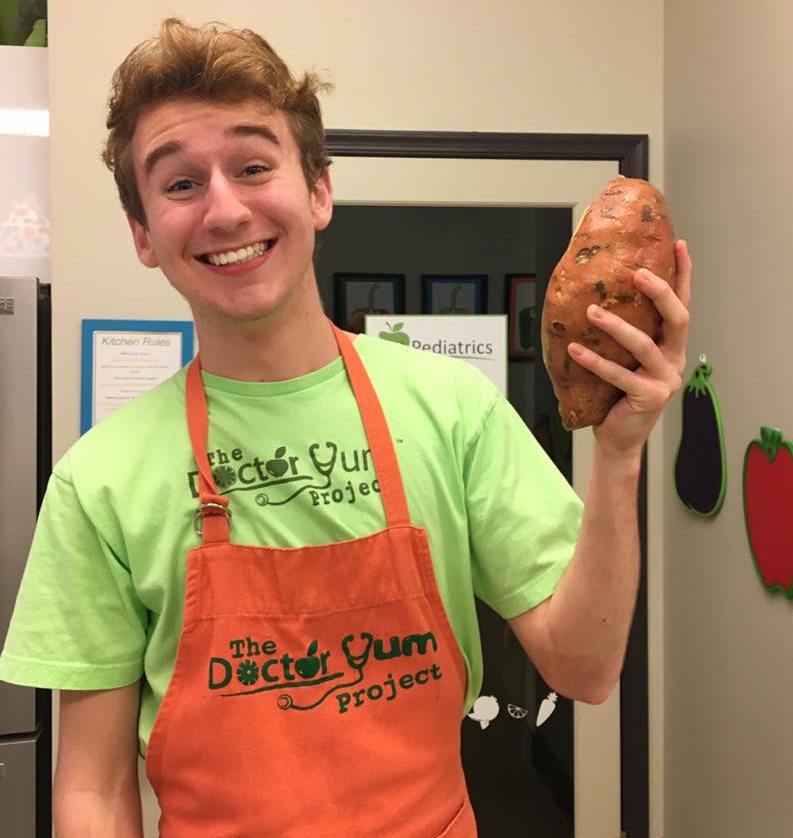
NutritionEd_Dr Yum team member Noah and sweet potato.jpg

In Virginia, where I live, a project with a great name, the Dr. Yum Project, is all about teaching preschoolers and parents to get off to a healthy start with a curriculum that makes cooking and learning about food an adventure. The nonprofit, which is the brainchild of pediatrician Nimali Fernando, also features a “meal maker machine” to help busy families solve the perpetual problem of what’s for dinner with healthy recipes to prepare together.

Okay, now I’m hungry. Time to look for some carrots and blueberries to replace those oreos that are whispering my name . . .

If you’re interested in the topic of kids, health, and food, you might want to take a look at these articles, blog posts, and other resources:


Shelley Sperry


The Alt Ed Teacher Exchange

We invited Gina McMurray to the blog to share a wonderful new initiative for alternative educators in the Austin area. Gina works as a mentor at Integrity Academy and is volunteering her time to coordinate this effort. If you know educators at alternative schools who could benefit from the exchange program, be sure to pass along this post! 
                        

Collaboration and idea sharing among mentors are daily events at Integrity Academy.

Collaboration and idea sharing among mentors are daily events at Integrity Academy.

We are all on the same mission: to change how we as a culture approach education.  Let’s join together in a new form of collaboration with a Teacher Exchange Program!

Mentors/teachers/guides at two different schools can switch places for the day, and learn—through direct interaction—what makes those schools awesome! We will experience what is successful and unique at another alt ed school and bring it “home”: putting into practice new ideas that we gain from other educators and learning environments.

Integrity Academy and Whole Life Learning Center are spearheading this movement, and we are in the planning stages of our first exchange date. One of our mentors will spend the day at WLLC, while one of theirs will come work with us. We all get the benefit of sharing teaching ideas and alt ed culture—without having to hire a sub!

If you are interested in participating in a Teacher Exchange day, please contact me at gina@integrityacademy.org, and I will help facilitate it. Thank you!


Gina McMurray
 

Media Monday: Hurricane Harvey and how your family or school can help

Hurricane Harvey_COHI_Corpus-Christi.jpg

Our area is experiencing such an unprecedented disaster that it’s hard to know what to say or do first. Our focus here is always kids and education, so we decided to use this Media Monday post to boost organizations working to help children and families in the Gulf and Central Texas region.

Please let us know through Facebook or Twitter (@AltEdAustin) if you are a school or group of students volunteering, raising money, or doing other Hurricane Harvey relief projects, and we will try to get the word out.

Donations

We strongly endorse sending money donations to the groups on the ground who are supporting first responders and local shelters, including, but not limited to, the City of Houston’s Hurricane Harvey Relief Fund, All Hands Volunteers, and The Red Cross of Central and South Texas. A long list of voluntary organizations in Texas that are active in disaster relief is available here.

A two-week-old infant safe in a shelter where Circle of Health International is providing vital services

A two-week-old infant safe in a shelter where Circle of Health International is providing vital services

Of special note is Circle of Health International (COHI), which provides medical assistance and other services to women, babies, and other highly vulnerable populations in places of climate disaster and armed conflict throughout the world. We know the organization personally as it is headquartered down the hall from Alt Ed Austin’s office at Soma Vida Work Life Balance Center (which is doing its part by offering free work space this week for those in need during the Hurricane Harvey crisis). We can’t say enough good things about COHI’s heroic work and effectiveness.

Another initiative near and dear to our hearts here at Alt Ed Austin is KoSchool’s student-organized donation drive inspired by Austin Mayor Steve Adler’s call to “do our chores” and create Welcome Kits for Hurricane Harvey evacuees. In partnership with Attendance Records, Capital Factory, Lee Ann LaBorde State Farm Insurance, and Alt Ed Austin, KoSchool students are accepting donations that they will assemble into Welcome Kits. If you’d like to participate, please see the image below and get more details on the Facebook event page.


All area food banks are accepting contributions, including the Central Texas Food Bank (Austin and surrounding areas),  Houston Food Bank, the Galveston County Food Bank, and the Corpus Christi Food Bank. They all take online donations.

So many families are in dire circumstances now, with only the bare minimum of clothing, medicine, diapers, and other essentials, that we especially want to highlight groups that are focusing on children. Many groups will need help over the long term to support people who have lost nearly all their material possessions and will take months or years to rebuild and make themselves whole again.

Volunteers

Many churches and nonprofit groups in Austin are looking for volunteers, and we know that plenty of students and people in the Alt Ed community are eager to help.  A general clearinghouse for volunteers to assist in projects related to Hurricane Harvey is available at the National Voluntary Organizations Active in Disaster site. Locally, the Austin Disaster Relief Network has a constantly updated list of trainings. And of course, the American Red Cross is seeking volunteers now and always, and will train you in disaster relief protocols.

Finally, we understand that many hospitals and trauma centers are experiencing blood shortages, so consider heading to a local blood donation center this week.


Shelley Sperry and Teri Sperry