Media Monday: New year, new debates over tech in the classroom

My resolution for the month of January involves deleting quite a few news feeds and social media apps from my phone for a while. It’s not quite a media fast, but certainly a restricted diet to start the new year. At the same time, I’m becoming more convinced that my smartphone is an indispensable tool for research in my work and for exploration of the world of art and science.

Lately it seems that educators are in a similar pickle: how to balance the addictive and troublesome aspects of the digital world with the undeniable value of the information and interconnection our phones provide? How much smartphone use in the classroom is too much? When is a digital fast in order, and when should kids be gorging on the world of data, video, and stories available literally at their fingertips?

Many educators are wholly embracing the power of the computers in kids’ pockets by using Twitter, Facebook, calendar apps, and texting to connect with students about assignments; asking kids to learn about current events and scientific advances by exploring government data sites, magazines and journals,  and the latest scholarly papers; and watching academic panels and real-time experiments on video. Smartphones are also allowing for “flipped classrooms,” in which kids absorb key information online so that they can use precious class time to put their knowledge into active practice in discussions, labs, and group projects.

In the 2017 Digital Study Trends Survey, answers from high school students demonstrated that smartphones, tablets, and similar learning technologies are quickly expanding as part of most school curricula, with 60 percent of students saying that tech helps them improve their grades and prepare for exams.

One of the most exciting trends in educational technology is in the realm of assistance for kids with learning disabilities and special needs. Many phone apps allow students with a variety of reading challenges to translate written text to speech, for example.

But despite all the advantages, parents and educators are understandably concerned about the need for student privacy protections, boosting face-to-face human interaction in the classroom, and ending the use of technology employed in bullying and other forms of harassment. One recent Atlantic article sounded the alarm by suggesting that personal use of phones by teens—although not specifically classroom use—is “destroying a generation.”

It’s an issue that will likely grow even more critical in the next few years, as tech futurists are suggesting that we need to be preparing quickly for the not-science-fiction-anymore world when kids’ contact lenses will record video and artificial intelligence (AI) will help them find, read, and interpret research materials in new ways we can’t even imagine.

My resolution for the rest of 2018? To learn more about where the classroom tech debate stands now and where it’s going, and then report back here. If you’re interested, here are a few recent articles to start with:


Shelley Sperry
Sperry Editorial
 

Media Monday: Finding reading buddies on BookTube

A lot of us are in a mad rush right now to make sure we have some meaningful gifts for the kids in our lives, or we’re picking out a few items to offer to charities who are collecting gifts for those in our community who have much less than we do. Either way, books are often wonderful options for kids of all ages.

One fun way to find out what young people are reading and enjoying this year is by taking a look at BookTube, which is an enormous community of book enthusiasts on YouTube. BookTubers put out reviews and recommendations of all sorts in the form of vlogs, but YA books are perennial favorites because of the youth of most of the folks doing the vlogging. At this time of year, members of the community are putting together their “Best of 2017” lists, rating everything from science fiction and fantasy to romance to mysteries to how-to and self-help nonfiction books. If you’re looking for recommendations for a particular young person, go to YouTube and try a search of “best books of 2017” or “2017 favorites” and the genre, setting, or types of characters they enjoy. Then watch several of the BookTubers run through their favorites. Right now, BookTubers are voting on their top Young Adult reads of 2017 in a variety of categories via the YA BookTube Awards, so check out those finalists here and follow #YABookTubeAwards on Twitter.

BookTube also includes web series based on books—most famous is the Lizzie Bennet Diaries, a modern retelling of Pride and Prejudice. BookTubers frequently host read-a-thons in which they challenge themselves and each other to read as many books in a day, weekend, or month as possible. They cheer about their latest book hauls, and they discuss their most anticipated upcoming releases. In general, it’s an enthusiastic group of fans of reading who encourage and support each other.

But in addition to gushing or scathing reviews, BookTubers often delve into political and cultural issues of the moment, including prejudices of all kinds and the lack of diversity on BookTube itself. For example, see mynameismarines’s “Why Is BookTube So White?” Last year (and continuing this year) several BookTubers got together to promote reading diverse literature via a Readathon called  #Diverseathon. Like any social media site, there can be hateful and intolerant commenters, and there is a popular category of “Why I Hate BookTube” videos that are worth taking a look at as cautionary tales.

Below is a short list of BookTubers that will give you a taste of what the community has to offer. And if your son or daughter leans in the bookish direction, there are several great tutorials from BookTubers on how to get started creating your own channel, including Little Book Owl’s “How to BookTube.”

  • With almost 170,000 subscribers, BooksandQuills is a superstar in the community who lives in London but grew up in the Netherlands. She reads widely in YA and other genres, but also offers interviews about how to organize your library, how literary translators work, and many other topics.
  • AWildSanaaAppears is an anime lover as well as a book lover who is especially fond of science fiction and fantasy and has great specific recommendations for kids, including middle grade readers.
  • AlessaReads is an 8-year-old BookTuber who is amazingly prolific even though she just started her channel in early 2017.
  • BooksandBigHair jumps into wide-ranging discussions of book-related topics, including book conventions and re-reading Harry Potter with questions about class and prejudice in mind.
  • If you’d like to feel like a slug when it comes to reading, check out 10-year-old Snazzy Reads and his extraordinary word habit.


Shelley Sperry
Sperry Editorial
 

Cockroaches, coyotes, and connection: A talk with Barbara Croom of the Austin Nature & Science Center

ANSCpic2.jpg


We’ve been thinking an awful lot about experiential education here at Alt Ed Austin lately, and maybe you have, too. Unfortunately, as my daughter moves through high school, there seem to be fewer and fewer opportunities for the sort of amazing outside-the-classroom experiences she had as a little girl. That’s unfortunate because many teens are desperately searching for inspiration for future careers and for their own creativity. And that’s part of what experiential education is all about.

This week I had a chance to talk with one of Austin’s premier experiential educators, Barbara Croom, who runs the school programs at the Austin Nature & Science Center (ANSC). She helped me understand a little more about why experiential learning centers like ANSC are usually filled with elementary and preschool students rather than teens:

As students get older, the rules and expectations for teachers increase, and it becomes more difficult to request funds for extra enrichment like they would find at ANSC. Students and teachers have to worry about passing tests. And buses often are spoken for by band directors and athletic coaches. But we do sometimes have older students who come on their own to work on science projects and papers, and our staff members are happy to help them.

Here’s the rest of our conversation:


What are some of the programs students respond to most enthusiastically?

Well, we’ve done our Wild about Wildlife for 40 or 50 years! Nothing connects a child to nature like touching a snake or a bunny or a cockroach. Those are instantaneous connections that are not forgotten. We have some staff members here who vividly remember coming as first-graders to see the cockroaches!

It has evolved over that time, of course, and now it’s about an hour-and-a-half program where students rotate through stations where they can touch and learn about live mammals, birds, and reptiles. They also see and hold pelts, skins, and skulls. Older children begin to learn about evolution and adaptations of animals to their environment. Other programs during the year involve geology and fossils, astronomy, and aquatic ecosystems. We try to follow the standard curriculum topics so that we can support what teachers are doing in their classrooms with our hands-on experiences.
 

ANSCpic3.jpg


What’s the role of your staff of educators?

What’s most important is that they connect with the children as quickly as possible. We stage the environment so that happens: Everyone—staff and students—sits on the floor at first, in a horseshoe shape—“crisscross applesauce” style—so that our educators can make eye contact with every student. We want to create a comforting atmosphere so kids aren’t intimidated by someone towering over them. We say hello and start chatting about the animals or geology, and soon the kids are enamored.

The key for us is to have people who love teaching. Many of them begin with us and then go on to school settings. They all have undergraduate or masters degrees, some in the sciences and some in other subjects, but all of them spend time in intensive training before they begin. And they are involved in experiential studies too, just as the students are. They go to the Hill Country to dig for fossils. They get their own hands-on experience learning about reptiles, plus discussions with experts from around the state. They are lifelong learners—just as we want the kids to be.


How do you know what level the children are at in their science knowledge?

ANSCpic1.jpg

We ask a few questions and let them ask questions so that we quickly understand where they are, then we start “coaching” them while they’re handling the animals or the rocks or other materials. We help them realize that they can understand a lot just by observing, touching, and listening. We ask them to compare skulls and see if they can suggest reasons the coyote has a long skull and a snout that’s very different from a rabbit’s or a human’s, for example.


Can any child, including one with some special needs, have a good experience at ANSC?

We make all our programs inclusive now. It’s a process we’ve been working on for the past 8 or 10 years. We provide extra staff and help for children who may be on the spectrum. We have a staff member who is learning American Sign Language, and several special programs for students who are hearing- or sight-impaired. This is a priority.


Do you have many homeschooled children visiting ANSC?

Yes! Hundreds! We have a monthly homeschool program that lasts four days, and that includes children from preschool through high school. We do such a variety of programs, and our staff are so good, that even if children end up in a classroom setting when they’re older, their parents bring them back for the homeschool events!


And finally, do you have a philosophy related to the kind of educational experiences you offer at ANSC that you want to share with parents and kids?

Mindfulness! As an educator my goal is to connect children and adults with nature and science. I believe that if you come to it mindfully, the connection will happen. Even a child who is afraid to go for a walk in the woods at first—with mindful attention that connection will happen.


Shelley Sperry
Sperry Editorial
 

Learning with our senses

LearningWithOurSenses.jpg

I recently happened upon a beautiful photo essay by Morna Harnden on some of the ways experiential learning takes place at Austin Children’s Garden. She has kindly granted Alt Ed Austin permission to publish excerpts here. Morna is a co-founder and co-teacher there, along with her husband, Ben Harnden, where they offer a variety of preschool programs as well as elementary-level homeschool science classes in South Austin.


Children use their senses to explore and try to make sense of the world around them. They do this by touching, tasting, smelling, seeing, hearing, and moving.
 
We love to provide opportunities for children to actively use their senses as they explore their world. “Sensory play” is crucial to brain development—it helps build nerve connections in the brain’s pathways. This leads to a child’s ability to complete more complex learning tasks and supports cognitive growth, language development, gross motor skills, social interaction, and problem-solving skills.
 

Sit Spots

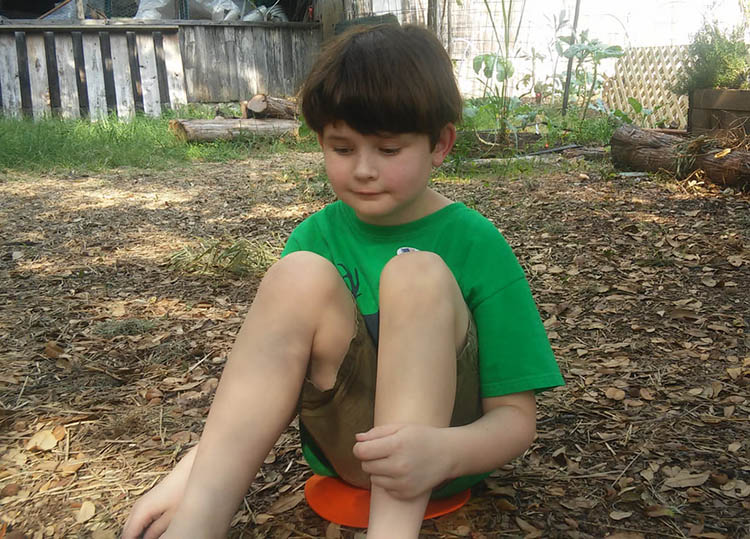
To start off our unit on the senses, we searched out our first Sit Spots. (We first learned about Sit Spots from Earth Native Wilderness School. If you haven’t had a chance yet to check out Earth Native, you must! They have amazing camps, preschool programs, workshops, and more!) In our Sit Spots we focused on our senses and discussed all the different sensations we experienced.
 

Sit Spots 1.jpg

We listened to all the sounds around us and heard:

"crickets"
"squirrels"
"church bells"
"my breath"
 

Sit Spots 2.jpg

With our eyes closed, we touched our surroundings and felt:

"leaves"
"something tickly"
"sticky grass"
 

Sit Spots 3.jpg

With our eyes closed, we smelled our surroundings and smelled:

"popcorn"
"leaves"
"air"
 

Sit Spots 4.jpg

With our eyes open, we focused on what we could see:

"my friends"
"clouds"
"magic tree"
 

Sit Spots 5.jpg

We focused on what we could taste in the air and had some surprising responses:

"ice cream"
"popcorn"
"just air"
 

Our Sensory Garden

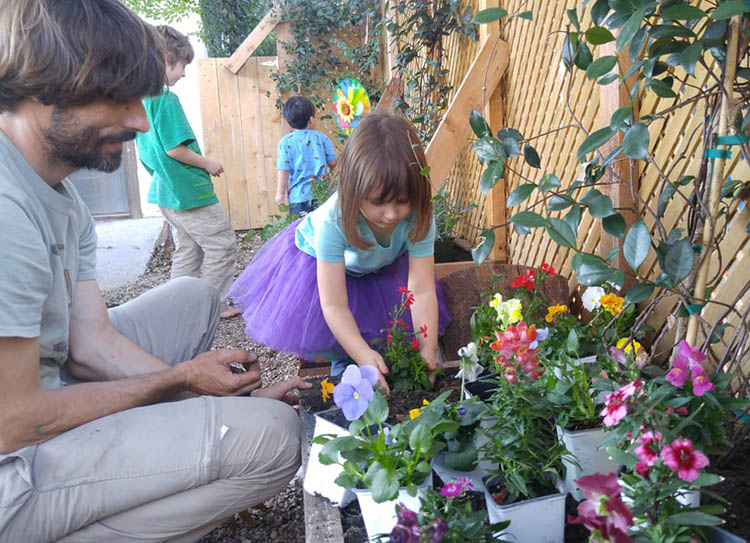
We planted a garden for each of the five basic senses!
 

Sensory Garden 2.jpg

The kids dug their own holes with a spoon and learned how to gently loosen the roots of the baby plants before planting.
 

Scent Garden.jpg

In our Scent Garden, as it is pretty shady, we planted many varieties of mint:

Chocolate mint
Orange mint
Pineapple mint
Grapefruit mint
Spearmint
Peppermint
 

Taste Garden.jpg

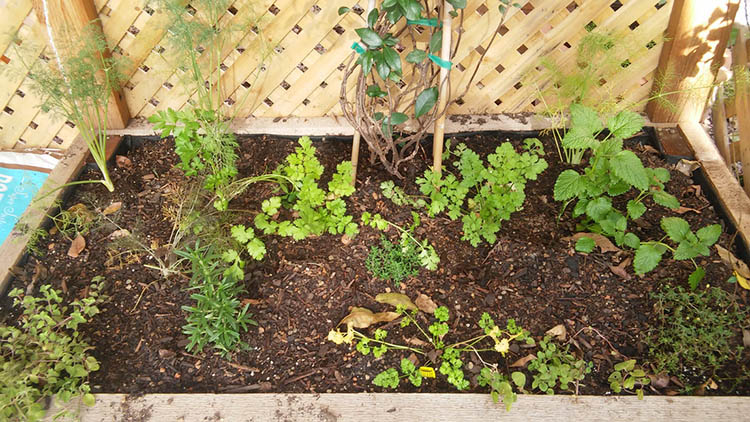
In our Taste Garden, we planted many different seasonal herbs:

Dill
Fennel (fun taste test to do with the dill, as they look so similar)
Parsley
Cilantro
Rosemary
Thyme
Oregano
Sage
Lemon Balm
Chervil
 

Listening Garden.jpg

In our Listening Garden, we planted grasses and plants with crispy leaves that make interesting sounds. Adding wind chimes and windmills enhances the listening quality of the garden.
 

Touch Garden.jpg

In our Touch Garden, we planted a variety of plants with soft leaves and interesting textures, including rubbery succulents.
 

Sight Garden.jpg

In our Sight Garden, we planted edible flowers with all the colors of the rainbow!


For an extended version of this articleincluding recipes for salt-preserved herbs and spice-scented play dough, instructions for “Easy Peasy Tie-Dyed Socks,” a scientific explanation of why mud pies make you happy, and much morevisit Morna’s original post on the Austin Children’s Garden blog. And don’t miss ACG’s upcoming events on Saturday, December 9: an Open House, including a free children’s yoga class, from 2pm to 6pm (RSVP to austinchildrensgarden@gmail.com); and a Kids’ Night Out from 3pm to 7pm, where children aged 3 to 10 will create their own candles with crayons and beeswax (tickets and more info available through Eventbrite).


Morna Harnden


Opening the door to gratitude

As we rush toward Thanksgiving this week, I’ve been thinking a lot about how to model and teach gratitude. During this past year of political and environmental turmoil, it’s often been difficult to pause and remember to be grateful for the many good things in my life.

One thing I’m always grateful for is my weekly yoga class where serenity reigns for at least an hour and my instructor always brings in the perfect quote to set the tone for meditation. So instead of looking for Media Monday inspiration online or in the news or entertainment world, I’ll return to the spoken word. The quote last week was from Melody Beattie:

Gratitude unlocks the fullness of life. It turns what we have into enough, and more. It turns denial into acceptance, chaos to order, confusion to clarity. It can turn a meal into a feast, a house into a home, a stranger into a friend.

How can we help our kids experience gratitude? The answer isn’t a big surprise. Recent research confirms that parents who show gratitude are more likely to create experiences that develop a sense of gratitude in their children. It’s important to teach children not only how to express gratitude as a form of politeness but also to talk about how it feels to be grateful.

Back in 2014, we learned from Nicole Haladyna how Austin’s Woodland Schoolhouse encourages empathy and gratitude through bonds with nature.

Back in 2014, we learned from Nicole Haladyna how Austin’s Woodland Schoolhouse encourages empathy and gratitude through bonds with nature.

We can also look for schools where gratitude is a part of daily rituals and make sure to put kids in situations where people talk the talk and walk the walk of gratitude during everyday life—family dinners, community yard sales, charity food drives, even birthday parties. Writing thank-you notes and taking time each day to list a few things for which they’re grateful are easy but proven ways to increase children’s understanding of what it means to be grateful.

One interesting bit of information in the research is that both optimism and extraversion are strongly associated with gratitude. Extraversion seems to lead people toward the kinds of social activities with larger groups where it’s easier to demonstrate and learn gratitude. And optimism tends to lead people toward activities where they can make the world better, which then boomerangs back and increases gratitude. Because gratitude is such a bedrock part of most religious traditions, parents who are involved in organized religion also seem to increase opportunities for children to feel and understand gratitude.

For the past five years, a psychology project of the Center for Developmental Science, jointly run by the University of North Carolina–Chapel Hill, Duke University, and North Carolina State University, has specifically been working toward understanding the teaching and learning of gratitude. They’ll hold a conference about their insights on gratitude in January.

In an article by Alyssa LaFaro for UNC, researcher Andrea Hussong says, “We think that a lot of gratitude lessons are learned in daily conversations, rather than big, sit-down, let’s-instill-a-virtue discussions.” The team has recently started producing some short videos to help model such conversations, but the goal is not necessarily to change kids’ behavior, but “helping parents learn how to listen to their kids, how to help kids share with their parents, and then how parents can appropriately share back with their children.”

One more good thing about gratitude: UNC psychologist Sara Algoe says, “Gratitude may actually alert us to people in our environment who are looking out for our best interests. And that’s really central to survival, to the human species. We need to be able to find people who have our backs.”

So in the interest of my own survival: Thank you to everyone who is part of the Alt Ed Austin and Alt Ed NYC communities online and in person, including my sister Teri in Austin and Karen Sullivan in New York, who let me contribute from afar. I’m grateful that I had a chance to meet so many of you a year ago at the 5th Anniversary party, and I look forward to meeting more of you next time I’m in Austin or New York! Happy Thanksgiving!


Shelley Sperry
Sperry Editorial
 

New graphic novels workshop for high school students and adults

GraphicNovels.jpg

Jess Hagemann is an award-winning author and accomplished biographer. She owns and operates Austin’s premier ghostwriting service, Cider Spoon Stories, through which she helps seniors, veterans, small business owners, and others write their life stories as books. She’s helping us celebrate National Novel Writing Month (#NaNoWriMo) with this guest post about her upcoming workshop, Graphic Novels and Novel Graphics.


I was six years old when the Bosnian War broke out in 1992. Protected in my little corner of Kansas, I watched Sesame Street, not the news. I didn’t know that 100,000 people were dying in this artificial conflict, the result of one group of people asking for their independence, and another group of people deciding they had no right to live at all. The largest European instance of ethnic cleansing since the Holocaust didn’t end for three bloody years. By then I’d graduated from PBS to MTV: a rapid coming-of-age that left me wise to the ways of pop culture—but not the politics to which pop culture responds.

It wasn’t until college that I read Joe Sacco’s Safe Area Gorazde, a graphic novel published in 2000 that recalls the journalist-author’s four months spent in the middle of the conflict. Based on the stories of several Bosniaks that Sacco interviewed in Gorazde between 1994 and 1995, the extent of the violence is revealed through a series of graphic vignettes and black-and-white illustrations more powerful than any photo essay. I learned then what it means for an author to give voice to the voiceless. For an artist to render truths we couldn’t otherwise have known. For trauma victims to share their stories, and finally be heard.

This eventually led me to start Cider Spoon Stories, a ghostwriting and editing service, in 2014. Ghostwriting means that if you have a story to share, but don’t have the time or confidence to write it down, you’ll tell it to me, I’ll write it for you, and you get the credit. It’s just that important to me that firsthand experiences and critical truths be disseminated.

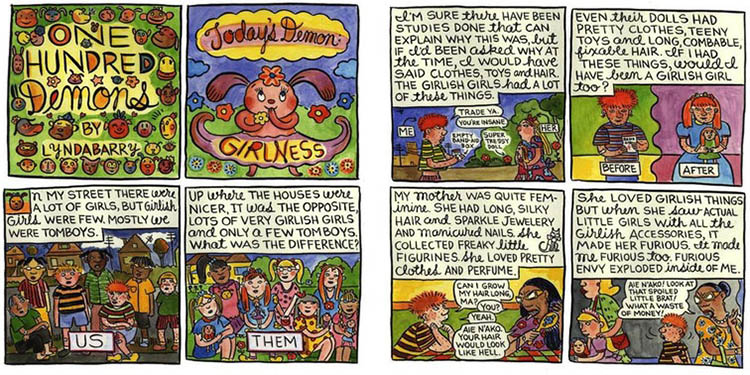
When I’m not writing, I’m teaching other people to write. This month, the topic is (naturally) graphic novels. On Saturday, November 18, we'll be discussing Lynda Barry, Marjorie Satrapi, Mat Johnson, Mark Danielewski, Chris Ware, Tom Phillips, Sophie Calle, and more. We'll look at how they use illustration, obfuscation, and found objects—all layered with (or revealing) text—to create beautiful, whimsical, or disturbing stories—some for the social good, some for the sake of telling a dang good tale.

If you want to learn to create engaging, active characters; develop coherent narrative around those characters; write detailed, scene-by-scene story outlines; and script through page breaks and panel descriptions, register here. The class is appropriate for ages 16+.


Jess Hagemann