

Is it ADHD or a kinesthetic learning style?

Continuing our summer mini-series on learning styles, I’m pleased to share this guest post and video from Madison McWilliams, who runs The Joule School. This unique program is now enrolling for Fall 2014.

LearningStyles for blog.jpg

At The Joule School, we serve students who are considered bodily-kinesthetic learners. These are children who learn best when they are allowed to engage their hands and feet as well as their minds. To some, there may appear to be an overlap between these children and those who have been diagnosed with ADHD, a neurological condition characterized in part by hyperactivity (the need to move often and difficulty in sitting still).  

Introductory material on learning styles is available here, here, and here. In short, a learning style is the method by which a student takes new information and converts it into knowledge. Learning styles influence the entire educational process, including which strategies children use when studying for tests and the types of subjects that they prefer. Many education experts recognize three primary learning styles: auditory, visual, and kinesthetic.

A kinesthetic learning style is characterized by an ability to retain (memorize) information best when it is related to movement.  When presented with new material at school, kinesthetic learners zero in on action that can be performed with the human body. They have an innate ability to copy movement and tend to excel in gross and fine motor activities such as dance, sports, art, or playing instruments. While telling a story, they will likely act out the scene or role-play while they speak.  Kinesthetic learners function best in a classroom where they can role-play, build, measure, jump, sing, and experiment because all of these actions help them process information into long-term memory.  

Kinesthetic kids have a long history of being unsuccessful and/or unhappy in traditional schools because their natural tendency toward movement is at odds with desk-and-lecture classroom structure. These children

  • tend to “zone out” when listening to a teacher for a long period of time and may daydream or doodle;
  • have difficulty concentrating on paper-and-pencil assignments;
  • get “the wiggles,” which may lead some students to fidget, kick, or get out of their seats;
  • may interrupt a student or teacher (likely with requests to show or demonstrate something);
  • may drop things on purpose, in order to have an excuse to get out of the seat to pick it up; and
  • walk to the pencil sharpener or bathroom an unnecessary number of times.

Misinformation has led many adults to automatically assume that behaviors like these (especially from boys) are the result of ADHD. Teachers of these students may respond with discipline or by contacting parents with a referral for ADHD testing. In fact, while the rate of ADHD in youth is approximately 8 percent of the total population, one recent study noted that when given a diagnostic checklist, schoolteachers rated 20–23 percent of the entire male population at their schools as having ADHD.*  This is not surprising, as the symptoms of ADHD in the classroom are almost identical to those of a kinesthetic learning style.  ADHD students often

  • blurt out answers to questions;
  • fidget in their seats, kicking the seat in front;
  • daydream;
  • have difficulty listening to a teacher for long periods of time;
  • may get out of their desks and wander around the classroom at an inappropriate time; and
  • interrupt the teacher or classmates.

Since the manifestations of ADHD and a kinesthetic learning style are so similar, it is prudent to address an ADHD referral by first screening a child for a kinesthetic learning style. This helps ensure that the child's behaviors are not simply evidence of a mismatch between his or her needs as a student and the learning environment. Two simple questions can help establish whether or not the student is challenged by ADHD or is simply a bodily-kinesthetic learner:

1. When provided with a bodily-kinesthetic lesson, do the “ADHD symptoms” disappear or appear to be dramatically reduced?

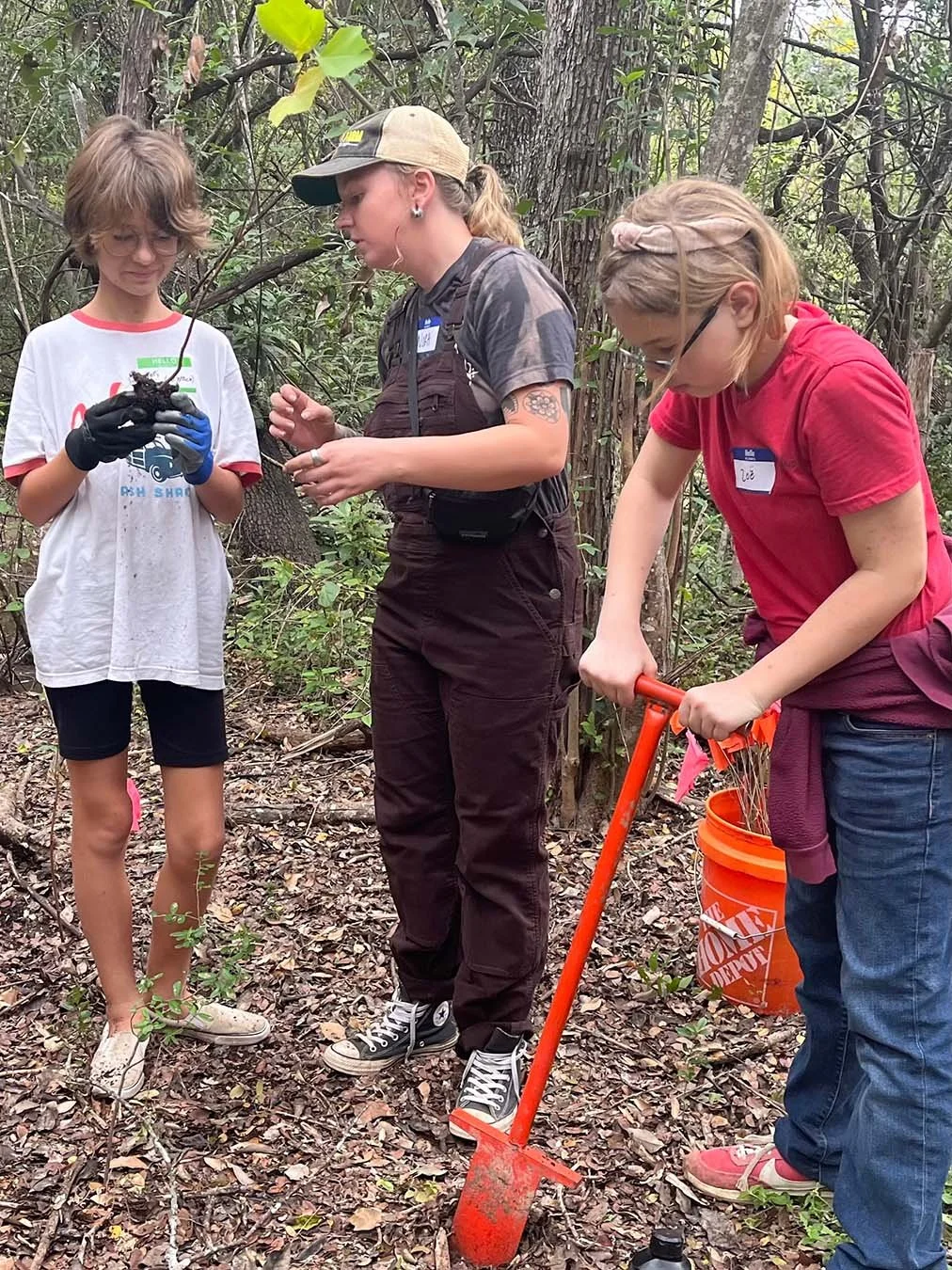
True kinesthetic learners will be able to stay engaged in a lesson that allows them to use their bodies. For example, a kinesthetic learner who is offered the opportunity to classify roots by movement and touch will probably be quite successful during the lesson and subsequent evaluation, because such an activity stimulates his or her mind. Students with ADHD, which is characterized by impulse control issues, may still find themselves distracted, fight the urge to disrupt or abandon the lesson, or have difficulty explaining what they are doing when prompted by a teacher to describe their learning.  

If a child is suspected of having ADHD because he or she struggles to sit still in class, stakeholders should try a kinesthetic lesson in a subject that the student ordinarily does not enjoy. (This is recommended because we all tend to concentrate better if we like the subject being taught.) If the student can remain focused during the lesson and retain the material taught, then it is likely that he or she simply has a mobile learning style. If the child completes the hands-on activities but shows little or no retention of the concepts covered, or seems far too stimulated by the hands-on environment to focus on the lesson, then an appropriate expert in ADHD should be consulted.

 2. Do appropriate ADHD accommodations help the child focus or achieve in school?

ADHD accomodations are designed for visual and auditory learners who need additional help to overcome their struggles with distractibility and hyperactivity. These children often retain material best if it is taught in a traditional format with traditional assignments, but they simply cannot focus on the lesson long enough for the material to sink in. There are dozens of research-based accommodations for these children. For visual learners, an appropriate ADHD accommodation might be a written checklist of tasks to help them organize and complete an assignment, which they can cross off as they progress through each task. Using audiobooks as a supplement to text-based materials can help hold the attention of an auditory student with ADHD. If appropriate accommodations are implemented and they facilitate gains in student learning, then the child may be a visual or auditory learner who simply needs assistance in focusing, and a specialist in ADHD can make recommendations for that student.

A Sample Lesson for Kinesthetic Learners

I will leave you with a brief video I made to demonstrate one example of a simple and effective math lesson geared to kinesthetic learners. Please feel free to leave questions or comments below; I’d love to continue the discussion.

Madison McWilliams

* Nolan et al. (2001), Teacher reports of DSM-IV ADHD, ODD, and CD symptoms in schoolchildren, Journal of the Academy of Child and Adolescent Psychiatry 40, 241—249.

The joy of learning styles

A parent in one of my recent consultation sessions asked, “How do I figure out my kid’s learning style when she’s just a toddler?” My answer: You don’t. At this age, you wait, you watch, you experiment. Above all, you pay attention to her emotions in learning situations.

What do emotions have to do with it? Well, while the research is inconclusive regarding the outcomes of applying learning styles theory to classroom practices, and there is disagreement among education experts about how best to determine and label these styles, you can be sure of one thing: learning style preferences matter—because happy, relaxed learning is the best learning. You know this intuitively.

Let’s say you need to learn a new language for your job. Put yourself in a stressful, uncomfortable situation, and your mind goes blank. But get in your groove, whatever that groove may be—listening to language lessons with your favorite music in the background, shooting hoops while practicing with a native speaker, or making a gorgeous set of flashcards with your best art supplies—and you soak up the lessons like a sponge.

Austin’s alternative educators understand this powerful phenomenon. Whether or not they subscribe to Neil Fleming’s well-known auditory/visual/kinesthetic model or Howard Gardner’s broader and more elegant formulation in Frames of Mind: The Theory of Multiple Intelligences, or any other particular theory, they’ve built their successful schools on a profound understanding of the simple concept that one size does not—and never will—fit all. That’s why they create systems that honor each student’s individual mix of needs and learning style preferences, allow room for flexibility, and cultivate joy.

I’m likely to post more about learning preferences here in the future. For now, I’ll leave you with this lighthearted infographic that the good people at OnlineEducation.net offered to share with Alt Ed Austin’s readers. Take this fun little quiz, and then leave us a comment: What’s your most joyful learning style?

Teri

It’s not too late to find a great summer camp!

I know. Your über-organized friends have had their kids’ summers mapped out since February, while you’ve been focused on a jillion other things. Now school’s almost out and you’re coming up for air, wondering if you’ve waited too long to get your kids into any decent summer programs.

It’s going to be okay. Better than okay, in fact! I’m here to reassure you that there are still spots open at many of Austin’s best-run, most creative and fun-filled camps. The Alt Ed Austin summer camp directory is a hand-picked list of smaller (and often more affordable) programs run by some of the best educators and kid wranglers around. It has something for everyone: from preschoolers to older teens, from the bookish to outdoorsy, from technophiles to free-spirited artists to eco-activists.


Here’s a sampling of the activities your kids could delve into with fellow campers this summer:

  • astronomy
  • building, woodworking, and tinkering
  • claymation
  • creative writing
  • creek and aquifer exploration
  • farming
  • fashion and sewing
  • green technologies
  • language immersion
  • music journalism
  • parkour and playground games
  • permaculture
  • puzzles and brainteasers
  • songwriting
  • visual and performing arts of all kinds
  • wilderness survival skills

So head on over to our alternative camp directory and snap up some of those open spots for your kids. Then breathe. And breathe some more. It’s going to be a good summer.

Teri

Austin Mini Maker Faire 2013!

Today’s guest post comes from one of Austin’s most beloved educators: Kami Wilt, director of the Austin Tinkering School. She is currently reprising her role as producer of the Austin Mini Maker Faire, and here she shares the latest news about my favorite event of the year. Read to the end to find out how you can enter to win a family pack of tickets!


We’re super excited to be putting on our second annual Austin Mini Maker Faire on May 5, from 10 a.m. to 6 p.m., at the Palmer Events Center. 

Last year our first Austin Mini Maker Faire had over 2,000 attendees, more than twice as many as expected. It was a DIY extravaganza of hands-on projects, robots, electric vehicles, glassblowing, and so much more. This year we have over 100 Makers signed up, and we expect 5,000 attendees. (Not so mini, you might say!)

The Faire will feature:

  • A Robot Petting Zoo
  • Steampunk Village
  • Mega Swap-o-rama of clothes-hacking and fabric arts
  • FIRST robotics stage with robot battles and more
  • Tinkering: Open Shop
  • Eco makers of all sorts in our Sustainable Village
  • Young Makers and Education area
  • 2 stages, each with a full schedule of performers and speakers with a Maker element
  • A 30' x 30' inflatable Planetarium
  • Austin Bike Zoo, premiering their Interactive Carnival and Bike Wonderland
  • 3-D printers, weaving, soldering workshops, homemade telescopes, and much much more!


In the years to come, we look forward to the cross-pollination and inspiration that will happen as our Faire grows and as schools and the community learn to utilize the event as a learning tool. Already, educators have begun to gear projects of all kinds toward the opportunities our Faire provides to “show and tell” in extraordinary ways. 

Can’t wait to see you all at the Faire!

Kami Wilt

Enter our drawing to win a family pack of tickets to the Austin Mini Maker Faire! Just leave a comment below telling us which area of the Faire most interests you or another member of your family. For another chance to win, share this post on your Facebook timeline before noon on Thursday, April 18, 2013. The winner will be randomly selected and will receive 2 adult and 2 child passes, a $34 value.

Amy Jackson reaches for the stars

Starry Sky Austin’s Amy Jackson always has a lot to say about space and astronomy. What she shares in this guest post (adapted from a recent one on her own blog), however, is more personal—and highly adventurous! Read on and watch Amy’s short, sweet video to learn how you can help one of our favorite alternative educators launch her latest mission.

Why does space exploration matter? Why should we put our hard-earned money into something that seems so intangible when there are so many other issues that need our attention here on Earth?

I get this question a lot as I work at educating the public about space. To answer, it helps to remember what got me excited about space and astronomy and why I eventually decided to study physics in college. It all points back to an experience I had on a field trip to NASA when I was in the third grade. As I followed my fellow classmates around rooms filled with mock-ups of Apollo mission spacecrafts, old astronaut suits kept behind glass, and small artifacts from past missions, I stumbled across a book filled with signatures of people who wanted to be astronauts. I will never forget adding my own signature to that book.

In eighth grade I went to Space Camp. I chose to study physics and astronomy in college. Two years ago I applied to the educator astronaut program at NASA, and now I teach children and the public about space and astronomy. Today I am working hard to get as many votes as possible so I can win a trip to space and fulfill my lifelong dream.

Space is the final frontier. It holds the biggest questions that have yet to be answered. How did the universe begin? How will it end? What makes up the majority of the mass of the universe? Space represents hope and inspires us to dream. It prompts us to ask questions and inspires us to want to find the answers. What do we have left if we don’t allow ourselves to dream?

Last September, on the official first day of fall, I walked my first grader to school. As she was putting away her bicycle, I heard kids shouting. I thought someone had fallen off a bicycle or there was a car accident. Lo and behold, everyone was pointing up to the sky in excitement. It was the space shuttle on top of a NASA airplane flying over the school! Parents and kids stopped and watched in awe. The fact that the adventure of going to space inspires young and old alike is proof enough for me that looking up to the sky—and dreaming of what can be—allows for great things to take place down here on Earth.

Amy Jackson

If you’d like to help inspire future generations of space explorers, scientists, and educators, click here to vote for Austin’s own Amy Jackson to win a chance to travel into space in the AXE Apollo Space Academy Competition.

The magic of making

In the most interesting presentation I attended yesterday at SXSWedu, Dale Dougherty made an impassioned and convincing case for informal learning, particularly in the form of “maker education.” The conference so far has been heavy on presentations promoting digital technologies and their many uses in education, and while I am all for using the latest tools when they can help meet the needs of learners, I will admit that it felt like a breath of fresh air to hear about kids in schools and other settings making real, physical things with their own hands.

Dougherty is the founding editor and publisher of MAKE Magazine and co-creator of Maker Faire, the “Greatest Show and Tell on Earth,” which began in the California Bay Area in 2006. Last spring he helped launch the Maker Education Initiative, a nonprofit organization dedicated to nurturing “a new generation of ‘makers’ who are creative, innovative, and curious.” He is also one of the leaders of Makerspace, which helps and encourages people to establish dedicated spaces for making in their schools, libraries, and neighborhoods.

In his keynote address, “The Magic of Making: Engaging Students as Makers,” Dougherty described the future of education as “IFFY”: Informal, involving Friends and Family, and centered on You and your goals. Making is by nature IFFY, he said, and when schools devote space, time, and resources to open-ended, project-oriented making of all kinds, they transform themselves into the centers of authentic learning that our communities desperately need. Projects like these provide the most natural and effective kind of learning assessment: students have tangible products they can show and stories they can tell about the problem-solving, design, and building process. One of Dougherty’s current goals is to “scale up” the creation of Makerspaces and maker programs to give all kids, at every socioeconomic level and in every community large or small, the chance to discover that they, too, are makers.


Later, Dougherty joined the local maker community for an interactive evening cohosted by the Austin Hardware Startup Meetup and Austin Mini Maker Faire at Capital Factory, a tech startup incubator, accelerator, and coworking space in downtown Austin. To a standing-room-only crowd filled with representatives of ATX Hackerspace, Round Rock’s TechShop, San Antonio’s Geekdom, and other Central Texas maker organizations and individuals, Dougherty spoke of Maker Faire’s success in bringing together people who do very different things (e.g., embroiderers, robot builders, kombucha brewers) who don’t necessarily know each other or believe they have anything in common. It also “flushes people out of their basements and garages,” where they have been pursuing their passions in isolation, and helps them share their skills and joy in making with other makers and the world.

Following Dougherty’s informal talk, he engaged audience members in a lively conversation about ways to strengthen, expand, and diversify the Austin maker community. Suggestions included developing networks of mentors and designing maker spaces to be friendlier to women and others not traditionally comfortable in these kinds of places. Dougherty emphasized summer camps as opportunities to practice maker education in less restrictive conditions than most schools can provide and encouraged camp directors to network with each other to establish as many maker experiences as possible for kids in Austin and beyond.

In wrapping up, Dougherty encouraged everyone to get involved in and help spread the word about this year’s Austin Mini Maker Faire, which takes place May 5 at the Palmer Events Center. Faire producer Kami Wilt announced that the Call for Makers is open through March 15 and that earlybird tickets are already on sale. Sponsorships are available at various levels. Alt Ed Austin is a proud sponsor of this all-ages, homegrown event, and I invite you to join us there to experience the magic of making.