One good question with Mike DeGraff

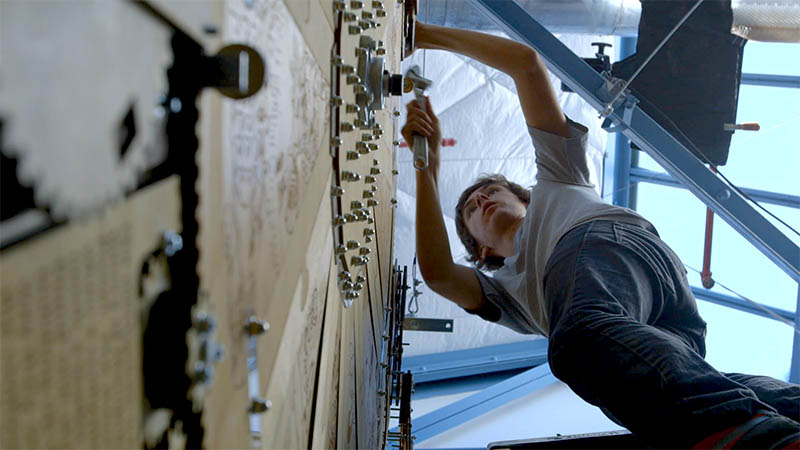
An iconic scene from the award-winning film Most Likely to Succeed

An iconic scene from the award-winning film Most Likely to Succeed

We’re pleased to reproduce here an interview with Mike DeGraff from Rhonda Broussard’s excellent blog One Good Question. Reading Mike’s thoughts on maker education will help prepare you for the mind- blowing, award-winning film Most Likely to Succeed, which you can view and discuss with Mike and others Tuesday, March 8, at 6pm at the North Door. Read more about the film and event at the end of the interview.
 

Mike DeGraff, educator’s educator and thought leader

Michael DeGraff is the Instructional Program Coordinator at the UTeach Institute. His work includes coordinating the Instruction Program Review process for all UTeach Partner Sites as well as supporting instructors to implement the nine UTeach courses. Michael has been a part of UTeach since 2001, first as an undergraduate student at UT Austin (BA Mathematics with Secondary Teaching Option, 2005), then as a graduate student (MA Mathematics Education, 2007), and finally as a Master Teacher with UKanTeach at the University of Kansas. He was also instrumental in launching Austin Maker Education.


In what ways do our investments in education reveal our beliefs about the next generation’s role in the world?

There was a call for 100,000 STEM teachers in the US, and since then there have been tons of initiatives, and related funding, to respond to the need (some say too much). UTEACH is a very constructivist- oriented teacher education program for STEM teachers that began at UT Austin and has spread across the country. Then we saw the launch of Maker Faire™ to showcase STEAM design in informal learning space. When I went to my first faire 3-4 years ago, I was amazed at how well it fit into what I understood about constructivist education.  I was also amazed that there wasn’t tighter articulation between schools, teacher education programs, and what’s going on in this sector.

In schools, "making" is mostly robotics, especially at the secondary level. School libraries may have makerspaces that are more diverse, but there’s very little happening in teacher preparation for how we prepare teachers for these spaces that are proliferating. No two people have the same vision for what you mean when you say makerspace. Whenever you talk about this, it’s so easy to get excited about the 3D printer, laser cutter and other specific tools. At UTeach, we’re more interested in how it transforms what kids are able to do and how teachers are empowered to teach differently. Not to dismiss the tools, but ultimately, what’s so exciting about all of this stuff is how it connects to this lineage of progressive education dating back to Dewey and meaningful, authentic, relevant work. That’s what’s so powerful to me about this whole maker movement. It really champions student voice in a way that I don’t see in any other movement/innovation/fad. How can we replicate that for every kid? One of the biggest hurdles in education and industry is to get kids curious. Makerspaces can get them to a point where they can start wondering.

The maker world and project-based formal education don’t seem to respect each other enough. The maker world is super auto-didactic, self-sufficient, DIY, vibrant, and very curious. The maker world sentiment is that schools are going to destroy the maker movement by embracing it and standardizing it. It’s not an unfounded fear. Look at the computer labs in the 90s. The way that education works is in compartmentalizing. My biggest fear is that it becomes a space where you go and do « making » for an hour completely separated from (or only superficially connected to) science, math, language arts, literature, art, etc.

The formal education world is coming from a perspective that we’ve been doing « making » well before Maker Faire started in 2006, but have called it other things like project-based instruction. Colleges of Education see the value in makerspaces, but in public education we have to focus on serving every kid.

While the Maker Education Initiative motto is « every kid a maker » colleges of education and educators in general are asking what do we do with kids who aren’t motivated by blinking a light or don’t identify with the notion of making? How does PD play out in these different areas, and what does it look like as these spaces develop?
 

Do you think that schools/universities would be adopting makerspaces if they weren’t tied to funding?

These spaces have always existed in universities, but they used to be highly articulated with coursework.

« Making » in a university is usually housed in the college of engineering, which makes sense for digital fabrication and electronics. You were typically a junior before you got to that level of coursework and only accessed the equipment for specific, course related projects. If you talk to industry, a big complaint is that universities are producing engineering graduates who can calculate, but can’t use a screwdriver and a hammer or connect that academic experience to the real world.

A makerspace is more similar to a library type model so it’s open and you can go in and make when/what you want. UT opened a Longhorn Maker Studio and when I went there in November it was full of kids making Christmas presents (like ornaments, a picture frame, and other highly personal artifacts). There are a lot of class projects, but it’s more about figuring out what they can do with it.  That’s what’s exciting.

Something that I see as very similar to the makerspace idea in the College of Science is open inquiry where students choose what they want to learn more about, design an experiment, and analyze results. In UTeach, one of the nine courses is totally dedicated to this process. Instructors have noticed that the hardest part of the process is to get students to become curious. Get students to develop their own questions that can be addressed by experiments. In education, we have identified content, but the gap is how we inspire students to be curious and engaged and motivated and passionate. It’s so well connected in general to how we get students to think and be self-motivated and have internal drive.
 

One could argue that makerspaces are going the way of MOOCs—only reinforcing the privilege and access of middle-class paradigms and still largely unused in lower-income/marginalized communities. If we really believe that makerspaces improve creativity, critical thinking, and STEM, what will it take for the movement to reach a more diverse audience?

Why I see maker movement as being fundamentally different, is that I see it as hitting on different things, namely on student motivation and constructivist education, with what we know about how students learn best, project-based instruction, and the evolution of progressive education. At the UTeach conference last May, we had several sessions about making in the classroom. It’s important for us is to embed this into regular coursework. Right now, a lot of the robotics and electives are afterschool activities, but in order for this to be truly democratized, we have to make it part of our classes—science and math that every kid takes.  NGSS and CCSS math standards demonstrate value for persistent problem solvers, design cycle, and implementing inquiry. Makerspaces can support these standards for all students.

As part of the maker strand at our UTeach conference Leah Buechley gave the plenary talk contrasting mainstream maker approaches with tools and techniques designed to support diversity and equality.” This is exactly why we, in education, need to systematically develop opportunities around « making » for a more diverse population, which early indications show is working. We’re already seeing that the demographics of youth serving maker spaces are much more diverse than that of Maker Faire.

Mike’s One Good Question: How can we use this space to address community needs? What we’re doing is making things, but why are we making them?
 

Here’s a special invitation from Mike to join him and other education thinkers and doers for a special screening of Most Likely to Succeed:
 

Please join us on Tuesday, March 8th, to discuss our schools, what we want them to look like, and how we can work together to meet the changing needs of our global society. Doors open at 5:30pm, special guest ¡Oh Antonio + His Imaginary Friends! will play from 6:00 to 6:30pm, and the movie starts at 6:45pm followed by a discussion and Q&A. Since the movie is about innovation in education, we are excited to be able to help Travis High School in developing its own makerspace and innovation. All proceeds from the screening will go directly to support providing resources for the space and teacher training related to those tools. Reserve your ticket here.

About the movie: For most of the last century, entry-level jobs were plentiful, and college was an affordable path to a fulfilling career. That world no longer exists. The feature-length documentary Most Likely to Succeed examines the history of education, revealing the growing shortcomings of our school model in todayʼs innovative world. Directed by acclaimed documentarian Greg Whiteley, the film has been named “among the best edu-documentaries ever produced” by Education Week.
See more at http://mltsfilm.org.
Making mud


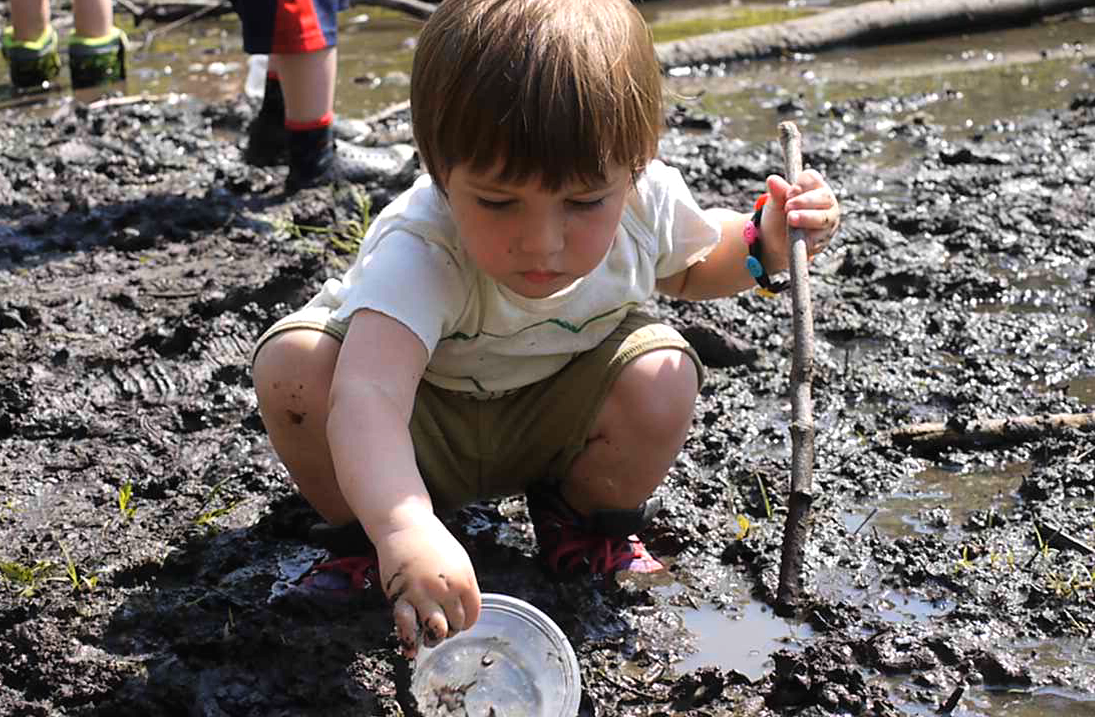
Meghan Fitzgerald is founder and chief learning officer at Tinkergarten, which began in New York and is now expanding to other communities—including Austin!—to offer outdoor early childhood education classes for children and their parents. We invited Meghan to join us on the blog to share her considerable mud-making expertise.
 

I must admit that, as a former principal and brand-new mom of an eight-month-old, I was a bit uncertain about making mud, and I certainly wasn’t thinking of it as a transformative experience. “Making mud? What’s the point?” I wondered. “Is it worth the mess?” This was before my forest school training and before I started to really spend time with tiny people outdoors.

It turns out the simple act of making mud is a universally powerful pastime for young people (and not bad for us big kids, either). Yes, kids get messy. (Fair warning: They may even try to taste the mud.) But with a few exceptions, kids get completely absorbed in this pursuit. The great news for parents is you can do this virtually anywhere—with the most basic of materials (water + dirt!). Armed with a few tips, parents can help unleash the activity’s rich learning potential. Play in the mud along with your kids, and you’ll inspire immediate smiles as well as a lifelong comfort, even pleasure, in mucking around. That kind freedom spawns unbridled creativity and joy that’s just plain good for the soul. So let them go for it—you can make an outdoor cleanup part of the fun too!

Here’s how we like to approach mud play:

  1. Pack a few materials: Unless you’re near a water source, you’ll need to bring it with you. We like to have around half gallon of water per kid so they can play and experiment for a while. Bring a small pail or container for each child so she can pour water as desired without dumping your entire supply.
  2. Clear your spot: If you’re in a high-traffic area, check to make sure that there are no obvious hazards (e.g., broken glass, metal, dog doo, trash) where you’ll be making your mud. As you scan the ground, grab some sticks that kids can use for stirring and mushing mud.
  3. Pour a little water. Then let them do the pouring: Trickle a small amount of water on the ground, and discover together what happens to the dirt. You can take a stick and even do a little mixing. Then hand a bucket to your kids, inviting them to transport water and see what happens when they add it to dirt. Stand back, and watch them get to work.
  4. Dole out the water as you go: Allow (or help) kids to fill up their pails or cups and dump water as often as they like. Playing with water is, in and of itself, a super engaging lesson in cause and effect and physics. We prefer filling a large container (e.g., 5-gallon bucket) and letting kids serve themselves.
  5. Play and “ooooooh” alongside them: Let them continue to pour, mix, and make mud on their own, but do the same alongside them. Every now and again, “Ooooh” or “Ahhh” at the mud puddles, rivers, and piles you make. Ask kids if they notice a difference between their mud and yours, giving an opportunity to describe the different muds using words such as soupy, thick, chunky, dry, wet, or sticky. Such a gripping sensory experience is a great opportunity to build language.
  6. Make something (optional): If you think they are ready for more, do not interrupt their play. Simply make a mud pie by forming a fistful of mud into a patty and plopping it down somewhere. Gather nature treasures to decorate it (our oldest loves to make pizza mud pies most). Kids will likely get intrigued by what you are doing and want to try it too. If you have older kids (ages 3+), you can make mud faces on the trees!

Why is this activity great for kids?

Playing and experimenting with ooey, gooey mud helps children to strengthen their sense of touch—and we know that the better kids are able to tune and integrate their senses, the more effectively they can learn. Once kids know how to make and manipulate mud, they have a tool for play and building with virtually unlimited uses. When kids transform the shape, texture, or nature of materials (in this case, turning dirt and water into mud), they also engage in a universal behavior pattern called the transforming schema, which supports brain development. Best of all, when you let kids lose themselves in play and give them room to mess around, you offer them the openness and freedom they’ll need to develop true creativity down the line. If all this isn’t compelling enough, research also indicates that playing in the dirt is just plain good for kids’ health. So go on, get dirty!

Meghan Fitzgerald

Leveling with kids about leveling up


Guest contributor Alli Vaughn, parent of an alternatively schooled 14-year-old, is a local developer dedicated to cultivating a culture of inclusiveness and encouraging young people in their journey toward technical literacy. You can reach her at lvlupworkshops@gmail.com, @friendlyfulcrum on Twitter, and Lvl\U/p Workshops.


What if we leveled with students that knowing how to self-teach a new technical skill is at least highly beneficial, if not critical to a future career?

The White House recently released a directive to teach coding in every single K– 12 public school in the nation. That’s going to take a while to implement, and I believe it’s only half of the problem. Knowing how to recall a provided answer is not a highly valued skill in a world where everyone can look up facts and syntax, but understanding how to use what you already know to learn what you need to know is. Ask any programmer if they are still using just one language, framework, or version of anything since they first learned to program. The answer is almost always “of course not!”

The good news is that we can address this. In fact, businesses want us to. They spend a lot of money trying to train graduates about this.

What if I told you that developers often learn new skills by themselves, with only sketchy documentation, and due to the pace of things, manuals are often out of date?

Google “stack overflow” and you’ll be faced with pages of questions from new and seasoned programmers alike collaborating on learning new skills. Look a little closer: There isn’t really one single answer to any of the problems. This is the reality of development!

Don’t believe me? Go schedule a lunch meeting with just about any developer working on anything new, and you’ll get your answer. The good news is that the problem is pervasive enough that tech folks are working on better documentation when they can, but it’s going slowly.

What if the students whom studies show are most hesitant to jump into the upper echelons of technical literacy had a safe, encouraging, and inclusive environment to do so? How might that change the next 10 years?

Projections show that while the total workforce going forward will become progressively more minority-based and female-heavy, neither of these populations is currently on any significant growth trajectory for future technical career involvement, and we lose them in High School. At the same time, reports on future job growth indicate a sharp uptick in the need for these workers in the next 10 years, and current participants are mostly male and Caucasian. Austin is an up-and coming tech hub in Texas, and a rapidly growing tech hub nationally, with no sign of slowing down soon.

Austin, we have a problem. Even though we have a growing workforce now, we won’t actually have enough people to fill the jobs coming down that pipeline! The largest issue is not a lack of initial interest in cool technical stuff (after all, these subjects are very interesting in many ways) but rather a lack of continued interest, and we think it’s at least partially due to the lack of a welcoming culture.

Think about it: Nothing turns a person off like feeling that they don’t know enough, or they don’t belong.

The good news is that recent studies show that the creation of a welcoming culture and community around technical field participation just may be the key to sustaining long-term interest!
 

Spotlight on the Little Program That Could

Taking place this spring at Griffin School and Skybridge Academy, Lvl\U/p’s Intro to Full Stack Development is an after-school workshop series for high school students, adapted from the Rails Bridge Curriculum, and is designed to build confidence by fostering a small-group, inclusive, welcoming environment where students work through real-world fundamentals and processes used by software development professionals.

Many programs here and elsewhere simply aim to teach students to code. It’s a worthy goal, but it’s problematic, and I think there are more beneficial ways to accomplish the same thing. Lvl\U/p workshops turn the code school model on its ear, with a goal of students learning how to learn a new technical skill through discussion, activities, and, of course, hands-on programming. The structure naturally fosters a warm, welcoming environment where not only do students learn the basics of CS and a no-nonsense framework but they also learn about the relevance of technical literacy to their own goals. No matter what their future chosen field, the ability to map that understanding to learning a new technology is an extremely valuable skill going forward.

The pros have been programming longer, but they often need to learn new things each time they participate in a project. I believe kids are capable of learning these fundamentals, and I think they deserve for us to level with them about how important these skills are! Every student’s development journey is unique, as is the journey of each professional developer, but we each have a responsibility to change the culture, together.

Alli Vaughn
 

Austin Alternative School Fair 2016!

Mark your calendars for February 20th, and plan to bring your whole family for a whole lot of fun! Our friends at the nonprofit Education Transformation Alliance are gearing up to put on the annual Austin Alternative School Fair, and I can see already that it’s going to be the best ever.

I’m pleased and proud that Alt Ed Austin is sponsoring the fair again, along with the good people at Whole Foods Market and Free Fun in Austin. I always have a great time talking with families at the fair, so please don’t be shy! Come on up to the Alt Ed Austin table and feel free to ask me your burning questions about Austin area schools, from pre-K through high school.

Then make your way around the Whole Foods rooftop plaza and playground, visiting with educators from 21 innovative schools, enrichment programs, and educational services. Each booth will offer a different hands-on activity for kids—including some very cool stuff for teens!—so while they're happily engaged, you can talk to the educators about their unique programs. Check out who will be there:


If you have kids in the preschool-to-elementary range, don’t miss the special show at noon! Lizzie Samples has been enchanting young audiences and their parents all over Austin with her Happy Face Storytime Performances. This is a perfect chance to see Lizzy enact a beloved children's story, in costume, with her signature charm and artistry. And, just like the fair itself, it's FREE!

Thinking ahead to potential hunger meltdowns or thirst-induced doldrums at the fair? The friendly folks at Whole Foods Market will be on hand with healthy snacks and beverages for sale! So plan to stay a while, play, talk, munch, and learn with us. If you have questions for me or any of the participating program directors before the fair, please leave them in the comments below, and we’ll do our best to answer them. Be sure to follow our Facebook event page for updates as we announce more fun, engaging activities for your kids.

See you at the fair!

Teri

Why storytelling is better than lecturing

Guest contributor David Sewell McCann is chief tale spinner for sparklestories.com, a streaming website of original children’s audio stories. He has honed his four-step process of intuitive storytelling from years as an elementary school teacher and parent and now teaches workshops around the country. He and his family live in Austin, where their children attend alternative schools. We are thrilled to bring you some of David’s wisdom, along with a very special Sparkle Stories offer just for Alt Ed Austin readers!


My son left the gate open again, and the dog is in the street.

My daughter is worried about catching the Zika virus.

He is afraid of grasshoppers, while she is sure she doesn’t have to brush her teeth.

Every day we parents hear about our children’s fears, aspirations, assumptions, confusions, and concerns, and we, as the primary adults in their lives, want to help. We want to tell him it’s OK. We want to explain to her why it is important to recycle. We want him to know that it is extremely unlikely that he will encounter a member of ISIS. We want to list out all the reasons why it is not OK to pinch her sister.

We want them to understand—and then we want them to feel better or change their behavior. And yet, most of the time, nothing really changes.

She is still worried. He left the gate open. Why don’t they listen?

Well, I believe it is because you are not speaking their language. You are explaining, when you might want to try describing.

Explaining is the language of science, statistics, and law. It is factual— fixed—and basically a dead language. It works for specificity and clarity but doesn’t work as well for change.

Describing is organic. It develops, it changes, it is dynamic, and it is what happens when we tell a story. Storytelling is the language of children.

If you don’t believe me, next time you want to get your child’s attention, try saying the four words “Once upon a time,” and see what happens. Those four words are the most potent spell any wizard can utter. It means that something very magical is about to unfold—something transformative, something unexpected: a story is about to be told. The room quiets, eyes glaze over, jaws slacken, and your child becomes a vessel ready to hear your wisdom.

And then comes your chance to deliver the wisdom of your choice. Tell a story about a boy who left the gate open one too many times and his favorite chicken ran away to live at the neighbor’s farm. Spin a yarn about the most charming, lovable grasshopper that ever was. Unfold a tale about a girl who was so surrounded in love that no illness could touch her.

And here is the thing: the story doesn’t have to be any good. Really. It can be the worst story ever told, and yet your child will manage to extract the magic, will find the wisdom, will sift through all the rubble and find the gold.

And they will thank you for it.

For inspiration, or if you find the craft of storytelling too daunting, then try out sparklestories.com and listen to some of our stories. You can input search words like “chores” or “fear of bugs” or “valentines” or “sensory integration” and several audio story options will appear before your eyes. There are now almost 900 original stories in the catalog, so there will surely be something there for you and your child.

If you input the code ALTED (all one word, all caps) then you can extend your free trial period to 15 days at no charge. And you will love the app that comes with a subscription!

For more information on storytelling, child development, and child study, you can click on the “Sparkle Schoolhouse” category on our blog here.

Meanwhile, when you are faced with a behavior or emotion or dynamic with your child that you would like to change, try this:

Close your eyes and take a breath. Do whatever you can to inch toward a grounded, peaceful place (even if it is only an inch) and then, ask your child, “What is one of your favorite animals in all the world?”

He or she will stop and think about it. Give a reminder that it’s “in all the world”—in Africa, Australia, in South America, in the jungle, the savannah, the arctic—anywhere.

When an animal is declared, say, “I’m going to tell you a story about that animal.”

Then tell one. Go ahead and tell a clunky, awkward, poorly formed story starting with “Once upon a time” all the way to “The End,” and . . . see what happens. As best you can, try not to judge yourself. You are just starting. Listen to some of our stories, or those of other storytellers, for inspiration. And then . . . try again. It will be well worth it.

David Sewell McCann
 

8 ways to encourage creativity in your child

Heidi Miller Lowell is a frequent contributor to the blog. She is a multimedia artist and educator who leads classes and workshops for all ages and summer camps for kids. Learn more about Heidi’s offerings here.


Prospective employers list creativity as the most sought-after quality in potential employees today. Our education system struggles mightily to design a curriculum that promotes creative thinking. Research shows that children’s brains are growing differently than ever before because of a lack of unstructured play and an overabundance of pre-made entertainment.

How do we promote creativity in our children? Here are my favorite eight tips and sources for supporting your child creatively.

1. Modeling is everything. Children learn by example. If you don’t feel confident, get some help online. There are tons of great e-classes teaching tinkering, sketching, painting, design, and writing for folks who are busy. If you want your children to be creative, do creative activities in their presence and with them.

2. Provide a creative provocation for your child. The provocation is a concept used in the Reggio Emilia method of education. The blog The Artful Parent has some great ideas for setting up provocations.

3. The book Young at Art by Susan Striker focuses on the creative development of children from birth through preschool. It talks about strategies for keeping creativity at the forefront of your daily life when you have small children. Some of the strategies would work great in a home with older kids too.

4. Engaging Learners through Choice-Based Learning by Katherine M. Douglas is an essential resource for all art teachers, homeschool families, and anyone interested in progressive education. This book emphasizes that even young artists need to be treated like real artists. This means giving students a say in what and HOW they make things. Douglas details setting up art stations and offers tips on teaching with a variety of media.

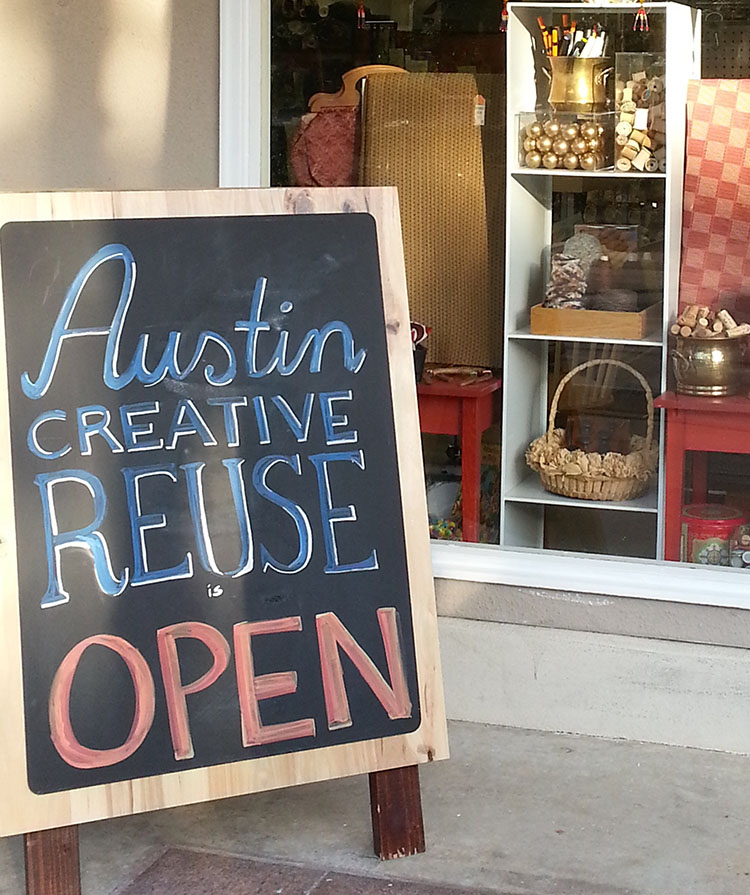
5. After you read the book above, you may want to stop and visit Austin Creative Reuse in The Linc. This center is stocked full of recycled materials that can be used for a bevy of art projects. The prices are great, and you can leave knowing that you are actually helping take care of our environment!

6. The book Creating Pathways to Literacy through Art by Beth Olshanky is also a game changer. It promotes creativity and literacy and comes with a DVD that models some of the lessons.

7. Look at any camps, schools, and extracurricular activities you’re considering for your child to see if their focus is on product or process. Any school that display 15 of the exact same penguin pictures in a display might be focused more on making pretty pieces of art for parents to see than on offering kids a valuable learning experience. Process-based art gives kids a chance to find their own creative voices rather than giving them step-by-step directions. Kids make mistakes. They work on finding solutions. Mistakes are the best teachers.

8. Come join us at Art Camp this summer at Four Seasons Community School! You can find out more at my website, heidimillerlowell.com.

Heidi Miller Lowell