A “really good” education

Heather Feinberg is a counselor, author, and founder of Mindful Kids, a nonprofit organization in Austin whose purpose is to serve children, teens, and the adults who care for them by exploring, practicing, and learning about meditation and energy management tools in inspiring and transformational ways. In her guest contribution today, she brings her perspectives as both a parent and a mindfulness professional to the question of what makes a “really good” education. To learn more about Heather’s work, visit her website or send her an email.


A few weeks ago while my daughter and I were shopping, we met another mom with her daughter. As happens frequently with littles, we stopped to chat and play amidst the racks. As the mom and I watched the girls navigate each other, we did our own exploring. She asked me if my daughter (who was clearly older than hers) went to preschool, and I said she did a few days a week. I returned the question, and she told me her plans for her daughter along with some other family details. It turns out she came here with her husband and young child and left their friends and families behind in India. She was eager to have an open mind to speak to, and I quickly became her consult on preschools in Austin.

After a few minutes covering preschool options in the area, she mentioned elementary school. She said something like, “I mean, I want my daughter to get a really good education.”

I heard her, acknowledged it, and responded, “Yes! I think most, if not all, parents would say that they want their children to get a really good education.” The thing is, I continued, what each person means by that is probably very different. For example, I continued, I would imagine that your idea of a really good education is probably distinctly different from mine.

I walked right into it, although I didn’t see it coming. She said, “Okay, so tell me, what is your idea of a really good education?”

“How much time do you have?” I immediately joked back, thinking there was no way I was going to be able to summarize my answer, nor did I want to try. Somehow, my humor was lost in translation, as she was clearly awaiting my response. So I took a deep breath and was surprised at how easy it was for me to tell her. I wish I had been recording myself; what I said went something like this:
 

1. Safe and Open Environment

To me, a really good education is about having an environment that is safe in all ways—physically, emotionally, psychically. Where the teachers are the guides, not the know-it-alls, the ones holding the space, grounded in a set of shared intentions for an experience, not a specific outcome. A place where it is safe for each child and each person to be exactly who they are, and are honored for their place and presence in the community. A place where each child is treated with kindness, patience, and appreciation and is truly seen. In order for this to happen, I understand that it will take teachers, mentors, leaders, and guides who are aware, conscious, and present.

2. All Senses Ignited

 A really good education means a place where the children’s senses (all six of them) are ignited. Not at the same time, of course, and not to a point of overstimulation, but in an organic balance of sensory exploration. School is a place where who my child is, what she is passionate about, what makes her come alive, should be explored every day and in many ways. Cooking and eating, singing and dancing, creating meaningful movement, art of every sort, a lot of appropriate touch, and an honoring of each child’s unique knowing (intuition) and fantasy creations are integral and imperative.

3. Autonomy and Independence

 A really good education fosters autonomy and independence in every child at their unique comfort and developmental level. I visited a private alternative school in Florida earlier in the year where they call any exams given to the students “celebrations” because they see them as an opportunity for the students to celebrate what they have learned. They teach the children how to prepare their brains and their bodies for the celebrations, knowing that they can be a heightened experience. They begin in preschool teaching about the brain, how to notice what part of their brains they are in, and then exploring meditation and mindfulness techniques with the students to help bring awareness and centering. It was powerful to see that in practice.

That is just one example of what I mean when I say autonomy and independence. A really good education means our children will learn skills that will equip them in being in the world in a meaningful and powerful way. I want to see our children develop an understanding of currency early on and learn how to create a relationship to it that will serve them their whole lives. I want our children to understand that while we are each unique learners, we are a part of one world community, and while we need to foster self-reliance, we must also accept and invite the support of everything and everyone around us. I want our children to learn to advocate for who they are and for what they believe with their strong, capable voices.

4. Learning to Love

Within a really good educational system, children come to learn about what they love and even more than that, develop a love of self. Shouldn’t part of a formal education be about learning to have a relationship with yourself? What I know is that having a relationship with anyone else depends first on how I learn to treat, love, and respect myself. So we do a disservice to our children when we put so much emphasis on their learning how to navigate relationships outside of themselves without at the very least acknowledging and appreciating the connection to the most important relationship we will ever have, the one with ourselves. Yes, learning compassion and empathy is integral, but that love must also include ourselves.

What would our world look like if this were emphasized not just in our homes but also in our schools? A learning of what each child loves, a learning of what it means to love, a learning of how to love, both self and others, and lots and lots of space to practice over and over again—that is education at its highest.

5. Nature Education

I am a full believer that if there is something valuable to learn, about 99 percent of the time nature can teach it to us. It is therefore vital for our children to spend time outside and in nature. Outdoor classrooms, plenty of time in the sun, rain, dirt, and mud, exploring, creating, absorbing, and just being. Learning how to plant seeds and watch them grow. Learning how plants can heal. Learning how to care for, connect to, and treat animals. Learning how to protect our planet. These are just a few examples of all the natural world has to offer, teach, and share with us.

6. Inspired Learning

How we learn something is more important than what we are learning. It is the difference between absorption of knowledge and regurgitation of facts or figures. A really good education means that the way my child is taught to read, to do math, and to write is evolved, is itself a transformative experience.

The environment itself speaks to the learning potential. I don’t want my child to learn in the ways I learned, not because it wasn't effective for me but because we have a whole new set of tools to use. A really good education means current, innovative programs, models, and systems that are being created in present time. It also means that learning is inspired by intrinsic interest, passion, and joy and not based on external rewards, test scores, or societal norms and expectations. We are born wired to learn. When we set up an environment for children where learning becomes something to do (with incentives, competitiveness, and pressure) instead of something to be (with expansiveness, willingness, and curiosity), it changes the spirit in which we come to know ourselves and our world.
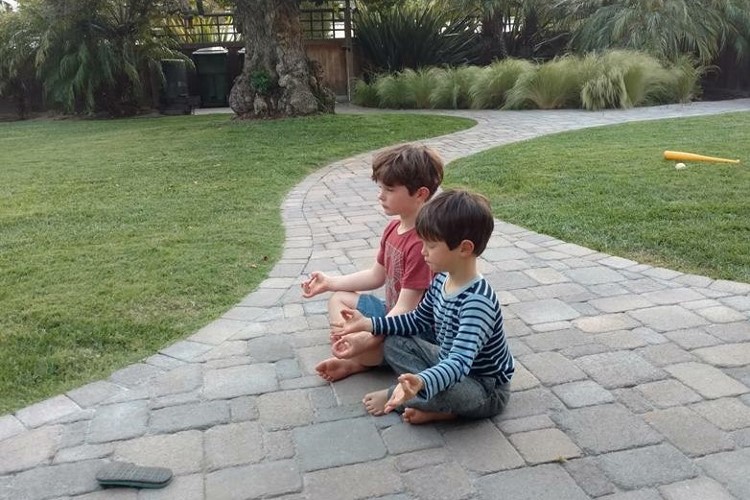
 

7. Internal Dialogue

Like most things on this list, teaching internal dialogue should be a shared responsibility at home and at school. However, in an era when many children begin at a young age to spend a great deal of their time away from their primary caregivers, this topic becomes even more imperative for the school environment.

Children model their behavior first and foremost on what they see, hear, and feel around them. This includes how they begin to formulate their thoughts and turn them into what they believe. I see this as one of the biggest tasks of an education, both from school and home: to help our children learn to have awareness about how their thoughts shape what they know, how they feel, and how they see the world.

Put more simply, we need to devote a significant amount of time in our formal and informal educational centers to fostering the internal dialogue of our children. If a school can do so in an intentional way, that is the first step. The next step is how.

What tools are they giving children to help them connect to their own minds, and how, when, and where is there space to practice using them throughout the day? How will our children understand their brains and their bodies, their emotional states, their feelings, their internal pulls, and their desires in neutral and non-threatening ways? How will we explore tools that will guide them in the development of managing all those interesting places and spaces? And how will we teach them to be disciplined in their practice?

The word discipline comes from the word disciple. We must guide our children to be disciplined in how they talk to themselves, how they care for themselves, and how they treat themselves so that they will come to trust and rely on their inner guidance and strength.

Therefore, schools who are visibly and intentionally enriching their curriculum around mindful practice—be it presence, yoga, breathing, meditation, visualization, journaling, all of the above, or something different—are the ones who are truly serving the whole child. That is a really good education.

8. A Shared Philosophy/Vision

In order for all the above to occur, there must be a shared vision and philosophy for the school community. What is the true foundation of the learning, and what are the intentions of the school? Usually this is created by the founder of the school, but it must be fully accepted, acknowledged, and acted upon by all those who share the space.

The children will understand, at their appropriate level of development, how this affects what, how, and why they learn as they do. In a really good school, parents are aligned with the vision and fully support the movement of the community. The adults who work within the school truly believe in the work they do. They choose with each lesson, even each glance, how to create the space and ground the learning.

Learning is about absorbing what happens around you, imprinting the energy of all things, so what is being spoken and what is unsaid are equally meaningful. Yes, I fully get how large an undertaking this is. Even as I write this I wonder to myself: how much can we as parents ask for in this capacity? Deep inside I know: we must ask for all that we can imagine. These are our children and the future of our world.
 

I also mentioned things like small class size, and maybe even small school size with a low student-teacher ratio. And I have plenty more specific desires that I would like to see. But here is what it all comes down to: A really good education is the one where my child, and your child, thrives. This will inevitably be different for different children—which is one of the reasons we are so lucky to be living in a city where there are so many different choices and options for a really good education. Not to mention to be living in a time where there are so many types of education that have value and are valued. (Of course, luck doesn’t have anything to do with it, but that’s another blog topic.)

After I finished, the mom asked me for my phone number so we could get together again and talk more. I guess whatever I said meant something to her, and I’m hoping maybe it means something to you, too. It surely helped me to get clear on what I want for my daughter and the kinds of environments where I believe she will thrive.

I hope more of us spend time thinking about what would be ideal for our children’s education instead of accepting what is made available to us, with blinders on to what may be missing. Your children’s education will have a profound impact on the parts of them that are nurtured, nourished, and fostered and the parts of them that are stifled, challenged, weakened, or cut off.

We as parents are active participants in their learning on all levels. What we choose here matters. And as we choose, we effectively change the system of education around us. It exists to serve our children and our families. Sometimes we forget that. Sometimes it's hard to remember. So tell me, what does a really good education mean to you?

Heather Feinberg
 

Preparing students for the future of work

Photo by Greg Vojtko, 2010

Photo by Greg Vojtko, 2010

Liya James is an entrepreneur, designer, and coach at The Next Lab. She works with people of all ages to take the next step in their entrepreneurial journeys. Liya joins us today to talk about the future of work and how we can all help students prepare for success in a professional environment that is changing more rapidly than ever because of the evolving technological landscape.


Throughout history, the American education system has taken on many different shapes and forms, adapting to the needs of students and of the country as a whole. Along the way, it has slowly changed to adapt to the needs of the industrial revolution, to the insights of emerging psychology, and to the increasingly global post-WWII world.

One of the most recent major shifts has been the digital age. The first personal computer entered the market in 1973. Over the next few decades, computers and automation changed the way we worked, giving rise to the era of the knowledge worker. With machines taking on ever more manual processes, companies increasingly asked employees to innovate and go beyond “just doing their job.” Beginning in the 1990s, technology got cheaper, creating faster-moving and more competitive industries. This meant more competition for companies, and pushed everyone to innovate faster to stay ahead of the curve. This competition has pushed every major industry headfirst into the digital age.

You can see the changes in now familiar companies. Amazon has replaced the traditional brick and mortar bookstores. Netflix has dramatically altered the video and movie industry. Apple became the biggest company in the world, disrupting the music and mobile phone industry. Facebook has revolutionized the way we communicate. These companies have very different work cultures and demand that employees bring different skills to the table than their predecessors. And they continue to push change to happen more rapidly.

Before schools can adapt to the digital age, a new technological era is already upon us. Looking ahead into the next decade, many experts point toward what they are calling the advent of a Fourth Industrial Revolution, where changes will be marked by technologies like robotics, artificial intelligence, nanotechnology, and 3-D printing. According to the World Economic Forum, “These developments will transform the way we live and the way we work. Some jobs will disappear, others will grow, and jobs that don’t even exist today will become commonplace. What is certain is that the future workforce will need to align its skill set to keep pace.”

The world of work that today’s high school students will enter will be markedly different from the one we are living in now. Technology will have changed, and many jobs that don’t even exist yet will be in high demand. What we do know is that almost every job will be enabled by technology and that employers will expect employees to add value and bring new ideas.

So the questions we are all faced with are:

  • What does this mean for today’s students?
  • How can we prepare them to thrive in this kind of economy?
  • What skill set can we teach them that will still be important 5, 10, and 20 years from now?

A key place to look for answers is a recent study about The Future of Jobs from The World Economic Forum that shows the top ten skills that senior executives across industries expect to be most important in 2020.
 

It is critical to note the top three:

  • Creativity
  • Critical Thinking
  • Complex Problem Solving

No matter what happens with technology, the value that people bring to work, and the kinds of skills that will set high performers apart, can be summed up as the ability to look at problems and opportunities from many different angles and frame them in a way that will lead to new, innovative ideas and solutions.

Employees and entrepreneurs who have the ability to imagine something that doesn’t exist right now and make it a reality will be valuable, whether inside a company or building one. It is our job, as parents and educators, to proactively help our children and students to build these skills so that no matter what field they choose to go into, they have a foundation in these enduring skills.

I’ve been seeing these changes in the business world up close, and I can tell you that their importance is only growing. I spent the past year traveling around the country teaching Fortune 500 executives how to implement design thinking in their businesses because they know the framework helps their employees build these skills in creativity and complex problem solving.

This summer, I am making it my mission to give students in Austin a head start in learning and implementing these skills by launching The Next Lab. During two separate weeklong programs, I am partnering with local business leaders to guide students through the process of taking an idea from concept to prototype and focusing on teaching the creative, critical thinking, and problem solving skills that will help them succeed, whether they want a great job with a bright future or want to start their own thing.

But being proactive about supporting these kinds of skills at home doesn’t have to wait for summer! Here are some ideas and strategies for getting started:

Embrace project-based learning. Students who are getting better at the kind of planning, problem solving, and follow-through that it takes to turn an idea into reality are getting a head start on the kind of skills they’ll need to start their own businesses or advance their careers. Whether you are looking at homeschooling options or supplementing classroom education with your own home projects, this site has a great list of 10 ways to support project-based learning at home for all ages.

Learn creative thinking. If you’re like many parents, when you see the word creativity, you immediately think about art, theater, and music. It’s true that these fields require creativity, but the future of business and technology needs as much if not more creative thinking. Mind Tools has some great tools and techniques, many of which can be adapted for teens to approach problems creatively at school or at home.

Develop an entrepreneurial mindset. This conjures up ideas of people starting businesses and slaving away in their basement. Starting your own business will always be an option, but in the new future of work, Fortune 500 businesses will need entrepreneurial thinking to innovate and stay ahead of the curve. For ideas on how to support kids who have great people skills but may struggle in school, watch this TED Talk from Cameron Herold, a Canadian entrepreneur who is raising his kids to be entrepreneurs too.

Whether at The Next Lab or in your own home, I hope that all of this helps you get a head start on the future of work!

Learn more about The Next Lab summer programs here.

Liya James


Making a very different Romeo & Juliet

Brian Oglesby (also known as the award-winning playwright Briandaniel Oglesby) teaches theater arts at Skybridge Academy in Dripping Springs, Texas. We invited him to share with our readers his unusually collaborative process of writing and producing a new version of Shakespeare’s Romeo and Juliet—one that speaks from and to the hearts of his young students.


In late May, a group of junior high students will perform an LGBT adaptation of Romeo and Juliet at Skybridge Academy. Romeo and Juliet are a same-sex couple. The students helped make this little play, and they are proud of it.

The existence of a rainbow-flavored imagining of the bard’s work isn’t revolutionary. The age of the students, and that this is in a school in Texas, and that the students chose this project—that’s what breaks new ground.

Broken ground will eventually become a familiar path; in a few years, preteens telling these stories will be normal. In the meantime, I marvel at the fact that this is happening.

Two years ago, Skybridge hired me to teach theater after I graduated from UT’s Playwriting program. I didn’t want to simply produce the same old Our Town or Guys and Dolls; those plays don’t speak to the current condition, and besides, I’m a writer, not a director. I wanted to contour the plays to my students, to make something from and for them. And Skybridge’s emphasis on teacher-student collaboration made new work a natural fit.

I use improv-based activities and devising techniques to generate material that I fashion into text so the students become part of the fabric of the plays. We find the space where my skills and interests as an artist collide with their skills, interests, and potential. The students take ownership of the play and, I hope, realize that they can make work of their own.

Early this semester, the junior high students generated a number of story ideas, and one stood out: a king with a rebellious daughter in love with another princess. Energy began to coalesce around this.

The students also responded to adaptations of classics. When I suggested Romeo and Juliet (which offers a robust plot and multiple protagonists), one of my students piped up that we should make Romeo and Juliet a same-sex couple, taking the conflict they’d created and mixing it into the old text.

The students voted anonymously, and the clear victor was this adaptation.

We set to work. Improv-based activities brought about irreverent ideas, like turning Friar Lawrence into a Fryer—a guy who operates a fry shack—and Paris into, well, a Paris Hilton-like figure. Dozens of their lines, including a translation of the pilgrim sonnet, made it into the script.

And we got to talking. We talked about heavy issues like gay teen suicide and LGBTQ history. Some of the students can’t invite grandparents to the production, demonstrating the generation gap. This gap is a tension in the play itself, as Juliet’s father wants him to marry a woman. We talked about how few stories exist for young LGBTQ people. We talked about how what we’re doing just isn’t done.  

Two years ago, a project like this would have scared the hell out of me. Heck, in December this project would have scared the hell out of me. I’d be afraid of being accused of promoting the “Gay Agenda.” If the students hadn’t suggested this project, it wouldn’t exist.

Part of this is Skybridge. The students know that our school is a safe place for LGBT people. We all make sure we’re using correct pronouns. I’m out and proud, as are a number of their classmates, and I teach an LGBTQ+ Stories class.

Part of this is generational. There is no “new normal” to the current crop of young folks; there is normal and there’s the “old normal.” Same-sex couples are being crowned prom kings and queens, and more than 50 percent of the upcoming generation recognizes that gender isn’t binary. And when you co-create with young people, the work reflects this reality.

Young people will replace us. Some of their values will change as they get older; and some of their values will change the world when they get older. This reality will find its way into the mainstream, and there will be more LGBTQ stories about, by, and for young people.

And the students have a sense of this. They are proud to be a part of it.

In two weeks, this will be similar to every single junior high play the audience has seen before. Someone may forget a line, of course, and our lighting will be clip lights, and it’s set outdoors. But I can also guarantee that this will be unlike anything they’ve ever seen.

Unless it rains.
 

Brian “Briandaniel” Oglesby

[You and your family and friends can experience this special production yourselves on May 20 or 21. Learn more here.]
 

Anxious minds: Teens and mental health

In recognition of rising rates of anxiety disorders and depression among our teens and May as Mental Health Awareness Month, Alt Ed Austin is launching a two-part blog series by staff writer Shelley Sperry. We’ll also highlight some helpful mental health resources for parents, kids, and educators on our Facebook and Twitter feeds.

worried-girl-413690_1920 (750x500).jpg


The umbrella term “mental health” covers a vast array of issues, and of course, we can’t be comprehensive in a few blog posts, so we’ll narrow the focus to what’s going on in schools and in our community to help kids with anxiety and depression. We want to help open up the conversation about all mental health issues, so please let us know via comments, here or on Facebook, if you have suggestions for resources or topics we should highlight in the future.

In this opening blog post, I’d like to just offer an overview and suggest a few options for anyone who wants to investigate further. Here are a few statistics from the Centers for Disease Control and National Institute of Mental Health:

  • About 8 percent of kids 12 to 17 report two weeks or more of mentally unhealthy days in the past month.

  • In 2014, an estimated 2.8 million adolescents aged 12 to 17 in the United States had at least one major depressive episode in the past year. This number represented 11.4 percent of the U.S. population aged 12 to 17.

  • Fully 25 percent of teens have experienced some form of anxiety disorder and for about 6 percent, this has caused “severe impairment.”

  • Depression affects about 10 percent of adolescents.

A 2015 Pew Research study based on parent surveys found that parents are most concerned about bullying and anxiety and depression among their kids. But often anxiety and depression are not as easy for teachers or parents to identify as behavioral problems. Students may want to hide their symptoms and may outwardly seem to be “good kids” and perfectionists, masking their challenges.

Because kids spend at least half—and sometimes more—of their waking hours at school, it’s essential that teachers, counselors, and school administrators be alert to signs of stress and distress among students. Yet despite the size of the problem, in most communities, schools suffer from a lack of mental health specialists. For example, in Wisconsin a major investigation determined that schools need twice as many psychologists and six times as many social workers as they have.

In the coming weeks, I look forward to looking at what’s happening in Austin’s schools to help teens cope with anxiety and depression, and offering some perspectives from educators, therapists, and social workers in the field.

Some helpful resources:

National Institute of Mental Health: part of the National Institutes for Health, NIMH is the lead federal agency for research on mental disorders.

Mental Health America: a nonprofit founded in 1909 and dedicated to helping people live mentally healthier lives. It has more than 300 affiliates across the country and does educational work in communities as well as advocating for legislation.

Anxiety and Depression Association of America: a nonprofit organization founded in 1980 and dedicated to educating the public and professionals about phobias and anxiety disorders and their treatment, as well as assisting people in locating treatment in their area. Despite its name, depression is not a major focus.

Texas System of Care Data Dashboard: a downloadable PDF report on child and adolescent mental health and wellness in Texas.

“Recent Advances in Anxiety Disorders and Coping Skills”: a presentation available on YouTube by Dr. Erin Berman, National Institute of Mental Health

Centers for Disease Control, Mental Health Surveillance Among Children in the United States, 2005–2011: the first comprehensive report on children’s mental health in the country.

Caring for Every Child’s Mental Health, a part of the federal government’s Substance Abuse and Mental Health Services Administration (SAMHSA): this site offers a variety of resources for parents and young people.

“Finding Help, Finding Hope”: a forum available from SAMHSA on YouTube about what to do if you think your child may have a mental health problem.

“A Blueprint When Feeling Blue: How a Mental Health Diagnosis Can Be Empowering”: A personal essay, backed up with relevant research, by social worker and mental health expert Ashley Santangelo.

Free Mental Health and Addiction Resources, compiled by RehabCenter.net.
 

Shelley Sperry

Media Monday: Listen up! Pop culture podcasts for kids

I woke up too early this morning—not to exercise or meditate, but so I could tune in to a couple of podcasts about my pop culture obsessions before work. While firing up the coffee maker and thinking about topics for Media Monday, I wondered whether there might be some good pop culture podcasts for kids and teens that would be worth recommending. 

I soon discovered what Stephanie Hayes wrote about a few weeks ago in “Where Are All the Kidcasts?” in The Atlantic: there just aren’t enough great podcasts for kids. This, despite the fact that “studies have found that children between the ages of seven and thirteen respond more creatively to radio stories than to stories shown on television.”

A few hours down the rabbit hole led me to an interesting site called Pop Culture Classroom  that aims to foster literacy, learning, diversity, and community through the pop culture—especially comics and graphic novels—kids love. The site aggregates a LOT of news about comic cons, but in addition, the founders work with teachers to create curricula around the art and stories in comics. Unfortunately, their podcast, Kids on Comics, which featured a father and son riffing on the books and movies they love, only lasted for two years. Still, it’s well worth checking out the extensive archive on everything from Star Wars to Naruto.

For me, the value of a pop culture podcast is the “deep dive” into minutiae and speculation about stories and characters. For that kind of fangirl or fanboy experience, primarily for kids 13 and up:

Mugglecast will celebrate its 10th anniversary in August—a major accomplishment in the fairly young universe of podcasts. May it wave the Hogwarts banners high forever. Everything and anything Harry Potter lovers could want is in its extensive archive of shows.

Verity is an all-female podcast among the many that discuss the sci fi favorite Doctor Who. Named after Verity Lambert, a young woman at the BBC (only 28 years old!) who worked her way up from typist to producer of one of the UK’s most beloved shows for kids and adults. And for the truly devoted, there’s also Lazy Doctor Who, in which two fans watch and discuss every episode of the 50-year-old TV show.

GeekScholars Movie News, /Film, and Filmspotting are all for passionate film nerds. Because they all tackle films that earn G to R ratings, some of the discussions may include topics not appropriate for sensitive or younger teens.

Finally, is your kid a “maker” interested in filling the gap in kidcasts? Reading Rockets has a nice how-to originally designed for teachers, but it will work well at home, too.

Shelley Sperry


Media Monday: Come and play! Everything’s still A-OK on kids’ TV

When I heard last year that the beloved Sesame Street was moving to HBO (for first-run only, then on to PBS) and making some changes, I felt a pang of nostalgia for the good old days of Big Bird, Luis, Maria, and Mr. Hooper (RIP). Why did they have to change the Street? Oscar in a recycling bin? Progress, right?

The good news from earlier this year is that the gold standard of preschooler programming, PBSKids, is expanding its offerings and its availability in a variety of ways so that kids can learn and sing and laugh with their favorite characters. PBS stations across the country will now be able to broadcast children’s programming 24/7 and stream it via pbskids.org and an app.

I no longer have a preschooler, so I’m a little out of touch with what’s happening in programming for the youngest viewers. My teen daughter says she still likes to watch clips of the little kids’ shows Super Why and Wordgirl, and of course, those of us who grew up with Mr. Rogers are deeply imprinted by that gentle neighborhood and the sound of the trolley bell. I decided to check on what’s new, good, and streaming for the under 5 bunch—things I hadn’t heard of before—and here’s what I found. I hope you’ll comment on any favorites you have and share with the rest of the Alt Ed Community.

(If you don’t subscribe to the streaming services, never fear: all three shows are easily previewed in clips on YouTube.)

Netflix
Word Party (coming July 8)
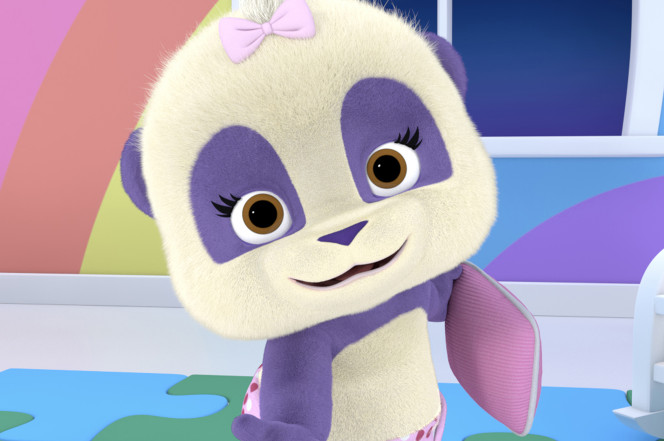
I’ve always heard that the best way to really learn something is to try to teach it to someone else. So now the Jim Henson Company is creating a TV series in which the kids who are watching teach baby animals new words. I can’t quite figure out how this one will work, but can’t wait to find out. Plus there’s singing and dancing, and the panda looks criminally cute.

Amazon Prime
Creative Galaxy
I happened to be a big Blue’s Clues fan back in the day, so the fact that its creator, Angela Santomero, is involved in this one gives it some points out of the gate. The show is also fresh and fun because it veers away from the usual preschool fare of numbers, shapes, and reading readiness. It’s about art as the solution to life’s problems! Arty the Alien and his friend Epiphany search the Creative Galaxy for tools and ideas for making their artistic solutions. And eventually real-life children try his cool art projects too. Mini bonus features that accompany the show suggest ways parents and kids can find art in unusual places—like the kitchen and the back yard.

Hulu
Guess with Jess
A cat with a British accent and a sly wink? I’d say it’s purrfection if I didn’t think the pun police would arrest me. This is a show in which Jess the cat and his friends on Greendale Farm solve mini mysteries like why acorns are buried under a tree and what makes a rainbow. They tackle all their Big Questions together. This one is heavy on the joy of friendship and little songs that any three- or four-year old will love.

Shelley Sperry