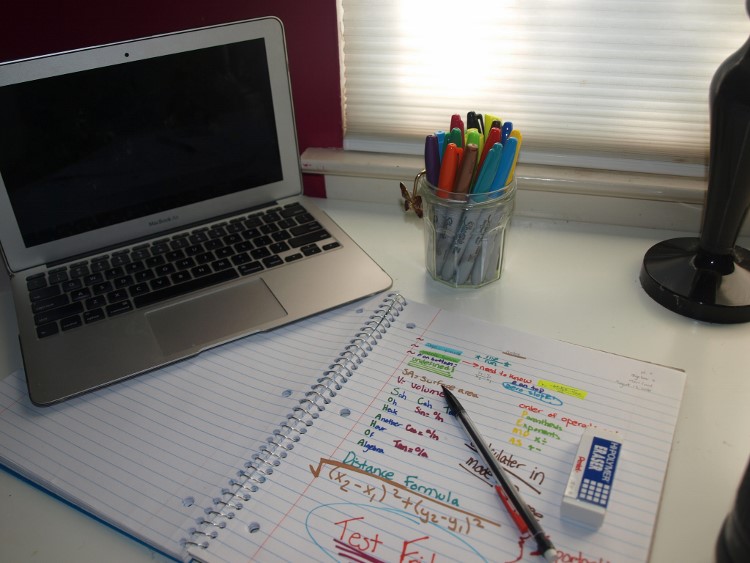
End homework! Or why the school day should end at 3pm

Stefany Bolaños is currently building Agora, an app built for teachers re-imagining the future of education. She teaches an economics course, has published three children’s books, and works with Junto Studio, a web development company. She is part of Startup Chile’s current batch. Startup Chile is Latin America’s leading accelerator, and the fourth biggest worldwide.


A quick Google search of the words “homework is bad” throws 31,700,000 results (“ban homework” yields a surprising 704,000). Clearly, homework is a controversial topic, and its opposition has gained force over the years. There’s a great deal of quantitative research (like this one from Stanford, or this from Penn State) that reflects how homework can have negative effects on kids. These are some of the reasons they give:

  • It imposes time pressures on children.
  • It leads to sleep disruption, indicating a negative relationship between the amount of homework, perceived stress, and physical health.
  • It interferes with time otherwise spent connecting with the family.
  • There isn’t even a correlation between whether children do homework (or how much they do) and any meaningful measure of achievement.
  • Homework can be an improper tool to test a student’s abilities—it doesn’t necessarily show how well a student understands a concept.

These are all very straightforward facts, but there’s a reason that’s even more important: we should let kids be kids.

Picture a regular school day for your kid. She wakes up at 7:00 a.m., goes to school, and stays there for 5–7 hours. The bus picks her up at 3:30 p.m. to take her home. By the time she’s dropped off, it’s probably around 4:00 p.m. The average American high school student spends seven hours a week on homework, and almost 10 percent of fourth graders worldwide report spending multiple hours on homework each night.

Those are the numbers. But that which is unseen is important as well. What about the children’s life-long interests? What about free time? What about running outside, learning how to fold a blouse, or helping mom or dad bake some cookies? Free time plays a key role in fostering both creativity and emotional development.

Without homework, kids might not have as much structure to their day. But that’s exactly the point! Traditional schools are sufficiently structured already.

So why should the school day—and school work—end at 3pm?

Because spending too much time in a school with structured activities won’t teach children critical life-coping skills. Autonomy is one of those. Mark Barnes makes an important point when he writes: “Responsibility implies autonomy, and homework offers none of this. Students are told what to do, when to do it, and when it must be returned. Where does responsibility come into play?”

Homework has another important deficiency: when students have already mastered a specific skill, they are likely to lose interest in repeating it. On the other hand, those who are struggling won’t necessarily improve by doing homework on something they don’t even understand. And we’re not even mentioning test scores, which don’t prepare children for the real world. Still, in case you were curious: the amount of homework completed has no effect on scores.

Not only do kids live less stressed with less homework; they also have the chance to pursue little passions, things that they enjoy doing—and enjoy learning. The alternative to homework is giving kids the chance to play, to rest, and to have fun. So much of their creative power relies on those little steps.

As Tommy Schnurmacher says: “Good teachers can get the job done in class. Those who can’t just assign more homework.”

 Is all homework bad?

It depends. My personal opinion is that if you treat homework as an extracurricular activity (or something that’s not mandatory), then students can voluntarily choose to do it, and by extension, learning takes a whole new meaning. For example, they can film interviews, conduct a field study in the park, or visit the aquarium during the weekend. The key difference is that this work is not graded, and the logic behind it is that learning can and will happen naturally at home or elsewhere in a child’s world.

Although there’s some research that suggests that as students age (especially during 7th through 12th grade), the positive effect of homework on achievement becomes more pronounced, other experts suggest caution against viewing the grade-level effect as fact. And even if it were true that the correlation between homework and achievement is direct for middle schoolers, there are diminishing marginal returns. For high schoolers, for example, two hours of homework appear optimal. So, in the final analysis, less is often more.

Stefany Bolaños
 

Hack to School: Making the transition easier for the whole family (part 2)

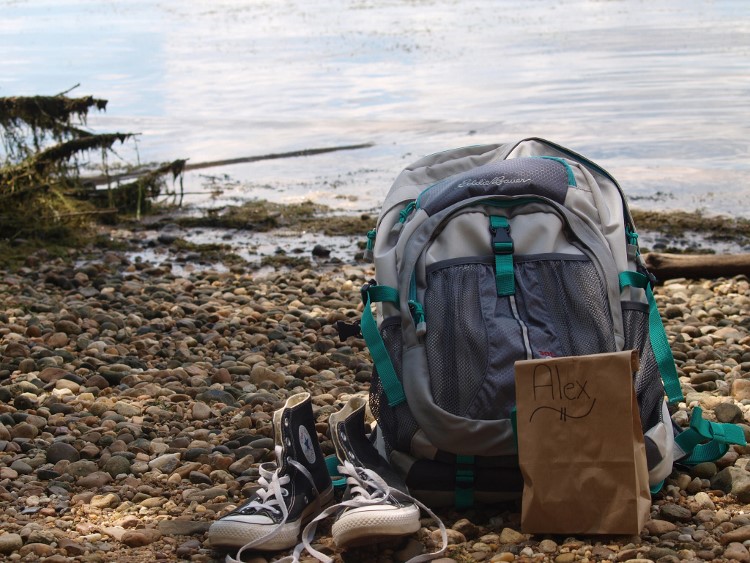
Back to nature.jpg


If you missed the first installment of back-to-school hacks from Shelley Sperry and Mari Frost, which addressed tips and tricks in the food, shelter, and clothing categories, you can catch up here. All photos are by Mari Frost, a 15-year-old who attends high school in northern Virginia.


Our second set of back-to-school hacks is about easing into the school routine in ways that will make the transition better for your mind and body. For lots of kids that means moving from thinking of your computer, tablet, and phone as entertainment (Find those Pokemon!) to thinking of them as learning tools.
 

Tech Prep: Your Digital Health

We suggest taking an hour or two several days before school starts to set your family up on all computers, phones, and tablets for the school year:

When you get your school schedules (including extracurricular activities), put them on everyone’s phone (the easiest way is to just snap a photo of a paper schedule) and put paper copies in a spot that’s easy to find (a bulletin board, the front hallway, the good old fridge). And at the same time, make sure everyone has all important contact numbers updated, including the school office phone numbers.

If your kid is heading to a brand-new school, make the schedule or an annotated map his or her lock screen shot, so it’s always immediately available to glance at. And it doesn’t hurt to practice asking for help finding your way around the school—that’s not always easy for shy kids.

Students! Set up the bookmarks in your browser so you can easily get to Google Scholar, Google Books, and the public library’s search pages. Those are all better places to start than an ordinary Google search, if you’re doing research. And never forget to check .gov sites for information—you’ll often find terrific resources there. Use sites like the Library of Congress, the National Park Service, and the USGS for trustworthy information.


Avoid disaster now by making sure that your word processing software is automatically backing up anything you’re writing at least every couple of minutes. For real peace of mind, set up a cloud account where you keep all your papers and notes. Something like iCloud, Google Drive, Dropbox, or similar services are usually free for small amounts of storage, which is all you need for your school projects—unless you’re making a lot of videos or taking a lot of photos. Trust us—there will be a panicky moment when you’ll be extremely happy you have old drafts of a paper or notes saved in the cloud.

If you take notes mostly by hand, consider taking photos of the most important pages. You can then study anytime—on the way to pottery class or grandma’s house. You’ll always have them with you. Even if you much prefer to read paper books, it doesn’t hurt to invest in a few digital versions (or better yet, check digital copies out of the library) so that you can read a few pages of Catcher in the Rye while waiting for your Dad to get through the line at HEB.

Put a label with your name and school on your calculator and any other gadget you use regularly outside your house. If someone finds it, there will be no doubt it’s yours, and they can return it to the school. It should go without saying: Don’t put your home address or phone number on the label.

Wait until everyone is in a great mood, and then start a family discussion of the contentious subject of limits on screen time for the coming school year. Serve ice cream and cookies. Good luck.
 

Body Prep: Exercise and Sleep

A few days before school starts, try to get into the best falling-asleep-and-waking-up pattern for you. If you’re a kid or teen, eight hours is really the minimum you need to function well. We all love to cuddle with our phones and tablets, but try getting a regular alarm clock and putting the gaming, video-watching, texting, Instagraming device as far from your bed as possible so you’re not tempted to look at it at 3 a.m.


If you have superhuman self-control, and can have the device near your bed, you could try a sleep-cycle app that monitors your sleep and helps you determine the best time to wake up—but really, an old-fashioned simple alarm clock, your parents, or a pet that wants breakfast is the best alarm.

One thing that may help you de-stress and get a good night’s sleep AND will help the morning go more smoothly is taking a relaxing bath or shower the night before.

Consider making it a rule to eat a healthy snack and get some sort of exercise before starting homework. Kids often need a period of transition and relaxation when they get home from school. If they start immediately on homework or jump into fun screen time, they may not be at their most alert and efficient for the rest of the afternoon and evening. A routine of skateboarding, basketball, or biking outdoors—or dancing or yoga indoors—whatever gets them moving a little—will help energize them and make homework time easier.
 

Low Tech Prep: Handmade Fun

For young kids who are walking or taking a bus to and from school for the first time, spend a morning or afternoon creating a cool, illustrated map of the route and walking or driving it a couple of times so it becomes familiar. Find a friend in the neighborhood who will be your kid’s bus buddy or walking buddy as they get used to the new route. They may find other friends to walk and ride with later, but it’s great to start out with someone they know.

Walk around a new school, play on the playground or sports fields a few times, and look at photos of teachers online so that the school doesn’t feel strange on Day One.

Sometimes it’s non-academic things that stress us out the most, so spend a few hours at lunch or dinner brainstorming about the kind of extracurricular clubs and teams you might want to try and the service projects you want to do, if your school includes service as a requirement.

Make a COOL IDEAS folder for all the kids and hang up in their rooms or a common family area. Anyone in the family can toss in photos, articles from magazines, or random notes whenever they find something that might be helpful for school or extracurricular projects. For example, if you know your son likes getting outdoors in the mud and needs a community service project, clip out the calendar of watershed clean-up days and put it in the folder. If your daughter has to write and illustrate a paper on the Odyssey, jot down information about an art exhibit on ancient Greece you saw in a magazine. Set a time each week to sort through the folders and choose the ideas you’ll act on.

DIY Day: Think of something you know you’ll need when October, November, and December roll around and do a family craft night now, when you’re more relaxed than you’re likely to be in the middle of the fall. Make cute scarves and hand-warmers for cold morning walks to school out of fleece and rice. Get started on Halloween costumes. Make pennants you can wave at school football or basketball games. Create a place to display photos, playbills, and memories on kids’ bedroom walls using fishing line and clothespins or a DIY bulletin board out of an old picture frame.

Ahhhh, now we’re ready for the learning to start!


Shelley Sperry, with Mari Frost


Hack to School: Making the transition easier for the whole family (part 1)

Photo by Mari Frost


Staff writer Shelley Sperry enlisted her teenage daughter, Mari Frost, to contribute photos and expert tips for this special back-to-school post. It’s full of useful ideas for both parents and kids, so pick out some favorites to share with your family.


Some kids and parents get wistful when summer ends, and some can’t wait to get back to the routine of books, friends, and after-school activities. We’ve had a quiet, laissez faire summer at our place, so we’re all pretty excited to begin the more structured school schedule again. But there are bound to be anxieties, no matter how eager you are for the learning to start.

My teen daughter and I decided to collect some back-to-school “hacks” we thought might help everyone transition gracefully. There’s no shortage of ideas in magazines, on YouTube, and, of course, Pinterest and Instagram right now, so you can have fun making your own lists—and please share ideas in the comments. Here we’ve selected the ideas we think are especially helpful for the week right before the madness begins, to relieve potential flailing and stress. We’ve broken them down into a few key categories: Food, Shelter, and Clothing. In part 2, we’ll share Mind and Body health hacks.


Food

If you have room in your fridge and pantry, designate a particular shelf or space as the lunch station—and if you have even more room, create a breakfast station too. Get a few cheap bins or baskets and use them to corral the fruit, cheeses, sandwiches, and salty and sweet snacks kids will be putting into their lunchboxes. We like the idea of using a small corkboard—or better still, a magnetic blackboard or dry erase board on the inside of the cabinet door. That’s where kids can leave messages for Mom and Dad, like, “We’re out of peanut butter!” and “Can I have Oreos next week????”

Walk kids through the process of washing their lunch containers or putting them into the dishwasher. Create the expectation that they’ll do this right when they get home—before snacks and homework—to make sure they’re ready for the next day. This is the hack designed to relieve Mom and Dad’s “Why are there 26 dirty containers in the sink?” stress.

Don’t forget after-school snacks and on-the-go breakfasts, especially for constantly hungry teens. Keep it simple. Ask each kid to name two snacks and two breakfasts they like, and then put a week’s worth of those in the fridge, freezer, or cabinet. We love having all the ingredients for smoothies in individual freezer bags so all you need to do is pop them into the blender.

Keep things cold in lunchboxes the easy way: use frozen water bottles or drink pouches or frozen grapes (a yummy, nutritious treat) to keep the rest of the lunch cold.

During a family dinner about a week before school starts, ask everyone to write down a couple of favorite quick and easy (15-minute) dinners. Break out the recipe apps and websites for ideas. Make a shopping list based on those dinners and try to make sure you always have most of the items on hand. Make a card with each item, including the recipe, and put into a paper bag that you clip to the refrigerator or pantry door. When you get stuck with no plan and no inspiration 30 minutes before it’s time to go to soccer practice, reach into the bag and make whatever you pick.   

Helpful stuff to put on your shopping list: cups with lids and straws for on-the-go smoothies or other breakfast drinks; magnetic dry erase or blackboard (or blackboard paint), magnets or cork board with push-pins for inside cabinet door; a case of freezer bags and zip-top plastic bags!


Shelter

What every house or apartment with kids needs is a designated school stuff area that is not the dining table or kitchen counter or middle of the front hallway. Get your kids involved in creating a spot in your house for backpacks and a small school paperwork center. Unfortunately, it’s easiest if the spot is in plain view, and not hidden away in a closet. It will be used morning and night!

Create a system that meets your needs, but at minimum, try to have plenty of hooks for backpacks and any additional gear bags (for sports, ballet, etc.). A table with a few baskets or a small set of cheap drawers (plastic drawers work just fine!) that you can label: PAPERS TO SIGN; IMPORTANT ASSIGNMENTS; and ARTWORK.

Put a family school calendar on the wall—a paper one or a dry-erase board—and make sure kids can reach it to add their own events, if they’re old enough. They can draw pictures or use stickers too.

Helpful stuff to put on your shopping list: hooks of all kinds—heavy duty, preferably—to hold backpacks, hoodies, umbrellas, whatever your family wants to keep out of the closet and in plain sight.  Over-the-door hooks for our front hallway closet have been a game-changer in our house because they are the perfect spot for all our raincoats and Mom’s purse. Efficiency sometimes has to trump style.
 

Clothing

There are three shoe tricks we learned recently, and we love them all!
 

  1. We all know we’re supposed to lay out clothes and schoolwork the night before so it’s all ready to go, but sometimes there’s that little extra item you REALLY don’t want to forget—your new locker combination, the extra keys, the bus pass you only need on Wednesdays, the calculator that’s required for the big test. Put those things inside your shoes. You can’t walk out the door without remembering them!
  2. Do your kids leave stinky gym shoes and clothes in a locker for days or weeks at a time? Give them a few herbal teabags and shove them inside the shoes to absorb some of the odor and leave a hint of lemon ginger or chamomile scent in the locker.
  3. New shoes? Wear them around the house for at least two or three days—or have a new shoe dance party with friends to make sure they’re worn in and won’t create blisters or be too slippery on the first day of school.

School clothes shopping is not usually much fun, but maybe a family pizza night that includes some school clothes prep could be?

  • If your kids need labels in some of their clothes, make them together with colorful permanent markers.
  • Roll tops and bottoms into outfits and tie up with a ribbon or twine and stack in an easy-to-reach drawer.
  • Let kids help pick out a few cute dollar-store bins and baskets, label, and put them in the closet or dresser so they can put away their own underwear, socks, and pajamas. Forget about folding—just getting things put away in roughly the right place is enough!

Don’t wait until after you have the emergency to put together your emergency clothes kit. The littlest kids may need to have this ready to go on Day 1. For older kids, it’s just a good idea to have an extra shirt and shorts or pants rolled up and available in a locker—or even in your car, if you are often rushing from event to event, eating and spilling. Put the items into a small plastic bag and squeeze out as much air as possible to reduce the size.

Other items that might be helpful to have in a very small backpack emergency kit: ibuprofen (if allowed at your school), pads or tampons, extra pencil and pen, travel deodorant and hand wipes, dental floss for kids with braces, a tiny roll of tape and/or glasses repair kit—or for kids who play sports, a whole extra pair of glasses, an extra reed or violin string for orchestra, a few dollars for the inevitable “I forgot my lunch” day.


In making this list, we discovered we have a lot more tips related to prepping not only your family’s kitchen and closets but also your kids’ minds and bodies for the transition to school. We’ll do that in the next post!


Shelley Sperry, with Mari Frost

Media Monday: Brighten and enlighten your mind with videos from KQED

In these final days of summer vacation, here’s a quick Media Monday recommendation from the Left Coast: some websites from KQED, an NPR and PBS affiliate in northern California. I’m recommending their KQED Education site, and in particular the new KQED Teach site. I’m also recommending the KQED Art School site. These sites, with most of their materials also available on YouTube, are just overflowing with intriguing videos aimed at both educators and students. Watch out—once you and your kids start exploring, you may find yourselves awash in video goodness from which there’s no escape!

KQED Education on YouTube and online has a lot of helpful information on art, politics, race, science, and media. Every time I look at it I find something pretty cool that I want to share with my daughter.

New this summer: a separate site called KQED Teach that has online, self-paced courses to help educators develop media literacy. I think many of the lessons would be useful for middle and high school students who want to create innovative multi-media projects, but the assumption when you sign up is that you’re an educator, not a student.  The courses are designed to help participants:

  • participate in online communities
  • learn to decipher and manipulate digital imagery
  • gain competence in making and sharing original media

Courses are free, and the introductory material for each module is available on YouTube, as well as through the KQED website. But you can’t fully participate in the learning without signing up and logging in.

KQED Art School has an inspiring number and variety of videos for kids—and many made by kids. In the videos, you can find how-tos related to the arts, interviews with adult and young artists, and a lot more. The arts represented include painting, animation, photography, dance, fashion, sound recording, ceramics, puppetry, printmaking, quilting, political activism through art, and more. I really cannot get enough of these videos, most of which are 5–8 minutes long. Here are a few recent examples to brighten and enlighten:


Shelley Sperry


How to have a great day at a museum? Step into your kid’s (lunar-powered) shoes.


This post was written by Abigail Kutlas, who studies Learning Sciences at Northwestern University. This summer, Abigail is a museum intern and researcher in Washington, DC. Her research focuses on family engagement and accessibility for children with intellectual disabilities.


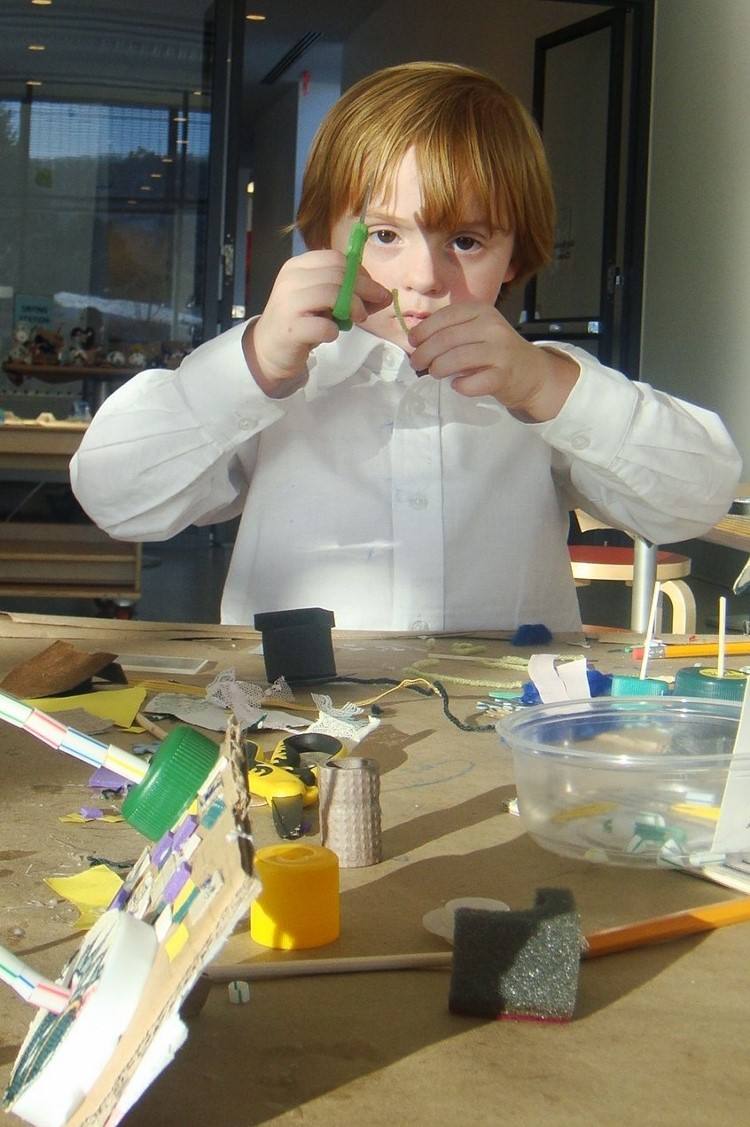
What would you invent to help someone see differently? Ask an eight-year-old and a thirty-eight-year-old and you’ll get very different answers.

When we posed this question to our visitors at the hands-on, maker-space-esque exhibit I work in, the youngest patrons were fountains of innovative ideas. They drew elaborate lunar-powered shirts, shorts, and shoes so soccer players could practice at night. They wanted to make a virtual reality headset so you could see information about your favorite constellations just by looking at them. One jokester even sketched carrots.

The answer I got nearly every time from grown-ups? Glasses. Nothing special or new, just glasses, like the ones perched on my own nose.  

Something similar happens when I watch kids sit down at a table with an open-ended prompt, like “How can you project an image onto a screen?” They start by sifting through every available material, and they work until they’ve found two or four or ten solutions, often using every Lego in sight. And most of the answers they come up with make sense, because they intuitively understand that lenses and light, in some combination, will help them reach their target.


Meanwhile, their parents often turn to me within seconds of sitting down and ask, “What’s the right answer?”

I don’t fault grown-ups for thinking like this. It’s a combination of what our traditional education system has taught us to value and the many hats we wear when we take our kiddos out into the world: timekeeper, taskmaster, bathroom-runner, and above all, expert. Each of those roles is important at times, but for a museum experience that lasts in the minds of all family members, I wish parents could check most of their hats at the door when they walk in.

The best advice I can give to adults visiting any museum with children is to be 25 percent grown-up and 75 percent kid while you’re there.

Go ahead and use your advanced fluency skills and big vocabulary to make sense of the information given on plaques and signs, but then assume your role as a kid and just enjoy it.


On your day at the museum:

  • Ask questions with the assumption that there are no right or wrong answers.
  • Talk about connections between what you’re seeing and anything (literally, anything) it reminds you of.
  • Don’t feel obligated to see every single thing in every exhibit. Let your and your kids’ natural interests tell you where to linger, which exhibits to race through, and which to avoid.
  • When you discover something new or are confused, stop and pay attention to those feelings. Discuss them with your kids. In other words, model the fact that learning is a lifelong process.

I see our youngest visitors do most of these things naturally, and it enhances their learning and overall experience when they see their grown-ups behaving this way too.

As museum professionals, we have theories upon theories about how to engage your children, but in the end, you spend every day with them and have so much more influence over their experiences than we ever can. We do our best to facilitate experiences that will be meaningful to kids and stick with them. But when parents let go and learn to walk through the museum like their kids do—with boundless imagination, curiosity, and amazement—that’s when the truly lasting impressions happen.

That’s also when parents and kids have the most fun!


Abigail Kutlas


Math and happiness

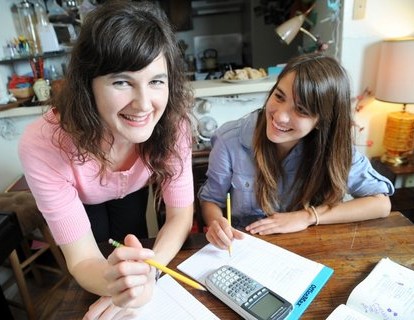
Lacie Taylor is founder and owner of Math For Keeps, a math ed business in Austin, Texas. She teaches her students how to practice math (much like you’d practice piano or basketball). With this approach, as she explains in the guest post below, her students develop a fluency in math as a language that changes the whole game for them.

Learn more about the Math For Keeps practice-to-mastery method here.


One of the magical things about one-on-one teaching is that it’s easy to keep a student in what educational theorists call their Zone of Proximal Development. I call it your Sweet Spot! If you’re bored, optimal learning is not happening. On the other hand, if you’re stretched so far that you’re freaking out, shutting down, with tears and much stress, optimal learning is also not happening. Here’s the fun, happy news: when you’re feeling your best while learning something, when you’re stretched enough that you’re engaged and inspired but not so much that you’re giving up, it FEELS good, AND that’s when optimal learning is happening. How lucky is that?

So how do we keep a student in that sweet spot? Let’s use one of the most famous subjects for knocking students out of their happy learning place—math—for outlining how.

First, a more formal definition of the Zone of Proximal Development: it is the gap between what a student can do independently (what they have mastered) and what they cannot yet do independently. Skills that are in the gap might have been introduced, and perhaps the student can do them with assistance, but they don’t yet have them mastered. Another way to put it: You’ve got your Actual Development, and your Potential Development, and your Zone of Proximal Development is where skills live when they’re in transition from one to the other.

So this space of learning—after you’ve been shown something, but before you’ve got it in the bag—that’s a fun happy space! The brain loves to be in this space, and loves to see skills move through this space into mastery. So why does learning sometimes stop feeling so fun? One culprit is our expectation that students work on things outside this zone. We’re expecting them to work on things they either already have in the bag (boring) or things that are unfair to expect them to do on their own just yet (defeating). The antidote, then, the guidelines for keeping students in their sweet spot, are pretty simple:
 

GUIDELINES FOR KEEPING A STUDENT IN THEIR SWEET SPOT
1. Don’t teach past what they’re ready for.
2. Don’t give busy work.
(TO NOTE: Do not get mad at your child’s classroom teacher if they aren’t doing this for your child. Doing this in a classroom of 25+ kids, all at different levels, when the paradigm is set up for its opposite, is a formidable challenge. But it’s one that alternative education is up to, and that’s one reason we’re all here on this blog.)


Number One Guideline: Don’t teach past what they’re ready for.

 If you as a student have truly been set up for success, each new level of math should feel completely do-able and accessible. The fact that it doesn’t, for most math students, sooner or later, simply means that the last level didn’t get mastered. At every new level of math, there is a new layer of skills that you’ll be figuring out. You won’t be able to do them independently; you’ll need help. The previous layers will have felt like that too at some point, but by now, if they have been practiced effectively all the way to mastery, then they will feel intuitive. You will be DONE with those skills. You won’t have to figure them out anymore. They are there to support the new skills you’re being expected to learn. When math starts feeling impossible, as it does for so many of us, it’s because we’re still getting that last layer down. We’re not ready for the new layer yet. Don’t give it to us before we’re ready, or our brains will reject it. We will hate math, feel discouraged by it, think we can’t do it, and start asking why the heck we have to learn it. Vicious downward spiral. Yuk.
 

Number Two Guideline: Don’t give busy work.

This is a tricky one because it is true that the more practice you have at a given type of problem, the better you become at it. The more automatic it feels, the more your brain energy gets freed up for the next level of skills. But it is also true that practice can quickly become tedious and mind-numbing once you’ve made it past that first-problem moment. In a perfect world, the student will have perfectly prescribed practices that are just right for their level. Your brain loves to witness progress. Nailing something that just recently seemed difficult is rarely boring. In fact, the most common student response to this scenario is “these are fun!”
 

Alt Ed for Curing Math Woes

In public education, currently, it seems students have two options: they learn at the school’s pace, or they end up having a less than happy, thriving experience in math. Sadly, most fall into the latter camp, because the school’s pace really doesn’t work for that many students (at least not without a different approach for practicing skills to mastery).

Students learn at different paces. If practice methods were introduced earlier, we could probably equalize better, but as it is, the further along you get in age, the more likely you will be in a class full of 15+ other kids all at dramatically different levels.

In the work I do, if I get a student early enough, I can make sure they’re ready for each class as it happens. The more likely scenario, however, is that parents have no idea just how behind their students are until after the student is multiple grade levels behind. The pain point gets loud enough long after the “ideal” time to fix it.

This doesn’t mean it’s not fixable. For many students, remediation can still happen in time for them to get on grade level. Then there are students who, even though entirely capable of learning math, at their own pace, will not catch up with the school’s pace. In this scenario, for students in public school, it is so easy for everyone involved to feel defeated. Parents, students, teachers alike are all operating under the assumption that because the student is not learning math at the school’s whirlwind pace, which has been pushing them along before they are ready for years, the student is condemned to struggle and to be perpetually behind and to probably not really learn math at all. And this is all with students (those using my practice method anyway) who are absolutely learning math.

What if “behind” didn’t even have to be a notion? Already, some students don’t go as far in math as others, and that’s fine, but what if those who didn’t go as far still learned math, and still loved it? Of course, this is totally possible in public education, with a bit of overhauling. Meanwhile, let’s explore it via all the amazing alternative education options in Austin.
 

Summary

Happy is most important! My whole method was developed on the premise that most of us (both “math-minded” and not) will end up frustrated by math trying to learn it with the minimal practice that is offered in the classroom. And not just the kind of healthy frustration that comes as a natural part of learning, but a very defeating kind that makes us feel inept. This is not fair. EVERYONE deserves to have a rewarding experience learning math. I aim with my practice method to give that to my students, regardless of what they’re getting in the classroom. So while it may feel discouraging—for those of you for whom your brain’s timeline is different than your school’s timeline—-I hope that overall the message I am sending is encouraging. The people I work with are fantastic students. They work hard, they’re enthusiastic, they show up ready to learn, they will get this stuff, on the timeline that is perfect for their brains. My job, with the help of parents—we all work as a team—is to make sure that when this timeline is different from the school’s, as it sometimes is, they don’t feel defeated, that if their enthusiasm for learning takes a hit, they know the reason and bounce back.


Lacie Taylor