



Finding the river within

Life Ki-do_Flow Like A River.jpg


We are delighted to welcome Sensei Jonathan Hewitt to share some of his deep wisdom with Alt Ed Austin readers. He is the founder of Life Ki-do Martial Arts, one of Austin’s most beloved, effective, and elevating enrichment programs.


Go with the flow. A profound way to live, but sometimes that’s easier said than done—and what exactly does it mean anyway?! Growing up, I powered through life. My goal was to be the best, the fastest, and the most popular. I was in control, and I was going to make it all happen. But wait— was I really in control? And even when I won the gold medals and got the approval, why did I feel so empty inside?

I realized at a pretty young age that I needed to look inside rather than outside for peace, fulfillment, and happiness. I spent many years searching for answers studying martial arts, psychology, mindfulness, and meditation. What I’ve come to is a place I call the River.

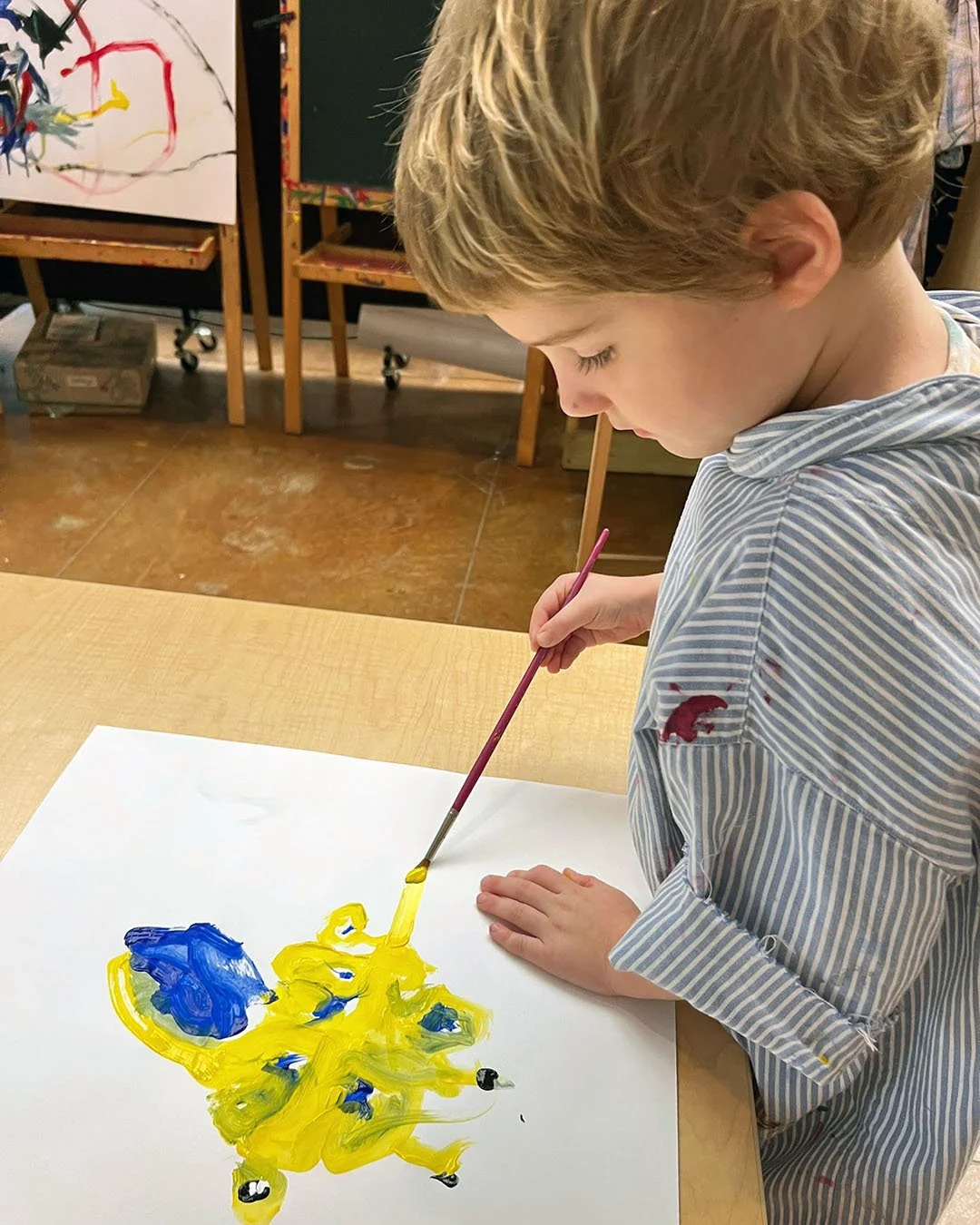
One of the reasons I like this word is that I work with children, and it’s an easy concept for kids to understand and relate to. But it also describes perfectly a beautiful way to live: rivers are always flowing and always moving toward something greater. Inevitably there will be obstacles in its way, but the River moves around those obstacles and never gets stuck. To me, the River is about putting your heart into life and giving it your all.

What it doesn’t mean is being perfect. I call the River’s two opposites Ice and Puddle. Being like Ice is trying too hard, feeling pressured and stressed. Being like a Puddle is not trying enough, feeling lazy, bored, and disinterested. The thing is that we are all like Ice and Puddle sometimes. It’s part of being a human being. The important thing is to not get stuck in judging ourselves and instead keep returning to the River over and over. It’s a fluid state, remember? Not a fixed, end-all state of perfection.

Life Ki-do_Elementary Martial Arts.jpg

Finding the River has not only transformed my life but also transformed the way I teach martial arts. I grew up in and taught for many years a rigid, traditional type of martial arts. The techniques were based on a set of preset circumstances—he does this move, so you follow with that move.

But life never happens that way, right? So why not practice martial arts in a way that reflects how we want to live life: dealing with spontaneous situations in a fluid manner? We practice how to take an opposing force and use it to redirect the flow. In martial arts, this might be a physical force, but in life it can be any circumstance or even (and most commonly!) our own inner emotions and thoughts.

The amazing thing is that when you are in the River, your experience with a partner becomes about connection, care, and cooperation rather than about comparisons, competition, and control. These are deep foundations for how to be in relationships with others in the world. Instead of seeing another human being as someone to fight with, or compete with, or compare yourself to, being in the River allows you to feel empathy and compassion for that individual. In our dojo, everyone supports each other to be their very best. Being not like Ice or Puddle allows you to be present and sensitive to your partner’s needs while also communicating honestly and clearly your own needs.

While there are many tools to stay in the River, the most effective by far is the breath, and we practice it all the time. With the kids, we call it Ninja Breathing to imbue the breathing with a sense of empowerment. Harnessing the power of the breath allows us to be relaxed, focused, calm, and present. Ready to see challenges as opportunities to grow rather than as obstacles that are impossible to overcome. Ready to let it come, let it go, let it flow. Like a River.


Jonathan Hewitt
 

Awareness, acceptance, and admiration for kids with ASD

It’s a little late, but as Autism Awareness and Acceptance Month comes to a close, I wanted to make sure to highlight some of the great work being done for Austin kids on the autism spectrum. Autism is a collection of neurological, developmental disorders that used to be divided up into many categories, but now researchers believe they all are variations of the same thing: Autism Spectrum Disorder, or ASD. The CDC estimates about 1.5 percent of kids in the United States are on the spectrum, and it’s something they’re born with, not the result of any trauma or environmental factors.

Kids with ASD often struggle with communication and social interaction, have heightened sensitivity to the world around them, and sometimes have some trouble with motor skills. The Autism Society of Texas (formerly the Autism Society of Central Texas) has loads of materials for parents, children, and educators who would like to become advocates and allies—or just want to know more. Their website also highlights camps for kids on the spectrum in the new 2017 Recreation & Camp Guide for Students with Special Needs, available in English and Spanish.

One of the best ways we can become good allies for kids with ASD is to help everyone learn more about it, including children of all ages. I can recommend Amethyst Schaber’s YouTube channel and especially her “Ask an Autistic” feature for its straightforward answers to common and not-so-common questions. Amethyst’s friendly face and voice will help younger children understand that ASD isn’t a scary thing and that some of the common “stims,” or forms of stimulation used by people with ASD (like hand waving or eye movements) are nothing to be afraid of.

Another terrific video primer for middle and high school kids who want to learn more about ASD is Khan Academy’s “What is autism spectrum disorder?”

For those who would like a resource in English and Spanish, make sure to take a look at Autism Spectrum Explained. This website was created by a college student whose sister is on the spectrum. The clever videos show viewers that different doesn’t mean non-functioning—in one case by using the analogy of PC and Mac operating systems.

Many schools in Austin and surrounding areas offer services tailored to children and teens on the spectrum within inclusive learning environments. These include alternatives like The Rise School of Austin, William’s Community School, Odyssey School, and The Magnolia School, as well as St. Francis School. For a complete list of ASD-friendly schools and other educational programs, go to the Autism Society of Texas 2017 Resource Guide, which offers links to education resources, both private and public.


Shelley Sperry
 

The Alt Ed Library: Open 24 hours

Nowadays, what people call learning is forced on you, and everyone is forced to learn the same thing on the same day at the same speed in class, and everyone is different.

—Isaac Asimov in conversation with Bill Moyers, 1988


What Mr. Asimov said almost 30 years ago is still true for many students, but in Texas, the United States, and the world, the sameness of learning is now being challenged in myriad ways every day. If you’re interested in how students, educators, and parents are revolutionizing schooling and unschooling, a trip to the education section of your bookstore or library is a good place to start—but we know from experience that sifting through all those titles isn’t easy.

We often recommend books to our clients, so we decided it would be useful to bring those recommendations together in one place. Today, on Independent Bookstore Day, we’re happy to introduce a brand-new feature on the website: our Alt Ed Library!

We’ve put together a curated list of books on a wide range of  topics, from forest preschools to DIY higher education, and from the slightly unconventional to the radical. We’re including links so you can take a look at reviews, and if you’re interested, buy the books from an indie bookseller or from a certain ubiquitous mega-retailer. (Just as we celebrate small, independent schools, we love supporting small, independent bookstores, and IndieBound makes it easy to do, either online or at your local brick-and-mortar shop.)


We plan to expand the list and hope our readers will contact us with recommendations for additions. Please check out the AEA Library here, and enjoy the read!


Shelley and Teri Sperry
 

Media Monday: A very alt alternative to college draws critics and fans

If you’re interested in keeping up with what’s new in the education tech world, the EdSurge podcast often introduces listeners to the latest trends and debates through lively discussions with experts and advocates. That’s the case with their latest episode, which covers a for-profit alternative to college called MissionU, which I hadn’t heard of elsewhere.

The MissionU program, which takes only a year to complete, is designed especially for young people who are ready to jump into a career immediately rather than exploring subjects through the traditional liberal arts and sciences curriculum of a four-year college or university or a two-year community college.

One particularly intriguing aspect of the program, which is based in the highly entrepreneurial San Francisco area, is that it requires no tuition upfront, but instead asks for payment after students are earning income. According to MissionU’s website:

There are no upfront costs for MissionU; we only get paid when you do. Once you're earning at least $50,000, you'll pay back 15% of your income for the first three years.

Take a listen to the pro and con discussion on the EdSurge podcast, and see what you think about this highly experimental approach.


Shelley Sperry
 

Media Monday: “Care and concern for Texas kids, not a cheese sandwich”

Children should never be shamed when their family falls on hard times. If a family loses the ability to pay for lunch their child should receive care and concern, not a cheese sandwich.

—Celia Cole, CEO, Feeding Texas


In the rush of news stories that fly by via TV, radio, social media, and in traditional magazines and newspapers, one that captured a lot of attention recently was New Mexico’s ban on “lunch shaming.” A lot of us were shocked to discover how often kids are subjected to humiliation of various types because they are unable to pay for their lunch at school.

We often see statistics about the high percentage of public school students who receive free or reduced-price lunches, but not as much about those who are not signed up for those programs but still find they can’t pay for a standard hot lunch when family circumstances suddenly change. School districts might require these students to do chores in exchange for food, toss unpaid-for food in the trash, or serve the kids cold cheese sandwiches, all practices that may single children out for taunting or worse by their peers. New Mexico’s Hunger-Free Students’ Bill of Rights Act, signed April 6, 2017, strives to ensure that all kids have access to the same nutritional lunch without shaming of any kind.

In Austin and school districts across the country, thousands of people responded to these stories and campaigns via Facebook, Twitter, and blogs, with generous donations to pay off school lunch debts. As of April 11, Addie Broyles reported that all of Austin ISD’s school lunch debt was paid off —at least temporarily. AISD food services director Anneliese Tanner said that the district serves about 700 “courtesy” (unpaid) meals to students each school day, which costs about $350,000 annually.

Dallas ISD takes another route, as it declares on its website: “Breakfast, lunch, and after school meals are FREE to all students. . . . Our goal is to provide nutrition to students that fuels successful learning.”

Texas State Representative Helen Giddings (D-Dallas) responded to the media attention on this topic by pressing the legislature to pass HB 2159, a bill that defines minimum standards for all Texas public schools when a student’s lunch account runs out.

Giddings says, “I have filed HB 2159 to address this situation and ensure that every Texas child is well-nourished and focused on their education, not their next meal. Let us leave finances to the adults and keep our kids focused on actualizing their wildest dreams."

Currently there are no guidelines to ensure that children whose lunch accounts run out of money will not be stigmatized with lower-quality food or identified in the lunch line, and there is no requirement that schools contact families to check whether those children are eligible for free or reduced-price lunches.

Stay up to date onthe progress of HB 2159 here or by contacting Rep. Giddings’s office or Feeding Texas, a nonprofit network of food banks advocating for a hunger-free Texas.

Another group that tackles hunger among Austin families is Keep Austin Fed, which “rescues” surplus food from the thousands of commercial kitchens in the city and gives it to people who need it.

Both Feeding Texas and Keep Austin Fed happily welcome donations.

And in case you missed it back in January, check out the inspiring story of Kealing middle-schooler Ian McKenna, who grows veggies to donate to hungry families and the Central Texas Food Bank.


Shelley Sperry

2e: Twice Exceptional — Join us for a special movie screening and discussion

We’re proud to announce that Alt Ed Austin and SchoolFairATX are co-sponsoring a screening of an amazing movie called 2e:Twice Exceptional. The screening will be held Wednesday, April 26, from 7:00 to 8:30 pm, at KoSchool, just south of downtown Austin. Get full details and register to attend here. Children 12 and up are welcome. The film lasts about an hour and will be followed by a half-hour discussion.

The term “twice exceptional” is becoming more common among educators to describe kids who are gifted and talented in one or more areas, including the arts, language, math, science, and leadership, and are also identified as having a particular challenge—an emotional or learning disability, a physical disability, ADHD, autism, or something else. We recently did a short explainer about 2e in our newsletter (scroll to the bottom for the Question of the Month).

The film 2e, by Thomas Ropelewski, is garnering praise and awards around the country. New York Times best-selling author Steven Kotler says it’s “essential viewing for anyone interested in understanding where our next generation of game-changing outliers may be coming from.”

Check out the film site here, and watch the trailer: