
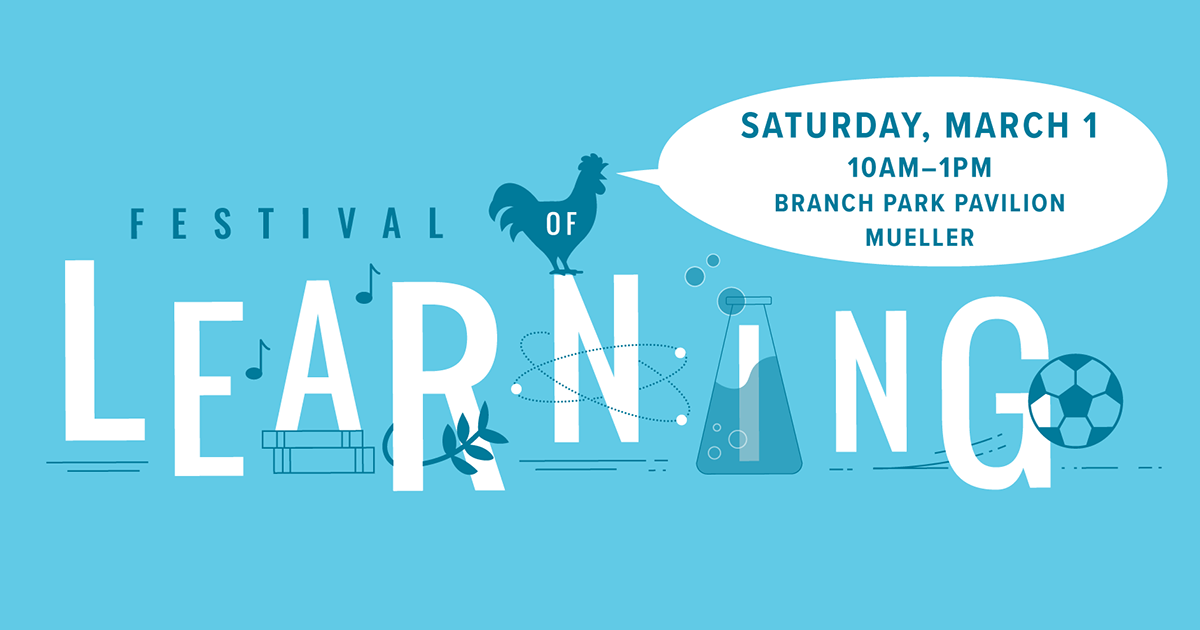
Austin Yawp!: A welcoming new learning community where families connect

A new unschooling and peaceful parenting space called Austin Yawp! has emerged in the past few months, so I decided to grab the opportunity to learn more about it by talking with Hannah Ford, one of Yawp!’s founders. Although unschooling has been around as an alternative education option at least since the 1970s, the concept is new to me (but not to my sister and Alt Ed Austin founder Teri), so I began by asking about some basics.

What exactly is unschooling? Hannah explains that unschoolers allow kids to learn naturally, without an imposed curriculum. “You work together as a family, and kids are empowered to make choices just like adults are able to make choices. We respect children, and we trust them.” She says that it’s a little crazy that the world believes everyone needs a piece of paper and test scores to prove they are learning, when learning is such a fundamental, natural process.
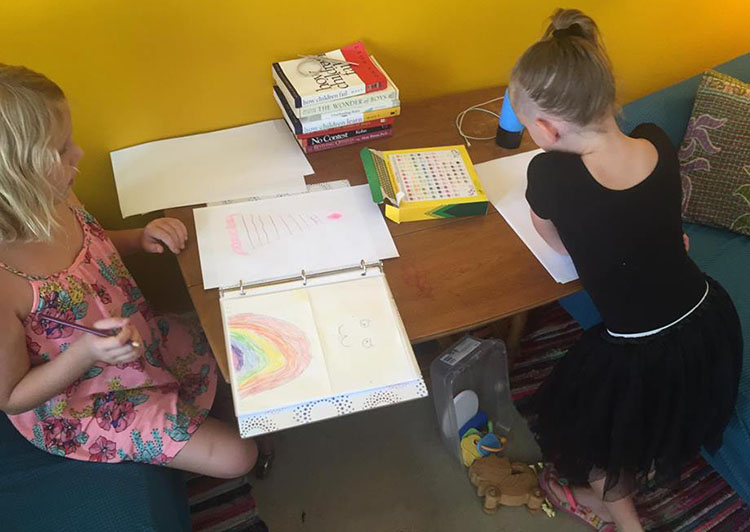
But unschooling is not exactly “child-led” as people sometimes describe it. “The child is not always leading, because that would presume the child knows all that’s available. What we’re doing is looking for sparks of passion, and feeding them. We’re constantly watching to see what kids are excited about. ‘Strewing’ is a good term. You look for what makes a kid’s eyes light up, and help them find information—books, people, museums—and let them go as far as they want to. If your children are interested in fish, you follow the fish as long as they want to!”

Hannah emphasizes that although she favors unschooling, Yawp! welcomes families pursuing a whole variety of approaches to learning, including various forms of homeschooling, alternative schooling, and even public school.

“We’ve been reassuring people that there is no test. If you’re interested in peaceful parenting and trusting and respecting children, we want to hear what you have to say. We want to be inclusive of a variety of philosophies. When you come here, you’re acknowledging respect for what we’re doing, respect for all the other families.”

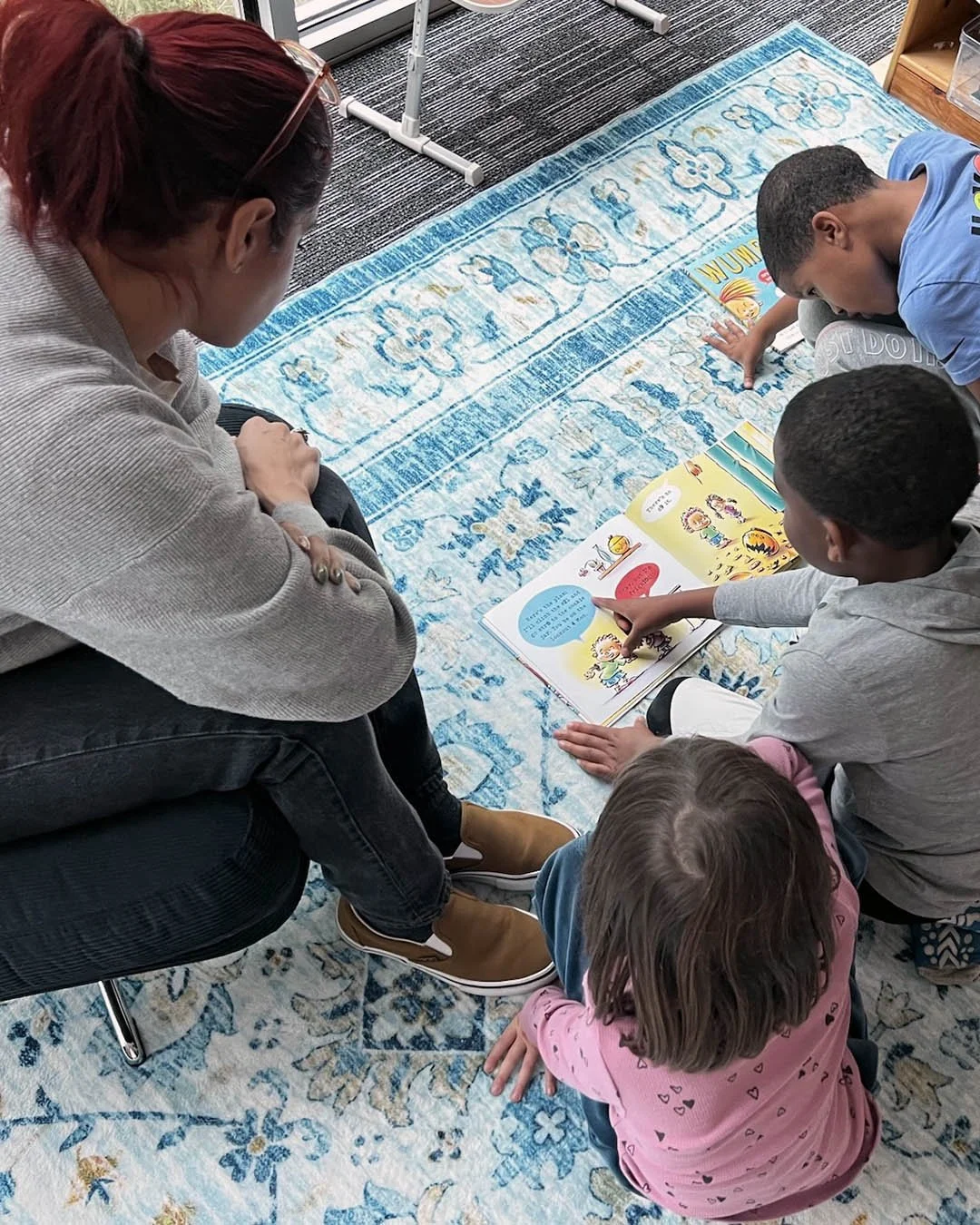
Unschooling is still an uncommon choice, which can be isolating. Hannah saw that families needed a way to combat that isolation, and that’s how Austin Yawp! was born. “I feel like not only are families connecting with each other through Yawp!, but they’re also deepening family relationships. We have some kids who previously weren’t that comfortable in social settings, but here there’s a space where the vibe is welcoming to everyone, and that allows for connections and friendships.”
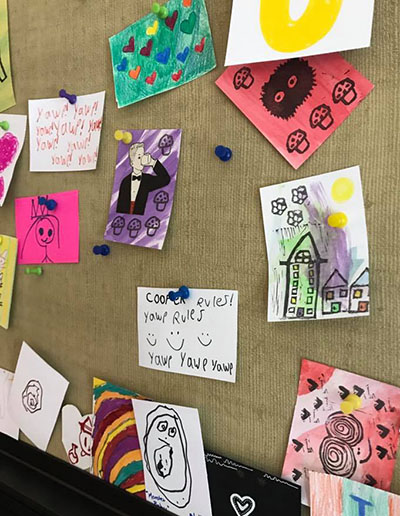
“And it’s really nice to meet other families on neutral ground, where no one has to worry about tidying up the house, and there’s no one hushing you, as you might have at a library or coffee shop,” says Hannah.

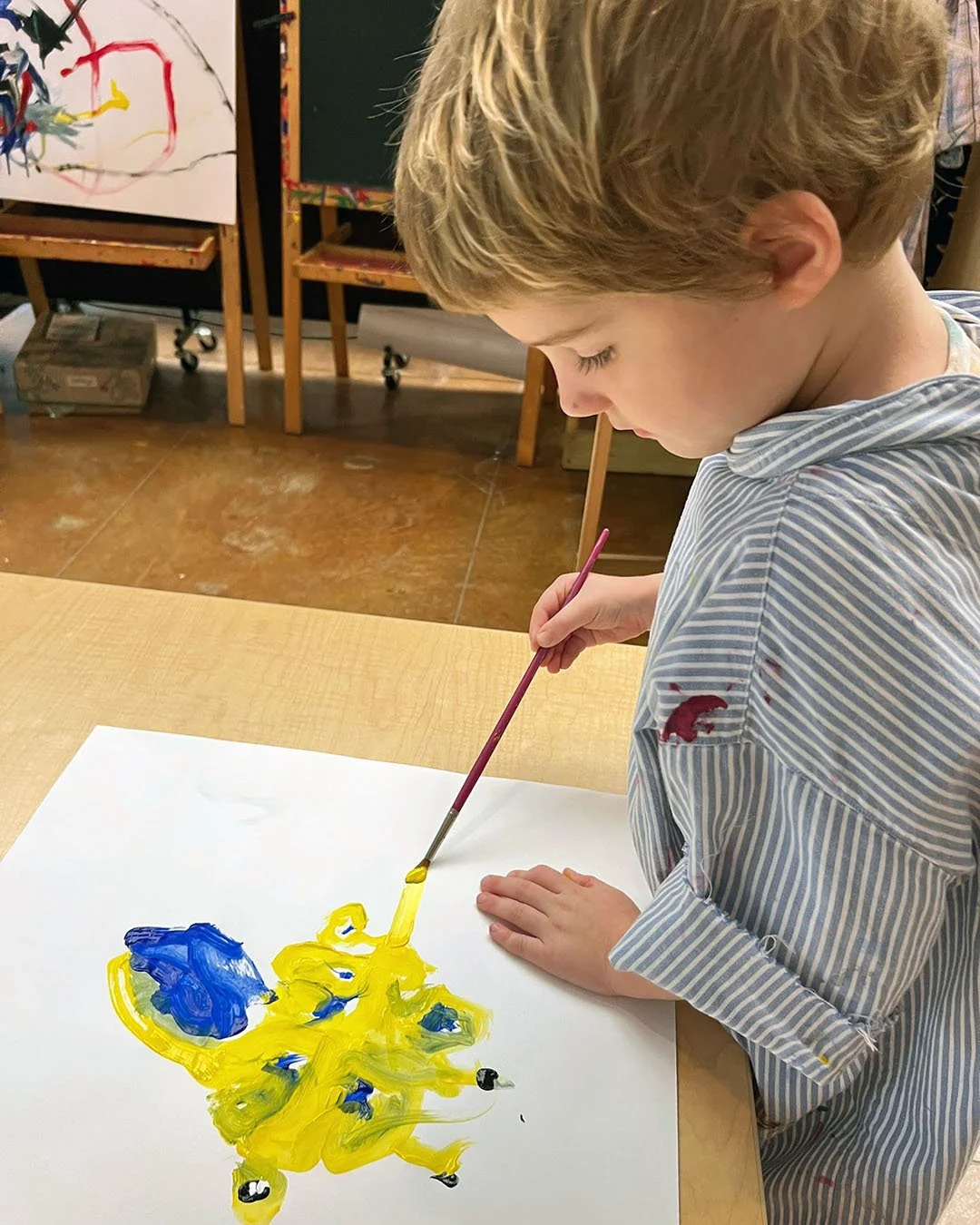
A typical day at Yawp! includes some planned events as well as open drop-in hours when families can meet to pursue any activity that interests them. Kids have met up for Minecraft, to create elaborate cardboard houses, and to play with DIY light sabers. The space has also hosted Raising Resisters, a parent discussion group that focuses on anti-oppressive parenting and education tactics.

Yawp! currently operates in a small space in the Mueller neighborhood, and they are planning to expand to a second location that will offer more room and a better outdoor play space. Watch their Facebook page for more details and information about upcoming events. And to learn more about activities, visiting, and the member agreement, check out the Austin Yawp! website.


Shelley Sperry
 

A tour of parenting (and educating) cultures with two kids

GloboGirls YouTubers Harper and Lyra celebrate the hard-to-describe beverage they came to appreciate while living and learning in New Zealand

GloboGirls YouTubers Harper and Lyra celebrate the hard-to-describe beverage they came to appreciate while living and learning in New Zealand

Well, even as I know I need to devote less time to mucking around on YouTube, Twitter, and the wonderful world of the web generally . . . sometimes it’s just so interesting! This week I decided to check in on Slate writer Dan Kois, who is spending all of 2017 traveling the world with his wife and two daughters for a book project, tentatively titled How to Be a Family. I used to enjoy listening to Dan on the parenting podcast Mom and Dad Are Fighting, until he left to pursue his traveling and writing project.

In part, this Media Monday is a recommendation to be on the lookout for the book because Dan is a lively, slightly curmudgeony writer whose insights about traveling, learning, and enjoying life with kids are bound to be fascinating. Unfortunately, the book is not due out until 2019! But as I was searching for the latest interviews with Dan (see below) to find out how his odyssey is shaping up, I found a terrific little surprise: the Kois kids, Lyra and Harper, have their own YouTube channel, called GloboGirls, where they are recording their adventures and the education they’re getting as their parents take them hopping from New Zealand to the Netherlands to Costa Rica to Kansas, with side trips to Hawaii and Dubai! So far, the girls have lived in and attended school in Wellington, New Zealand, and have just recently moved to the Netherlands.

In New Zealand, kids at Harper’s school took their shoes off before entering the classroom. At Lyra’s school, where kids of many ages are mixed together, she was greeted by a traditional Maori welcome ceremony. Yes, I’m a little jealous.

Dan says that he chose to go to places where families are good at things that his family is not so good at. I really like that as a reason for travel! So in New Zealand, that meant living life mostly outdoors. Maybe in the Netherlands it will be living life mostly on bikes? With tulips? We’ll see . . .

Take a listen and look at the Kois family chronicles:


Shelley Sperry


Media Monday: “Our grade book is the real world.” Learners take control.

“It’s time for education to be transformed,” say the founders and curators of Trailblazers, a new journal about what’s happening in learner-centered education right now. Of course, we couldn’t agree more. But what’s worth noting and celebrating about this manifesto is that is it written, edited, and designed by students themselves. They plan to publish once each semester.

Anya Smith-Roman, Kaylyn Winters, and Abigail Emerson are all students at Atlanta’s Mt. Vernon Institute for Innovation (MFIVI), which is linked to Mt. Vernon Presbyterian School. As part of a unique “innovation diploma” project, the students and their friends are energetically doing all the things alternative education is about: They’re connecting with community members and entrepreneurs. They’re making choices about their own learning and creating something new and all their own. They are declaring that they want to “blur the line between school and the real world and leave the world better than we found it.”

At MVIFI, the emphasis is consistently on getting out in the community to act and interact. “Our grade book is the real world,” says 10th-grader Brady Vincent. Brady is an entrepreneur who has consulted with outside organizations and is now working on a backpack with modular, interchangeable parts.

The first issue of Trailblazers includes a look at a recent learner-centered education conference through interviews with participants. Education Reimagined'sPioneer Lab program hosted the conference in Washington, DC, last fall, with more planned for this year.

Also in the journal: Neel Pujar, now in college at UC San Diego, talks about his experiences working on Design39Campus, a unique K-8 learning environment within a traditional public school district in San Diego. And New Zealander Kim Mi Yeoh writes about blending her interests in animals, architecture, and activism against factory farming in Auckland while studying at  Hobsonville Point Secondary School. Cali Ragland of Perkiomen Valley High School in Pennsylvania explains how she is pursuing a way to enhance curiosity in education and approaching it as a design challenge:

We identified Curiosity . . . as an important component and aspect of learning. We determined that this was an important quality for learning that is often not included in education, and, as a result, we are now trying to determine how a system of education can include Curiosity to better meet the needs of the 21st-century learner.

For more information about learner-centered education, take a look at the Mount Vernon Institute for Innovation and at Education Reimagined, a national organization promoting learner-centered approaches. And check out the video below:

Shelley Sperry
 

Raising Resisters

We invited Antonio Buehler back to the blog to tell our readers about a new group that is working to nurture and strengthen the next generation of effective anti-oppression activists. Among his many other roles, Antonio is founder of Abrome, a local school centered on self-directed, meaningful learning for ages 5–19.


The 2016 presidential election campaign reminded many Americans that while our society likes to boast about its commitment to equality, justice, liberty, and tolerance, an often stronger undercurrent of bias, bigotry, oppression, and hate courses through the veins of American culture. Prior to the election of Donald Trump, and coming off two terms of America’s first black president, both the political left and right were generally dismissive of what appeared to be a rising tide of hostility toward immigrants, black and brown communities, Jews, Muslims, the LGBTQ community, and women. However, since the election, the hostilities against marginalized and oppressed groups have continued to rise, while fascist and white supremacist organizing has moved out from the shadows and into the streets. Although the fabric of society may have changed very little over the past year, the aesthetics have changed significantly.

As organic and organized protests began to grow after election day, and leading up to the inauguration, it became apparent that many previously inactive people were looking for ways to become engaged. While more established political and nonprofit entities were eager to pull those people into their organizations, a small group of Austin activists came together as the Oh Shit! What Now? (OSWN) Collective to find ways to introduce those people into more radical activist circles that focus on direct action tactics. OSWN has since helped organize and plan study groups, discussions, trainings, and workshops aimed at building a diverse community of resisters, and equipping folks with radical skills that they can share with others to push back against hierarchical and oppressive forces within society.

The younger generations have historically been one of the drivers, if not the primary ones, of radical social change, while their caregivers or guardians, as well as those who contribute to the development of the younger generations (e.g., teachers), help shape whether the youth believe that they can drive social change. That’s why OSWN came together with Abrome, the Crustacean Zine Library, and Austin Yawp to launch Raising Resisters, a discussion group that focuses on anti-oppressive parenting and education tactics.

Parenting, education, and activism have a long history of interrelatedness. Radical leftists and anarchists have often understood that oppression is more easily dismantled within the family than within societal institutions, and that young people could be spared being conditioned by mainstream schooling into accepting authoritarianism, capitalism, nationalism, and other hierarchical belief systems. For example, in the 19th century, Henry David Thoreau, Louisa May Alcott, Leo Tolstoy, and Francisco Ferrer Guardia all led alternative schools that were the precursors of radical free schools and democratic schools wherein children had full control over their educational experiences. In the 20th century, in conjunction with the rise of the free schools, writers such as Paul Goodman, George Dennison, and John Holt helped introduce the notions of deschooling and unschooling as a means of resistance into a wider counterculture that was already questioning American foreign policy, racial segregation, and assumptions about social norms. Holt, the most influential of these thinkers, even forewarned of today’s rise of fascism and the inability of system reforms to effectively stave off that rise.

OSWN, Abrome, the Crustacean Zine Library, and Austin Yawp invite parents and educators to join us at our monthly Raising Resisters discussion group meetings to continue the tradition of marrying parenting, education, and activism so that we can build community to resist, and create something better.

Upcoming Events (meetings at 6:30pm at Austin Yawp, 4548 Page St., Austin, TX 78723):

  • Thursday, June 15th
  • Thursday, Jul 20th
  • Thursday, Aug 24th
  • Thursday, Sep 21st
  • Thursday, Oct 19th
  • Thursday, Nov 16th
  • Thursday Dec 14th


Antonio Buehler

Fun leads to mastery in game-based education

Some of the most innovative, forward-looking alternative learning experiences for kids today are built on the notion of games and gaming. Edutopia, the teaching and learning website, even has a Pinterest board devoted to game-based learning. Many commercial games that teach biology, math, history, geography, and every other subject imaginable are infiltrating traditional classrooms, and for particular subjects or problems, that makes a lot of sense. But for this blog post, I wanted to look at why educators would create an entire curriculum based on gaming.

Thinking hard, gaming hard at Quest to Learn, an alternative public school in New York City

Thinking hard, gaming hard at Quest to Learn, an alternative public school in New York City

In New York City an innovative school for grades 6–12 called Quest to Learn is an evolving project to improve kids’ learning, empathy, and collaboration skills. In reading about Quest, I learned the basic tenets of the gaming approach—and then I was lucky enough to interview Austin’s own Cheryl Kruckeberg, who has been advocating for game-based education and running Game of Village, a program based on these tenets, for years.

Quest’s founders, a nonprofit group called the Institute of Play, created an alternative, publicly funded “school of choice” entirely focused on games for a few key reasons, including:

  • Games ask us to collaborate with others and learn by doing.
  • In a game, teachers and students can see immediately whether they are succeeding or failing and can go back and try again, or “iterate.” Failing is an important part of learning in any game, and (unlike a failing grade in a traditional classroom) helps motivate kids to keep trying.
  • Learning happens by doing!
  • Everyone gets to participate and contribute something unique to the process.
  • Feedback happens in the moment, not days or weeks later in an exam.
A long-running Austin program centered on interdisciplinary learning through role playing and world building

A long-running Austin program centered on interdisciplinary learning through role playing and world building

My talk with Austin’s Cheryl Kruckeberg reinforced many of the notions above with real-life examples from Game of Village. Cheryl says that one of the best things about learning through play is that the consequences aren’t dire, so kids can go all out to win, but if they lose or make mistakes, it’s just a game. “Tomorrow they come back and try again.”

The problem in most grade-based education, says Cheryl, is that it tells kids that an “F” is a statement about who they are, and that may very well change how they think about themselves. “All of that judgment is gone in the concept of the game,” she explains. Kids are having fun and working together to improve, not anxious about judgment and evaluations from others.

“Play is the modus operandi of learning—the way to knowledge, to intimacy, to relationships with the world and people in it,” Cheryl continues. “Jean Piaget [the pioneering child psychologist] said that play is for the pleasure of mastery, and I think that’s right. Kids will do things for play and bend themselves into pretzels to overcome any challenge for the sheer pleasure of mastering something—to get to the next level in a digital game or board game, for example—when they wouldn’t do that for the sake of rote classroom learning.”

Readers of the blog may have met Cheryl a few months ago, when she wrote a blog post about exactly how Game of Village works—creating an entire alternative village-world on a 1/24 scale, with 3-inch avatars, or “peeps” who inhabit the village. Games ideally last about 25–30 days and include around 25 kids, but the time period can span an intensive five or six weeks, or can be spread out over an entire school year for one day each week.

From a recent Game of Village showcase

From a recent Game of Village showcase

I wondered what kind of learning objectives and structures the Game of Village mentors begin with, and Cheryl explained, “What we do is set some basic take-aways and usually a time period and geographical setting. It’s important to have some parameters, so that kids have something to push against. From there, they have a lot of freedom to explore.”

“Recently, we launched a village of the future, which kids love because of all the gizmos they can try. Our goals were to talk about sustainability and climate, including exploring sustainable living systems. The kids got an invitation to help the inhabitants of a distant planet that had used up all its resources. They had to build a model sustainable village and educate the aliens on how to use it. The kids had to research carbon footprints, carbon capture, how to produce electricity through solar, wind, and wave technology versus fossil fuels—explaining their impacts and long-term viability. They designed homes and civic systems. It’s exciting because the way each village evolves is organic, and the mentors release control of the game to the kids as soon as possible.”

A Game of Village participant tinkering toward mastery

A Game of Village participant tinkering toward mastery

Often the kids in Game of Village are of a similar age—around 10 to 14, but sometimes there are 8-year-olds, and those kids find unique ways of playing the game, says Cheryl. “The older kids get into the heady stuff and deep research, but younger kids do more of the crafting.” Just as in real life, both thinkers and crafters are critical to success.

Cheryl also believes that interactions between the students are invaluable in teaching students about nurturing and supporting each other. “We have kids who begin at a young age and then move into leadership roles as they get older. There are times when something the little ones need to do is a task they can’t handle, so we have older kids who are ‘village mentors in training’ and do safety training that allows them to help younger kids and reinforce their own learning at the same time. Our traditional schools separate kids so much that this important mentoring time is gone, and that’s a huge loss in our society. The Game of Village tries to avoid that separation. Kids need the opportunity to nurture.”

“For me, somewhere along the line education got separated from learning,” Cheryl explains. “People really want to learn, and that distinguishes us as a species. Sparrows will just build nests the same way, over and over—but human beings want to try this, that, and the other thing, always trying new alternatives.” In a nutshell—or an eggshell—this is what game-based learning provides.

Pacifica Village

Pacifica Village

Game of Village kids completed their creation of Pacifica, a sustainable village for the planet Kepler-9D, on May 19 at AHB Community School. Students at Integrity Academy will experience a full unit of Game of Village next year. More information about Game of Village and how your kids can get involved is available here.

And for another fascinating take on role-playing games and learning, check out a recent article by Paul Darvasi for KQED News, about Sword and Sorcery Camps.

Game on!


Shelley Sperry
 

Media Monday: Wow! This is your brain on shows about science!

Nate Butkus Show about Science.jpg

There are now so many great podcasts geared toward curious kids that it’s becoming hard to keep up! Podcasts are so great for car trips, both short and long, because they can spark lots of new topics for conversation and learning–and can often touch our emotions or make us laugh, too.

I thought I’d do a quick rundown of a few science-oriented pods you may not have checked out yet, because there’s a new one out today that looks like a lot of fun: NPR’s Wow in the World.

wow in the world.jpg

Although individual local NPR stations have long produced content for kids, this is actually the first venture for the national public radio network. Hosts Guy Raz and Mindy Thomas combine forces in episode one to bring science, technology, and all things innovative to elementary-school-age kids, including what early humans ate and whether saying “thank you” can make you healthier. And it looks like each show will feature a few questions to talk about afterward and some extra reading for kids whose curiosity is really in overdrive.
 

I feel a little like I wasted some crucial entrepreneurial time in kindergarten and first grade since learning about six-year-old Nate Butkus, who has been hosting his own Show About Science podcast for more than a year. Nate interviews scientists about everything from lava lamps to genetics. He is charming and gets right to the heart of the matter with every question.

Recently, worlds collided when Nate did a show from KPCC in Southern California in order to interview the host of Brains On and see a Tesla coil in action. Brains On! is an American Public Media podcast that explores fun, sciencey topics such as the Science of Slime and How Do Pianos Work. Adults host and kids co-host the episodes, which run around 20 minutes.

But Why has a great hook: Kids ask the questions (But Why Do Dogs Have Whiskers? Who Was the First Person?) and a parade of experts answers them each week. The show originates from Vermont Public Radio.
 

And whatever you do, don’t forget about our own Austin-based Tumble, which we’ve raved about before and was voted one of the best of 2016 on iTunes. They have a super newsletter that rounds up lots of science and other pod recommendation for kids.

Let us know if there are any podcasts you want to share!


Shelley Sperry