



What I Wish I’d Known: A Parent's Guide to Dyslexia
/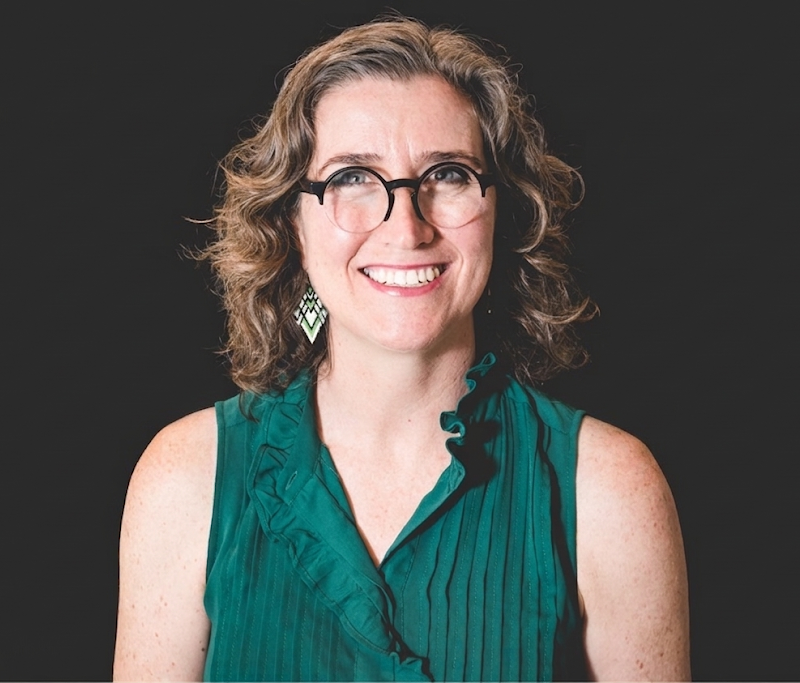
Terra Lynch, Consultant
In honor of Dyslexia Awareness Month, I invited Terra Lynch to share some of her professional and personal insights. Terra has spent 25 years in public, charter, and independent schools in Texas and New York. She founded the Learning Specialist role at Headwaters School and served as its Middle School Director. She is co-author of Protocols in the Classroom, trained in Basic Language Skills at the Rawson Saunders Institute, and co-founded a neighborhood dyslexia parent support group. Now a consultant, Terra helps kids and families understand a dyslexia diagnosis and advocate for themselves at school. —Teri
“She’s not where I thought she would be in reading.”
My daughter’s birthday fell one day past the public school kindergarten cutoff, so she stayed in her forest pre-K program while her friends moved on. A couple of months in, she was adamant about wanting a more traditional classroom experience. By November, we found a private kindergarten with room for her, and she settled into the routines quickly. But not the reading.
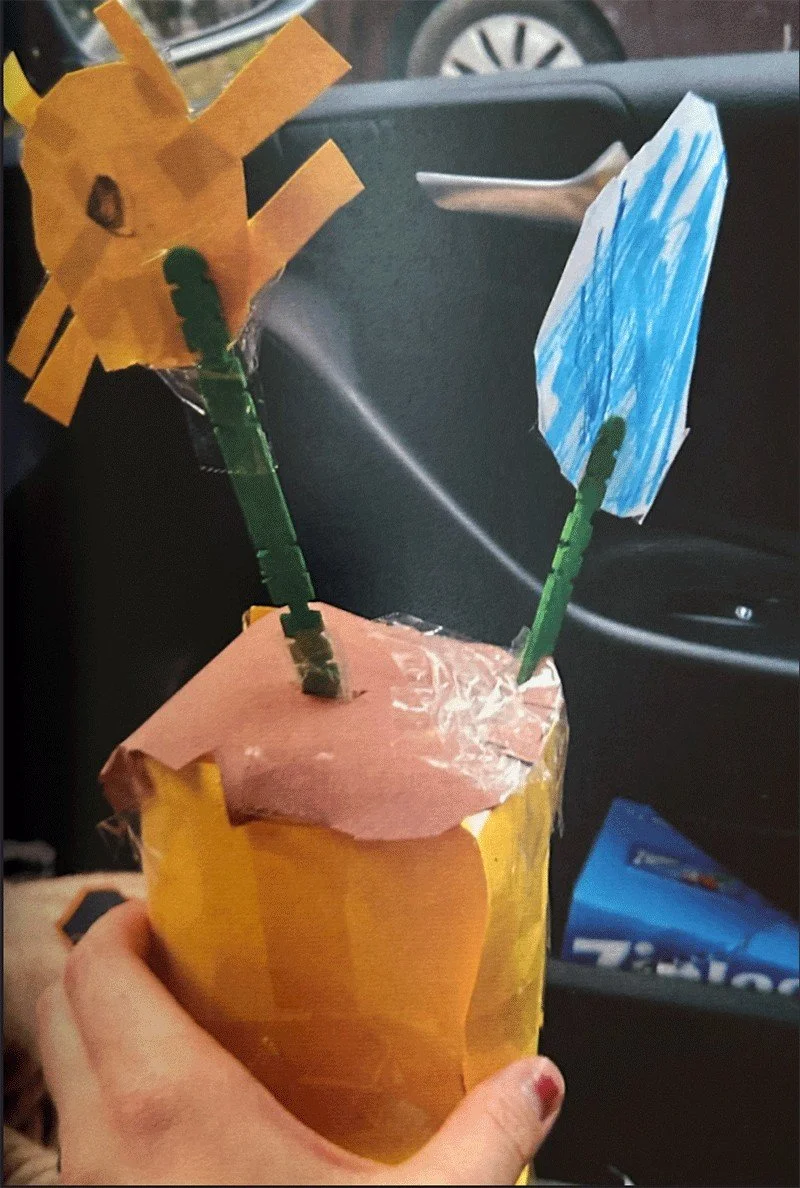
Flowers in a vase, made in the art center
“She has single-handedly transformed the art center into a hub of activity,” her teacher continued at our first conference. “She shows incredible creativity there and loves the playground. But she’s having trouble with reading and writing.”
I was perplexed. We read to her for at least an hour a day, often more. Our house was full of books, magazines, and newspapers. She loved listening to stories and making up her own, which I would write down. She relished multi-step projects. Yes, she still mixed up some letter sounds (Yion instead of Lion, for example), but her spoken vocabulary was huge. Her fine motor skills were advanced. Yet reading and writing were a struggle.
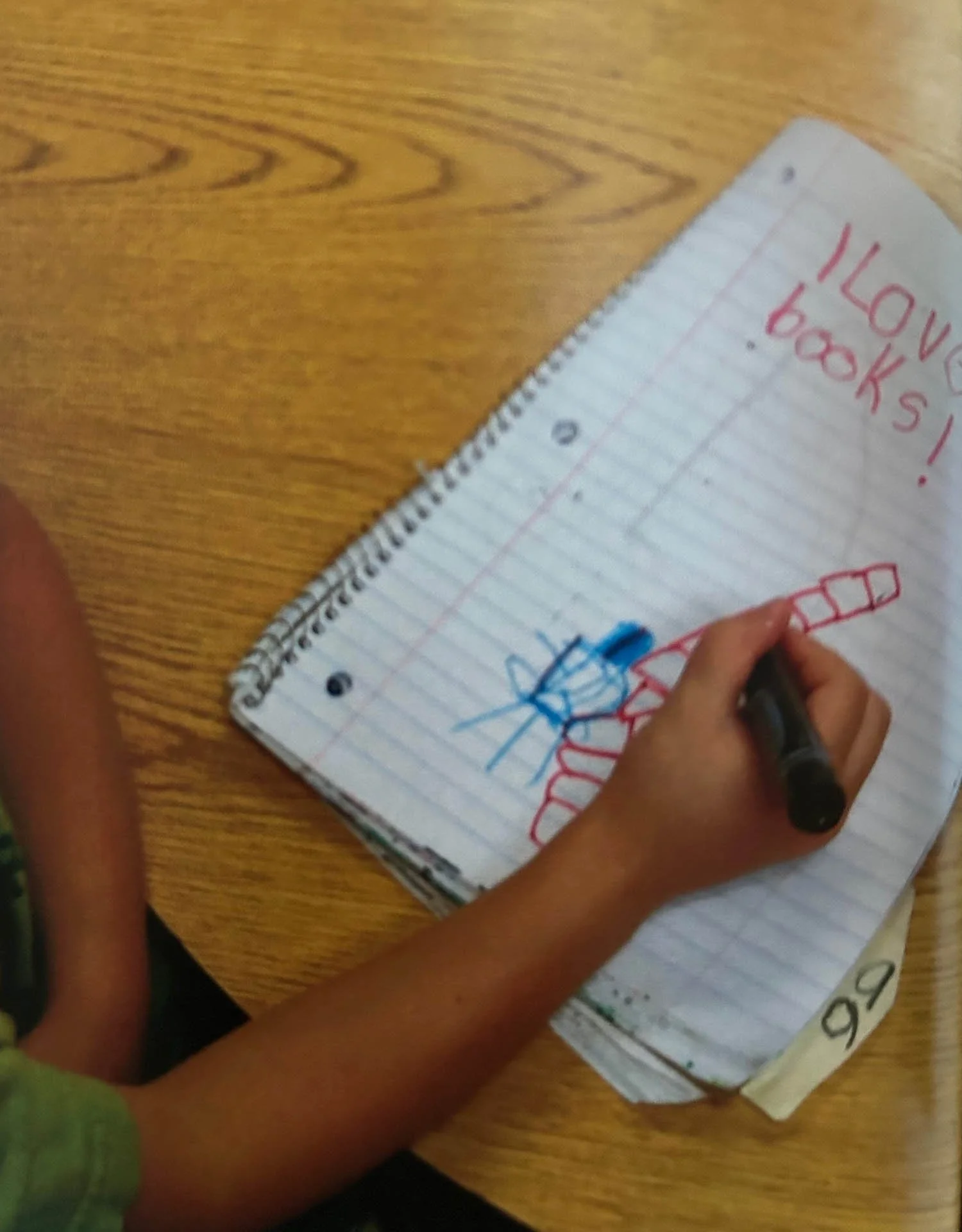
A kindergarten writing assignment says “I love books!”
At that time, schools commonly told families to wait until first grade to test. So, we waited. By first grade she was hiding her homework books, crying during homework time, cutting her clothes, and picking at her fingernails at school. Our happy, high-spirited girl started saying things like "I hate grades" and "I hate school." She is the daughter and granddaughter of teachers. It was heartbreaking to watch.
I requested an evaluation from the school district. After a mid-year meeting and a few months of data-gathering, the school agreed to evaluate her, and the diagnosis came that spring: dyslexia.
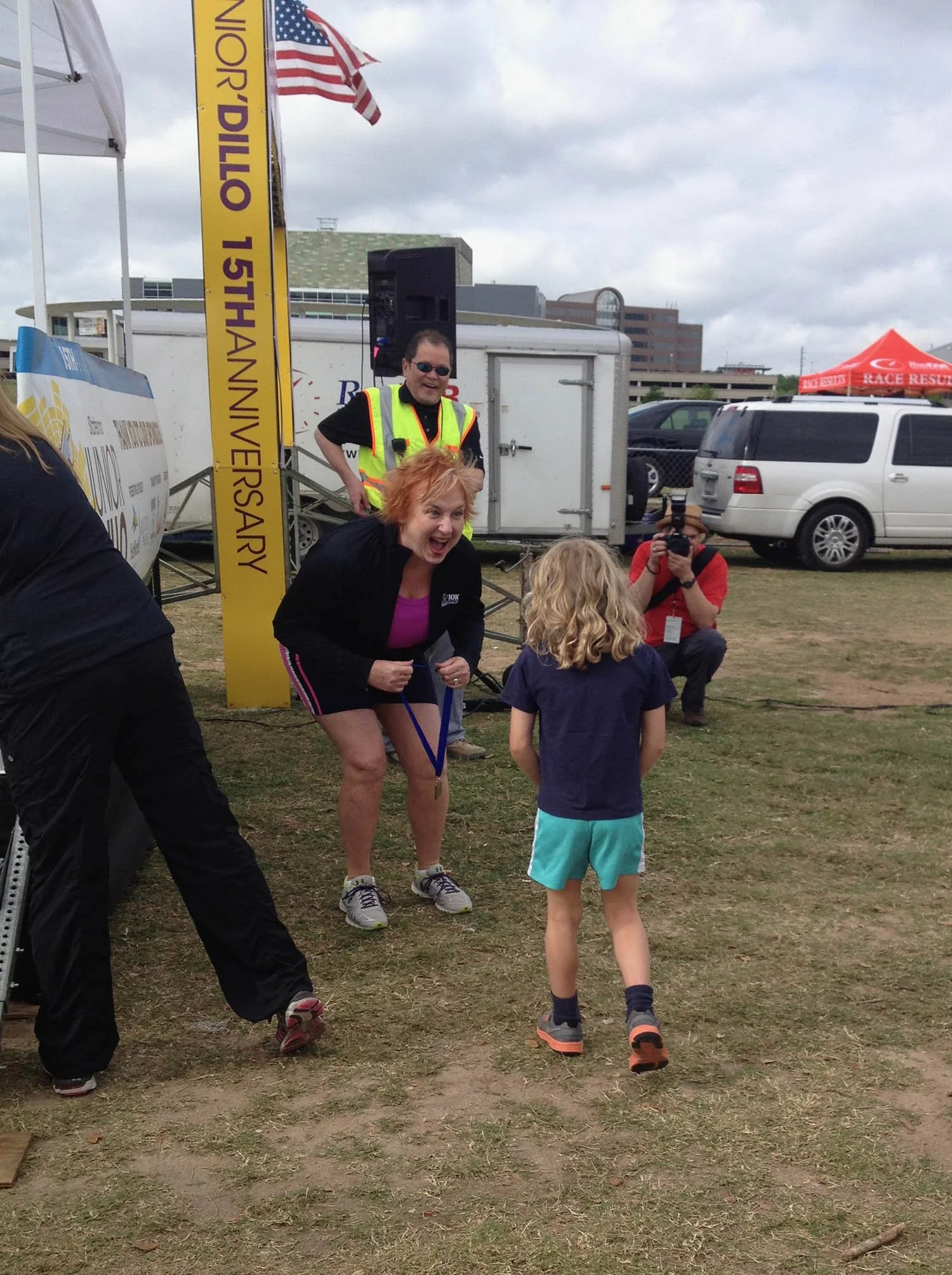
First place: one of many running medals
We explained it to her like this: “You know how running comes easily to you, and you’ve won lots of races? Other kids have to practice really hard just to finish one.” She nodded. “Reading is like that. It comes easily to some people, like Mom, but it takes a lot more work for you.” She nodded again--the story of me learning to read before school was part of family lore. “That’s what dyslexia is. Your brain learns to read in a different way, so you’ll need extra practice. You’ll get to work with a special teacher at school who knows how to help.” She seemed relieved. Better still, once the specialized reading instruction began, her confidence came back. It took five years and a lot of hard work on her part for her to read at grade level, but she did it (and we are forever grateful to Mrs. Fuller for that!)
A few years later, my son was diagnosed too. At the start of first grade he felt that something was off, and told me, "I'm the oldest kid in my class, but I'm the worst reader!" This time the process moved faster. He began working with the reading specialist right away, and the diagnosis soon confirmed what we expected: dyslexia.
Once we knew, I set out to learn everything I could. I joined a parent dyslexia group, and then co-founded one in my own neighborhood that grew to 30 members. I earned a certificate from Austin’s Rawson Saunders Institute to teach Basic Language Skills, a structured literacy curriculum, so I know what good dyslexia instruction looks like. I created the Learning Specialist position at a local independent school, where I went on to become the principal of the middle school. I coached students, parents, and teachers through evaluation, diagnosis, advocacy, and day-to-day tools and support. I’ve seen dyslexia at the kitchen table, in the classroom, and in the principal’s office. Now I want to help other families spend less time struggling and more time getting what their kids need.
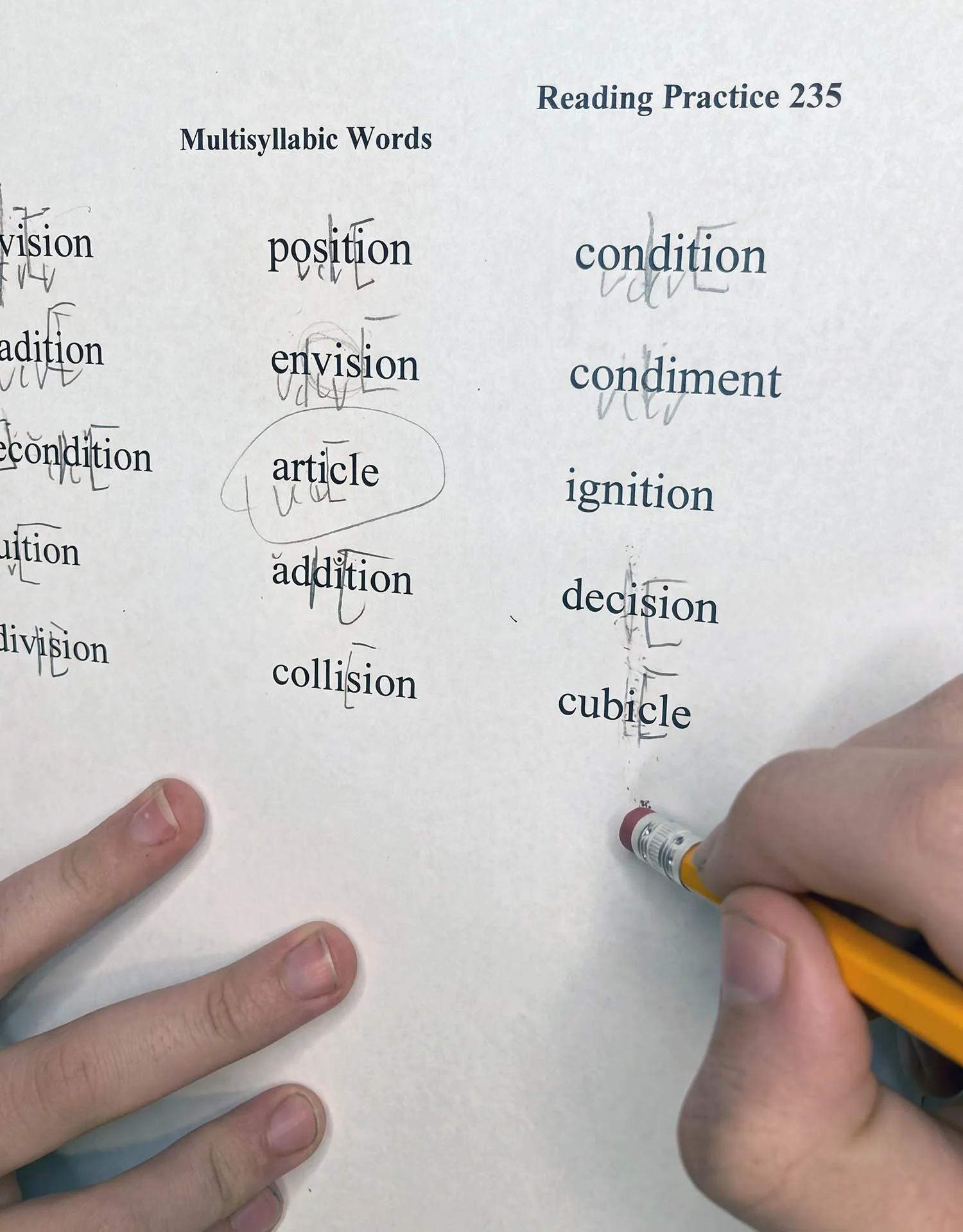
My son’s specialized reading practice
What I wish I’d known
Dyslexia is common, and it runs in families. Estimates range from about 5 to 20 percent of people, depending on how it’s defined. If you or your partner struggled with reading in school, or your grades didn’t reflect your knowledge, one of you may be dyslexic, too.
Don’t wait. Waiting delays instruction and costs confidence. Texas schools must screen for dyslexia in kindergarten and first grade, so ask for your child’s results. If you want an evaluation, put your request in writing. A written request gives the district 15 school days to respond.
Know which meeting you’re walking into. Since 2023, Texas treats dyslexia as a specific learning disability under federal special education law (IDEA). Many families now go through an ARD meeting, not only a 504 meeting. The rights and paperwork are different, and confusing.
A teaching certificate doesn’t guarantee dyslexia training. Texas early-grade teachers must pass a Science of Teaching Reading exam, but a test is not the same as training in structured literacy. Your child’s teacher may not recognize the signs.
Your child is not lazy. Research suggests that once a child decodes well, they may need only one to four successful readings to learn a new word. A struggling reader may need dozens of repetitions, which is why consistent, well-designed instruction matters so much.
Where I can help
Maybe you just heard “she's not where we expected” at a conference. Maybe you have an evaluation report and aren’t sure what it says, or how to share it with your child. I work with parents on:
Understanding the evaluation and diagnosis in plain language
Talking with your child about dyslexia so they understand how their brain works and keep believing in themselves as learners
Preparing for teacher conferences with specific questions to ask and observations to share
Getting ready for 504 and ARD meetings: what to expect, what to ask for, and how to follow up
My daughter, who once told me, “I hate school,” is now earning her nursing degree. She works on an ambulance, manages a band, and took last semester off to travel to eleven countries in five months. My son, who called himself the worst reader in his first grade class, is now a high school junior taking multiple AP classes. After a car design course in Turin last summer, he plans to learn Italian fluently and study transportation design in college.
If you’re worried about your child’s reading, or navigating school and family life after a diagnosis, I’d love to talk with you. You can book a consultation with me here.
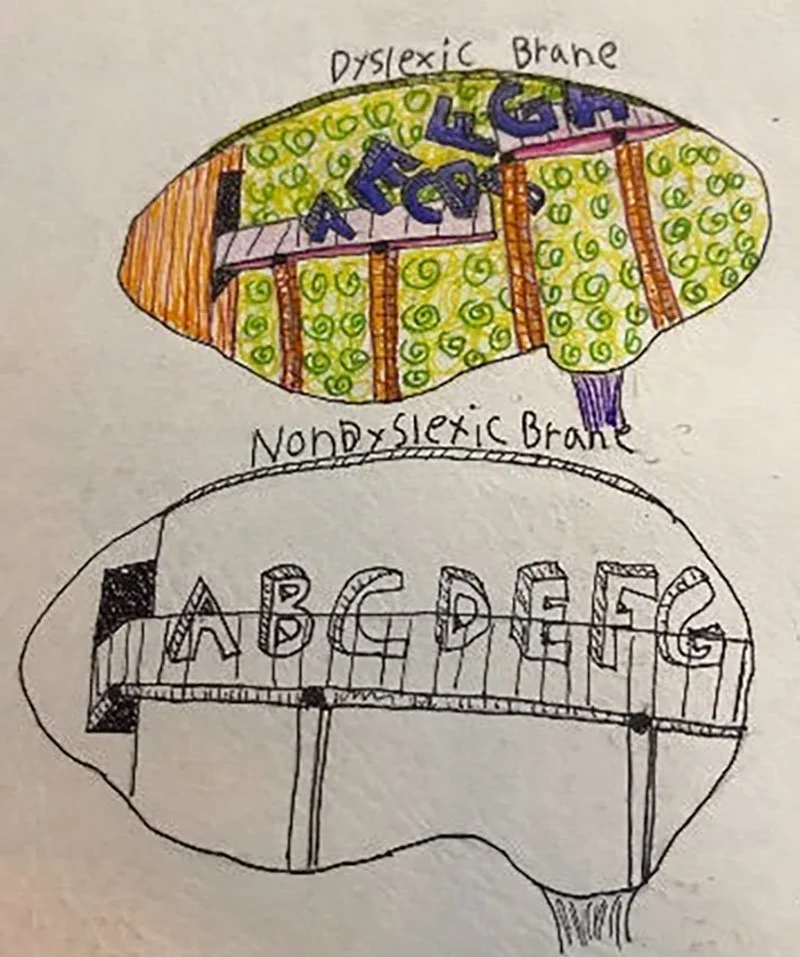
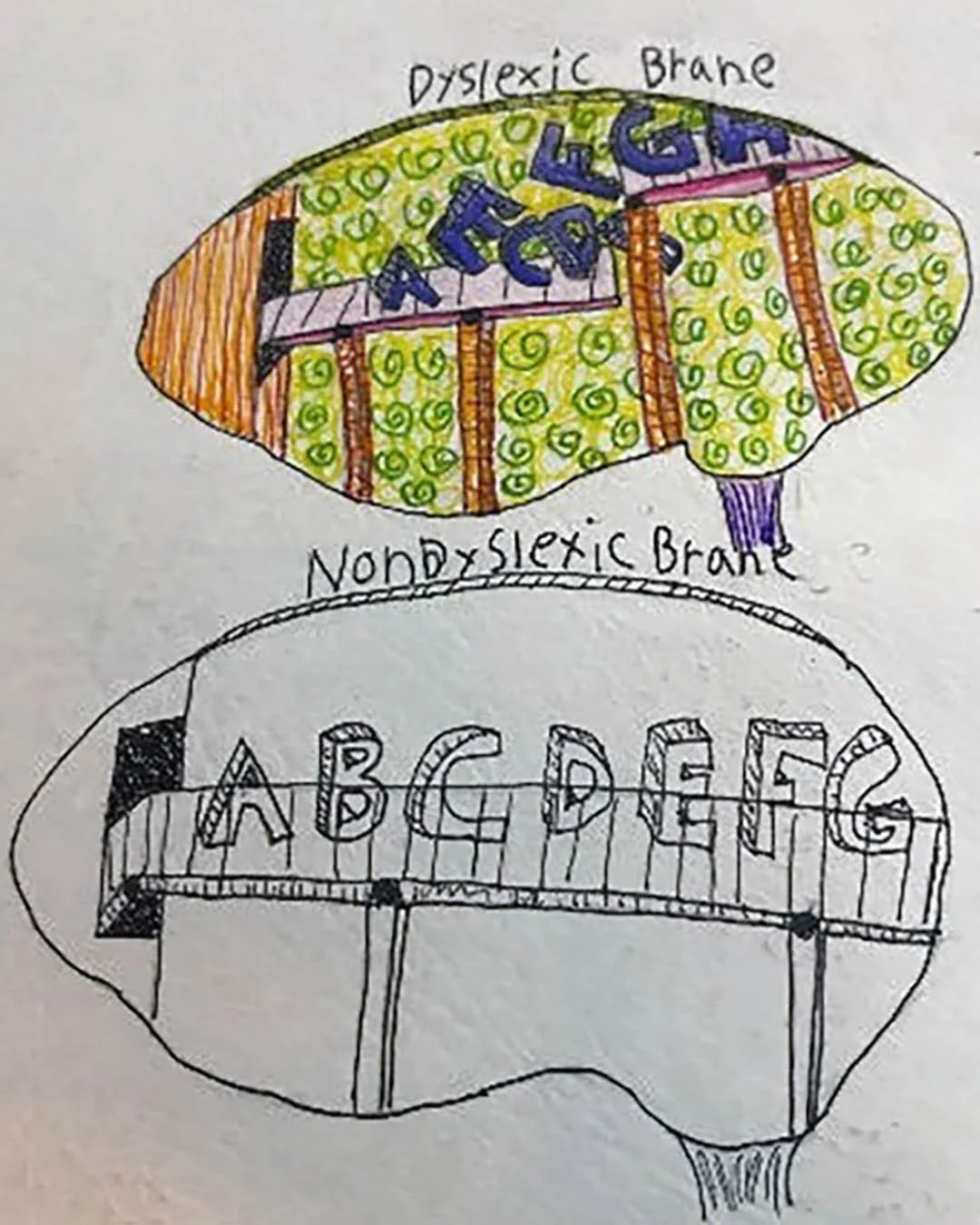
My daughter’s illustration from middle school comparing the dyslexic brain to a neurotypical brain
—Terra Lynch | Consultant