




Austin's Abrome joins Flying Squads as a collaborator

Abrome_Flying-Squads_1.jpg


We are pleased to republish this thought-provoking piece by Antonio Buehler, which originally appeared on the
Flying Squads blog. Antonio is, among other things, a co-founder, adult learner, and facilitator at Abrome.


Abrome is a Self-Directed Education (SDE) community in Austin, Texas, that is now in its fourth year. As Facilitators (adult staff members), we regularly critique our approach to interacting with Learners and building community, as well as how the culture of Abrome is evolving. It was through this process, for example, that we recognized the benefits of working more closely with Agile Learning Centers. Attending their trainings and bringing some of their tools and practices into our community helped us improve our skills as Facilitators and enabled us to better cultivate and protect an inclusive, non-oppressive culture that was building within our growing community. 

However, we still face a variety of challenges that many other Self-Directed Education communities struggle with. For example, accessibility will always be a challenge due to an absence of public funding. We also have limited diversity (e.g., race, nationality, religion) in a society that insists that only those with privilege can risk opting out of oppressive systems. And of course, our so-called radical belief that young people should be treated as people and not coerced for their own good is just a bridge too far for most families. Another challenge that we had not previously considered was that Abrome Learners were not in the world in the ways that free people should be able to be in the world. 

What we saw as freedom to do whatever the Learners wanted to do at Abrome, we eventually realized was freedom that was severely restricted by time and place. Abrome is not in the urban center of Austin, and public transportation does not extend to our neighborhood (intentionally so, unfortunately, thanks to lawmakers). Our Learners cannot easily walk to a library, museums, or busy intersections where people from all segments of society come into contact with one another. And even though we frequently organized outings to go to the library, visit museums, or go into the city for any other reason, we were doing so with a destination and goal in mind that resulted in time-restricted outings—we did not allocate time for exploration, evolving interests, or emergent possibilities. So while they are free at Abrome in ways that schooled children are not, Abrome Learners were still missing out on leveraging that freedom in ways that would allow them to better develop their understanding of themselves as members of a broader society and as individuals who could influence that society. 

We decided that we would experiment with an unstructured day in the city that would give them the opportunity to assert their right to exist as full people in a city that does not fully honor young people, and allow their day to unfold in ways that were not limited by the Facilitators’ feelings of needing to transport the Learners back to our physical home base. 

I wrote the following letter to parents October 6, 2019:

While we love our planned outings we recognize that they have been limiting to the Learners because we typically have a goal to go somewhere and do something specific and time bounded, and then when it is over we come back to Abrome. We are concerned that the Learners are not being given the opportunity to simply exist in the city where they can allow their plans to evolve emergently based on the combined interests of the group. Further, we want to continually push back against the notion that learning is confined to any given space, that learning objectives must be clearly defined, or that children and adolescents should not exist in public spaces during the day. We brought this up as an awareness at Friday’s Check-in and Change-up and we decided that we would experiment with an unstructured full-day outing in Austin on Thursday. The idea is that we go into or meet at a location in Austin, and then check in with the Learners and Facilitators to see how they want to collectively spend their time that day. . . . If this practice goes well we anticipate doing this once per week.

Jennifer was the Facilitator who joined four adolescent Learners on that first “Get Lost Day,” and it went fabulously well. We decided as a community that we would continue with our Get Lost Days, which have been a wonderful change of pace for older and younger Learners. These days have stretched us in terms of finding consensus and building community outside of our physical space and away from the tools that we regularly use at our physical home base. 

Soon after starting our Get Lost Days, we learned about Flying Squads. Similar to our experience finding Agile Learning Centers, we found that our beliefs and intentions lined up very well with what Flying Squads was doing. I was particularly moved by this statement on their homepage:

Even in the most caring of school and homeschooling coop spaces, a definitive line is drawn on where children learn and what space and materials are and are not for them. By intentionally not using a learning space or having predetermined tools and materials, Flying Squad participants learn the important value of abolishing these distinctions as the young people involved interact with the world outside on a regular basis, carving out a space for themselves in their city. And as they do so, they learn perhaps one of life’s most important lessons: how to find self-identity while caring for and developing a community with others.

An added bonus was that I already knew Alex (Brooklyn) and Bria (Portland) from their work advocating for children and Self-Directed Education, and I respected them greatly. After jumping on a call with them and discussing it with the other Abrome Facilitators, we decided that we would use Abrome as a vehicle for growing Flying Squads as the next step to extending greater freedom to participating young people, and in turn, helping to move society so that it begins to tolerate (and eventually embrace) free young people as full members of that society. Like the other projects, Austin Flying Squads will be operating two days per week, with one day more focused on learning through play, and the other day more focused on social justice and youth rights. We are excited to collaborate with the other Flying Squads, and we will be sharing some of our experiences and observations on the Flying Squads blog.

Taking up space is a political act

Taking up space is a political act

Navigating the city

Navigating the city

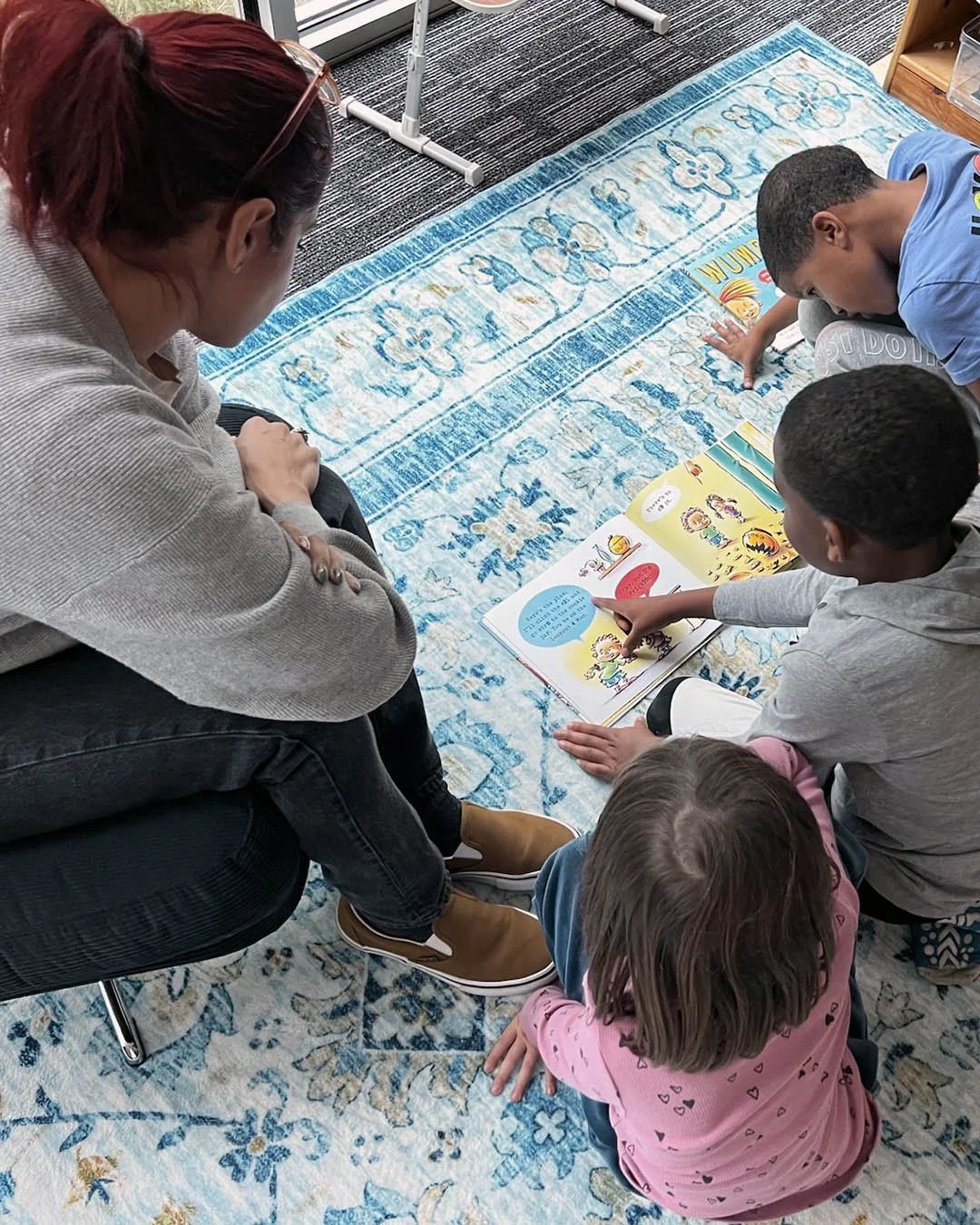
Younger Learners searching nooks and crannies at a local bookstore

Younger Learners searching nooks and crannies at a local bookstore

Antonio Buehler

Join us at the Festival of Learning 2019!

Alted_fair_2019_FB-Event_cover.png

Looking for something fun, informative, and FREE to do with the kids this weekend? Head over to the historic Browning Hangar in the Mueller neighborhood on Saturday between 10am and 1pm for Alt Ed Austin’s second annual Festival of Learning! There will be activities for children, performances by talented teens, and loads of empowering information for parents and other lifelong learners.

With 30 unusual schools, preschools, enrichment programs, and adult learning opportunities on display, there’s something for everyone. You’ll have a chance to learn about many different learner-centered approaches to education, and you’ll meet some of the most creative, effective, and beloved educators around. Check out the official Festival webpage, where you’ll find a list of participating programs.

Visit our Facebook Event page to let us know you’re coming and share the news with friends. We’ll also be posting previews and updates there and on Instagram. And here’s a short and sweet promo video created in one day by the Marketing Immersive students at the Academy of Thought and Industry, featuring some scenes from alt ed programs here in Austin:


Rest assured, the show will go on rain or shine, as we’ll be protected under that big ol’ roof. And don’t go away hungry or thirsty; there’s plenty to eat and drink right across the parking lot at the Mueller Trailer Eats food park.

When you arrive on Saturday, look for me at the Alt Ed Austin booth, front and center. I'd be happy to answer your questions, help you find the programs of most interest to your family, and guide your kids to fun, hands-on activities they’ll love. I look forward to meeting you and helping you find the right fit for your kid—or you!


Teri

What’s new in Austin’s alternative education community?

Photo by Ian Schneider on Unsplash

Here’s a brief roundup of some of the latest developments in the local alt ed scene as the 2019–2020 school year gets underway. Kudos to all the educators who have been working hard all summer to better serve each member of their learning communities.


Apple Blossom Center for Discovery and Gantry Academy have joined forces in Leander to offer a number of options to serve students in the community. They are launching homeschool enrichment days (Wednesday afternoons and Friday all day) with activities including Sportsball athletics, cooking, art, music, STEAM, entrepreneurship, and more. Options range from $100 to $300 per month.

Ascent is the latest Acton Academy to launch in the Austin area. Founders Janita Lavani and Samantha Jansky are some of the most experienced Acton guides and curriculum creators anywhere. They spent the summer acquiring and beautifully renovating the campus at 5701 Cameron Road to create both the Spark Studio for ages 4–6 and the Elementary Studio for ages 7–11, where the school year begins right after Labor Day.

Clearview Sudbury School recently added a music room to its campus and a new staff member, Rose Hardesty, Clearview’s first to have graduated from a Sudbury school. This fall, Clearview will celebrate its 10th anniversary by bringing in Jim Rietmulder, the author of When Kids Rule the School and a nationally recognized expert on self-directed democratic schools, for a talk on Friday, November 15, at 6pm.

Huntington-Surrey School has moved to a new location in north-central Austin: 4700 Grover Avenue. The school has served high school students since 1971 and has now expanded its programs to work with exceptional 7th and 8th graders, either part-time or full-time.

Julia’s Garden Montessori is launching its elementary program, called Taller, based on the Scottish national Curriculum for Excellence. The school’s staff has grown this summer to include new administrative, wellness, and education specialist roles to meet the needs of all learners, from the toddler stage through 9 years of age. It is currently in the home stretch of the accreditation process with the International Council for Accrediting Relationship-based Education (ICARE).

Progress School has renovated and moved its classrooms into a larger building on the same campus to better accommodate its growing enrollment. Learners will be grouped into three rather than two multi-age classes. Progress is currently working with ICARE toward accreditation as a relationship-based education school.

Announcing the Alt Ed Job Board


Almost as soon as this website went live, back in 2011, I started receiving messages from educators looking for jobs in the kinds of schools and educational programs that were featured here. Many of these inquiries came from teachers or administrators working in traditional school systems who were nearing the burnout stage and looking for a workplace where they could re-engage their creative talents, reignite their love of the learning process, and feel better supported both professionally and personally. Others were people who had attended or worked in alternative education in other regions and were interested in moving to Austin specifically to be part of a larger ecosystem of like-minded educators.

I tried my best to connect these job seekers with members of Alt Ed Austin’s network of schools and other educational programs that might have openings, but this tended to be a hit-or-miss proposition. It was time consuming, too.

Soon I also began to get requests from schools to post job openings somehow on the website. But I didn’t really have a good place or mechanism for doing so, and I wasn’t sure it fit into Alt Ed Austin’s primary mission of serving families looking for educational options. Still, I kept informally passing along information about job openings to prospective job candidates, and vice versa.

Then I received a desperate plea from a parent whose child’s beloved teacher was moving across the country for family reasons. She wrote, “We love the school. We love the teacher who is leaving. Our child and his classmates have been thriving here. But our school director and community are having a heck of a hard time finding someone who could even come close to filling her shoes. Can you help?” This parent’s message convinced me that helping fill open positions in alternative education falls squarely within Alt Ed Austin’s mission. Of course families want to know that open spots will be filled in a timely manner by great educators who are the best fits for their learning communities.

Thus was born the Alt Ed Job Board. I’m proud and excited to say that it’s been in its pilot stage for a couple of months now and is officially here to stay. Please pass the word (and link!) to anyone you know who is looking for fulfilling work in education or who has a position to fill in a learner-centered school, enrichment program, summer camp, or other education-focused organization. And to those in the midst of a search: I hope you find the perfect match.

Teri

How to build community among alternative schools? Put the kids in charge!

Alt-Ed-Prom_1.jpg

Guest contributor Peter Fox is a high school student at the Academy of Thought and Industry in Austin. When I heard about the multi-school prom he and his fellow students were organizing this spring, I invited him to share the story with our readers. We love seeing this kind of collaboration in the alt ed community. Thanks, Peter, and congratulations on a job well done!


I first joined the Austin alt ed community in November of 2018. Due to a variety of factors, public school seemed to no longer be a good fit. When my family and I looked at a number of different schools, the Academy of Thought and Industry (ATI) seemed to be the way to go. Although I quickly enveloped myself in the ATI community, one distinct issue became clear to me as I continued my foray into the alternative education scene: there are no Friday night lights in alt ed. In public school, we always enjoyed the fact that there were many other schools in the area. Sure, we may have been rivals, but oftentimes we had friends at these separate schools. We were all practically a huge community. In the Austin alt ed scene, that sense of community did not exist—yet.

Fast-forward to February of this year. At ATI, we are highly independent students. In our school-wide Life Design class, we faced the daunting prospect of taking on a project that we would be working on for the rest of the semester. Our only restriction was that our project, whatever we chose, had to in some way better our community. When I heard the idea of a shared prom between alt ed schools, I knew I had to have a part in it. An alt ed prom could begin to fill the void of organized events among alternative schools in Austin. It would not only impact our small school community but potentially many other school communities in our area. It was the perfect solution to the problem I saw.

And so, we set out. With a grim amount of work in the short time ahead of us, our initial committee immediately brainstormed on how we could plan such a complicated event in a month and a half. It was decided to split up the tasks among four committees: a logistics group, in charge of finding a venue and food; a finance group, who would handle our budget; a decor group, tasked with decorating our prom; and, last but certainly not least, a programming group, for scheduling the event itself and gathering necessary equipment. However, we were still missing one critical element: a project manager—somebody who would keep everything running smoothly and every part moving in sync. After little deliberation, my friend Samantha and I volunteered to take on this role, with Samantha handling the creative oversight and me handling logistical items. Finally, we could begin work.

I first drafted a schedule for every workday we had until prom, complete with deadlines, due dates, and deliverables. This would make sure we could keep track of every aspect that comes with event planning. We then formed committees, and immediately began work on our first deliverables. At the same time, we began reaching out to alternative schools around Austin, asking if they were interested in our prom or any sort of future alt ed event. Spring Break came and went, and when we returned to school, we found that two alt ed schools wanted to join us: Clearview Sudbury School and Lake Travis STEM Academy.

That was when I realized: this is actually happening, and we have to deliver. With renewed energy and added pressure, I sent a small group of people (including our amazing guide Chris Ready) to Clearview to gauge their interest level. The findings were amazing and slightly surprising: the students we spoke to felt the same lack of a larger community beyond their own school and not only wanted to attend the prom, but help plan it. The next day, our Clearview friends visited ATI to work with us on several aspects, such as our theme and possible icebreakers and activities during the prom itself. The time flew by, and soon we were working with Clearview, Lake Travis STEM, and even homeschool students to design our perfect prom.

After months of preparation, the night had finally arrived. We began setting up at 2pm, and the prom officially began at 7:30. We saw our efforts pay off and reaped the rewards in a night of fun and celebration. During a short break, I looked around the room, and what I saw was surprising and satisfying. Students from all three different schools were joined together in groups on the dance floor.

Alt-Ed-Prom_2.jpg
Alt-Ed-Prom_3.jpg

We had achieved exactly what we set out to do. Our community, during those two hours, was expanded and transformed into something bigger than just us. When we first started working on our prom, we could barely remember each other's names. Now, there was a familiar sense of friendship among everybody on the dance floor, as we enjoyed the fruits of our labor.

So, what’s next? Well, as I put the finishing touches on this post, I’m also sending out an invitation for our next shared alt ed event, a potluck on Friday, May 10. Which, by the way, if you or your school would like to attend, please email me (pfox@thoughtandindustry.com). All are welcome!

potluckinvitation.png


Creating these activities and events is such a fantastic learning experience, and honestly, just a fun time. Our mission, as a group of students, is to create the sense of community among alt ed schools that has been to this point exclusive to public schools, and our prom was just the beginning. Stay tuned for future events!


Peter Fox

What I learned at the Education Reimagined Symposium 2019: #whyLCE

I was excited to learn recently that a new learner-centered school, Gantry Academy, is launching soon in Round Rock. Soon after, I had the serendipitous pleasure of meeting its founder and director, Jennifer Phillips, at the Education Reimagined Symposium in Washington, D.C. It was the best education conference I’ve ever attended, and I’m grateful that Jennifer offered to share her takeaways and insights from the symposium in this guest post. —Teri Sperry

The time is now. Kelly Young, president of Education Reimagined, at the organization’s symposium, January 17, 2019.

The time is now. Kelly Young, president of Education Reimagined, at the organization’s symposium, January 17, 2019.


While many parents feel that the standard modern education system doesn’t work for their child, we might not know that there is another way. We just have this nagging feeling that our children are not widgets to be produced by an educational factory. So, some of us are moving to private schools, where lower ratios and individual attention give us hope for a better outcome. But then we hop from school to school, looking for the right fit that we can’t articulate, only knowing that something about each offering is just not working for our child. What we are developing alone together is the concept that education should start with the learner, rather than the institution.

Education Reimagined hosted a one-day symposium in Washington, D.C., on January 17 focused on sharing the message of Learner-Centered Education (LCE). There were over 200 educators, philanthropists, vendors, and learners present; chances are you missed it, quite possibly just because you haven’t even heard the term LCE, and you aren’t alone.

A true learner-centered education is more than a majority consensus on a thematic unit topic. It allows each learner to strive for mastery at their own pace (competency-based), with personalized, relevant, and contextualized content that they themselves engage in designing (learner agency). It is rooted in meaningful relationships (socially embedded) and it does not stop in the classroom (open-walled).

As it turns out, I was sent to the symposium because the educational goals I have for my own children align directly with the purpose of Education Reimagined. This organization is fully committed to transforming all education into the learner-centered paradigm. I didn’t realize it before, but my family is just a small piece of a much larger movement. I knew intrinsically what I wanted education for my girls to look like. I could describe it to other parents as “learner-driven” or “passion-driven” or even a “hack school” model, and I could cite specific studies supporting this approach, but what I lacked was the common vocabulary and the knowledge of the sheer magnitude of the existing efforts pushing in the same direction.

After a full day of immersion with these passionate, dedicated innovators, I came away inspired and recommitted to building a better educational method for every single child! It may sound fantastical or like an unreachable goal, but here are my top takeaways from the symposium that make this dream possible. 

1. This is not a “fancy liberal fad.”

At the conference, I spoke with leaders from both private programs and public school districts, from northern states like Vermont and from heartland states like Missouri. I was not the only person from Texas there. The idea that each person is unique and learns best in their own unique way has so much research to back it up that LCE is not just trending; it’s only a matter of time before it is the new standard. How can anyone make that claim? It’s already happening in most other major industries, from personalized television programming from Netflix and Hulu, to personalized medications based on your DNA. Personalized education is not just preferable; it’s inevitable.

Jasmine McBride, a student who spoke at the symposium about her experiences in a learner-centered high school.

Jasmine McBride, a student who spoke at the symposium about her experiences in a learner-centered high school.

2. Kids are people NOW.

While this may sound like an obvious statement, how many times have you heard “Children are our future?” Implying that age limits the usefulness of a person is not only harmful but also wasteful. There are now high school students who are published authors, Emmy award winners, and mentees of Broadway superstars, all thanks to their experiences with LCE. Learner agency, the ability for a student to make decisions about their own education, seems to generate one particularly interesting outcome (among the many additional benefits): sense of self. Self-confidence. Self-esteem. Self-efficacy. I heard from the young learners I spoke with directly that even one year in an LCE program can have a major lifelong impact. The more this seed grows in learners now, the more exponentially it will take off as they take on leadership roles in the community.


3. This is the best-kept secret in your neighborhood.

Remember when I mentioned that we are each developing this feeling “alone together”? The latest study shows that up to 60 percent of the public feels that education should be aimed at preparing individual learners for personally fulfilling lives. And yet, those same people think that only 5 percent feel the same way! Start the conversation with those around you. Even if they don’t have the same vocabulary, it’s something we can discuss together rather than in isolated pockets.

What can I do for my child NOW?

First, read about Learner-Centered Education at Education Reimagined to learn more about the national conversation happening now. Familiarize yourself with the vocabulary so we can all be having the same conversation locally as well as nationally. Decide if a fully personal, engaging educational path is right for you or your child. 

Second, act locally! While some public schools near us have shifted to competency-based report cards and portfolio assessments, they are still required to teach to the standardized tests. Work with your PTA to encourage change within your school. Some private schools are run democratically. Take a proposal to your leadership circle to discuss the LCE concept in depth.

Third, drop in to one of the regular workshops hosted by Gantry Academy to help us develop the LCE method that best offers custom, individualized programs to each learner right here in Round Rock, Texas!

[For a more comprehensive review of the symposium’s specific events, read Suzanne Freeman, Ph.D.’s blog post here.]


Jennifer Phillips