


A conversation with Dr. Karen Rayne about transgender students and SB6

Of the Texas respondents, 73 percent of transgender schoolchildren said they’d experienced mistreatment because of their gender identity, with nearly half saying they’d been physically attacked and 14 percent leaving a school because of how they were treated.

Another 14 percent of those surveyed said a professional—like a psychologist or religious adviser—had tried to stop them from being transgender, and 41 percent said they experienced “serious psychological distress” sometime in the month before they took the survey.

—Lauren McGaughy, “Transgender Texans skip the bathroom to avoid violence, new survey says,” Dallas News, January 26, 2017


With all the controversy heating up in the Capitol over SB6, and growing concern over the problems faced by transgender kids in Texas schools, I decided to talk with Dr. Karen Rayne, a local educator and author with expertise in gender and sexuality issues, particularly related to teenagers. Below is some background on the issue, followed by an edited account of our conversation.

Many thanks to Dr. Rayne for her time and thoughts. Alt Ed Austin highly recommends her UnHushed, “Sex Ed Done Right,” classes and her book, Breaking the Hush Factor.

The debate over SB6, the Texas legislature’s so-called “bathroom bill,” is one that continues to dominate political media, but more important, it is one with sweeping consequences for students across the state. If approved, the bill would prohibit trans people from using bathrooms and locker rooms matching their identities in schools and other public buildings. The law also allows Texas businesses to ignore local ordinances that protect trans citizens’ rights to choose facilities in keeping with their identities.

Nearly 150,000 American teenagers (1 in every 137) would identify as transgender according to a new report from UCLA’s Williams Institute, cited in a recent, enlightening New York Times article by Niraj Chokshi.

Last week the White House weighed in on the controversy, declaring that the federal government would no longer support a stance by the Obama administration that defended transgender students’ rights under 1972’s Title IX, which bars discrimination based on sex for schools that receive federal funds. The decision to stop supporting the Title IX argument affects not only states and localities that want to pass laws requiring that students behave according to the gender listed on their birth certificates, but it also affects an upcoming Supreme Court case originating in Gloucester County, Virginia, in which Gavin Grimm was barred from using the boys’ bathroom at his school.

Last week national attention again focused on transgender rights in Texas. Trinity High School junior Mack Beggs, the 17-year-old boy who competed in and won the girls’ state wrestling championship, was in the news because he had to compete under the gender listed on his birth certificate.
 

I asked Dr. Rayne to tell me a little about how she sees kids and schools reacting right now to the SB6 issue in Texas.

The reaction of a lot of kids, including my teenage daughter, is “Why should anyone care?” The interest in where someone chooses to go to the restroom is oddly invasive, putting the government in someone else’s personal space. It’s strange that we’re in a place where Republicans are no longer the party of small government in many areas, including this one.

The best-case scenario for schools in the future is probably that transgender kids’ classmates will not care at all and will not comprehend that this was ever a serious controversy. I think in the long run that’s where we’re headed, but we’re not there yet.

In general, how do schools and students cope with the process of gender transitioning?

A number of schools are good at supporting students—both public and private schools. The problem with public schools is that they are so large, with very diverse communities. So, in a large community of students and educators, there will always be some people who are not supportive. I do find that in some smaller schools you have a whole community that is supportive of trans kids.

Austin ISD has an array of LGBTQ resources for students and parents, and hosts its own Pride Week in October. Area alternative schools that specifically welcome LGBTQ kids and faculty include, but are not limited to, KọSchool, Skybridge Academy, Griffin School, Integrity Academy, and Radicle Roots Community Schoolhouse.

My experience is that younger kids—elementary school age—are still strongly under their parents’ influence, so if parents are willing and strong advocates, the kids follow their lead and become strong advocates for themselves. Parents can talk with school administrators and are often able to make transitions easier. And of course, transitioning isn’t quite as salient for a six- or seven-year-old, and most other kids that age are fine with it because fewer judgments are made in that pre-adolescent stage.

The older kids are when they transition, the tougher the social, cultural, and biological structures are. The stresses and strains that play out in social lives at school are difficult for all teenagers, and they are less under their parents’ protective wings, so there’s just less that parents can do, even if they want to be supportive.

I think we have to remember that teens have a rough time navigating identity issues, even without the added complication of gender transition. There are issues with self-esteem and self-compassion, and figuring out who you are in relation to the rest of the world. For all teens it’s a socially and politically charged time, and for transgender teens the stresses are multiplied.
Out Youth is a Central Texas organization serving LGBTQ young people with a variety of programs. Right now, they are sponsoring a campaign called #TakeMyHandTexas, and giving away free buttons to symbolize support for transgender rights, explaining: “When you wear a #TakeMyHandTexas button, you’re showing that not only are you an ally to this community, but you’ll also gladly accompany someone to any gender-specific space they feel uncomfortable going to alone, including the bathroom.” 


How can allies talk with legislators, friends, and family about issues of civil rights, privacy, and fairness when it comes to the transgender community?

 It really depends on whom you’re talking to. Some people are lacking good information and quite open to incorporating new ideas when they’re presented. So in that case, statistics and examples you might find in news coverage are helpful. I think one of the best books on the subject is Sam Killermann’s A Guide to Gender: The Social Justice Advocate’s Handbook, which is coming out in a new edition on March 8.

We can talk about the real-world impact of SB6 on vulnerable students, and we can talk about the fact that if protecting people against sexual predators in private spaces like restrooms is the goal, those laws are already on the books. If you think someone is open to new information, then have some solid facts available.

A 2015 Media Matters report found that in 17 school districts with a total of 600,000 students, protections for trans people resulted in no problems with harassment in bathrooms or locker rooms as a result of the protections.

I think one of the biggest problems this kind of legislation introduces is that it encourages and gives license to ordinary people to police others’ behavior.

One real-world impact that people may not be aware of is how laws like the one proposed in Texas stratify gender-nonconforming communities into those who “pass” in the larger community and those who do not. So, for example, if you have undergone hormone treatments or had surgery as part of your transition and you look very feminine, you will be much less likely to be questioned or attacked for using the women’s restroom, and more likely to be questioned or attacked for using the men’s. Transgender women who still look more masculine and cis-gender women who happen to look and dress in a more traditionally masculine way face questions and attacks no matter where they go.

Two advocacy and support organizations with great collections of resources for students, families, and schools are Trans Youth Equality Foundation and Gender Spectrum.

And what about talking with people who don’t seem as eager to receive new information, facts, and statistics?

There are people who have a perspective on gender that is narrow and specific, so for them the idea of a transgender person is an emotional and cultural assault. I think it’s usually not about religious doctrines—I’ve found many religious communities that are strong supporters of transgender people. A lot of religious people hear and feel salience in the notion that “God made me a girl, but then my body did not follow instructions.” Often religious communities support people trying to align themselves physically with what they feel God intended for them.

So, for those who feel assaulted by the idea of transgender people, I think it’s more about inherited cultural values and expectations than religion. We often grow up tied to our culture’s gender structures, without much evidence as to why. In that case, it’s hard to break through unless something happens that makes them question those values and structures.

Do you have any predictions on what we’ll see in terms of both the politics of SB6 and the culture as relates to transgender students?

I would never underestimate how conservative the legislature is, so I would really be stunned if the bill doesn’t pass. But that said, the way our school districts run is somewhat independently, so the implementation might vary a lot.

It’s an interesting time to be alive and looking at these issues. And overall, I think we are coming into a time of more openness. I see us swinging toward openness and acceptance among young people toward each other and toward diversity in terms of gender and sexuality. The current political climate is about reacting to that swing toward openness, and we may lose some footing for a while, but in the long run, openness and compassion and diversity will overcome.
 

Recommended Reading:

Finally,  for some good laughs with a Texas-style political edge, don't miss this short web ad by Oscar-nominated Austin filmmaker Richard Linklater!


Shelley Sperry
 

Conversations about schooling: The Smart Schooling Book Group

Smart-Schooling-Book-Group_FB-cover-image.jpg

Alt Ed Austin is pleased to help spread the word about a new book group focused on crucial questions about educational systems and new understandings in the psychology of learning. Antonio Buehler, founder of Abrome, joins us on the blog to explain why he started the group and how you can join the conversations.
 

The majority of the parents we talk to are not eagerly looking to provide their children with a rich, self-directed learning environment. Sadly, most of the parents we talk to are trying to save their children from the trauma that is so often associated with schooling (e.g., testing, sleep deprivation, depression, bullying). One of the greatest challenges we face when talking to those parents about Emancipated Learning as an alternative to school is that it is often the first time that they have heard of an educational environment that does not rely on coercion. Most of them have never been introduced to the notion of self-directed education, or they believe that self-directed education can be achieved by allowing a student to pick a topic they are expected to write a report about. They might have heard of homeschooling, but have never heard of unschooling, Sudbury Valley, or Summerhill.

Instead of being able to highlight how we are creating a psychologically safe learning space where young people can engage in deep, meaningful, and enduring learning experiences that will allow them to lead remarkable lives, we are left trying to educate them on human psychology, the history of schooling, and the science of learning. Needless to say, a 30-minute conversation covering such deep topics is typically not enough to compel parents to take meaningful action to improve their children’s learning experiences in their current schools, to move them to alternative schools that better meet their children’s needs, or to opt out of schooling altogether.

At the same time, there are a lot of teachers and administrators who know that something is not working at their schools but do not know what they can do to substantially improve the situation.  They have most likely never been introduced to much of the research that proves that self-directed learning is the best way to deepen learning, promote lifelong learning, and eliminate much of the trauma associated with coercive schooling. It is not their fault, as the organizations they work for and the education schools that they attended go out of their way to ignore these topics, and instead focus on marginal reforms while pushing the baseline assumption that young people need to be forced to learn, and that schooling environments are where that happens.

In an attempt to spur the necessary conversations around education that are currently not happening, we will be hosting the “Smart Schooling Book Group” at the Laura Bush Community Library for the duration of this year. We will read one book each month that focuses on education, with an emphasis on the psychology that would ideally inform how we approach education, and then come together to discuss it on the last Thursday of each month.

2017 Reading List
Jan 26:  Why Don't Students Like School? by Daniel Willingham
Feb 23:  The Price of Privilege by Madeline Levine
Mar 30:  Wounded by School by Kirsten Olsen
Apr 27:  Free to Learn by Peter Gray
May 25:  Overschooled but Undereducated by John Abbott
Jun 29:  Ungifted: Intelligence Redefined by Scott Barry Kaufman
Jul 27:   Gardener and the Carpenter by Alison Gopnik
Aug 31:  Drive by Daniel Pink
Sep 28:  Summerhill School: A New View of Childhood by A. S. Neill
Oct 26:  The End of Average by Todd Rose
Nov 30:  Old School by Tobias Wolff (novel)
Dec 28:  Mindset by Carol Dweck

We hope that young people, parents, future parents, teachers, and school administrators can all benefit from these readings and conversations. Hopefully, some school board members will also drop in.

Antonio Buehler
 

Come one, come all, to the Austin Alternative School Fair 2017!

Get out your calendar, circle February 25, and rally the kids of all ages!

The nonprofit Education Transformation Alliance is joining with sponsors Free Fun in Austin, Whole Foods Market, and Alt Ed Austin to host the annual Austin Alternative School Fair on February 25, from 11a.m. to 2 p.m. at the Whole Foods Market rooftop plaza.

Check out the event’s Facebook page for updates over the next few weeks.

We like to think we’re doing our part to “Keep Austin Weird” for kids by bringing together highly innovative, creative educators to share information about the number and variety of learning options in our area.

Parents and kids will have a chance to meet with the folks who run schools, enrichment programs, and educational services. The fair is set up on the plaza near the playground and features engaging activities for teens and younger kids, including virtual reality experiences, 3D printing, computer games, a mini nature museum, assorted crafts, as well as movement-based fun like sock poi and flow arts. And of course, there will be healthy food and drinks for sale from Whole Foods.

Alt Ed Austin is proud to sponsor the event again this year. It’s always a chance to talk and share in a relaxed, fun setting. We’re lucky—and more important, our kids are lucky—to have such a caring community of educators.

Participants this year include:

  • Abrome (K–12th)
  • AHB Community School (K–8th)
  • Clearview Sudbury School (K–12th)
  • French School of Austin (PreK–8th
  • Fusion Academy (6-12th)
  • Game of Village (enrichment program for ages 9–14)
  • Growing Curiosity (PreK)
  • Inside Outside School (K–5th)
  • Integrity Academy (PreK–12th)
  • KoSchool (8th–12th)
  • Progress School (K–8th)
  • Radicle Roots Community Schoolhouse (K–8th)
  • Sansori High School (9th–12th)
  • Skybridge Academy (6th–12th)
  • Synergy Middle School (enrolling ages 11–13 for 2017)
  • Whole Life Learning Center (PreK–8th)
  • WonderWell (ages 2 through PreK & Kinder)

News that made a difference for Texas students


In the first week of this new year, we want to look back at some of the most consequential education stories—for both public schools and alternative schools—in Texas in 2016. As we look back, we see three major political flashpoints, and also some promising trends and innovations growing out of the alternative school scene in our area. Both flashpoints and innovations are listed below, with links for finding out more information about each.
 

Political Flashpoints

  • At the moment we were compiling this list, the Austin American-Statesman published a report revealing that “School districts across Texas pulled in lackluster preliminary grades under the state’s new letter-grade accountability system.” The new system, which won’t be fully implemented until next year, is based primarily on standardized testing and got a lot of complaints and pushback from school districts—including Austin ISD—even before the preliminary grades were released. Looks like this grading system will be an issue to watch going forward into 2017 and beyond.
  • August 2016 marked the 50th anniversary of the tragedy of the sniper attack on UT’s campus, the first modern-day mass shooting. August also marked the beginning of so-called “campus carry” at Texas’s public colleges.
  • A series of investigative pieces by the Houston Chronicle revealed that the Texas Education Agency may have mandated low special education enrollment in public schools, leading to the denial of crucial services for many children and saving the state billions. The investigations are ongoing.
     

Trends in Alternative Education around Austin


If there are trends or major issues in Texas education you want to see explored on our blog, let us know in the comments below, and we’ll make an effort to address them in 2017. Here’s to a happy new year for all Texas kids!
 

Time to get your story-loving kids on board for NaNoWriMo!


We WRITE, practicing the arts of storytelling and poetry. We SHARE—reading our own work aloud in the classroom, performing in public, or having work published; sharing brings writers in contact with readers, helping build literary communities in our own backyards.

—The Badgerdog writing program of the Austin Public Library Friends Foundation


For most of us, November 1st means digging a few sweaters and sweatshirts out of the back of the closet, ramping up the panic as Thanksgiving’s culinary pressures approach, and enjoying the sights, sounds, and tastes of peak autumn. But for a certain group of word nerds, November 1st means one thing above all: It’s time to begin the NaNoWriMo marathon and not look up from the notebook or keyboard until midnight, November 30th.

NaNoWriMo, an acronym for National Novel Writing Month, is an international writing challenge community that started as a tiny idea in 1999 in San Francisco and eventually turned into a nonprofit in 2005. Today, hundreds of thousands of people across the globe participate by signing up online and pledging to write the first draft of a 50,000-word novel in the month of November. If you make that goal, you “win” NaNo, but even if you don’t reach the word mark, participants get a great sense of camaraderie and accomplishment just from process.

NANOWRIMO_1.jpg

For young people, there is a special community, called the Young Writers Program, where kids of all ages can join in the challenge with their teachers and parents. In 2015, more than 80,000 students and educators took part, not counting the teens who participated, as many do, in the main NaNo community. Kids generally set their own word limits, and aren’t bound, of course, by the 50,000 goal, which is about the length of The Great Gatsby. For a little taste of the excitement involved in plotting, world building, and sharing stories, take a look at some of the many videos created by past teen participants by searching “NaNoWriMo2016” on YouTube.

In Austin, the place for young writers to learn more about the NaNoWriMo experience is at the Austin Public Library. At Faulk Central Library, kids ages 10 and older are invited to attend a NaNoWriMo kickoff Tuesday, November 1, at 5:30 p.m. called “What’s Your Story.” This will be followed by “Keep It Up,” a meeting halfway into the month, on November 15. At the end of the intense and fabulous month there will be a celebratory meeting on December 1, when kids can talk about their experiences, learn a little about how to revise the first draft they have created, and even share their work.

In addition to the library activities, if you have girls in 3rd through 8th grade who are aspiring writers, they may be interested in a couple of workshops happening on Saturday, November 5, as part of the We Are Girls TX conference. Here’s the schedule.

The NaNoWriMo activities at the library are sponsored by the Badgerdog writing program, which operates year-round and sponsors spring break and summer writing workshops for elementary, middle, and high school kids all over Austin.

Cecily Sailer, Programs Manager for the Austin Public Library Friends Foundation, says her best advice is that kids of all ages should have fun with NaNoWriMo and set their own, personal goals. “If you spend November writing a little more than normal, you win!” says Cecily. “And make sure to talk about what you’re creating with someone else—take it outside the keyboard or notebook and into the world.”

Follow the Library Foundation on Facebook for updates about this program, and definitely check out the Unbound blog, which features writing and artwork by students!

Need more inspiration?


Shelley Sperry

Holistic eating, playing, and learning make for healthy kids at Integrity Academy


The sign in the Casa de Luz dining hall, which serves Integrity Academy’s students and mentors—as well as the public—in central Austin says simply, “Nature is our menu planner.”

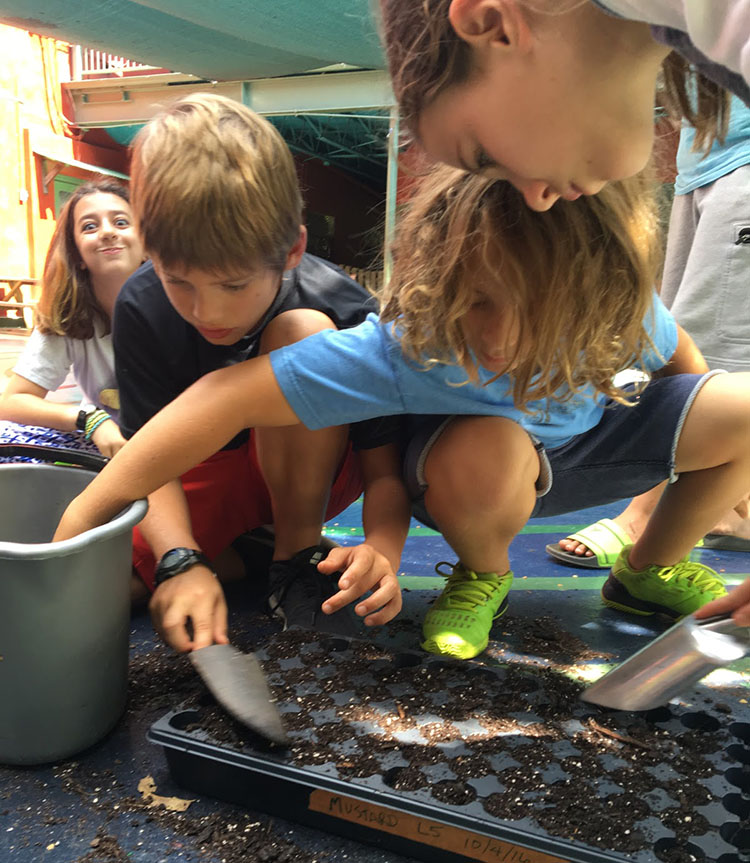
At Integrity Academy kids ages three to thirteen experience lunch time and snack time as opportunities “to commune over food in a public setting, with manners and reverence,” says Executive Director Ali Ronder. As beautifully shown in a recent video (above), they use real dishes, glassware, and cloth napkins instead of styrofoam trays and plastic sporks. The kids also help to grow their own food in an organic garden, including a “rainbow garden,” where they are currently planting the red end of the spectrum, including strawberries.

Students learn about nutrition in twice weekly classes, making yummy snacks like banana “sushi” and blueberry smoothies. Ali says that taco day is everyone’s favorite, but all the lunches on the weekly menu are tasty, colorful, and vegan.

Celebrating Integrity Academy’s dedication to serving students plant-based, healthy, organic meals, the Physicians Committee for Responsible Medicine recently awarded the school a “Golden Carrot” and a prize of $750.

“Not only are these foods helping students stay focused and energized in the classroom, but they’re also reducing long-term risk for chronic diseases,” according to Physicians Committee dietician Karen Smith.


The academy’s educational philosophy has always included devotion to a whole food, plant-based diet as the basis for healthy learning. Two full hours of the students’ day are devoted to learning how to care for their own bodies through yoga and games, in addition to nutrition and gardening classes.

Parents and mentors at Integrity Academy point to the fact that even kids who are initially wary end up enthusiastic vegan eaters as their palates develop over time. And with healthy bodies come more energy and the “emotional resilience” that makes learning and getting along with each other so much easier and more fun. All you have to do is take a look at the academy’s blog to see that’s true.


Shelley Sperry